
Sign up to save your podcasts
Or



Based on Podcast App listening data
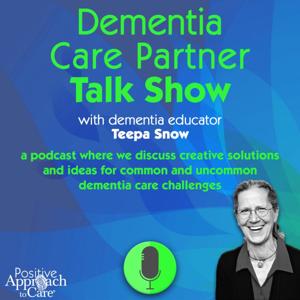
Do men and women experience brain change differently? In this unscripted episode, Greg asks Teepa that question, and her answer goes beyond basic biology. You'll hear how hormones, brain wiring, and a lifetime of roles can shape what dementia looks like. For example, a longtime homemaker's familiar routines can hide early changes, while a former manager may feel driven to get back to work. Teepa and Greg also act out how men and women often respond differently when they want someone out of the room, and how a simple offer of coffee can turn the moment around. The takeaway is that patterns can guide you, but curiosity about the actual person is essential.
Learn more at teepasnow.com.
Senior care communities are struggling to hire and keep staff, and many are relying on overtime to fill the gaps. So why do people who care about older adults sometimes choose to walk away? In this episode, Teepa and Greg look at what the job often feels like from the inside: stretched shifts, extra residents added without notice, little preparation for supporting people living with brain change, and not being heard by leadership. Teepa then names three changes that can help team members stay: building real skills for connecting with people, not just completing tasks; treating every staff member as a valued, respected part of the team; and protecting time off so care partners can rest and have a life outside of work.
If your team is feeling the strain of turnover, overtime, or burnout, the PAC Champion Courses are a practical place to start. These short, skill-focused trainings help staff move beyond the task list and build a shared approach for reading the person in front of them, responding with support, and working as a connected team. Explore the Champion Courses as an option for your team.
A headline claiming up to 45% of dementia cases could be prevented or delayed by modifying lifestyle factors sounds hopeful, but Greg and Teepa dig into why it can also be misleading and even harmful. They explain how prevention framing can slide into shaming and blaming a person for brain change that was likely underway long before anyone noticed. Instead, Teepa offers a harm reduction approach that meets people where they are and supports the life they actually want, rather than trying to perfectly follow restrictive guidelines.
Learn more at www.teepasnow.com.
Some of the most common phrases in dementia care, like don't you remember and calm down, often seem to be some of the most unhelpful. Greg and Teepa unpack why these phrases often spark arguments and suggest replacing them with a simple, repeatable pattern: reflect back what the person said, offer information, then gently initiate a change of direction so the conversation doesn't loop.
Learn more at teepasnow.com.
A care partner asked about her mother who is still living on her own, but her personal and home hygiene have started to slip, and she wasn't sure how to bring it up without causing a reaction. Teepa models how to open the conversation gently by starting with the environment rather than the person, and she encourages using a detective's curiosity rather than confrontation to avoid triggering resistance. She also discusses the bigger picture: changes in hygiene is often the tip of the iceberg — a signal that the level of support the person needs isn't yet in place. Learn more at teepasnow.com.
When an article promises so-called tricks to get a person living with dementia to eat, bathe, or go to bed, Greg and Teepa stop to question both the word and the mindset behind it. They explain why these suggestions often assume that the individual can't tell what's happening (they often can) and how this tactic can erodes trust. They then walk through connection-based strategies that start with curiosity instead: acknowledging what the person is reacting to, seeking information, and being willing to change your own approach when the brain change makes the old one stop working.Learn more at teepasnow.com.
Exercise grows new brain cells. This drink lowers your Alzheimer's risk by 32 percent. This food shrinks your brain. If you have ever tumbled down an internet rabbit hole of dementia headlines, this episode is for you.
Greg reads Teepa a stack of real headlines pulled from just the first six months of the year, and together they sort out what deserves your attention and what is simply not true. Teepa explains how brain change is multifactorial and cannot be magically cured by one magic food, drink, or habit; the truth about research on so-called quick fixes, and why chasing sensational claims often leaves care partners feeling more frightened and more blamed than before.
Every brain change journey is different. There's no if-A-then-B here — but there are skills, and they can be learned.
Need support with a specific situation? Positive Approach to Care® offers a complimentary 30-minute consultation that can help you start to see the bigger picture and build on what's already working.
Some headlines stop you cold. Care partners have a 63% higher mortality rate than people the same age who aren't supporting someone. In this episode, Greg and Teepa look past this statistic and ask a better question: who exactly is dying early? Teepa's answer, drawn from forty-five years of experience, is that the risk isn't in supporting another individual — it's in doing it alone, without knowledge, without skill building, and without anyone to call. You'll hear why nobody can take care of them like I do is a warning sign rather than a badge of honor, what happens to the person living with dementia when the lone care partner goes down first, and why learning to pause and breathe is truly essential for survival.
If you're carrying this alone, you don't have to. The Care Partner Support Series from Positive Approach to Care® is a place to bring your real questions, build practical skills, and connect with people who understand the road you're on. No judgment, no overwhelm, just support and a next step. Explore more about the Care Partner Support Series (link).
Heat waves can be dangerous for people living with dementia, and the reason is not what most care partners assume. In this episode, Teepa and Greg explain why the sense of thirst fades with age and brain change, why a wet mouth can convince the brain it has had enough, and why a person who is genuinely dehydrated may tell you with total confidence that they already drank. You will also hear why cold water is often the wrong offer and what to try instead, and how pushing fluids can turn you into the threat.
If this episode has you thinking about someone you support and wondering how to keep them safe without taking over, Teepa's Living at Home with Mid- to Later-Stage Dementia video walks through finding the balance between helping and encouraging independence and offering personal care that builds trust. It is approximately ninety minutes of practical techniques you can put to use right away.
A Dutch care community started placing life-size stickers of residents' own front doors on their room entrances. It's a lovely idea. So why doesn't it always land?
In this episode, Teepa Snow and host Greg Phelps discuss why a person living with dementia may not be looking for their most recent home at all. They might be looking for their mother's house. Or the home they had when they were first married.
What you'll hear:
• Why environmental cues work for some people and distress others
• How to explore a familiar object without correcting someone
• Why packing up and wanting to go home is so common
• What to try when a single change isn't enough
Explore more about the concept of home as Teepa shows you how to shape a space so it supports abilities, encourages independence, and lowers stress for all. Check out Designing a Supportive Dementia Care Environment for more information.
From the publisher's feed
Ranked by our users in the last 21 days
3,309 Listeners
866 Listeners

12,717 Listeners

5,064 Listeners

5,109 Listeners

8,110 Listeners

13,013 Listeners

41,386 Listeners

669 Listeners

10,541 Listeners

10,524 Listeners
47 Listeners

2,123 Listeners

642 Listeners

223 Listeners