
Sign up to save your podcasts
Or

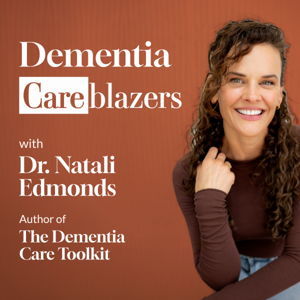


There are 5 important conversations to have with your loved one before dementia gets worse. As dementia progresses, it can become harder for someone to understand and communicate their wishes, leaving family caregivers to make difficult decisions without knowing what their loved one would want.
In this video, I share 5 conversations to consider having as early as possible. We'll talk about when to step in with safety concerns, future care and living arrangements, who should make important decisions, what matters most to your loved one, and their wishes for medical care.
And if your loved one's dementia has already progressed and you never had these conversations, I'll also share how you can use what you already know about them to help guide difficult decisions.
If you'd like to see this episode on video, you can hop on over to my YouTube channel here.
MORE DEMENTIA CAREGIVING SUPPORT
📖 My new book, The Dementia Care Toolkit, is the easiest place to start for help with hard moments like these: https://careblazers.com/toolkit
→ Learn about the Care Collective: https://tinyurl.com/podcast-cc
CHAPTERS
00:00 5 Conversations to Have Before Dementia Gets Worse
04:02 When Do They Want You to Step In?
06:35 What Matters Most if They Need More Care?
09:02 Who Do They Trust to Make Decisions?
10:30 What Makes a Good Day?
12:21 Their Wishes for Future Medical Care
14:14 What if It's Already Too Late to Ask?
17:14 How to Start These Conversations
---
Hi, I'm Dr. Natali Edmonds, a board-certified geropsychologist specializing in dementia care. Whether your loved one has Alzheimer's, frontotemporal, Lewy body, vascular, or mixed dementia, we believe that to create a dementia-friendly world, we must first create a caregiver-friendly world.
This content is for educational purposes only and is not a substitute for professional medical advice. Always consult with a healthcare provider for medical guidance.
Have you ever had a thought about dementia caregiving that made you feel guilty or ashamed? Something you'd never feel comfortable saying out loud because you're afraid of what other people might think?
You're not the only one.
In this episode, I'm talking about some of the difficult thoughts, feelings, and experiences that dementia caregivers rarely discuss openly. From intimacy and exhaustion after placement to resentment and feeling disgusted by the care, these are real experiences that deserve to be talked about without judgment.
Having a difficult thought doesn't make you a bad person or a bad caregiver.
If you'd like to see this episode on video, you can hop on over to my YouTube channel here.
📖 Order The Dementia Care Toolkit: https://careblazers.com/toolkit
Get free resources that go with the book, including a companion workbook: https://careblazers.com/book
⏱ CHAPTERS
0:00 - Intro 1:40 - Sex and physical intimacy 3:02 - Exhaustion after placement 4:40 - Not wanting them to suffer longer 5:56 - Wanting another partner 7:31 - Feeling disgusted by the care 8:24 - Resentment toward family and friends 9:17 - What would you add to the list?
#Dementia #DementiaCaregiver #CaregiverSupport
Get free weekly tools and tips in my free newsletter, The Dementia Dose: https://tinyurl.com/dementiadose-podcast
---
Hi, I'm Dr. Natali Edmonds, a board-certified geropsychologist specializing in dementia care. Whether your loved one has Alzheimer's, frontotemporal, Lewy body, vascular, or mixed dementia, we believe that to create a dementia-friendly world, we must first create a caregiver-friendly world.
This content is for educational purposes only and is not a substitute for professional medical advice. Always consult with a healthcare provider for medical guidance.
If you've ever found yourself correcting, arguing with, or trying to reason with someone who has dementia, you're doing what comes naturally. But with dementia, those responses can sometimes make things harder for both of you.
Back in 2017, I made a video about three things to never do with someone who has dementia, but I didn't do a very good job of telling you what to do instead. In this episode, I'm sharing all three, what I've changed my mind about since then, and practical strategies you can start using today. That includes the one way reasoning with your loved one can actually work.
If you'd like to see this episode on video, you can hop on over to my YouTube channel here.
My new book, The Dementia Care Toolkit, goes deeper into these strategies with real caregiver stories, questions, and exercises to help you apply them to your own situation. There's also a free PDF workbook to go with it.
➡️ Get The Dementia Care Toolkit here: https://careblazers.com/toolkit
Get free weekly tools and tips in my free newsletter, The Dementia Dose: https://tinyurl.com/dementiadose-podcast
⏱ CHAPTERS
0:00 - Introduction
1:20 - 1. Don't correct them
3:26 - When correcting is the right call
4:06 - 2. Don't argue
4:26 - "That's not him": Do less to de-escalate
6:19 - Why arguing can make things worse
7:23 - 3. Don't reason (and what I've changed since 2017)
8:24 - Reason from their reality
10:15 - Free workbook for these strategies
#dementia #dementiacaregiver #dementiacare #caregivertips
---
Hi, I'm Dr. Natali Edmonds, a board-certified geropsychologist specializing in dementia care. Whether your loved one has Alzheimer's, frontotemporal, Lewy body, vascular, or mixed dementia, we believe that to create a dementia-friendly world, we must first create a caregiver-friendly world.
This content is for educational purposes only and is not a substitute for professional medical advice. Always consult with a healthcare provider for medical guidance.
Most dementia caregivers already know the one thing that could make a difference. They've heard it over and over again. But knowing what to do and actually doing it are two very different things.
In this episode, I share a story from a recent talk where a caregiver told me she'd tried everything to get her husband to stop driving. What happened once we started talking it through is something I want every caregiver to hear, especially when you're feeling stuck or overwhelmed.
I'll also explain how the thought "I've tried everything" can keep us from seeing other possibilities, and share a few small ways you can start making room for yourself, even when your time and energy are limited.
If you'd like to see this episode on video, you can hop on over to my YouTube channel here.
My new book, The Dementia Care Toolkit, shares my essential strategies for challenging dementia behaviors and caregiving overwhelm, including how to adapt those strategies to your own situation when generic advice doesn't work. When you preorder, you'll also get a free 200+ page workbook to help you track what works and become your own best resource.
➡️ Preorder The Dementia Care Toolkit: https://careblazers.com/toolkit
→ Learn about the Care Collective: https://tinyurl.com/podcast-cc
⏱ CHAPTERS
0:00 - The advice caregivers already know 0:42 - When the usual dementia driving advice doesn't work 2:31 - Why "I've tried everything" can keep you stuck 3:38 - The one thing caregivers keep putting off 5:41 - Why generic dementia advice doesn't always work
#dementia #dementiacaregiver #caregiverselfcare #dementiacare
---
Hi, I'm Dr. Natali Edmonds, a board-certified geropsychologist specializing in dementia care. Whether your loved one has Alzheimer's, frontotemporal, Lewy body, vascular, or mixed dementia, we believe that to create a dementia-friendly world, we must first create a caregiver-friendly world.
This content is for educational purposes only and is not a substitute for professional medical advice. Always consult with a healthcare provider for medical guidance.
Helping someone with dementia stay engaged and independent can be challenging, especially when the activities you've tried don't seem to work. But sometimes, small changes in how we set up activities or organize the home can make a meaningful difference.
In this episode, I'm joined by Ju Tu, founder of Aegeliss, who turned her family's dementia caregiving experience into thoughtfully designed products that help people with cognitive impairment continue doing more for themselves.
➡️ Shop Aegeliss: https://www.aegeliss.com/nataliedmonds Use code Lovecareblazers for 10% off your first three orders.
We talk about why familiar activities like puzzles or folding towels don't always work the way they're usually set up, how visual cues and labels can make everyday tasks easier, and how Montessori-inspired approaches can help people with dementia maintain a sense of independence and purpose.
You'll also learn simple things you can try at home, even without buying anything, to make activities more accessible and give your loved one more opportunities to participate on their own terms.
If you'd like to see this episode on video, you can hop on over to my YouTube channel here.
📙 Preorder The Dementia Care Toolkit: https://careblazers.com/toolkit
→ Learn about the Care Collective: https://tinyurl.com/podcast-cc
⏱ CHAPTERS
0:00 - Intro 0:58 - Ju's story of caring for her grandparents 1:56 - What Montessori means in dementia care 3:29 - How losing independence can show up as behaviors 7:01 - Room signs and labels that make home easier 10:14 - Why traditional puzzles can be frustrating in dementia 14:44 - Simple Montessori activities you can try at home 18:12 - Where to place signs so they get noticed 25:20 - The email that keeps Ju going
---
Hi, I'm Dr. Natali Edmonds, a board-certified geropsychologist specializing in dementia care. Whether your loved one has Alzheimer's, frontotemporal, Lewy body, vascular, or mixed dementia, we believe that to create a dementia-friendly world, we must first create a caregiver-friendly world.
This content is for educational purposes only and is not a substitute for professional medical advice. Always consult with a healthcare provider for medical guidance.
When your loved one with dementia seems fine to everyone else, it can leave you feeling like no one believes what you're living with. A sibling says, "Dad seemed great today." A doctor says, "They're doing so well." And you're left wondering if they think you're exaggerating.
In this episode, I'm sharing what I told a caregiver who came up to me after a talk with this exact frustration, and what helped me when my own siblings said these things about my dad. I'll walk you through two ways to handle these comments so they don't upset you as much, and explain why someone with dementia can seem perfectly fine during short visits and appointments.
If you'd like to see this episode on video, you can hop on over to my YouTube channel here.
📘 My new book, The Dementia Care Toolkit, is available for preorder. It includes an entire section devoted to you, the caregiver, and how to handle the frustration, emotions, and grief that can come with dementia care.
➡️ Preorder The Dementia Care Toolkit: https://careblazers.com/toolkit
⏱ CHAPTERS 0:00 - Intro 0:28 - When family says "Dad seems fine" 2:00 - Option 1: Sharing how their comments affect you 3:45 - Option 2: Changing how you think about their comments 6:40 - Why dementia can look so different to others
→ Learn about the Care Collective: https://tinyurl.com/podcast-cc
---
Hi, I'm Dr. Natali Edmonds, a board-certified geropsychologist specializing in dementia care. Whether your loved one has Alzheimer's, frontotemporal, Lewy body, vascular, or mixed dementia, we believe that to create a dementia-friendly world, we must first create a caregiver-friendly world.
This content is for educational purposes only and is not a substitute for professional medical advice. Always consult with a healthcare provider for medical guidance.
When someone with dementia insists they're still safe to drive, describes a visit that never happened, or swears someone is stealing from them, it can look a lot like lying. Or like they're refusing to see what's right in front of them.
But a lie means knowing the truth and choosing to say something different, and that's not what's happening here. In this episode, I'm walking through three common dementia symptoms that can look like lying from the outside: anosognosia, confabulation, and delusions. I'll explain what's going on in the brain with each one, how to tell them apart, and the one response that tends to make all three harder.
If you'd like to see this episode on video, you can hop on over to my YouTube channel here.
If you're left thinking, "Okay, but what do I actually do when this is happening?", my book, The Dementia Care Toolkit, is filled with strategies you can try in situations just like this.
It's available for preorder here: ➡️ https://careblazers.com/toolkit
→ Learn about the Care Collective: https://tinyurl.com/podcast-cc
⏱ CHAPTERS
0:00 - Intro
1:21 - Anosognosia: when they don't know anything is wrong
3:12 - Confabulation: when the brain fills in a memory gap
4:59 - Delusions: false beliefs that keep coming back
6:01 - What to ask yourself instead of "why are they lying?"
---
Hi, I'm Dr. Natali Edmonds, a board-certified geropsychologist specializing in dementia care. Whether your loved one has Alzheimer's, frontotemporal, Lewy body, vascular, or mixed dementia, we believe that to create a dementia-friendly world, we must first create a caregiver-friendly world.
This content is for educational purposes only and is not a substitute for professional medical advice. Always consult with a healthcare provider for medical guidance.
Sometimes the strangest dementia behaviors have a pattern or explanation that isn't obvious at first.
Maybe your loved one seems fine earlier in the day but becomes restless every evening. Maybe they follow you everywhere, hide or collect unusual things, believe they're living in a different time of their life, or suddenly seem perfectly fine when the doctor walks into the room.
After the first strange behaviors episode, so many of you told me your loved one does these things too, or that the explanation finally helped it make sense. So in this episode, I'm breaking down 5 MORE: sundowning, shadowing, hiding and hoarding, time shifting, and show timing.
For each one, I explain what may be happening underneath the behavior and what you can try when it happens.
If you'd like to see this episode on video, you can hop on over to my YouTube channel here.
Because once you see what the brain may be trying to do, a lot of these behaviors start to make sense.
And if you want more ideas for what to do when these moments happen, I have two resources that can help:
→ Preorder the Dementia Care Toolkit Here: https://careblazers.com/toolkit
→ Learn about the Care Collective: https://tinyurl.com/podcast-cc
⏱ CHAPTERS
0:00 - Intro
1:39 - #1 Sundowning
6:22 - #2 Shadowing
9:01 - #3 Hiding, hoarding and collecting
13:06 - #4 Time shifting
15:11 - #5 Show timing
18:42 - How all 5 behaviors connect
20:03 - Where to get help with what to try
---
Hi, I'm Dr. Natali Edmonds, a board-certified geropsychologist specializing in dementia care. Whether your loved one has Alzheimer's, frontotemporal, Lewy body, vascular, or mixed dementia, we believe that to create a dementia-friendly world, we must first create a caregiver-friendly world.
This content is for educational purposes only and is not a substitute for professional medical advice. Always consult with a healthcare provider for medical guidance.
➡️ Learn more about Memory Board: https://www.memoryboard.com/DEMENTIA24702 When you visit through this link, look for the pop-up with a Careblazers promo code.
Paid link: Dementia Careblazers may earn a referral fee from purchases made through this link and promo code.
Helping someone with dementia keep track of what's happening throughout the day can mean a lot of reminders, phone calls, notes, and repeated updates.
In this episode, I'm talking with Tyler Zannini, founder of Memory Board, about a simple tool families are using to share schedules, reminders, messages, photos, and other updates with a loved one with dementia.
We talk about how Memory Board came to be, how families are using it in real life, who it may be helpful for, how it works as dementia progresses, and some practical ways caregivers can use it from a distance.
Questions for Tyler's team: [email protected]
⏱ CHAPTERS 0:00 - Why Memory Board caught my attention 1:25 - How Tyler's grandmother inspired Memory Board 3:02 - What Memory Board is and how it works 4:48 - How families are using it 7:41 - Photos, visitors, and staying connected 12:04 - Can it help in later stages of dementia? 15:25 - Scheduling messages in advance 17:05 - Is there an ongoing subscription cost?
---
Hi, I'm Dr. Natali Edmonds, a board-certified geropsychologist specializing in dementia care. Whether your loved one has Alzheimer's, frontotemporal, Lewy body, vascular, or mixed dementia, we believe that to create a dementia-friendly world, we must first create a caregiver-friendly world.
This content is for educational purposes only and is not a substitute for professional medical advice. Always consult with a healthcare provider for medical guidance.
There are a few phrases dementia caregivers say all the time that sound completely normal but can actually make dementia behaviors worse.
Things like "I already told you," "Don't you remember?" or "You just asked me that" usually come from frustration or from genuinely trying to help. But dementia changes what the brain is able to remember, process, and explain.
In this episode, I break down 4 common communication traps, why they can backfire, and what you can do instead. I also get into why the best response for your loved one might be completely different from the best response for someone else, and that is okay.
Dementia caregiving isn't about finding one perfect response. It's about learning what works for your loved one with dementia and adjusting as their brain changes.
If you'd like to see this episode on video, you can hop on over to my YouTube channel here.
📘 Looking for more practical strategies? My book, The Dementia Care Toolkit: Real Help for Challenging Behaviors and Caregiving Overwhelm, is available for preorder here:
https://careblazers.com/toolkit
→ Learn about the Care Collective: https://tinyurl.com/podcast-cc
⏱ CHAPTERS
0:00 - The repeated question that wears you down
2:14 - "I already told you" and the reminding trap
3:57 - "Don't you remember?" and highlighting their deficits
5:38 - "You just asked me that" and the repetition awareness trap
6:49 - "Why did you do that?" and the explanation trap
9:40 - Becoming a dementia detective when a behavior makes no sense
---
Hi, I'm Dr. Natali Edmonds, a board-certified geropsychologist specializing in dementia care. Whether your loved one has Alzheimer's, frontotemporal, Lewy body, vascular, or mixed dementia, we believe that to create a dementia-friendly world, we must first create a caregiver-friendly world.
This content is for
From the publisher's feed
Ranked by our users in the last 21 days

6,677 Listeners
2,008 Listeners

2,615 Listeners

4,854 Listeners
167 Listeners

7,946 Listeners
40 Listeners

1,092 Listeners

61 Listeners

23 Listeners

19,960 Listeners

1,399 Listeners
24 Listeners

2,050 Listeners

7 Listeners