Dialectic

Dialectic

Download on the App Store

Dialectic episodes

  • 32: Chris Sacca - Drifting Back to Real

    Chris Sacca is an investor and founder of Lowercarbon Capital and Lowercase Capital.

    Prior to becoming an investor, Chris grew up in Buffalo, NY; studied around the world by way of the Georgetown School of Foreign Service; turned his student loans in $12M in the tech bubble of 2000 before losing it all and then some; and broke into Silicon Valley before eventually landing at Google, where he won the founders award. Then Chris started angel investing, which led to his first venture fund, Lowercase I. Lowercase I is one of if not the best performing VC funds ever, by multiple, at 214x, and included Twitter, Uber, Instagram, and more.

    Toward the end of Lowercase, I had the pleasure of working with Chris. Around that time, he was also a Guest Shark on Shark Tank. Chris was heavily involved in both Obama campaigns and was a large supporter of Hillary Clinton in 2016. When Trump won, he wound down new investing at Lowercase and "hung up his spurs" to focus on political and democracy related efforts. Then, in 2018, Chris started Lowercarbon Capital to invest in "un-f*cking the planet": carbon removal, climate science, cooling the planet, and eventually nuclear fusion.

    We talked about writing and storytelling, keeping people around who keep you honest, having a good taste in "weird," playing rigged games, taking the right kind of risks, and how even billionaires have imposter syndrome. We also get into how great founders embody inevitability, what makes the people at Lowercarbon special, how much Chris thinks about AI, and the many chapters of Chris's life, including whatever might be next.

    Authenticity is a moving target for all of us, but one of the things I most admire about Chris is his ability and desire to shamelessly play his own game.

    Timestamps

    • (0:00): Open: The Common Thread Amongst The Best Founders
    • (1:26): Intro
    • (3:49): Coast to Coast
    • (12:36): Leaning into Weird & Investing in Fusion
    • (24:42): Having People Who Keep You in Check
    • (32:07): The Power of Language and Stories
    • (1:03:10): Investing, Risk, and Wild Confidence
    • (1:28:03): Imposter Syndrome and Making Companies Better
    • (1:38:10): Lowercarbon's Team and Culture
    • (1:57:54): Chris's Life Chapters, AI, and Creative Outlets
    • (2:22:11): Drifting Back Towards Real


    All links and transcript: https://dialectic.fm/chris-sacca

    2 hr 37 min
  • 31: Gabe Whaley - Playing the Crowd & Outlasting the Hype

    Gabe Whaley is co-founder and CEO of MSCHF (Instagram, Wikipedia), the art collective, fashion and footwear brand, startup, and fill-in-the-blank, famous for its viral products and cultural interventions.

    A few notable works include Jesus Shoes (Nike Air Max filled with holy water), Severed Spots (a "decentralized" Damien Hirst print), Museum of Forgeries (One original Warhol and 999 perfect forgeries), and of course the Big Red Boot. This conversation was heavily influenced by MSCHF's recently released Made by MSCHF, a "textbook," through which the team peels back the curtain and shows us inside the black box that has produced more viral hits than one can count.

    Gabe had a sheltered childhood and went to two years of army academy at West Point before eventually finding his way to New York City to intern at Buzzfeed around 2014. In his spare time, he started releasing weird internet projects under the name "Miscellaneous Mischief." After tasting virality a few times, he started collaborating with likeminded creatives and eventually formalized MSCHF in 2019.

    I've known Gabe for many years (and even did a small collaboration with him from my seat at 100 Thieves). We sat down to reflect on the last 15 years and the arc of MSCHF, what made it special, and where one goes next when virality makes you feel nothing and the internet feels mature.

    The conversation includes MSCHF's eye-of-the-beholder legibility, their obsession with value, the power of mystery, and how the product doesn't culminate with release, but after the audience has made it their own (in MSCHF parlance, "playing the crowd"). We also discuss the creative process behind the hit factory, how acting as a label rather than individuals changes their relationship to the work, whether the cultural future is actually canceled, how the internet has changed, and how real world experiences offer something to the creator and the consumer that digital life simply can't. We wrap-up by speed-running through many of MSCHF's internal values, from "always punch up," to "death is just as importance as birth," to perhaps its defining frame: "nothing is sacred."

    I hope you are inspired toward play, originality, embracing discomfort, and having the courage to burn it all down and start anew.

    Full transcript and all linked references: https://dialectic.fm/gabe-whaley

    Timestamps

    • (0:00): Intro
    • (2:21): Value and Legibility
    • (13:24): Is the Future Canceled?
    • (20:00): We Create as a Result of What We Believe In
    • (26:11): What Makes a Good Remix
    • (29:08): How MSCHF Relates to the Current Thing and Evolves What Game it Plays
    • (38:31): Creating Something the Crowd Can Play
    • (44:59): Emphasis on Craft and Objects Rather than Creating "Lifestyle"
    • (47:27): Keeping Up in a World That Demands Constant Production
    • (53:11): Resisting The Internet's Scale and Lack of Friction
    • (1:03:15): Accidental World Building, Process, Creative Inputs,...
    • 2 hr 5 min
    • 30: David Senra - The Clarity of Commitment

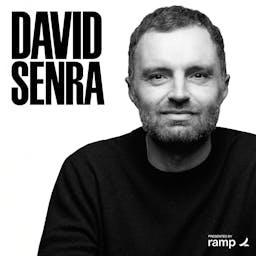
      David Senra (Website, X) is a podcaster and loves that title more than anyone. He hosts Founders, where he teaches the lessons of history's greatest entrepreneurs by way of the biographies he reads of them. This week, he launched a second show, David Senra, where he talks to the greatest living entrepreneurs (often about the lessons from Founders). The first episode with Spotify Founder & CEO Daniel Ek is available now, and the show is in partnership with Scicomm Media, the team behind Huberman Lab.

      David is an enthusiast about four things: entrepreneurship, reading, history, and podcasts. His two shows are the articulation of those obsessions in a form of service for the rest of us. He is following Charlie Munger's advice: "take a simple a idea and take it seriously."

      David is one of the most energizing people I've ever met and has greatly inspired my work. I've had several multi-hour conversations with him that left me buzzing afterward, and I'm pleased that this is no exception. We cover many of his favorite lessons and founders, his process, biographies, focus, fear, endurance, service, and legacy.

      I hope you are inspired to commit yourself to something worth your days and years.

      Transcript and extensive linked references: https://dialectic.fm/david-senra

      Special thanks to Josh Kale for producing this episode. Please check out his show Limitless on frontier technology and AI.

      Timestamps:

      • (0:00) - Open
      • (1:49) - Intro
      • (3:02) - Podcasts are Energy Transmission
      • (7:52) - People Buy Simple Stories
      • (12:38) - Repetition Doesn't Spoil the Prayer
      • (16:11) - Trust in Brands and Products (and Podcasts)
      • (19:40) - Continuous Improvement and Speaking to a Moving Parade
      • (26:18) - Confidence and Simplicity
      • (34:55) - What Makes a Great Biography and Biographer
      • (42:17) - Humanity in Context: Why Biographies are So Practically Helpful
      • (48:52) - Fear
      • (54:32) - Self Reflection and Commitment
      • (1:06:52) - Considering Stuff Beyond Podcasting
      • (1:10:40) - Focus and Making Time for Relationships
      • (1:14:00) - What Should David Delegate?
      • (1:24:36) - Advice for 2017 David
      • (1:28:21) - Storytelling and Clear Thinking
      • (1:32:19) - Defying Rationality and Creating Magic with Obsessive Details
      • (1:38:09) - Self-Deception and Understanding Who You Are
      • (1:45:01) - Intuition
      • (1:48:34) - Being Easy to Interface With
      • (1:52:26) - Biography Most Founders Would Benefit From: James Dyson's Against the Odds
      • (1:57:05) - Simplicity and Edit Before You Make
      • (2:02:42) - Lesson for Tech People: Learn from History
      • (2:06:14) - What David Hopes His Kids Say About Him

      • Dialectic with Jackson Dahl is available on all podcast platforms.
        Join the ⁠telegram channel for Dialectic⁠
        Follow ⁠Dialectic on Twitter⁠

        2 hr 19 min
      • 29: Billy Oppenheimer - Attuned to Clues

        Billy Oppenheimer (Website, X) is a researcher and writer who works closely with Ryan Holiday and Rick Rubin, and publishes the “Six at 6” newsletter. Billy is also working on his first book, The Work is the Win.

        We kick off by discussing one of my favorite new ideas: "looking for clues," a process and philosophy for creativity that Billy learned from Rick Rubin. He shares the story Rick told him when he learned and adopted this language, which is so representative of how Billy (and I!) research in our work.

        From there, we talk about Billy's robust research process and how he has created an external brain of the ideas and patterns that inspire him rather than relying on memory. We also talk about the importance of time as a filter and a series of maxims that underpin his work and creativity. We discuss the importance of inputs over outputs and his big idea and book title, "The Work is the Win," as well many related ideas on success, complacency, compounding, standards, initiative, local maximums, and more. We finish with some lessons from Billy's favorite people.

        This conversation is a field guide for making things, pushing through the messiness of progress, and attuning yourself to the richness of the world that often takes the shape of clues.

        Full transcript and all links: https://dialectic.fm/billy-oppenheimer

        Timestamps:

        • 0:00 - Intro
        • 1:20 - Looking for Clues with Rick Rubin
        • 17:42 - Billy's Own Clue-Seeking
        • 24:26 - Balancing Listening to the Market and Finding Unique Influences
        • 31:17 - Memory, Notecards, and Billy's External Brain
        • 37:13 - Making Notes for an Ignorant Stranger, or Leaving Clues for Your Future Self
        • 45:09 - Lingering and Time as a Filter
        • 52:51 - Billy's Book and Big Idea: "The Work is the Win"
        • 1:00:07 - Be Great Regardless
        • 1:04:31 - Following Up Even When Your Abilities and Standards Don't Match
        • 1:10:10 - Fending Off the Wolf at the Door
        • 1:15:55 - Unfolding and Planting Seeds
        • 1:18:17 - Taking Initiative and Opening Doors: "He Who Hesitates is Lost"
        • 1:24:58 - Stupid Bravery and Getting Past the Sewage
        • 1:30:16 - Local Maximums and Resisting Personal "Folklore"
        • 1:36:14 - Some of Billy's Favorites: Ryan Holiday, Rick Rubin, Steve Jobs, John Mayer, Greta Gerwig, Jerry Seinfeld, Ralph Waldo Emerson
        • 1:56:45 - Side Quests
        • 2:02:26 - "I Know What We Do Here" and Creative Environments
        • 2:05:28 - Bringing Familiar and Unfamiliar Together
        • 2:09:26 - Mastery and Compounding
        • 2:12:44 - The Real Life of Appearances
        • 2:15:43 - "Ton-goo-ey" and The Gifts We Give Ourselves
        • Links:

          • ‎McCartney 3, 2, 1 (2021)
          • The Way of the Tracker: The Path of “not this” - Boyd Varty
          • Eddie Murphy Is Tracy Morgan's Favorite | Comedians In Cars Getting Coff...
          • 2 hr 22 min
          • 28: Maxwell Meyer - Starships & Road Trips

            Maxwell Meyer (X, Newsletter) is the founder and editor of Arena Magazine, an "American Propaganda" print and digital publication focused on technology, capitalism, and civilizational progress. Max also works with Joe Lonsdale at 8VC and is the proprietor of his Iowan farm, Henry Hills. He was previously the editor of the Stanford Review.

            Our conversation is about ideas Max is most interested in across storytelling and media, American values, technology and progress, capitalism, writing and craft, and deep love for his country.

            We start with critique, the media's tendency toward cliché, and defending the new while building trust with readers. Then we talk about American ideology: its radical founding myth, collective enterprise, and a nation of movers. Max makes a case that national character ought to be lived and formed bottom-up, and repeatedly argues that cultural pendulum swings are as old as time and we need not overreact to the swings of the day. He describes tech's brief abandonment of the rest of America and talks through how we might export Silicon Valley's outcome-oriented culture to government and other industries. Max argues that the foundation of capitalism is simple: "you can't kill your counterparty." We of course discuss Arena, magazines, writing, editing, and his ambitions there too.

            Above all else, Max makes the case for America, big and small: the beautiful, always-changing, rarely-agreeing, perpetually striving amalgamation of souls that stretch from sea to shining sea.

            You can subscribe to Arena here: https://arenamag.com/subscribe

            Full transcript and all links: https://dialectic.fm/maxwell-meyer

            Timestamps:

            • 00:00: Intro
            • 01:14: Elon, The Media, Cliché, American Collectivism, and Cultural Pendulum Swings
            • 09:07: Media, Criticism, and Defending the New
            • 17:49: American Ideology: The Declaration, Communal Enterprise, Americans as Movers
            • 28:20: Patriotism
            • 33:36: Learning from the Rest of the World
            • 40:27: A Case for Progress
            • 49:38: Tech's Separation from American Culture in the 2010s
            • 58:44: Tech Accountability and Engaging Normal People on their Premises
            • 1:15:23: Silicon Valley's Tiny Nations and Alex Karp's "The Technological Republic"
            • 1:21:19: The Frontier and the Core: Exporting SV Engineering Culture to Government
            • 1:28:46: Principled and Unpredictable Thinkers
            • 1:34:06: The Case for Capitalism
            • 1:43:07: Defending Critiques of Capitalism and Concerns of Concentration of Power
            • 1:49:37: Arena, Good Writing and Editing, Magazines as a Medium, Durability, Influences
            • 2:02:19: Big and Small America
            • 2:06:16: Joe Lonsdale
            • 2:06:50: Upholding Abundance
            • 2:11:39: Cooking and Bringing People Together
            • 2:12:38: The Back Half of the Brain
            • 2:14:02: The Places Between Places
            • Key Links:

              • The Man-Made Miracle of SpaceX - Max Meyer
              • Max Meyer Launched a Print Magazine in 2024. Here’s Why. - Infinite Loops Podcast
              • Man i...
              • 2 hr 20 min
              • 27: Mackenzie Burnett - Accounting for the American Dream

                Mackenzie Burnett (Website, X) is the co-founder and CEO of Ambrook, financial software for independent businesses starting with farms and ranches. We trace her arc from a policy-first upbringing (USDA household, Congressional internships, climate-security research at Stanford) to a building software for rural America.

                We talk about why Mackenzie loves America and cares about agriculture, the challenges of aligning sustainability with business and government, and pragmatically building resilience. Mackenzie talks about the American Dream and why independent small businesses are the foundation of it in many ways.

                Then we get into Ambrook’s product philosophy: why “all roads lead to accounting,” how multi-P&Ls and biological inventories make farms deceptively complex, and why understanding bookkeeping and money movement enables better decision making and understanding over the long run for big and small businesses.

                We also talk through Mackenzie's broad ambition for Ambrook; her growth as a leader; brand, aesthetics, and environment; Ambrook's editorially independent research division, Offrange, and more. Mackenzie is one of the most quietly ambitious and focused people I've met, and yet under her impressive and serious exterior is a life and love for America and its people that is all heart.

                Special thanks to Josh Kale for his help producing this episode.

                ---

                Full transcript and all links: https://dialectic.fm/mackenzie-burnett

                ---

                Timestamps

                • 00:01:11 Intro
                • 00:02:51: The American Heartland
                • 00:05:21: Agriculture, Policy, and Government
                • 00:12:29: The Challenges with Prioritizing Climate Risk: "Long Term and Abstract"
                • 00:18:04: Pragmatic Environmentalism and Resilience that Drives Business
                • 00:21:49: The American Dream
                • 00:25:52: The Importance of Independent Small Businesses
                • 00:28:58: Entrepreneurship on the Frontier: America's First Entrepreneurs and Ambrook's First Customers -- Farmers
                • 00:36:28: Biological Factories: Why Farms are Complex Businesses
                • 00:40:41: Why Everything Goes Back to Accounting
                • 00:44:30: Why Money Movement Matters
                • 00:51:13: Ambrook as a Twenty-Year Container
                • 00:57:27: The National Importance of Agriculture
                • 01:00:49: The Features of Illegibility
                • 01:04:49: Ambrook's Long Term Vision
                • 01:10:17: Making the Intractable Tractable (And Doomscrolling Your Company's Slack)
                • 01:14:42: De-Risking and Becoming Friends with Anxiety
                • 01:17:26: Building Something That Takes on a Life of its Own
                • 01:20:07: Ambrook's Culture in Three Words
                • 01:21:26: Brand and Storytelling
                • 01:26:11: AI Enabling the Middle Class
                • 01:30:57: California History and J.G. Boswell
                • 01:34:05: Niche Subjects and History and "The Land Where Lemons Grow"
                • 01:36:46: Disney's Magic Band
                • 01:39:15: Strange Math and Happiness and Sadness in Parallel
                • 01:41:31: Aesthetics, Beauty, and Physical Design Systems
                • 01:47:31: The Draw to Start Things

                • Links & References

                  • America, the Beautiful - Mackenzie Burnett
                  • 1 hr 50 min
                  • 26: Cyan Banister - A Fool’s Dérive

                    Cyan Banister (Website, X, Substack) is an investor, artist, and co-founder and General Partner of Long Journey Ventures. Previously, Cyan spent four years at Founders Fund and has a legendary angel investing track record alongside her husband, Scott, including early rounds in SpaceX, Uber, and DeepMind.


                    Cyan is as original as they come: she grew up on a Navajo reservation and was homeless by 15, with a series of unlikely serendipitous moments combined with optimism, agency, and love of capitalism taking her to a very different life than the one she grew up with. I focused this conversation not on Cyan's work, but her unique approach to living.


                    We begin with Cyan’s “church”: a weekly visit to see Bobby McFerrin and co. do live, jazz acapella in Berkeley, CA. We discuss how this space ties to presence, openness, and play, and then talk about the tension between novelty and consistency as she continues on her own path toward self-love and mindfulness. She also tells me about her radical approach to accountability and the empowering results of assuming that everything is her fault.


                    One of Cyan's favorite words is the French dérive, or an intentional drift, and it embodies her approach to the world. She moves with childlike wonder, seeking to see things and people from new perspectives and challenging others to react beyond their default settings. She daydreams about the outcomes she wants and has remarkable conviction and faith even when others do not believe her.


                    We wrap with a grab bag representative of Cyan's diverse interests, from filmmaking and performance art to the US Constitution to Bill Murray. Cyan manages to combine randomness and intentionality, naiveté and sober-minded awareness, humility and conviction. I hope you are are as inspired as I am to live more playfully, seriously, and courageously.


                    Full transcript is available at https://dialectic.fm/cyan-banister


                    Timestamps

                    • 0:01:23: Intro
                    • 0:03:45: Cyan's "Church"
                    • 0:16:21: Stillness, Mindfulness, and Introspection
                    • 0:28:47: Learning to See in Original Ways
                    • 0:39:38: People: When the "Light is On," "Collecting Minds," and Conjuring Friends
                    • 0:46:55: Cultivating Childlike Joy and Refusing to be a Victim
                    • 0:52:30: Radical Accountability
                    • 0:56:28: Randomness, Faith, and Experimentation
                    • 1:06:22: Conviction and Peter Thiel
                    • 1:12:54: Returning to Seed Investing and Long Journey Ventures
                    • 1:18:23: Thoughts on Art
                    • 1:23:42: Performance Art
                    • 1:26:37: Cyan's Creative Projects
                    • 1:32:51: Boredom
                    • 1:36:06: Living Around Elderly People
                    • 1:42:14: Pete Buttigieg
                    • 1:45:57: Being a Role Model
                    • 1:48:26: Young People's Future
                    • 1:52:46: Scott Banister and Lessons for Her Kids
                    • 1:55:35: "It Just Doesn't Matter" And Who Pulls the Strings

                    • Key Links

                      • Cyan - by Kevin Gee and Dan Scott - Cloud Valley
                      • Cyan Banister — From Homeless and Broke to Top Angel Investor - Tim Ferriss
                      • 2 hr
                      • 25: Reggie James - Our Infinite Mirrors (Live at FWB Fest)

                        Reggie James (Substack, X) is a designer, writer, and entrepreneur. Reggie previously founded Eternal and recently edited and published Hardware 2024, a book highlighting recent attempts at creating a different hardware future. This conversation happened live on stage at FWB Fest 2025 in Idyllwild, CA.

                        We explored Reggie's frame of technology as a mirror and the Kevin Kelly-inspired notion that technology has an agenda of its own. Reggie has a fresh perspective on brand and "feel" as they relate to technology products, why friction can create meaning, and a Naoto Fukasawa-influenced view that design is about communicating values. The latter, for Reggie, originates with writing.

                        We dipped into a discussion about how hardware and how it shapes our software cultures, and what a world with more basic luxuries like the iPhone might look like. We also discussed "loaded" technologies and the current narratives that are working in crypto vs. what might be idealized.

                        The conversation concludes with a zoomed out meditation on myth, American western idealism, personal history, and what type of vision is required to create something radically new. This episode is shorter than usual given the live nature, but it's jam packed and I'm thrilled that we were able to cover a lot of ground across many of the ideas that are representative of Reggie.

                        Full transcript and all links: https://dialectic.fm/reggie-james

                        Video version from FWB livestream available here.

                        Timestamps

                        • 3:05: Technology as Mirror
                        • 8:04: De-fanging Loaded Technologies
                        • 12:43: Writing's Role in the Design Process
                        • 16:13: Affordances, Software, Hardware, and Values
                        • 22:53: Universal Luxuries
                        • 25:46: Friction and How Technology Can Make us Feel
                        • 30:16: The Role Brand Plays in Technology Today
                        • 34:30: Successful Narratives in Crypto
                        • 41:30: Crypto as a Mirror
                        • 44:39: American Myth & West
                        • 47:56: Personal Myth
                        • 54:16: Vision

                        • References

                          • What Technology Wants - Kevin Kelly
                          • Crying in the Garden ~ Closing Eternal - Reggie James
                          • Joan Didion on writing to think
                          • Universals & Luxuries - Reggie James
                          • Naoto Fukasawa: Embodiment - Naoto Fukasawa
                          • THE TOKYO TOILET
                          • ‎Perfect Days (2023)
                          • 59 min
                          • 24: Linus Lee - Engineering for Aliveness

                            Linus Lee (⁠⁠Website⁠⁠, ⁠⁠X⁠⁠) is a builder, engineer, and writer who explores how software can amplify our abilities, humanity, and agency. He builds, researches, and advises on AI at ⁠⁠Thrive Capital⁠⁠, a venture capital firm, and continues to write and hack on personal projects.

                            Previously, Linus held research or engineering roles at ⁠⁠Notion⁠⁠, ⁠⁠Betaworks⁠⁠, ⁠⁠Replit⁠⁠, and others, and has built over 100 personal ⁠⁠projects⁠⁠ on the side--including his own programming language and ⁠⁠most of the tools he uses day to day⁠⁠. Most of his work, writing, and projects revolve around language, knowledge work, thinking tools, machine intelligence, and latent space for creativity.

                            We begin with how technology can concentrate or distribute power and amplify our diminish our agency. Then he breaks down his framework around instrumental and engaged interfaces, why representation is so critical in tools, and talks through what 'tools for thought' actually means. We also discuss the state of LLM tools and how they can become more robust, as well as how latent space could be codified to help us understand more qualitative domains. This bleeds into his approach to and work at Thrive, which we discuss in detail.

                            Linus is attuned to the ways technology can make us more or less human, and that's reflected throughout. Technology is not determined: the future we imagine and create is entirely up to us. Will we optimize ourselves into something non-human, or dream our way into something beautiful?

                            Views expressed here are the interviewee's and not intended as investment advice.


                            Full transcript and all links are available at ⁠⁠https://dialectic.fm/linus-lee⁠⁠


                            Timestamps:

                            • (2:23): Values and Technology as an Amplifier for Agency
                            • (9:57): Instrumental vs. Engaged Interfaces and Tools
                            • (20:05): Representations, Abstraction, and Exposing Complexity
                            • (33:23): Dreaming of Thinking Tools, Especially Beyond Text
                            • (48:06): LLMs, Mechanical Thinking, and Going Beyond in How We Understand
                            • (57:42): Embeddings of People
                            • (1:01:16): Applying Rigor and an Engineering Approach to Working with LLMs
                            • (1:08:26): Collaborating with AI: Having Agents Work for You vs. Accelerating Your Craft
                            • (1:11:10): Using LLMs to Explore Latent Space
                            • (1:14:58): Working at Thrive: building internal tools and taking software seriously at a VC firm
                            • (1:28:09): What Great Engineering in an Organization Looks Like
                            • (1:33:50): Humanity, Aliveness, and Technology
                            • (1:39:41): Dreams, Aesthetics, Imagery, and Intentionally Guiding Technology
                            • (1:46:09): Lost to Wonder

                            • References

                              • ⁠⁠What are conference talks about? - Linus⁠⁠
                              • ⁠⁠Instrumental interfaces, engaged interfaces - Linus⁠⁠
                              • ⁠⁠What makes a good human interface? - Linus⁠⁠
                              • ⁠⁠Dialectic Ep. 21: Geoffrey Litt - Software You Can Shape⁠⁠
                              • ⁠⁠Linus Lee on Representations for MIT Media Lab Lecture⁠⁠
                              • ⁠⁠On Exactitude in Science - Jorge Luis Borges⁠⁠
                              • 1 hr 50 min
                              • 23: Tamara Winter - Tacit Trust & Caring Curiosity

                                Tamara Winter (X) is the Commissioning Editor of Stripe Press, where she exercises her taste to identify the knowledge and "ideas for progress" that matter most in alignment with Stripe's mission: to increase the GDP of the internet.

                                "Tammy" worked at the Charter Cities Institute and the Mercatus Center at George Mason University, which is chaired by Tyler Cowen.

                                Tammy is obsessed with tacit knowledge and the illegible parts of the world that actually support so much of our lives, work, and societies. This includes taste, charisma, relationships, and a wide-range of load-bearing infrastructure that supports healthy and trustful societies, from small-talk and manners to hidden forces that prevent anti-social behavior and maintain safe places to live and work.

                                We discuss this and more, including how she selects the ideas worthy of Stripe's audience, her unique career path, her refreshing take on agency, her standards for herself, reading and writing, and how she chooses how to spend her time. Above all, Tammy's incredible love of other people shines throughout the conversation.

                                Full episode transcript with all linked references: https://dialectic.fm/tamara-winter


                                Timestamps

                                • 2:09: Taste, absorbtion, and influences
                                • 10:54: Deploying your taste
                                • 15:49: Ideas that matter and taking yourself seriously
                                • 22:13: Aesthetics
                                • 24:16: Choosing Teachers and Authors
                                • 28:15: Charisma & delightfullness privilege
                                • 34:59: Living a relational life
                                • 44:07: Trust, social scaffolding, and small talk
                                • 51:01: Erosion of social norms, low-trust environments, and load-bearing infrastructure
                                • 1:02:17: Cultural arson and the dark sides of "you can just do things"
                                • 1:15:44: The healthy kind of agency
                                • 1:20:45: Tammy's N-of-1 path and who she aspires to rhyme with
                                • 1:28:38: Red herrings of success and focusing on outcomes
                                • 1:32:22: Assortive everything
                                • 1:37:52: Personal and professional standards
                                • 1:43:06: Journaling, great writing, and audience
                                • 1:57:29: Reading & Biographies

                                • Key Links:

                                  • The Art of Doing Science and Engineering - Richard Hamming
                                  • On Self-Respect - Joan Didion
                                    • Scaling People - Claire Hughes Johnson
                                    • High Growth Handbook - Elad Gil
                                    • Virginia Woolf on Montaigne
                                    • Ava on Tammy
                                    • Old Enough!
                                    • 2 hr 11 min

                                    About Dialectic

                                    From the publisher's feed

                                    Conversational portraits of original people, across technology, media, business, and creativity. By Jackson Dahl.

                                    Best of Dialectic

                                    Ranked by our users in the last 21 days

                                    More shows like Dialectic

                                    The Twenty Minute VC (20VC): Venture Capital | Startup Funding | The Pitch by Harry Stebbings

                                    The Twenty Minute VC (20VC): Venture Capital | Startup Funding | The Pitch

                                    541 Listeners

                                    The Knowledge Project by Shane Parrish

                                    The Knowledge Project

                                    2,698 Listeners

                                    Conversations with Tyler by Mercatus Center at George Mason University

                                    Conversations with Tyler

                                    2,450 Listeners

                                    The a16z Show by Andreessen Horowitz

                                    The a16z Show

                                    1,087 Listeners

                                    Invest Like the Best with Patrick O'Shaughnessy by Colossus | Investing & Business Podcasts

                                    Invest Like the Best with Patrick O'Shaughnessy

                                    2,342 Listeners

                                    Founders by David Senra

                                    Founders

                                    2,200 Listeners

                                    Dwarkesh Podcast by Dwarkesh Patel

                                    Dwarkesh Podcast

                                    567 Listeners

                                    No Priors: Artificial Intelligence | Technology | Startups by Conviction

                                    No Priors: Artificial Intelligence | Technology | Startups

                                    140 Listeners

                                    Latent Space: The AI Engineer Podcast by Latent.Space

                                    Latent Space: The AI Engineer Podcast

                                    102 Listeners

                                    "Econ 102" with Noah Smith and Erik Torenberg by Turpentine

                                    "Econ 102" with Noah Smith and Erik Torenberg

                                    145 Listeners

                                    How I Write by David Perell

                                    How I Write

                                    19 Listeners

                                    BG2Pod with Brad Gerstner and Bill Gurley by BG2Pod

                                    BG2Pod with Brad Gerstner and Bill Gurley

                                    455 Listeners

                                    TBPN by John Coogan & Jordi Hays

                                    TBPN

                                    142 Listeners

                                    Uncapped with Jack Altman by Alt Capital

                                    Uncapped with Jack Altman

                                    41 Listeners

                                    David Senra by Scicomm Media

                                    David Senra

                                    243 Listeners