
Sign up to save your podcasts
Or

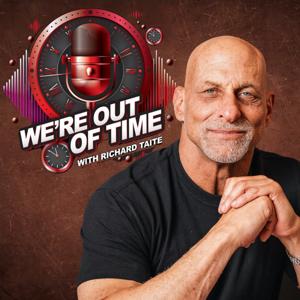

On this episode of We’re Out Of Time, clinical neuropsychologist Dr. Daniel Hai joins host Richard Taite for a powerful, unfiltered conversation on trauma, addiction, neuroplasticity, and what real healing actually requires.
Dr. Hai, founder of the Neuro Assessment Center, breaks down neurocognitive therapy in practical terms—how he blends neuroscience, attachment theory, mindfulness, and real-world exposure therapy to create measurable cognitive and behavioral change. From meeting clients in classrooms and nightclubs to helping autistic adults integrate socially, he explains what exposure and response prevention (ERP) truly looks like outside the therapy office.
They challenge controversial topics head-on: Is functional medicine overhyped? Are therapists neglecting their own unresolved trauma? What is “premorbid intelligence,” and can clinicians accurately measure someone’s capacity before addiction or trauma altered their trajectory? The discussion dives into executive functioning, obsessive thought loops, and the neurological patterns that keep people stuck.
The episode turns personal when Richard shares his belief in transcendence—describing a moment in Italy where he had a glass of wine without reigniting addictive behavior, arguing that some individuals can move beyond constant internal struggle. Dr. Hai offers a clinical counterpoint, emphasizing maintenance, routine, and the reality that for many, recovery is an active, ongoing process. Together, they explore the gray space between “recovered” and “in recovery,” questioning whether the traditional disease model tells the full story.
They also unpack neurodiversity, over-diagnosing, and whether society’s fixation on labels may hinder functional growth. Dr. Hai shares the powerful story of an 11-year-old nonverbal child who defied every clinical expectation—an experience that shaped his lifelong commitment to seeing beyond diagnoses and treating the whole person.
The conversation expands into spirituality versus science, intuition, higher power, AI in mental health, ketamine and psychedelics, and why therapeutic alliance—not trendy modalities—remains the strongest predictor of long-term transformation.
 View all episodes
 By Richard Taite

4
103103 ratings
On this episode of We’re Out Of Time, clinical neuropsychologist Dr. Daniel Hai joins host Richard Taite for a powerful, unfiltered conversation on trauma, addiction, neuroplasticity, and what real healing actually requires.
Dr. Hai, founder of the Neuro Assessment Center, breaks down neurocognitive therapy in practical terms—how he blends neuroscience, attachment theory, mindfulness, and real-world exposure therapy to create measurable cognitive and behavioral change. From meeting clients in classrooms and nightclubs to helping autistic adults integrate socially, he explains what exposure and response prevention (ERP) truly looks like outside the therapy office.
They challenge controversial topics head-on: Is functional medicine overhyped? Are therapists neglecting their own unresolved trauma? What is “premorbid intelligence,” and can clinicians accurately measure someone’s capacity before addiction or trauma altered their trajectory? The discussion dives into executive functioning, obsessive thought loops, and the neurological patterns that keep people stuck.
The episode turns personal when Richard shares his belief in transcendence—describing a moment in Italy where he had a glass of wine without reigniting addictive behavior, arguing that some individuals can move beyond constant internal struggle. Dr. Hai offers a clinical counterpoint, emphasizing maintenance, routine, and the reality that for many, recovery is an active, ongoing process. Together, they explore the gray space between “recovered” and “in recovery,” questioning whether the traditional disease model tells the full story.
They also unpack neurodiversity, over-diagnosing, and whether society’s fixation on labels may hinder functional growth. Dr. Hai shares the powerful story of an 11-year-old nonverbal child who defied every clinical expectation—an experience that shaped his lifelong commitment to seeing beyond diagnoses and treating the whole person.
The conversation expands into spirituality versus science, intuition, higher power, AI in mental health, ketamine and psychedelics, and why therapeutic alliance—not trendy modalities—remains the strongest predictor of long-term transformation.
3,375 Listeners

21,138 Listeners

27,584 Listeners

819 Listeners

355 Listeners

712 Listeners
708 Listeners
908 Listeners

20,222 Listeners

403 Listeners
63 Listeners
145 Listeners

87 Listeners

118 Listeners