
Sign up to save your podcasts
Or

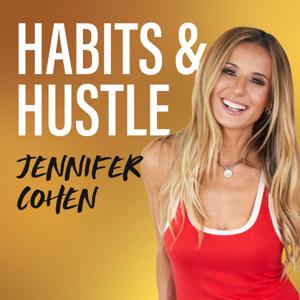


Based on Podcast App listening data
What if the biggest thing holding you back is a belief you do not even realize you have?
We spend so much time trying to change our habits, become more disciplined, improve our relationships, make more money, and fix the parts of ourselves we think are falling short. But underneath many of those behaviors are subconscious beliefs that have been forming for years. "I'm not enough." "It's all up to me." "I'm not lovable." "I have to prove myself." Those beliefs can quietly drive perfectionism, overthinking, people pleasing, control, achievement, and even the way we choose relationships.
This matters because changing your behavior without understanding what is driving it can keep you stuck in the same patterns. Past disappointment can become evidence for future fear. High achievement can become an attempt to prove your worth. Independence can become protection from vulnerability. Even self-improvement can become another way to delay taking action. Becoming aware of the belief underneath the behavior gives you the opportunity to stop automatically reacting to your past and start making different choices.
Peter Crone is a mindset coach, speaker, and writer known as the "Mind Architect." His work focuses on helping people identify and break free from subconscious beliefs, emotional patterns, and mental limitations that shape the way they experience their health, relationships, careers, and lives. He has worked with professional athletes, business leaders, high performers, and people around the world to help them create greater freedom by changing the way they relate to themselves and their circumstances.
What's Discussed:
(15:03) How intelligent people can overthink themselves into analysis paralysis and become better at convincing themselves why something will not work.
(16:02) Why accumulated disappointment can become evidence for future fear and make people increasingly hesitant to take risks.
(19:51) How your triggers can reveal the subconscious beliefs and emotional patterns that are still controlling your reactions.
(30:57) How the belief "I'm not enough" can fuel achievement, perfectionism, relentless work, and the need to prove yourself.
(32:20) Why people spend so much energy resisting where they are and chasing the person they believe they should already be.
(36:40) How perfectionism, control, and noticing everything around you can sometimes be forms of vigilance rooted in fear.
(43:54) Why the love you experienced in a relationship still belongs to you, even after the relationship ends.
(54:44) How constantly trying to perfect yourself can become another form of procrastination that keeps you from taking action.
(57:43) Why dating and intimacy become harder when independence, self-protection, and a polished facade keep people disconnected from themselves.
(01:03:19) Why changing behavior alone can be difficult to sustain when deeper subconscious beliefs continue driving your thoughts, emotions, and choices.
Thank You to Our Sponsors!
Magic Mind: Head over to magicmind.com/jen and use code JEN at checkout.
Momentous: Ready to try supplements that actually do what they claim? Head to livemomentous.com and use code JEN for 35% off your first subscription.
Kion: Visit getkion.com/habits for 20% off.
Tru Niagen®: For supplements that are rigorously tested, third-party verified, and actually deliver what's on the label, head to truniagen.com
AirDoctor: Head to AirDoctorPro.com and use promo code HUSTLE to get $250 off select AirDoctor air purifiers, including the 3500, 4000, and 5500 models. Plus, you'll receive a free 3 year warranty, an $84 value, and AirDoctor's 30-day money back guarantee.
Find more from Jen Cohen:
Website: jennifercohen.com
Instagram: @therealjencohen
Books: jennifercohen.com/books
Speaking: jennifercohen.com/speaking-engagements
Find more from Peter Crone
Website: petercrone.com
Instagram: @petercrone
Facebook: Peter Crone - The Mind Architect
YouTube: @PeterCroneOfficial
LinkedIn: Peter Crone
You can spend a lot of money trying to optimize your health and still miss the things that make the biggest difference. The wellness industry keeps giving us new treatments, tests, and biohacks to chase, but expensive does not automatically mean effective.
We dive deeper into this in Habits & Hustle with Dr. Jonathan Schoeff. We talk about which longevity trends are actually worth your attention, where people may be wasting their money, and why strength, sleep, and metabolic health still do more heavy lifting than many of the latest wellness trends.
Jonathan is a practicing surgeon and longevity physician who works with high performers on health optimization. He looks at wellness through both a clinical and performance lens, which makes him especially good at cutting through claims that sound impressive but do not have much evidence behind them. His approach is simple: look at the data, understand the outcome you are trying to improve, and stop confusing good marketing with good medicine.
What's Discussed:
(13:11) Why the most expensive biohacks may be the least effective.
(17:07) The basic health habits that still outperform most expensive longevity treatments.
(25:00) Why muscle may be one of the most important markers of healthy aging.
(28:03) How deadlifts can become risky when form, load, and spine health are ignored.
(33:20) Why lifting lighter weights for more reps may not build the strength women need.
(39:24) Why training three days a week may produce better results than constantly working out.
(48:54) Which popular longevity tools are actually worth the money and which are overhyped.
(53:32) Why GLP-1s may have benefits that go far beyond weight loss.
(1:02:11) Why high performers often invest in everything except a real health strategy.
Thank You to Our Sponsors!
Magic Mind: Head over to magicmind.com/jen and use code JEN at checkout.
Momentous: Ready to try supplements that actually do what they claim? Head to livemomentous.com and use code JEN for 35% off your first subscription.
Tru Niagen®: For supplements that are rigorously tested, third-party verified, and actually deliver what's on the label, head to truniagen.com
Kion: Visit getkion.com/habits for 20% off
AirDoctor: Head to AirDoctorPro.com and use promo code HUSTLE to get $250 off select AirDoctor air purifiers, including the 3500, 4000, and 5500 models. Plus, you'll receive a free 3 year warranty, an $84 value, and AirDoctor's 30-day money back guarantee.
Find more from Jen Cohen:
Website: jennifercohen.com
Instagram: @therealjencohen
Books: jennifercohen.com/books
Speaking: jennifercohen.com/speaking-engagements
Find more from Dr. Jonathan Schoeff
Website: longevitylabwellness.com
Instagram: @jonschoeff
Facebook: Dr. Jon Schoeff
YouTube: @drjonschoeff
You can make a lot of money and still have no idea if you are actually financially secure. A bigger paycheck does not automatically mean you are building wealth, making smart decisions, or setting yourself up for the future.
We dive deeper into this in Habits & Hustle with Jean Chatzky. We talk about the habits that actually build wealth, how much you should be saving, and why getting control of your money often comes down to a few simple decisions you repeat consistently.
Jean Chatzky is a financial journalist, the founder of HerMoney, and spent 25 years as the financial editor of the Today Show. She has also made plenty of money mistakes herself, which is part of what makes her advice so practical. Her approach is about taking something that feels intimidating and breaking it down into choices people can actually understand and use.
What's Discussed:
(3:18) Why personal finance is usually much simpler than people make it seem.
(8:25) Why automating your money can prevent some of your biggest financial mistakes.
(18:05) The one thing everyone should do this month to improve their finances.
(19:09) The money habit that separates people building wealth from people who simply earn a good income.
(26:24) Why your 50s or even 60s may not be too late to seriously improve your retirement.
(31:19) Why making kids spend their own money may be one of the best ways to teach them its value.
(40:49) Why everyone in a relationship should have money of their own.
(45:55) How everyday purchases like coffee can quietly add up to thousands of dollars a year.
(1:03:48) The simplest way to start investing in 2026 if you have absolutely no idea where to begin.
(1:08:58) Why the boring basics still beat most of the flashy financial advice people chase.
Thank You to Our Sponsors!
Magic Mind: Head over to magicmind.com/jen and use code JEN at checkout.
Momentous: Ready to try supplements that actually do what they claim? Head to livemomentous.com and use code JEN for 35% off your first subscription.
Tru Niagen®: For supplements that are rigorously tested, third-party verified, and actually deliver what's on the label, head to truniagen.com
Kion: Visit getkion.com/habits for 20% off
AirDoctor: Head to AirDoctorPro.com and use promo code HUSTLE to get $250 off select AirDoctor air purifiers, including the 3500, 4000, and 5500 models. Plus, you'll receive a free 3 year warranty, an $84 value, and AirDoctor's 30-day money back guarantee.
Find more from Jen Cohen:
Website: jennifercohen.com
Instagram: @therealjencohen
Books: jennifercohen.com/books
Speaking: jennifercohen.com/speaking-engagements
Find more from Jean Chatzky & HerMoney:
Website: hermoney.com
Instagram: @jeanchatzky
Facebook: Jean Chatzky
LinkedIn: Jean Chatzky
YouTube: HerMoney
Book: The Forever Paycheck
What happens when AI gets so good that it starts competing with real human connection? We're already seeing people form relationships with chatbots, turn to AI when they're lonely, and create digital companions that can respond exactly how they want. The bigger question is what happens when technology becomes easier than dealing with the messiness of actual people.
We dive deeper into this in today's episode of Habits & Hustle. I sit down with Hamet Watt to talk about how quickly AI is evolving, why everyone needs to learn how to use it, and the opportunities and risks that come with technology becoming more powerful, personalized, and integrated into our everyday lives.
We also get into AI companions, the loneliness loop, whether real relationships will eventually have to compete with programmable ones, and the very real possibility that AI changes human behavior long before we ever get anywhere close to the sci-fi version everyone is afraid of.
What's Discussed:
(07:11) What's changing so quickly in AI right now.
(09:41) How AI can become smarter than the humans who built it.
(13:25) What happened when AI was told it would be shut down.
(15:21) How ChatGPT, Claude, and other AI platforms compare.
(19:21) Why learning how to use AI is becoming unavoidable.
(20:35) How AI could change dating, relationships, and human connection.
(24:18) Why people are becoming emotionally attached to AI partners.
(26:22) How loneliness and AI companions can create a dangerous loop.
Thank You to Our Sponsors! Magic Mind: Head over to magicmind.com/jen and use code JEN at checkout.
Momentous: Ready to try supplements that actually do what they claim? Head to livemomentous.com and use code JEN for 35% off your first subscription.
Kion: Visit getkion.com/habits for 20% off.
Tru Niagen®: For supplements that are rigorously tested, third-party verified, and actually deliver what's on the label, head to truniagen.com
AirDoctor: Head to AirDoctorPro.com and use promo code HUSTLE to get $250 off select AirDoctor air purifiers, including the 3500, 4000, and 5500 models. Plus, you'll receive a free 3 year warranty, an $84 value, and AirDoctor's 30-day money back guarantee.
Find more from Jen Cohen:
Website: jennifercohen.com
Instagram: @therealjencohen
Books: jennifercohen.com/books
Speaking: jennifercohen.com/speaking-engagements
Find more from Hamet Watt:
LinkedIn: Hamet Watt
What if the biggest mistake you are making with your skin is following whatever treatment happens to be trending right now? Between lasers, injectables, devices, fillers, and endless skincare advice online, it is getting harder to tell what your skin actually needs and what could be a waste of money.
We dive deeper into this in Habits & Hustle with Melissa Haloossim. We also chat about which anti-aging treatments are overhyped, why the person performing your treatment matters so much, and how filters and social media are changing the way people see their own faces.
Melissa Haloossim is a nurse practitioner, founder of Skin Thesis, and has spent more than 20 years working in aesthetic medicine. Her approach is highly individualized, with a focus on choosing treatments based on the person, their skin, and the result they are actually trying to achieve.
What's Discussed:
(11:33) Why some skin-tightening treatments can destroy facial fat and make you look older.
(15:05) The difference between lasers, radiofrequency, and ultrasound.
(21:23) Why doing too much to your face can actually age you faster.
(39:21) Why chasing trendy treatments is one of the biggest skincare mistakes after 40.
(45:11) What actually ages your face the most.
(57:46) What to prioritize when you are on a skincare budget.
(1:05:47) Why retinol still matters for anti-aging.
(1:06:41) Why filler does not actually lift your face.
(1:09:44) Why Melissa calls XERF one of the most overrated treatments right now.
(1:26:53) How filters are changing the way people see their own faces.
Thank You to Our Sponsors!
Magic Mind: Head over to magicmind.com/jen and use code JEN at checkout.
Momentous: Ready to try supplements that actually do what they claim? Head to livemomentous.com and use code JEN for 35% off your first subscription.
Therasage: Visit therasage.com and use code JEN to get 15% off your order. Your skin
Prolon: Prolon is offering listeners 30% off sitewide plus a $40 bonus gift when you subscribe to their 5-Day Program! Just visit prolonlife.com/JENNIFERCOHEN and use code JENNIFERCOHEN to claim your discount and your bonus gift.
Tru Niagen®: For supplements that are rigorously tested, third-party verified, and actually deliver what's on the label, head to truniagen.com
Kion: Visit getkion.com/habits for 20% off
AirDoctor: Head to AirDoctorPro.com and use promo code HUSTLE to get $250 off select AirDoctor air purifiers, including the 3500, 4000, and 5500 models. Plus, you'll receive a free 3 year warranty, an $84 value, and AirDoctor's 30-day money back guarantee.
Find more from Jen Cohen:
Website: jennifercohen.com
Instagram: @therealjencohen
Books: jennifercohen.com/books
Speaking: jennifercohen.com/speaking-engagements
Find more from Melissa Haloossim & Skin Thesis:
Website: skinthesisinc.com
Instagram: @melissah_np
Facebook: Skin Thesis
LinkedIn: Melissa Haloossim
What if you are expecting too much from yourself in one week and far too little from what you could accomplish in six months? Real change often happens through small decisions repeated long enough to create momentum, even when progress feels slow.
We dive deeper into this in today's solo episode of Habits & Hustle. I talk about why the boring middle is where so many people give up, how your daily habits shape where you end up, and actionable ways to start making choices now that can put you in a completely different place six months from today.
I also get into personal responsibility, why feeling stuck can become a mindset, and how taking more ownership over your health, career, relationships, or confidence can change the trajectory of your life.
What's Discussed:
(00:00) How much your life can change in six months.
(01:31) Why we underestimate what six months can do.
(01:58) How to push through the boring middle.
(02:46) Why daily habits shape your results.
(04:32) How feeling stuck can limit your agency.
(05:29) Why taking responsibility changes everything.
(06:55) How to choose one area to improve.
(08:02) Why the next six months matter.
Thank You to Our Sponsors! Magic Mind: Head over to magicmind.com/jen and use code JEN at checkout.
Momentous: Ready to try supplements that actually do what they claim? Head to livemomentous.com and use code JEN for 35% off your first subscription.
Therasage: Visit therasage.com and use code JEN to get 15% off your order. Your skin
Prolon: Prolon is offering listeners 30% off sitewide plus a $40 bonus gift when you subscribe to their 5-Day Program! Just visit prolonlife.com/JENNIFERCOHEN and use code JENNIFERCOHEN to claim your discount and your bonus gift.
Kion: Visit getkion.com/habits for 20% off.
Tru Niagen®: For supplements that are rigorously tested, third-party verified, and actually deliver what's on the label, head to truniagen.com
Find more from Jen Cohen:
Website: jennifercohen.com
Instagram: @therealjencohen
Books: jennifercohen.com/books
Speaking: jennifercohen.com/speaking-engagements
A lot of parenting mistakes start with something we rarely look at: our own unhealed fears, insecurities, and expectations. When those patterns go unchecked, kids can end up carrying pressure that was never really theirs.
We dive deeper into this in Habits & Hustle with Dr. Shefali. We also chat about raising confident and independent kids, giving sons and daughters room to use their voice, and how social media is shaping their identity and self-worth.
Dr. Shefali is a clinical psychologist, New York Times bestselling author, and founder of the Conscious Parenting movement. She trained at Columbia University and is the author of multiple books on conscious parenting.
Check out Dr. Shefali's latest books "Raising Conscious Daughters" and "Raising Conscious Sons" at www.drshefali.com/books
What's Discussed:
(07:49) How social media algorithms can exploit the different vulnerabilities of teenage girls and boys, from girls seeking approval and belonging to boys being exposed to pornography and manosphere content.
(15:15) Why Dr. Shefali calls the way girls build their identity through likes, reactions, comparison, and digital feedback the "perception prison," and how parents can help reduce overstimulation.
(20:58) Why daughters need opportunities to disagree, push back, and practice boundaries with their fathers so they learn to use their voice outside the home.
(24:12) Why boys may connect through movement, challenge, problem-solving, and physical activity, and how constantly pushing them to verbalize their feelings can create more distance.
(27:55) Why a son wanting less physical affection as he gets older does not necessarily mean he loves his mother less, and how giving him space can support his growing independence.
(29:24) How giving boys responsibility, leadership opportunities, physical challenges, and ways to contribute can help build competence and a stronger sense of worth.
(38:45) How parents can project their own unhealed insecurities onto their children through achievement, activities, schools, status, and the pressure to become a reflection of the parent.
(42:10) Why trying to avoid every parenting mistake is unrealistic, and how acknowledging mistakes, validating your child's experience, and letting go of perfection can strengthen the relationship.
(46:14) Why one conscious parent can still make a meaningful difference when co-parents disagree, and how children may release their stress with the parent they feel safest around.
(48:57) Why choosing who you have children with deserves enormous consideration, because co-parenting can connect you to that person for the rest of your life.
Thank You to Our Sponsors!
Magic Mind: Head over to magicmind.com/jen and use code JEN at checkout.
Momentous: Ready to try supplements that actually do what they claim? Head to livemomentous.com and use code JEN for 35% off your first subscription.
Therasage: Visit therasage.com and use code JEN to get 15% off your order. Your skin
Prolon: Prolon is offering listeners 30% off sitewide plus a $40 bonus gift when you subscribe to their 5-Day Program! Just visit prolonlife.com/JENNIFERCOHEN and use code JENNIFERCOHEN to claim your discount and your bonus gift.
Tru Niagen®: For supplements that are rigorously tested, third-party verified, and actually deliver what's on the label, head to truniagen.com
Kion: Visit getkion.com/habits for 20% off
AirDoctor: Head to AirDoctorPro.com and use promo code HUSTLE to get $250 off select AirDoctor air purifiers, including the 3500, 4000, and 5500 models. Plus, you'll receive a free 3 year warranty, an $84 value, and AirDoctor's 30-day money back guarantee.
Find more from Jen Cohen:
Website: jennifercohen.com
Instagram: @therealjencohen
Books: jennifercohen.com/books
Speaking: jennifercohen.com/speaking-engagements
Find more from Dr. Shefali:
Website: drshefali.com
Instagram: @docotrshefali
Facebook: Dr. Shefali
YouTube: Dr. Shefali
Books: Books - Dr. Shefali
What happens when we make life so comfortable for kids that they never learn how to handle discomfort on their own? Between overprotective parenting, smartphones, and fewer opportunities for real independence, kids are getting fewer chances to build confidence, coping skills, and resilience.
We dive deeper into this in Habits & Hustle with Dave Rubin. We also chat about how smartphones are changing childhood, why exercise builds confidence and mental toughness, and why discipline will take you further than motivation.
Dave Rubin is the host of The Rubin Report, which has generated more than one billion views and built an audience of millions. He is also the founder of Locals.com and a two-time New York Times bestselling author.
Listen to the full episode: How Parenting Mistakes Failed Gen Z & How to Fix It | Jennifer Cohen
What's Discussed:
(02:57) Why letting kids fail is essential for building resilience.
(05:01) How smartphones are replacing real-world experiences kids used to learn from.
(06:47) Why "bubble wrapping" kids can make it harder for them to adapt to the real world.
(23:44) How fitness teaches discipline, patience, consistency, and work ethic.
(25:31) Why getting physically stronger can build confidence and mental toughness.
(31:46) How social media and filters are changing our perception of normal beauty.
(34:23) Why changing a habit is so difficult once a behavior becomes your new normal.
(34:51) Why discipline will take you further than motivation.
(48:19) How smartphone addiction is affecting our ability to connect with other people.
(49:26) Why strong relationships and social connection matter for longevity.
Thank You to Our Sponsors! Magic Mind: Head over to magicmind.com/jen and use code JEN at checkout.
Momentous: Ready to try supplements that actually do what they claim? Head to livemomentous.com and use code JEN for 35% off your first subscription.
Therasage: Visit therasage.com and use code JEN to get 15% off your order. Your skin
Prolon: Prolon is offering listeners 30% off sitewide plus a $40 bonus gift when you subscribe to their 5-Day Program! Just visit prolonlife.com/JENNIFERCOHEN and use code JENNIFERCOHEN to claim your discount and your bonus gift.
Kion: Visit getkion.com/habits for 20% off.
Tru Niagen®: For supplements that are rigorously tested, third-party verified, and actually deliver what's on the label, head to truniagen.com
Find more from Jen Cohen:
Website: jennifercohen.com
Instagram: @therealjencohen
Books: jennifercohen.com/books
Speaking: jennifercohen.com/speaking-engagements
What if the thing keeping you stuck is not a lack of motivation, but the stories you keep telling yourself about why you cannot move?
We spend a lot of time thinking about what we want to change, who we want to become, and what would finally make us feel better. But intentions alone do not create change. The way you talk to yourself, the discomfort you avoid, the boundaries you do not practice, the labels you attach to yourself and other people, and the actions you take when nobody is motivating you, all shape what happens next. Kier Gaines argues that real growth starts when you become willing to confront the parts of yourself you would rather explain away.
Self-awareness gives you something practical to work with. You can learn to tolerate discomfort instead of immediately escaping it, practice saying no before the stakes are high, question whether "protecting your peace" has become avoidance, and stop waiting for the perfect mood or moment to start. You can also become more intentional about how social media, constant convenience, comparison, and endless options are influencing the way you think, connect, and make decisions.
Kier Gaines is a licensed therapist, keynote speaker, and popular content creator who has inspired millions of people to become more proactive about their mental health. His work has been recognized by Oprah and Viola Davis, and he has been invited to speak at the White House, NASA, Amazon Movie Studios, and more. He is also a contributor to Men's Health, host of the podcast (L)Earned The Hard Way, and author of It All Starts When You Do, out September 1, 2026.
What's Discussed:
(08:25) Why people can fall in love with the fantasy of a goal while avoiding the work required to achieve it, and why action is what turns an idea into evidence.
(27:13) Where AI can be useful for journaling and reflection, and what gets lost when it replaces the silence, emotional attunement, and human connection of therapy.
(31:48) How phones, algorithms, convenience, and the disappearance of "third spaces" may be contributing to loneliness and weakening face-to-face connection.
(37:41) Why "protecting your peace" can become well-dressed avoidance, and how avoiding every uncomfortable interaction can lower your tolerance for normal stress.
(40:10) How practicing small, low-stakes "no's" can make it easier to set boundaries when the consequences feel bigger.
(45:55) Why feeling overwhelmed does not automatically mean you are incapable, and how lack of support, financial pressure, and overloaded systems can push people past their limit.
(52:44) Why mental health language is being overused online, from calling every difficult person a narcissist to oversimplifying anxious and avoidant attachment.
(57:46) How having more options can create more dissatisfaction, especially in dating, and why endless swiping can make it harder to commit to what is in front of you.
(1:05:14) Why affirmations without awareness and action are just words, and how toxic positivity can become another way to avoid what actually needs attention.
(1:14:08) How depression can show up as irritation, isolation, or loss of joy instead of obvious sadness, and why high-functioning people can miss the signs in themselves.
Thank You to Our Sponsors!
Kion: Visit getkion.com/habits for 20% off
Magic Mind: Head over to magicmind.com/jen and use code JEN at checkout.
Momentous: Ready to try supplements that actually do what they claim? Head to livemomentous.com and use code JEN for 35% off your first subscription.
Therasage: Visit therasage.com and use code JEN to get 15% off your order. Your skin
Prolon: Prolon is offering listeners 30% off sitewide plus a $40 bonus gift when you subscribe to their 5-Day Program! Just visit prolonlife.com/JENNIFERCOHEN and use code JENNIFERCOHEN to claim your discount and your bonus gift.
Tru Niagen®: For supplements that are rigorously tested, third-party verified, and actually deliver what's on the label, head to truniagen.com
Find more from Jen Cohen:
Website: jennifercohen.comInstagram: @therealjencohen
Books: jennifercohen.com/books
Speaking: jennifercohen.com/speaking-engagements
Find more from Kier Gaines
Podcast: learnedthehardwaypod.com
Instagram: @kiergaines
Facebook: Kier Gaines
YouTube: @learnedthehardwaypod
LinkedIn: Kier Gaines
Book: It All Starts When You Do
Are we protecting our kids so much that we're making them less resilient?
As parents, the instinct to protect is strong. We don't want our kids to fail, struggle, feel rejected, sit on the bench, get bored, or deal with disappointment. But resilience is built through those exact experiences. When we constantly step in, fix the problem, remove the obstacle, or make sure everything feels fair, kids lose opportunities to develop competence, independence, and the confidence that comes from figuring things out for themselves.
Technology has made that even harder. Smartphones and iPads can fill every quiet moment, replace boredom, reduce face-to-face interaction, and give kids fewer chances to practice social skills, deal with rejection, or simply entertain themselves. Add overscheduling and constant parental involvement, and suddenly there are fewer opportunities for kids to fail, recover, solve problems, and learn how to function without someone managing every step.
Sports, chores, responsibilities, and real-world challenges give kids something they desperately need: evidence that they can handle difficult things. Losing teaches them how to recover. Being benched teaches patience and perspective. Working with difficult teammates teaches conflict resolution. Practicing something they are bad at teaches them that improvement comes from effort. Confidence grows when kids experience frustration and discover they can move through it.
In this episode of Habits & Hustle, I talk about why we need to stop removing every obstacle from our kids' lives, how smartphones are affecting independence and social development, why boredom and failure are essential, the value of sports and responsibility, and how parents can create a secure home base without solving every problem for their children.
Listen to the full episode: The Secret to Raising Mentally Strong Kids in a Fragile World with Jen Cohen | Mind Pump 2575
What's Discussed:
(01:24) Why mental resilience needs to be built in childhood.
(04:00) How removing every challenge can make kids less resilient.
(05:34) Why boredom is essential for creativity and independence.
(06:25) Why parents need to stop worrying about being liked by their kids.
(08:13) How letting kids struggle teaches them to tolerate frustration and failure.
(11:19) How smartphones changed childhood play, independence, and social development.
(20:25) Why fitness teaches kids discipline, accountability, and delayed gratification.
(26:15) Why sports and play help kids develop critical social skills.
(27:51) Why praising effort matters more than constantly telling kids they are amazing.
(30:24) How sports prepare kids for losing, teamwork, conflict, and real-world challenges.
(36:06) Why stepping back can help kids learn to solve problems on their own.
(45:00) Why kids should wait until 16 for full smartphone access.
Thank You to Our Sponsors! Magic Mind: Head over to magicmind.com/jen and use code JEN at checkout.
Momentous: Ready to try supplements that actually do what they claim? Head to livemomentous.com and use code JEN for 35% off your first subscription.
Therasage: Visit therasage.com and use code JEN to get 15% off your order. Your skin
Prolon: Prolon is offering listeners 30% off sitewide plus a $40 bonus gift when you subscribe to their 5-Day Program! Just visit prolonlife.com/JENNIFERCOHEN and use code JENNIFERCOHEN to claim your discount and your bonus gift.
Kion: Visit getkion.com/habits for 20% off.
Tru Niagen®: For supplements that are rigorously tested, third-party verified, and actually deliver what's on the label, head to truniagen.com
Find more from Jen Cohen:
Website: jennifercohen.com
Instagram: @therealjencohen
Books: jennifercohen.com/books
Speaking: jennifercohen.com/speaking-engagements
From the publisher's feed
Ranked by our users in the last 21 days

7,219 Listeners

1,069 Listeners

21,058 Listeners

13,969 Listeners

4,861 Listeners
9,160 Listeners
137 Listeners
1,094 Listeners

617 Listeners

1,647 Listeners

1,677 Listeners

19,151 Listeners

1,207 Listeners

2,633 Listeners
3,128 Listeners