
Sign up to save your podcasts
Or

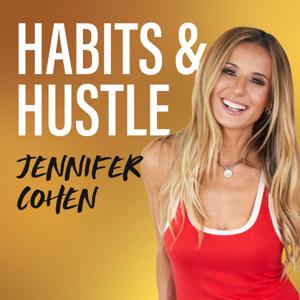
By Jen Cohen


4.5
779779 ratings


The podcast currently has 587 episodes available.
The most played episodes among Podcast App listeners.
Are your health habits helping you live better, or are they quietly making your life more complicated? We are surrounded by nutrition rules, supplement stacks, protein targets, fasting windows, wearables, weight-loss drugs, and viral claims about foods we have been eating for decades. A banana in your smoothie is suddenly a problem. Every snack needs added protein. Everyone thinks they need electrolytes. People lose weight quickly without thinking about the muscle they may be losing with it. And in the process of trying to become healthier, many people become afraid to eat, travel, miss a workout, or enjoy their lives. This matters because better health rarely comes from obsessing over every minor detail. It comes from building muscle, eating enough whole foods, understanding your own habits, and creating a routine you can return to after an imperfect week. Strength training can improve your metabolism, mobility, confidence, and discipline. Nutrition should support your life. Data should help you make decisions. And a healthy routine should give you more freedom, not turn you into a prisoner of your own wellness protocol. Dr. Joey Munoz is a nutrition expert, coach, and the founder of Stronger Standard. He has a PhD in nutrition and focuses on evidence-based fat loss, muscle building, sustainable habits, and helping people cut through nutrition misinformation. His work combines nutrition science, strength training, behavioral psychology, and practical coaching to help people improve their health without relying on extreme diets or constantly chasing the latest trend. What's Discussed: (02:47) Why viral nutrition claims about bananas and smoothies create unnecessary fear and confusion. (08:31) When healthy eating, perfect routines, and longevity protocols begin damaging your quality of life. (13:13) How rapid weight loss on GLP-1 medications can increase muscle loss without strength training and adequate nutrition. (22:22) Why intermittent fasting is overrated as a unique fat-loss or autophagy strategy. (28:07) The simple foundations of a healthy diet and why eliminating entire food groups is usually unnecessary. (34:08) Why protein has become overmarketed and how much you may actually need. (38:48) How to return to your routine after travel or overeating without punishment, restriction, or giving up. (50:13) Why the carnivore diet and fear of "plant toxins" ignore dose, context, and how the body adapts to stress. (53:40) Which popular supplements may be wasting your money, including greens powders, hydration products, BCAAs, and expensive forms of creatine. (01:05:09) How muscle supports blood sugar regulation, cardiovascular health, body composition, and long-term independence. (01:07:46) Why proper strength training can improve mobility when you prioritize control and range of motion over heavier weight. (01:11:16) How strength training builds discipline, confidence, consistency, and skills that transfer into every part of life. Thank You to Our Sponsors! Magic Mind: Head over to magicmind.com/jen and use code JEN at checkout. Momentous: Ready to try supplements that actually do what they claim? Head to livemomentous.com and use code JEN for 35% off your first subscription. Therasage: Visit therasage.com and use code JEN to get 15% off your order. Your skin Prolon: Prolon is offering listeners 30% off sitewide plus a $40 bonus gift when you subscribe to their 5-Day Program! Just visit prolonlife.com/JENNIFERCOHEN and use code JENNIFERCOHEN to claim your discount and your bonus gift. Kion: Visit getkion.com/habits for 20% off. Tru Niagen®: For supplements that are rigorously tested, third-party verified, and actually deliver what's on the label, head to truniagen.com Find more from Jen Cohen: Website: jennifercohen.com Instagram: @therealjencohen Books: jennifercohen.com/books Speaking: jennifercohen.com/speaking-engagements Find more from Dr. Joey Munoz Website: strongstandard.com Instagram: @dr.joeymunoz Facebook: Dr. Joey Munoz YouTube: @dr.joeymunoz LinkedIn: Joseph Munoz

What if the health of your brain decades from now is being shaped by what you are doing today? We tend to think about Alzheimer's and cognitive decline as problems that show up later in life, once memory starts slipping or confusion becomes noticeable. But many of the factors associated with brain decline can begin much earlier. Blood sugar, insulin resistance, sleep, inflammation, muscle mass, exercise, social connection, oral health, and even the medications you regularly take may all influence the environment your brain is aging in. This matters because brain health gives you more areas to act on than most people realize. You can pay attention to metabolic markers before they become major problems, build and preserve muscle, protect your sleep, stay socially connected, take care of your oral microbiome, and understand which emerging therapies actually have evidence behind them. The earlier you start thinking about your brain this way, the more opportunity you have to influence how well it functions later. Dr. David Perlmutter is a board-certified neurologist, six-time New York Times bestselling author, and internationally recognized expert in brain health, nutrition, and neurodegenerative disease. His latest book, Brain Defenders, explores microglia, the brain's immune cells, and how their function may influence conditions including Alzheimer's and Parkinson's. His work focuses on giving people practical ways to protect brain health through metabolism, lifestyle, and emerging neuroscience. What's Discussed: (05:51) What research suggests about slowing or even improving cognitive decline in people already diagnosed with Alzheimer's through intensive lifestyle intervention. (10:47) Why Alzheimer's should not be viewed as purely genetic and how lifestyle and metabolic health can influence risk even when genetic predispositions are present. (12:19) How loneliness and social isolation may affect brain health through stress, cortisol, oxytocin, inflammation, and changes in the brain's immune cells. (20:50) Why the biological conditions associated with cognitive decline may begin in your 40s and 50s, decades before memory problems become obvious. (30:34) How exercise supports the brain through BDNF, irisin, and other chemicals released during muscle activity, and why both cardio and strength training matter. (38:00) Why restorative sleep is an active period for memory consolidation and brain recovery, and how fragmented sleep can undermine brain health even when you spend eight hours in bed. (1:04:34) What the science currently says about NAD, NR, NMN, and IV NAD for mitochondrial function, biological aging, and cognitive health. (1:12:04) How periodontal disease, the oral microbiome, and frequent use of certain antibacterial mouthwashes may affect nitric oxide, metabolism, and long-term brain health. (1:23:05) What emerging research says about GLP-1 drugs for Parkinson's and Alzheimer's, and why using or microdosing them specifically for brain protection is still ahead of the evidence. (1:33:25) Why homocysteine and fasting insulin are two blood markers worth paying attention to when assessing metabolic and long-term brain health. Thank You to Our Sponsors! Magic Mind: Head over to magicmind.com/jen and use code JEN at checkout. Momentous: Ready to try supplements that actually do what they claim? Head to livemomentous.com and use code JEN for 35% off your first subscription. Therasage: Visit therasage.com and use code JEN to get 15% off your order. Your skin Prolon: Prolon is offering listeners 30% off sitewide plus a $40 bonus gift when you subscribe to their 5-Day Program! Just visit prolonlife.com/JENNIFERCOHEN and use code JENNIFERCOHEN to claim your discount and your bonus gift. Tru Niagen®: For supplements that are rigorously tested, third-party verified, and actually deliver what's on the label, head to truniagen.com Find more from Jen Cohen: Website: jennifercohen.com Instagram: @therealjencohen Books: jennifercohen.com/books Speaking: jennifercohen.com/speaking-engagements Find more from Dr. David Perlmutter: Website: drperlmutter.com Instagram: @davidperlmutter Facebook: David Perlmutter M.D. YouTube: @davidperlmutterMD LinkedIn: David Perlmutte, MD Book: Brain Defenders
What if the person you cannot get over was never actually your person? We tend to give enormous weight to chemistry and connection, especially when we find someone we like who seems to like us back. That feeling can be powerful enough to make us overlook a harder truth: connection alone does not create a relationship. Without commitment and compatibility, chemistry can keep you emotionally invested in someone who is never actually choosing you. Matthew Hussey breaks down the four levels of a relationship, from attraction to compatibility, and explains why so many people get stuck at the stage that feels the most exciting. He also explores why unfinished relationships can become so difficult to let go of. The future you imagined can start to feel more real than the relationship itself, keeping you attached to potential instead of what is actually happening. Matthew Hussey is a relationship coach, bestselling author, speaker, and host of the Love Life podcast. His work focuses on dating, heartbreak, confidence, communication, and helping people build healthier relationships by paying attention to how someone actually shows up, rather than relying on chemistry or potential alone. What's Discussed: (00:00) Why connection and chemistry can feel incredibly important without actually creating a relationship. (01:27) The four levels of a relationship: admiration, mutual attraction, commitment, and compatibility. (03:46) Why someone choosing not to be with you cannot be "your person." (05:07) How heartbreak can come from grieving the future you imagined rather than losing an actual soulmate. (07:58) Why unfinished relationships and "what could have been" can occupy so much mental space. (09:20) How romantic fantasy can become a form of avoidance that keeps you from participating in your real life. (12:37) Why real relationships are built through commitment, difficulty, and repeatedly choosing one another. (13:47) How to intentionally move on by removing reminders, limiting updates, and stopping the person from remaining part of your everyday life. Thank You to Our Sponsors! Magic Mind: Head over to magicmind.com/jen and use code JEN at checkout. Momentous: Ready to try supplements that actually do what they claim? Head to livemomentous.com and use code JEN for 35% off your first subscription. Therasage: Visit therasage.com and use code JEN to get 15% off your order. Your skin Prolon: Prolon is offering listeners 30% off sitewide plus a $40 bonus gift when you subscribe to their 5-Day Program! Just visit prolonlife.com/JENNIFERCOHEN and use code JENNIFERCOHEN to claim your discount and your bonus gift. Kion: Visit getkion.com/habits for 20% off. Tru Niagen®: For supplements that are rigorously tested, third-party verified, and actually deliver what's on the label, head to truniagen.com Find more from Jen Cohen: Website: jennifercohen.com Instagram: @therealjencohen Books: jennifercohen.com/books Speaking: jennifercohen.com/speaking-engagements Find more from Matthew Hussey Website: matthewhussey.com Instagram: @thematthewhussey Books: Books by Matthew Hussey Facebook: Matthew Hussey YouTube: @thematthewhussey LinkedIn: Matthew Hussey
What if all this optimizing is actually making us less happy? Sleep scores, step counts, glucose monitors, supplements, peptides, wearables, and endless wellness protocols have turned health into something we constantly track, measure, and try to perfect. But when every meal, workout, night of sleep, and social plan becomes another data point, the pursuit of better health can start creating more stress than clarity. You may look disciplined and optimized on the outside while feeling anxious, restricted, and disconnected from the life you are trying to improve. Technology has also changed the way we trust our own bodies. We wake up feeling fine, check a low sleep score, and suddenly decide we are exhausted. We skip dinners, birthday cake, travel, drinks, and time with friends because we are afraid of disrupting a routine or hurting a metric. The tools designed to support our health can begin controlling our choices, until we are protecting the routine more than we are enjoying the results. The real question is not always "How can I optimize this?" Sometimes it is "Is this actually improving my life?" Health should give you more energy, freedom, connection, and joy. It should not make you afraid of food, obsessed with numbers, or unwilling to be spontaneous. Every protocol, product, and intervention comes with a tradeoff, and more optimization does not automatically mean better physical or mental health. In this episode of Habits and Hustle, I talk about when healthy habits cross the line into obsession, why sleep trackers and wellness scores may create more anxiety than clarity, how people are sacrificing dinners, birthdays, relationships, and spontaneity to protect their routines, and why looking optimized on the outside does not always mean you are healthy on the inside. What's Discussed: (01:25) Whether constant optimization is making us less happy. (03:11) When tracking and hacking every part of life becomes an obsession. (04:41) Where healthy optimization ends and extreme wellness behavior begins. (05:48) Why checking your sleep score can create more stress than clarity. (06:46) Why looking thin or optimized does not necessarily mean you are healthy. (07:45) How the wellness industry profits by selling fear and endless solutions. (08:17) Why people are optimizing their lives without actually enjoying them. (09:22) How protecting your routine can cost you dinners, birthdays, and relationships. (09:50) Why sleep tracker data can change how tired you believe you feel. (10:33) How technology and constant tracking have weakened human connection. (11:35) Why a phone call can be more efficient than endless texts and meetings. (16:37) Why chasing money, fitness, beauty, and longevity can leave you with fewer memories. Thank You to Our Sponsors! Magic Mind: Head over to magicmind.com/jen and use code JEN at checkout. Momentous: Ready to try supplements that actually do what they claim? Head to livemomentous.com and use code JEN for 35% off your first subscription. Therasage: Visit therasage.com and use code JEN to get 15% off your order. Your skin Prolon: Prolon is offering listeners 30% off sitewide plus a $40 bonus gift when you subscribe to their 5-Day Program! Just visit prolonlife.com/JENNIFERCOHEN and use code JENNIFERCOHEN to claim your discount and your bonus gift. Kion: Visit getkion.com/habits for 20% off. Tru Niagen®: For supplements that are rigorously tested, third-party verified, and actually deliver what's on the label, head to truniagen.com Find more from Jen Cohen: Website: jennifercohen.com Instagram: @therealjencohen Books: jennifercohen.com/books Speaking: jennifercohen.com/speaking-engagements
What if the thing keeping you stuck is not a lack of motivation, but the stories you keep telling yourself about why you cannot move? We spend a lot of time thinking about what we want to change, who we want to become, and what would finally make us feel better. But intentions alone do not create change. The way you talk to yourself, the discomfort you avoid, the boundaries you do not practice, the labels you attach to yourself and other people, and the actions you take when nobody is motivating you, all shape what happens next. Kier Gaines argues that real growth starts when you become willing to confront the parts of yourself you would rather explain away. Self-awareness gives you something practical to work with. You can learn to tolerate discomfort instead of immediately escaping it, practice saying no before the stakes are high, question whether "protecting your peace" has become avoidance, and stop waiting for the perfect mood or moment to start. You can also become more intentional about how social media, constant convenience, comparison, and endless options are influencing the way you think, connect, and make decisions. Kier Gaines is a licensed therapist, keynote speaker, and popular content creator who has inspired millions of people to become more proactive about their mental health. His work has been recognized by Oprah and Viola Davis, and he has been invited to speak at the White House, NASA, Amazon Movie Studios, and more. He is also a contributor to Men's Health, host of the podcast (L)Earned The Hard Way, and author of It All Starts When You Do, out September 1, 2026. What's Discussed: (08:25) Why people can fall in love with the fantasy of a goal while avoiding the work required to achieve it, and why action is what turns an idea into evidence. (27:13) Where AI can be useful for journaling and reflection, and what gets lost when it replaces the silence, emotional attunement, and human connection of therapy. (31:48) How phones, algorithms, convenience, and the disappearance of "third spaces" may be contributing to loneliness and weakening face-to-face connection. (37:41) Why "protecting your peace" can become well-dressed avoidance, and how avoiding every uncomfortable interaction can lower your tolerance for normal stress. (40:10) How practicing small, low-stakes "no's" can make it easier to set boundaries when the consequences feel bigger. (45:55) Why feeling overwhelmed does not automatically mean you are incapable, and how lack of support, financial pressure, and overloaded systems can push people past their limit. (52:44) Why mental health language is being overused online, from calling every difficult person a narcissist to oversimplifying anxious and avoidant attachment. (57:46) How having more options can create more dissatisfaction, especially in dating, and why endless swiping can make it harder to commit to what is in front of you. (1:05:14) Why affirmations without awareness and action are just words, and how toxic positivity can become another way to avoid what actually needs attention. (1:14:08) How depression can show up as irritation, isolation, or loss of joy instead of obvious sadness, and why high-functioning people can miss the signs in themselves. Thank You to Our Sponsors! Kion: Visit getkion.com/habits for 20% off Magic Mind: Head over to magicmind.com/jen and use code JEN at checkout. Momentous: Ready to try supplements that actually do what they claim? Head to livemomentous.com and use code JEN for 35% off your first subscription. Therasage: Visit therasage.com and use code JEN to get 15% off your order. Your skin Prolon: Prolon is offering listeners 30% off sitewide plus a $40 bonus gift when you subscribe to their 5-Day Program! Just visit prolonlife.com/JENNIFERCOHEN and use code JENNIFERCOHEN to claim your discount and your bonus gift. Tru Niagen®: For supplements that are rigorously tested, third-party verified, and actually deliver what's on the label, head to truniagen.com Find more from Jen Cohen: Website: jennifercohen.comInstagram: @therealjencohen Books: jennifercohen.com/books Speaking: jennifercohen.com/speaking-engagements Find more from Kier Gaines Podcast: learnedthehardwaypod.com Instagram: @kiergaines Facebook: Kier Gaines YouTube: @learnedthehardwaypod LinkedIn: Kier Gaines Book: It All Starts When You Do
The podcast currently has 587 episodes available.

7,238 Listeners
1,091 Listeners

21,088 Listeners

13,981 Listeners

4,874 Listeners
9,186 Listeners
133 Listeners
1,097 Listeners

612 Listeners

1,661 Listeners
1,694 Listeners

19,137 Listeners

1,221 Listeners
2,646 Listeners
3,165 Listeners