
Sign up to save your podcasts
Or

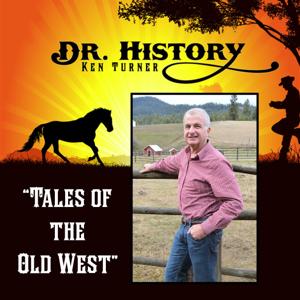


Based on Podcast App listening data
Sometimes it was luck, others a knowledge of geology and some it was buying the right stock. Eilley Orum, the Queen of the Washoe made millions but died poor. Four Irishmen became the Kings of the Washoe, earning $138 million form two mines and millions more investing in the right stock. All four died wealthy leaving millions to family.
Learn more about your ad choices. Visit podcastchoices.com/adchoices
"High grading" was the practice of workers stealing a few pounds of high-grade ore to sell to crooked assayers. Professional gamblers rushed to each new strike to relieve the workers of the hard-earned money. Women were scarce on the mining frontier, but when they showed up, they were treated with extreme respect.
Learn more about your ad choices. Visit podcastchoices.com/adchoices
There was always a way to cheat potential buyers of a non-productive mine. From dishonest assayers, to salting a mine with gold or silver from another mine, to selling worthless stock. Some owners assessed the stockholders on played out mines that never produced.
Learn more about your ad choices. Visit podcastchoices.com/adchoices
With more steamers on the rivers, it was the perfect place for professional gamblers. Unwary passengers with rolls of money were the perfect victims for the crooked gamblers. Cheaters were sometimes caught and kicked off by the captain. James Bowie caught a cheater, and with the use of the knife he was famous for, taught the crooks a lesson.
Learn more about your ad choices. Visit podcastchoices.com/adchoices
The games always involved gambling. How many arrows could be in the air at one time. Throwing a pole through a moving hoop. "Double ball" was played by the women as well as foot races. Husbands and wives could wager all their spouses belongings, sometimes losing it all, which could cause some serious discussions.
Learn more about your ad choices. Visit podcastchoices.com/adchoices
Native Americans would gamble for religious purposes as well for entertainment. They could lose all their worldly goods with a roll of the dice, the guess of who holds a bean or a game called “ball play”, similar to lacrosse. Gambling between tribes has been going on for centuries before the white man showed up.
Learn more about your ad choices. Visit podcastchoices.com/adchoices
Molly Brown visits us from beyond the grave for a person-to-person interview. The Lady from Leadville, married Johnny Brown, became amazingly wealthy and traveled the world. She tells us of her experience on the Titanic. She always was there to help those in need.
Learn more about your ad choices. Visit podcastchoices.com/adchoices
Almost everyone gambled in the old west, from kids to the old folks. Fortunes were won or lost with the toss of the dice or turn of a card. Gamblers could be found in large or small towns, mining camps, rail workers camps, anyplace where a few men wanted some excitement.
Learn more about your ad choices. Visit podcastchoices.com/adchoices
The railroads needed settlers to fill the land. They spent a lot of money promoting the land, even sending people to Europe to entice them to come to America. Towns needed a railroad spur to ensure they town would grow, some did, others just disappeared.
Learn more about your ad choices. Visit podcastchoices.com/adchoices
The Southern Pacific encouraged settlers to farm and improve on their land grants with the understanding they would be able to buy it for from $2.50 to $5 per acre. When the railroad raised that price to $25 and $35 an acre, the farmers revolted. They were being evicted from the land they had worked for years. In the end the railroad won.
Learn more about your ad choices. Visit podcastchoices.com/adchoices
From the publisher's feed
Ranked by our users in the last 21 days
1,678 Listeners

1,566 Listeners
2,770 Listeners

857 Listeners
132 Listeners
3,998 Listeners
6,175 Listeners

19,155 Listeners
3,651 Listeners

2,927 Listeners
775 Listeners
24,780 Listeners
5,645 Listeners
928 Listeners
197 Listeners