Sign up to save your podcasts
Or


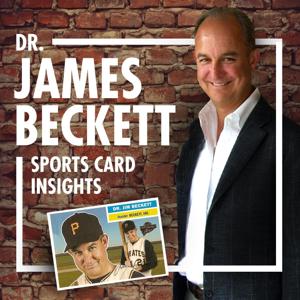
By Dr. James Beckett
4.2
114114 ratings
The podcast currently has 1,737 episodes available.
The most played episodes among Podcast App listeners.

Dr. Beckett discusses “The LCS Spectrum,” arguing that local card shops can succeed in many different ways, from old-school vintage-heavy stores to modern, high-end shops focused on new product, breaking, events, and social media. He proposes an idea for a directory or app that profiles shops with verified answers so travelers and customers know what a store offers, and so manufacturers like Fanatics, Panini, Upper Deck, and others could use consistent criteria for direct accounts and allocations. Using his former Dallas shop First Base as an example, he outlines categories for evaluating an LCS, including business sustainability, market/location, product mix, physical presentation, repeat business, creating collectors, people development, hobby citizenship, reach beyond local geography, and a distinctive “claim to fame.” 00:23 The LCS Spectrum Idea 02:10 Old School vs Modern Shops 03:30 Why Categorize Shops 04:10 Dealers and Hobby Economics 05:52 1 Real Business Basics 06:48 2 Location and Market 07:46 3 Product Mix Inventory 09:08 4 Store Presentation 09:54 5 Repeat Business 10:11 6 Creating Collectors 11:40 7 People Development 12:30 8 Hobby Citizenship 12:55 9 Reach and Celebrity 13:50 10 Claim to Fame 14:33 Modern Requirements and Allocation

Dr. Beckett welcomes longtime friend and former colleague B.A. Murry for a wide-ranging conversation covering their decades in the sports card hobby. They discuss Murry’s distinction as one of the “three amigos” who have set up at every National, Beckett’s attendance at every National, and memories of the earliest shows in Los Angeles and the original promoters. Murry recounts early mail-order buying from Sam Rosen/Card Collectors Company, inexpensive complete sets like 1948 Bowman and 1951 Topps Redbacks, ordering 1957 Topps as issued, and an early regret of giving away 1954 cards. They reflect on the shift from set-building and want lists to modern high-dollar “lottery” ripping, debate what counts as vintage, and share 1970s–80s hobby stories including St. Louis gatherings, auctions, and using the first annual guide. 00:41 National Show Regulars 01:12 Origins of the National 02:30 Mail Order Hobby Beginnings 05:41 Early Selling and Regrets 07:25 OG Perspective on Today 08:43 Want Lists and Set Building 09:32 Adult Hobby Takes Off 12:08 Collector Mindset and Roots 14:37 Buying Trips and Vintage Lines 17:52 Late Night Auctions Stories

Dr. Beckett and Hobby Hotline co-hosts Rich Klein and John Newman enjoy an unscripted chat-driven discussion. They examine market “pumping,” focusing on rising Star Wars card prices ahead of the franchise’s 50th anniversary, and how first appearances and recognizable stars can drive a pecking order in value. The panel compares this to pricing dynamics like NFL quarterback contracts and debates voice-actor autographs. They discuss T206 set collecting, Wagner rarity, past sale prices, and why multiple Wagners hitting auction blocks can signal equilibrium or a potential market peak, referencing the 1980 surge in ’52 Topps Mantles. They also consider whether a Yordan Álvarez Triple Crown would move the hobby, and how modern baseball trends depress batting-average value. 00:46 Hobby Hype and Pumping 01:43 Star Wars Anniversary Buzz 03:53 First Appearances and Autographs 04:41 T206 Wagner Market Talk 05:54 Why More Wagners Appear 10:35 Yordan Alvarez Triple Crown 12:49 Modern Hitting and Moneyball 16:04 Pitching Changes and Metrics

Dr. Beckett and Rich Klein discuss the need for a better way to connect employers and candidates in the sports card industry, weighing an Indeed-style job aggregator against the hobby’s historically successful word-of-mouth, relationship-based hiring. They reference openings like Beckett cataloging roles, internal postings at COMC, and CGC hiring graders and verification specialists with bonuses and benefits, while noting potential conflicts of interest such as employee submission programs at grading companies. They argue that strong culture, cross-training, and trusted references helped Beckett hire and promote passionate entry-level talent, but today growth in the hobby requires far more employees. They also note challenges recruiting when entrepreneurial collectors can earn more independently, and why benefits and steady pay matter as people age. 00:35 Need a Hobby Job Board 02:42 Hiring Entry Level Talent 04:13 Culture and Internal Growth 05:02 Aggregators and LinkedIn Limits 06:52 AI Pitfalls and Networking 08:42 Trustworthy Store Staffing 10:28 Big Company Hiring and Cross Training 11:10 Grading Jobs and Conflicts 12:27 Fanatics Warehouse Security 13:43 High Potential Hobby Hires 14:21 10X Hobby Needs Workers 14:44 Why Young Talent Won't Apply 15:51 Paychecks and Benefits Matter

Dr. Beckett records an episode after learning that pitcher Tommy John has passed away, honoring John’s unusual and inspiring career and arguing he deserves the Hall of Fame for his on-field accomplishments, not just the surgery that bears his name. Beckett cites John’s 26 seasons, 288 wins, 3.34 ERA, pitching effectively until age 46, four All-Star selections, and two second-place Cy Young finishes, comparing his candidacy to contemporaries Fergie Jenkins and Jim Kaat. He recounts John’s 1974 elbow ligament tear and Dr. Frank Jobe’s pioneering operation, noting John missed a season, then returned to pitch 14 more years and win more games after surgery than before, emphasizing the grueling rehab and the hope it gave later athletes. Beckett also discusses limited hobby impact despite John’s recognizability and rookie card details. 01:41 Hall of Fame Case 03:03 Tommy John Surgery Origins 03:58 Rehab And Comeback 06:12 Pitching Style And Value 07:14 Collector Market Impact 09:34 Legacy Of Hope
The podcast currently has 1,737 episodes available.

98 Listeners

373 Listeners

23 Listeners

173 Listeners

113 Listeners

107 Listeners

1,042 Listeners

53 Listeners

46 Listeners

35 Listeners

33 Listeners

25 Listeners

15 Listeners

8 Listeners

15 Listeners