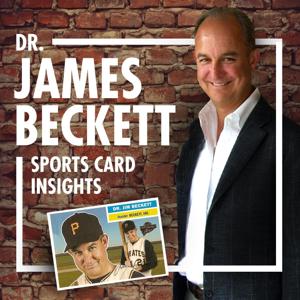
Dr. James Beckett: Sports Card Insights

Dr. James Beckett: Sports Card Insights

Download on the App Store
  • Favorites

    23

    Followers

  • Typical duration

    17 min

    per episode

Based on Podcast App listening data

Dr. James Beckett: Sports Card Insights episodes

  • 1523 - High Numbers, with Rich Klein
    Dr. Beckett and Rich Klein discuss a listener question from Stephen Britton about what “high number” cards are, how to identify them, and why they can be tougher and more desirable. They explain that the term mainly applies to vintage baseball sets issued in series, where the last series (the highest card numbers) was often printed and distributed in lower quantities, creating scarcity; classic examples include 1952 Topps high numbers and many Topps baseball sets from 1959–1973, with nuances such as short prints, double/triple prints, and varying cutoff points by year (e.g., 1967 vs. 1972). They note exceptions where earlier series can be tougher, discuss how modern releases like Topps Heritage sometimes label “HN,” and suggest using hobby references like Beckett Vintage Magazine to see series breakdowns. They also consider how reduced set-building today affects demand for high-number commons versus stars.
     
    01:25 Defining High Numbers
    02:26 Series and Number Ranges
    04:41 How to Identify Them
    05:16 Research and Price Guides
    06:20 Scarcity and Demand
    09:19 Beyond Baseball Examples
    11:18 Oddball Series Exceptions
    13:57 Wrapping Up Advice
    16:33 Modern Hobby Impact
    19 min
  • 1522 - COMC Ramblings
    Dr. Beckett discusses COMC in a positive ramblings episode while reacting to COMC’s fee increases and how higher per-card pick/pack “shipping” costs change the economics of low-dollar cards, encouraging more in-ecosystem vault/credit use and more careful buying, submitting, and pricing. He explains COMC’s operational challenges as ingestion and shipping at massive scale, compares COMC’s growth and criticism to Beckett’s, and notes tensions between being a tech leader, serving collectors, and making money, including thumbnail/color limitations and a distraction toward auctions versus COMC’s fixed-price “long tail” strength. He reflects on a shrinking personal time horizon and gradual selling, notes hockey hasn’t performed as well for him on COMC, reports March as his best COMC month ever, and offers feedback on how COMC’s March Madness promotion could have communicated standings better.
     
    00:24 Why ComC Still Works Well
    01:41 Fee Hikes and Shipping Reality
    02:36 Adapting Strategy for Low-End Cards
    03:18 Flipping vs Long-Term Selling
    04:04 Portfolio Selling Wish List
    06:28 Growth Pains and Security
    08:04 Leadership and Company Vision
    08:51 Fixed Price Focus vs Auctions
    09:41 Backlogs and Long Tail Advantage
    10:59 Hockey Over-Supplied Listings
    12:12 Best Month Ever and March Madness

    15 min
  • 1521 - Hockey Ramblings
    Dr. Beckett shares a hockey ramblings sparked by receiving an Upper Deck National Hockey Card Day kit and an Allure box, plus opening the New York Rangers Centennial Set tin (the last of the Original Six for him). He discusses National Hockey Card Day at participating hobby shops, his Allure pulls and the challenge of understanding non-serial-numbered Color Flow parallel rankings, and his impressions of the Rangers set design, collation, autographs, and high-number short prints. Announces he’s going to Toronto for the Expo for the first time since November 2000, outlines his buying goals (personal collection, eBay resale, and COMC resale), and notes constraints like customs and carry-on space. 
     
    01:10 National Hockey Card Day Kit
    01:53 Allure Box Color Flow
    02:50 Toronto Expo Return Trip
    03:18 Rangers Centennial Set Review
    06:40 Hockey vs Baseball Comparisons
    09:07 Show Strategy and Resale Plans
    10:31 COMC Costs and Customs
    14 min
  • 1520 - Out-Takes from Hobby Hotline 040426
    Dr. Beckett recaps last Saturday's Hobby Hotline live call-in discussion with John Coffman, Chris Carlin, and Joey, focusing on how COVID kick-started the hobby and how Fanatics’ acquisition of Topps and PSA’s growth under Nat Turner accelerated change. They debate the hobby’s increasing “lottery ticket”/gambling feel, the shift of products and pricing toward breakers, and how high wax costs push collectors toward singles while still relying on breaks to supply the market. The group discusses brand and conduct concerns around breakers, and argues unlicensed manufacturers like Panini, Upper Deck, and Leaf can remain viable by right-sizing and leaning on strong inserts. They also cover grading-company event strategy, highlighting PSA’s tech and process improvements (app scanning, QR intake, reduced lines) and the importance of human guidance at shows and hobby-shop drop-offs, noting PSA, BGS, and SGC can coexist with distinct strengths.
     
    02:12 Fanatics and PSA Giants
    03:36 Eisner vs Rubin Mindset
    04:19 Gambling and Break Culture
    07:45 Wax Prices and Buying Singles
    11:17 Breakers vs Hobby Shops
    13:31 Non Licensed Brands Survive
    15:02 Grading Shows and Tech
    19:48 Coexisting Grading Ecosystem
    21 min
  • 1519 - Ramblings 6.0
    Dr. Beckett discusses a recent surge in suspiciously similar email autograph requests, offering his mailing address for listeners who want an autograph and noting his longtime experience with through-the-mail requests. He shares feedback from Phil Pierce about last week’s episode featuring Gervise Ford and talks about collecting “playing years” runs and getting them autographed. Beckett helps a friend unload mostly junk-wax-era loose cards, finding value mainly in unopened packs and connecting the friend with someone who hosts pack-opening parties. He comments on a Beckett Grading complaint about unexpected surface damage, noting how photos and handling can complicate evidence and that factory or other handling is more likely than grader-caused scratches. He then opens Panini USA Stars & Stripes Baseball and 2025 WNBA Prizm boxes, observes breaking incentives, and reflects on “recognizability” of players when evaluating products.
     
    00:24 Autograph Email Surge
    01:15 Mailing Address Details
    02:18 Hobby Friends and Feedback
    03:32 Playing Years Autographs
    04:31 Junk Wax Donation Find
    06:51 Grading Damage Dispute
    10:17 Panini Box Break Trends
    13:12 Recognizability Quotient
    17 min
  • 1518 - Gervise Ford, My First Hobby Friend, Part 3
    Longtime (but now retired) card dealer Gervise Ford reflects on the 1970s hobby before price guides, when most transactions were trades and even complete 1961 Topps high-number sets could be had for $20. He recalls selling off unwanted sets, trading 1953 Topps cards for fabricated custom card boxes, and a painful hindsight example of selling 1953 Bowman's for a dime a card that would be worth far more today. Gervise describes how he eventually sold his shop and most of his collection through First Base/Wayne, with John Esch buying much of the better material, and shares the timing of a $50,000 shop sale alongside a major health diagnosis. They discuss investment misconceptions, memorable collections and how the hobby has changed.
     
    00:00 Trading Before Price Guides
    02:22 Selling Shop and Collection
    03:54 Health Scare and Timing
    04:47 Landmark Cracker Jack Card
    05:30 Regrets and Hobby Lessons
    06:53 Attic Find Reality Check
    10:24 Life After the Hobby
    11:29 Giving Back in Retirement
    15 min
  • 1517 - Gervise Ford, My First Hobby Friend, Part 2
    Two longtime hobbyists look back on starting a small weekend card shop in Dallas, moving to a bigger location, and deciding to open a full-time store with Wayne Grove as a knowledgeable managing partner who could run the shop daily as their family responsibilities grew. They discuss how card condition mattered less in the early days, Gervise shares memorable buying stories including a high-value 1953 Mantle and unusual 1954 Bowman Ted Williams pulls, and note collecting across sports. The conversation also covers learning programming through college and actuarial work, writing insurance software, and using BASIC to help speed up price guide work. They reflect on early conventions, auctions, and how buying untouched collections revealed true card supply.
     
    00:36 Partnering with Wayne Grove
    01:51 Condition and Collecting
    04:29 Beyond Baseball Cards
    05:06 Learning to Program
    08:14 Hobby People and Conflicts
    10:13 Early Conventions and Auctions
    14 min
  • 1516 - Gervise Ford, My First Hobby Friend, Part 1
    Two longtime friends reminisce about how a one-shot 1969 classified ad in the SMU campus paper connected them and changed lives, leading to trades, softball games, and deeper involvement in the national baseball card hobby. They compare early collecting experiences—starting with 1954 and 1956 Topps, trading for Bowman cards, idolizing Stan Musial, and seeking complete sets—while recalling sources like The Sporting News, Coin World, and dealer Sam Rosen. The conversation covers buying boxes cheaply, doubling money on card lots, discovering pre-war issues like T205, T206, and T207, and the challenge of selling in early days. They also recount starting a 1974 card show and association, the hobby’s growth after 1975, and its rapid expansion through 1980 and beyond.
     
    00:00 The SMU Ad That Started It
    02:06 Late Bloomers in Sports
    02:59 Trading With Older Collectors
    04:54 Buying Boxes and Hustling
    06:08 Discovering the National Hobby
    07:40 First Trades and Set Building
    09:22 Coin World Finds
    10:10 Starting Shows and Going Midwest
    12:50 Big Collections and Selling Challenges
    17 min
  • 1515A - Panini March 2026
    Dr. Beckett reviews a Panini mail day featuring 2025-26 EuroLeague Contenders Basketball and 2025 Prizm Black Football, noting value, inserts/parallels, and how products will be viewed years later based on the year/copyright conventions. He pulls base cards of Luka Dončić and Victor Wembanyama in EuroLeague and discusses Panini’s looming loss of major U.S. licenses, the industry pivot toward Fanatics, and how Panini may adapt using approaches similar to Leaf and new mixed products like 2026 Bowman Basketball. He then adds a late-arriving, high-priced debut product, 2025 Panini Silhouette Football, outlines its configuration and hit types, shares his box results, and closes with five trends he believes will shape the hobby: more digital, more global, more gamification/gambling ties, more direct-to-consumer, and more experiential collecting.
     
    00:41 EuroLeague Contenders Rip
    02:24 Panini vs Fanatics Shift
    03:47 Prizm Black Football Box
    07:09 Year Labels and RC Debate
    10:46 Silhouette Price and Hits
    12:47 Future Five Future Trends
    15 min
  • 1515 - Offensive Manipulation Defenses
    Dr. Beckett addresses a question about “offensive” shill bidding, expanding the discussion to market manipulation as cards are treated like stocks and collectors take “positions” in multiple copies. He explains defensive manipulation as bidding (or reserves/house bids) intended to prevent or thwart recorded sales below a card’s comp range, while offensive manipulation is bidding a comparable copy up above comps to raise the perceived value of cards you already own, which he calls more insidious. Beckett distinguishes legal auction reserves from forbidden self-bidding in online auctions and describes shill/shield schemes involving friends, aliases, or proxy bidders. He also warns that fixed-price listings and brokered private sales can easily be manipulated, and suggests prediction markets could influence perceptions and bidding behavior, emphasizing buyer beware and ethical conduct.
     
    02:04 Offensive Manipulation Tactics
    03:46 Brokered Private Sales Manipulation
    05:55 Ethics and Buyer Beware
    08:24 Self Bidding vs Shilling
    11:16 Prediction Markets Risk
    12:51 High End Market Warnings
    14 min

About Dr. James Beckett: Sports Card Insights

From the publisher's feed

Dr. Beckett unretires to share sports card stories, analyses, and opinions, based on his six decades of intensive experience.

Best of Dr. James Beckett: Sports Card Insights

Ranked by our users in the last 21 days

More shows like Dr. James Beckett: Sports Card Insights

Sports Card Nation Podcast by John Newman

Sports Card Nation Podcast

98 Listeners

Sports Card Investor by Sports Card Investor

Sports Card Investor

373 Listeners

Hobby Hotline Podcast by JN Enterprises

Hobby Hotline Podcast

24 Listeners

Stacking Slabs by Brett McGrath

Stacking Slabs

175 Listeners

The Hobby With Cage by Hosted by: @cagelawyer

The Hobby With Cage

113 Listeners

Golden Age of Cardboard | A vintage sports card podcast by Michael Moynihan

Golden Age of Cardboard | A vintage sports card podcast

105 Listeners

Sports Cards Nonsense by Sports Cards Nonsense

Sports Cards Nonsense

1,039 Listeners

Sports Cards Live by Cloud10

Sports Cards Live

52 Listeners

The Crossover by Card Ladder

The Crossover

46 Listeners

Cards To The Moon by Five Card Guys

Cards To The Moon

35 Listeners

Sports Card Lessons Podcast by Ken Cairns

Sports Card Lessons Podcast

33 Listeners

The Shallow End by david.asa.schwartz

The Shallow End

25 Listeners

Splendid Sports Cards Podcast by Splendid Sports Cards Podcast

Splendid Sports Cards Podcast

15 Listeners

Vintage Spotlight by Cloud10

Vintage Spotlight

8 Listeners

Sports Card Clubhouse by Sports Card Clubhouse

Sports Card Clubhouse

15 Listeners