
Sign up to save your podcasts
Or

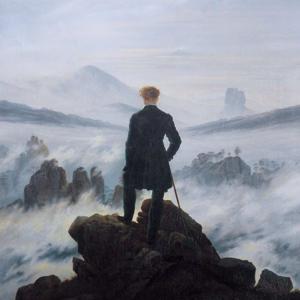


What if the deepest truth of reality lies not in substances or isolated things, but in the pure relationality that connects everything?
John Vervaeke is joined by renowned scholar Douglas Hedley to explore James Filler's groundbreaking work "Heidegger, Neoplatonism, and the History of Being." John and Douglas examine the profound implications of viewing ultimate reality as fundamentally relational rather than substantial, uncovering significant convergences between Heidegger's later thought and the ancient Neoplatonic tradition. The dialogue goes into how Neoplatonic metaphysics offers potent solutions to the philosophical dilemmas posed by modernity and postmodernity, and why the notion of strong transcendence is essential yet challenging in contemporary thought. Douglas enriches the discourse with reflections on imagination, symbolism, and theological significance within the Neoplatonic heritage.
Douglas Hedley is Professor of the Philosophy of Religion at Cambridge University. He was educated at Keble College, Oxford and at the University of Munich, and has previously taught at Nottingham University. He is the Director of the Cambridge Centre for the Study of Platonism and co-chair of the Platonism and Neoplatonism section of the American Academy of Religion. Dr Hedley's work centers on concepts of imagination, violence, and the sublime, and he has published widely, from early modern philosophy—particularly the Cambridge Platonists—to Coleridge. He is the Principal Investigator for the AHRC grant on The Cambridge Platonists at the Origins of Enlightenment: Texts, Debates, and Reception (1650-1730), and is co-editor of the Series Studies in Philosophical Theology.
Connect with a community dedicated to self-discovery and purpose, and gain deeper insights by joining our Patreon.
Notes:
(0:00) Introduction to the Lectern
(01:30) Douglas Headley's Background and Interests
(03:30) Overview of James Filler's Argument
(05:30) Critique of Substance Ontology
(9:00) Neoplatonism and the Trinity
(9:30) Lectern Dialogues: Philosophical Connections: Relational Ontology and the Modern Crisis
(10:30) Heidegger's Misreading of Plato
(16:30) Heidegger's Theological Influences
(26:00) Modernity, Postmodernity, and Transcendence
(34:30) Eastern Orthodox Christianity and Neoplatonism
(36:15) Pushback on the Trinity Concept
(40:00) Greek and Russian Orthodox Traditions
(43:00) Western Theology and Neoplatonism
(49:30) Dialogical Model of the Self
(55:00) Christian Neoplatonism and Love
(59:30) Embodiment and Transcendence
(01:04:30) Final Thoughts and Parting Words
---
Connect with a community dedicated to self-discovery and purpose, and gain deeper insights by joining our Patreon.
The Vervaeke Foundation is committed to advancing the scientific pursuit of wisdom and creating a significant impact on the world. Become a part of our mission.
Join Awaken to Meaning to explore practices that enhance your virtues and foster deeper connections with reality and relationships.
John Vervaeke: Website | Twitter | YouTube | Patreon
Ideas, People, and Works Mentioned in this Episode
Substance Ontology vs. Relational Ontology
Heidegger's Relationship to Neoplatonism
James Filler's Philosophical Contribution
The Trinity as Relational Symbolism
Mysticism and Theology
Embodiment and the Contemporary Crisis of Meaning
James Filler
Plotinus
Iamblichus
St. Augustine
Marius Victorinus
Jonathan Pageau
"The Iconic Imagination" by Douglas Hedley
"Participation in the Divine"
"Process and Reality" by Alfred North Whitehead
"Symposium" by Plato
Thanks for joining The Lectern Live Become a member at Gamma Tier and above to join the Live Q&A portion of this seminar. Join the Lectern here: https://lectern.teachable.com/p/lecte...
Join John Vervaeke, Guy Sengstock, and Kyle Koch as they invite you to a transformative retreat designed to help you reconnect to the real—deepening your connection to yourself, others, and the world around you. They explore the philosophical, spiritual, and psychological concepts behind the retreat and how these ideas will be integrated into the activities. Guy introduces his 'circling approach,' Kyle shares his nature-centered practices, and John elaborates on the importance of dialogical practices for cultivating wisdom and meaning. The retreat will take place from March 17th to 22nd, 2025 at Mount Mitchell Eco Retreat Center in North Carolina and aims to help participants deepen their connections with themselves, others, and the natural world. Lastly, the trio touches on the broader cultural implications of meaning in the age of advancing artificial intelligence, emphasizing the importance of shared, meaningful practices.
Reconnecting to the Real Retreat - Spaces are limited to just 20 participants to ensure a deeply immersive, participatory experience where genuine connection and transformation can take place.
This retreat is a fully participatory experience, where John, Guy, and Kyle will guide you through immersive practices while engaging in them alongside you. Each day follows a carefully designed flow:
Morning Movement: Led by John or Sara, starting the day with embodied practice.
Morning Sessions (9 AM - 12 PM): John will lead transformative practices, including meditation, contemplation, and deep philosophical inquiry.
Afternoon Nature Connection (2 PM - 4 PM): Kyle and Guy will guide participants through core routines of nature connection, helping to cultivate a deeper relationship with the natural world.
Evening Practices: John and Guy will lead Circling and Dialogical practices, fostering deep listening, relational intelligence, and transformative conversation.
Throughout the retreat, you will learn and practice:
Wisdom & Awareness Practices
Dialectic into Dialogos
Philosophical Fellowship
Socratic Search Space
Meditation & Contemplation
Yoga
The Circling Method & Relational Practices
Group Circling Exercises
1-on-1 Circling Sessions
Deep Listening & Communication Skills
Core Routines of Nature Connection
Sit Spot (Attuning to nature through stillness)
Storytelling (Sharing and integrating experiences)
Animal Forms (Embodied movement inspired by nature)
Mapping (Developing a spatial awareness of the land)
Bird Language (Understanding ecological intelligence through avian behavior)
This retreat is an opportunity to engage deeply with practices that cultivate self-awareness, relational depth, and a profound connection to nature.
Location: Mount Mitchell Eco Retreat, North Carolina (ashville)
Cozy cabins and shared spaces with mountain views
Organic and locally sourced meals
Access to nature trails, meditation spaces, and quiet areas
Pricing: Private Suite: $4800
Private Lodge: $4500
Shared Room: $4300
Dorm Room: $4,000
*Includes food
Notes:
(0:00) Welcome! Today's special topic is 'Reconnecting to the Real'
(1:00) Guy's Introduction - The Power of Circling
(3:00) Kyle's Introduction - Embodied Practice & Nature Connection
(4:00) Retreat Details
(7:00) John's Contribution - Dialogical & Imaginal Practices
(9:00) Socratic Search Space - Exploring Virtue Through Dialogue
(12:00) The Meaning Crisis & The Need for Embodied Wisdom
(14:00) Guy's Circling Approach
(16:00) Relational Presence & Deep Listening
(21:00) The Existential Crisis of What it Means to be a Human Being
(27:00) The Call to Practice Connection Now
(37:30) "Knowledge is knowing how to solve the problem and wisdom is knowing what problems to solve."
(40:00) "Theology would become the discipline for the future."
(41:00) The Shared Nature of Meaning
(51:00) The Impact of Virtual Connection and Lose Connection
(57:00) Rediscovering a Connection with Nature
---
Connect with a community dedicated to self-discovery and purpose, and gain deeper insights by joining our Patreon.
The Vervaeke Foundation is committed to advancing the scientific pursuit of wisdom and creating a significant impact on the world. Become a part of our mission.
Join Awaken to Meaning to explore practices that enhance your virtues and foster deeper connections with reality and relationships.
John Vervaeke: Website | Twitter | YouTube | Patreon
Guy Sengstock, the founder of the Circling method, is a renowned facilitator and innovator in the field of authentic communication and personal development. His method blends philosophical rigor with a deep understanding of relational dynamics, offering transformative experiences that foster genuine connection and self-awareness.
Learn more about Guy Sengstock and his methods at his website
Kyle Koch is a movement expert and facilitator of nature-based embodiment practices, Kyle has been working with Evolve Move Play for over a decade, helping people reconnect with their bodies, the land, and the deeper rhythms of existence. He integrates physical play, ancestral movement, and relational presence into his work.
Learn more about Kyle Koch at his website
What is the true nature of contemplation, and how does it intertwine with our understanding of reality?
John Vervaeke is joined by Mateusz Stróżyński to discuss his masterful work, Plotinus and the Contemplation of the Intelligible World. They explore the deep and often overlooked wisdom of Plotinus, one of history's greatest thinkers. Together, they dive into the connection between thought and experience, revealing how contemplation isn't just about thinking it's about actively participating in reality itself. Mr. Stróżyński breaks down Plotinus' intricate view of the universe, showing how everything is woven together in a way that challenges our modern, fragmented way of seeing the world. They go on to discuss the nature of the self and what it means to truly "know" something, touching on insights from Buddhist Dzogchen, Christian mysticism, and personal experience.
Mateusz Stróżyński is a professor of classical philology at Adam Mickiewicz University in Poznań, Poland, and a practicing psychoanalyst. His research focuses on the intersection of Platonism, mysticism, and spirituality, exploring how ancient philosophical traditions inform modern contemplative practice. He is the author of Plotinus and the Contemplation of the Intelligible World.
Connect with a community dedicated to self-discovery and purpose, and gain deeper insights by joining our Patreon.
Notes:
(0:00) Introduction to the Lectern
(0:30) Mateusz Stróżyński joins John Vervaeke to explore Platonism
(2:00) The Interplay of Philosophy and Experience
(6:00) A Kinship Between Works
(8:00) Interweaving Phenomenological and Conceptual Perspectives
(11:30) The Role of Contemplation in Plotinus's Philosophy
(15:30) The Threefold Structure of Consciousness
(20:00) The Fall and the Multiplicity of Experience
(30:00) The Hierarchical Nature of Reality
(43:00) Fractal Coherence in Plotinus's Philosophy
(50:30) Democratic Views and Reality Perception
(52:00) Exploring Plotinus' Worldview
(57:00) Plotinus' Analytical Approach
(1:05:00) Mapping Cognition and Reality
(1:16:30) Skepticism and Participatory Knowing
(1:28:00) Modern Science and Metaphysics
(1:34:30) Concluding Thoughts
---
Connect with a community dedicated to self-discovery and purpose, and gain deeper insights by joining our Patreon.
The Vervaeke Foundation is committed to advancing the scientific pursuit of wisdom and creating a significant impact on the world. Become a part of our mission.
Join Awaken to Meaning to explore practices that enhance your virtues and foster deeper connections with reality and relationships.
John Vervaeke: Website | Twitter | YouTube | Patreon
Ideas, People, and Works Mentioned in this Episode
The Nature of Contemplation
Interweaving of Knowing and Being
Fractal Metaphysics
The Threefold Structure of Consciousness
Modern vs. Premodern Worldviews
The Relationship Between Science and Mysticism
Plotinus
Marcus Aurelius
St. Augustine
Nishida Kitarō
"Plotinus and the Contemplation of the Intelligible World" by Mateusz Stróżyński
"Waking, Dreaming, Being" by Evan Thompson
Quotes:
"Plotinus does not create a system—he reveals a dynamic interplay where intellect and experience are seamlessly interwoven." - Mateusz Stróżyński (10:00)
"If we want to truly understand something, we must go beyond it—transcend it—because reality unfolds from higher principles." - John Vervaeke (15:00)
"Everything that exists contemplates—existence itself is an act of seeing, an act of knowing." - – Mateusz Stróżyński (20:00)
"How does the concept of a 'limited God' differ from traditional theistic views, and what implications does this have for understanding the purpose of the universe and human existence?"
John Vervaeke is joined by Phillip Goff to discuss his influential book, Why? The Purpose of the Universe, and his unique perspective on panpsychism. The duo discuss the intricate philosophical questions concerning the nature of consciousness, the purpose of the universe, and the existential meaning that interweaves with our fundamental worldview. Goff elucidates his nuanced yet respected stance on panpsychism, highlighting his academic contributions at Durham University. Goff introduces the concept of a "goddish" entity, explaining that the universe may have a sense of purpose or goal-directedness without adhering to traditional theistic views. Goff and John examine the commonalities between Goff's ideas and Neoplatonism, as well as Whitehead's process theology, noting the importance of a unifying principle in the universe. The dialogue also touches on holistic perspectives on health, highlighting the interconnectedness of physical, mental, and spiritual well-being.
Phillip Goff is a philosophy professor at Durham University, UK, who dedicates most of his time to unraveling the ultimate nature of reality. In his recent book, Why? The Purpose of the Universe (Oxford University Press, 2023), he explores the middle ground between traditional belief in God and secular atheism. Goff recently converted to a form of 'heretical Christianity,' which he discusses in this article and this interview. Some of the big themes of his research include the nature of consciousness, panpsychism, and the purpose of the universe. He also actively engages in philosophical debates on X and Bluesky and co-hosts the podcast Mind Chat with Keith Frankish, a philosopher who holds polar opposite views.
Connect with a community dedicated to self-discovery and purpose, and gain deeper insights by joining our Patreon.
Notes:
(0:00) Introduction to the Lectern
(3:15) Philip Goff joins John to discuss Panpsychism
(3:30) Background of Philip and his works
(6:00) Exploring the Concept of God and Purpose
(9:00) Debating Theistic and Non-Theistic Views
(11:30) Beyond Traditional Theism
(24:00) Eastern Orthodoxy and Neoplatonism
(26:30) From Panpsychism to Faith
(32:00) Challenging the Limited God
(37:00) Divine Creativity and Limitations
(46:00) Exploring Panentheism and God's Nature
(47:00) The Vine and the Branches - Unity with God
(50:00) The Meaning Crisis and Existential Questions
(53:00) Four Pillars of Meaning in Life
(56:30) Purpose vs. Orientation in Life's Meaning
(1:02:30) "There's a very important social role religion has played historically in bringing the community together, marking the seasons and the big moments of life, birth, coming of age, marriage, death. Giving people a framework and a focus for spiritual practice, a way of interpreting and responding to their deepest experiences."
(1:16:30) Reimagining Religion and Holistic Health
(1:22:30) Parting Words
---
Connect with a community dedicated to self-discovery and purpose, and gain deeper insights by joining our Patreon.
The Vervaeke Foundation is committed to advancing the scientific pursuit of wisdom and creating a significant impact on the world. Become a part of our mission.
Join Awaken to Meaning to explore practices that enhance your virtues and foster deeper connections with reality and relationships.
John Vervaeke: Website | Twitter | YouTube | Patreon
Ideas, People, and Works Mentioned in this Episode:
Panpsychism
Goddish entity
Meaning Crisis
Neoplatonism connection
Whitehead's theology
Holistic health
Heretical Christianity
John Hick
Tim Mulgan
David Bentley Hart
Karen Armstrong
Keith Frankish
The Fifth Dimension
The Interpretation of Religion
Galileo's Error
Fine-Tuning in Physics
Cosmic Purpose and Human Contribution
"The Interpretation of Religion" by John Hick
"Awakening from the Meaning Crisis" by John Vervaeke
"Mind and Cosmos: Why the Materialist Neo-Darwinian Conception of Nature is Almost Certainly False" by Thomas Nagel
"Life After Faith" by Philip Kitcher
"The Case for God" by Karen Armstrong
Quotes:
"Every generation absorbs a worldview it can't see beyond. I think future historians will look back and ask, why did people ignore the evidence for cosmic purpose for so long?" (10:00)
"Faith is not about certainty; it's about trust—a way of interpreting your deepest experiences and shaping your fundamental life goals." (29:00)
"If there's purpose in the universe, maybe we can contribute to the meaning of existence itself. That's a powerful and hopeful idea." (1:01:00)
Philip Goff: Website | X | Podcast
—
Thank you for Listening!
Thanks for joining The Lectern Live Become a member at Gamma Tier and above to join the Live Q&A portion of this seminar. Join the Lectern here: https://lectern.teachable.com/p/lecte...
Question - "How does Jhana meditation simplify experience to facilitate insight and cognitive flexibility?"
John Vervaeke is joined by Mark Miller, Rick Repetti, to explore the intersection of predictive processing, relevance realization, and embodied cognition in contemplative practices. They introduce PhD candidate Jonas Mago, who discusses his research on Jhana meditation and its impact on cognitive flexibility and insight. The conversation touches on contrasting Jhana practices with charismatic Christian traditions such as speaking in tongues. They also explore how Jhana states temporarily reduce the complexity of perception, allowing practitioners to observe the construction and deconstruction of their experiential models. The neuroscientific evidence provided, such as changes in brain responses during these states, adds depth to this exploration, illustrating how such simplification can lead to profound insights.
Mark Miller, a philosopher and cognitive scientist, holds a senior research fellowship at Monash University's Center for Consciousness and Contemplative Studies in Australia, with affiliations at the University of Toronto and Hokkaido University in Japan. His work, which dives into the interplay between human thought, technology's impact on well-being, and human-computer interaction, is at the forefront of integrating cognitive neuroscience with philosophical inquiry.
Rick Repetti is Professor of Philosophy at Kingsborough Community College, CUNY, USA. He is the author of The Counterfactual Theory of Free Will (2010), as well as several articles on Buddhism, meditation, free will, and philosophy of religion.
Jonas Mago is a cognitive neuroscientist and wellbeing aficionado, deeply invested in understanding the cognitive and neurobiological mechanisms underlying human flourishing. His research explores contemplative practices designed to cultivate wholesome states of mind—spanning meditation, prayer, collective cultural rituals, and psychedelic therapies. I approach these topics from an interdisciplinary perspective, integrating cognitive science, neurobiology, computational modeling, and phenomenology to investigate mechanisms of self-regulation and transformation. He is currently pursuing my doctoral studies in Neuroscience at McGill University under the supervision of Dr. Michael Lifshitz, with co-supervision from Prof. Dr. Karl Friston. His academic journey includes a master's degree in Mind, Language, and Embodied Cognition from the University of Edinburgh (UK) and undergraduate studies in Liberal Arts and Sciences at University College Maastricht (Netherlands).
Connect with a community dedicated to self-discovery and purpose, and gain deeper insights by joining our Patreon.
Notes:
(0:00) Introduction to the Lectern. This is the beginning of The Predictive Processing Series
(0:30) Mark Miller, Rick Repetti, and Jonas Mago joins John Vervaeke
(1:30) Predictive Processing and Meditation
(4:00) Inside Jhanas Meditation
(10:00) Phenomenology and Cognitive Functions of Jhanas
(11:30) "Is Jhanas essential for the path of awakening?"
(13:00) Predictive Coding and Cognitive Models
(18:00) Jhana meditation and the transient nature of predictive models
(25:00) Analysis of the risks and benefits associated with Jhana practice
(30:00) EEG Studies on Jhana Practitioners
(37:00) Jhana versus Pure Consciousness
(45:00) High Arousal Contemplative States: Jhana and Christian prayer
(54:00) The Importance of Context in Contemplative Practices
(1:05:00) Final Words
---
The Vervaeke Foundation is committed to advancing the scientific pursuit of wisdom and creating a significant impact on the world. Become a part of our mission.
Join Awaken to Meaning to explore practices that enhance your virtues and foster deeper connections with reality and relationships.
John Vervaeke: Website | Twitter | YouTube | Patreon
Ideas, People, and Works Mentioned in this Episode:
Predictive Processing
Epistemic Vulnerability
Metacognition
Absorption States
fMRI Studies
Sangha
EEG Studies
Relevance Realization
Embodied Cognition
Jhana Meditation
Thomas Metzinger
Michael Lifshitz
Alton
Ram Dass
Buddha
Tanya Luhrmann
Shaila Catherine
Metzinger, T. (2021). The Elephant and the Blind: Insights into pure consciousness experiences.
Lerman, T. (2012). When God Talks Back: A study on evangelical experiences of speaking in tongues.
Quotes:
"What we're trying in, in meditation is starting to model our predictive hierarchy of the brain opaque. So to notice that experience ultimately is not something that's, that's kind of a real grasp on reality, that all we have is this imprint of reality on our experiential or generative modeling, through this, this predictive hierarchy."
"The interplay between micro and macro perspectives mirrors the flexibility we aim for in meditation and science."
"Epistemic vulnerability can be a doorway to growth if properly framed—or a risk without it."
Mark Miller: Website | X | Podcast | YouTube
Rick Repetti: Website | X | Facebook
Jonas Mago: Website | X |
—
Thank you for Listening!
John Vervaeke engages in a profound discussion with James Filler, author of 'Heidegger, Neoplatonism, and the History of Being'. They examine the core arguments of Jame's book, which emphasizes relationality as more fundamental than individual existence in understanding reality. The conversation explores Neoplatonism, Heidegger's philosophy, and the convergence of these ideas with contemporary physics and biology. James recounts his journey in developing his dissertation into a pivotal work aimed at reorienting ontological perspectives. John and James also discuss the trajectory of Western and Eastern Christian thought, touching upon relational ontology's scientific and ethical ramifications.
James Filler is the author of Heidegger, Neoplatonism, and the History of Being, a groundbreaking work exploring the philosophical underpinnings of relational ontology. His forthcoming book, Substance Ontology and the Crisis of Reason deepens the critique of substance thinking in Western philosophy.
Notes:
(0:00) Welcome to the Lectern
(1:00) Core themes of Heidegger, Neoplatonism, and the History of Being
(3:00) Background of James Filler
(5:30) Core argument of the book
(10:00) The philosophical debate between Parmenides and Heraclitus
(15:00) Ontological relationality and its philosophical implications
(25:00) Heidegger's dialogue with Asian philosophy and the Christian trinity
(34:00) Western vs. Eastern Christianity - diverging paths
(40:00) A critique of Process Philosophy
(48:30) The conceptual and ethical implications of historical Christian interpretations
(51:30) Distinction between discursive and non-discursive reasoning
(58:30) Substance ontology and the crisis of reason
(1:03:00) Addressing the crisis of rationality in modernity
(1:11:00) Final reflections on relationality and its broader impacts
---
Connect with a community dedicated to self-discovery and purpose, and gain deeper insights by joining our Patreon.
The Vervaeke Foundation is committed to advancing the scientific pursuit of wisdom and creating a significant impact on the world. Become a part of our mission.
Join Awaken to Meaning to explore practices that enhance your virtues and foster deeper connections with reality and relationships.
John Vervaeke: Website | Twitter | YouTube | Patreon
Ideas, People, and Works Mentioned in this Episode
Martin Heidegger
Plotinus
Aristotle
St. Gregory
Heraclitus
Parmenides
Plato
Jordan Hall
Evan Thompson
Relationality
Neoplatonism
Substance Ontology
Trinity
Process Philosophy
Virtue Epistemology
Humility
Dialogical Rationality
"Heidegger, Neoplatonism, and the History of Being" by James Filler
"Substance Ontology and the Crisis of Reason" by James Filler (upcoming book)
"Awakening from the Meaning Crisis" by John
"Recovering Plato: A Platonic Virtue Epistemology" by James Filler (published in Episteme)
"The Divine Matrix" by David Ray Griffin
"The One" by Paas
"Being and Time" by Martin Heidegger
"The Republic" by Plato
"The Enneads" by Plotinus
"Metaphysics" by Aristotle
Quotes:
"Relationality is itself more primordial, more fundamental to understanding the nature of reality."
"To be independent in the first place required a relation—because to be independent means there's something you're independent from."
"Our rationality operates best dialogically, not nomologically, which aligns deeply with relational ontology."
John Vervaeke and Evan Thompson continue the exploration of life, cognition, and consciousness, drawing from interdisciplinary collaboration and philosophical discourse. The discussion challenges reductionist perspectives in biology, examines organisms as autonomous agents, and questions the adequacy of current models to explain life's complexities. Consciousness is explored through presence and embodiment, while also debating the roles of large language models like ChatGPT in understanding cognitive processes. By integrating philosophical and phenomenological perspectives, the episode addresses the interconnectedness of consciousness, cognition, and life, transcending traditional mind-matter dichotomies and emphasizing the significance of embodiment in cognitive functions.
Evan Thompson is a philosopher and author, specializing in the integration of cognitive science, philosophy of mind, and Asian philosophical traditions. Based at the University of British Columbia, his work, including his recent book 'The Blind Spot', examines the intersections of consciousness, experience, and reality through a comprehensive interdisciplinary approach.
Immerse yourself in the groundbreaking insights of Evan Thompson's thought-provoking book, "The Blind Spot: Why Science Cannot Ignore Human Experience"
Notes:
(0:00) Introduction: Welcome to the Lectern
(0:15) Evan Thompson's Background and the Book 'The Blind Spot'
(2:10) The Blind Spot in Perception: Cognitive Science, Asian Philosophy, and Mystical Insight
(2:30) Revolution in Biology: Life, Cognition, and Consciousness
(5:00) Autonomous Agents vs. Machines
(11:30) Challenges to Newtonian Mechanics and Reductionist Ontology
(22:00) Life as Self-Enabling, Not law-Entailing
(32:00) Historical and Nomological Explanations in Biology
(39:00) Epiphenomenalism
(43:00) Debunking Computational Functionalism
(45:00) Exploring Cognition and Relevance Realization
(49:00) Limits of AI
(51:00) The Energy and Social Costs of AI
(1:00:00) Structures of Consciousness
(1:08:00) The Primacy of Awareness and Embodiment
(1:22:00) Concluding Thoughts and Future Discussions
---
Connect with a community dedicated to self-discovery and purpose, and gain deeper insights by joining our Patreon.
The Vervaeke Foundation is committed to advancing the scientific pursuit of wisdom and creating a significant impact on the world. Become a part of our mission.
Join Awaken to Meaning to explore practices that enhance your virtues and foster deeper connections with reality and relationships.
John Vervaeke: Website | Twitter | YouTube | Patreon
Evan Thompson: Website | Twitter | Facebook
Ideas, People, and Works Mentioned in this Episode
The Blind Spot: Why Science Cannot Ignore Human Experience - book co-authored by Evan Thompson, Adam Frank, and Marcelo Gleiser
Waking, Dreaming, Being: Self and Consciousness in Neuroscience, Meditation, and Philosophy - book by Evan Thompson
Why I Am Not a Buddhist - book by Evan Thompson
The Nature of Selection: Evolutionary Theory in Philosophical Focus by Elliott Sober
The Watchmen (comic series) by Alan Moore and Dave Gibbons
The Relevance Realization (paper) by John Vervaeke and colleagues
Chalmers' work on consciousness works by David Chalmers
The Visible and the Invisible by Maurice Merleau-Ponty
Neoplatonism
Hegelian Philosophy
Immanuel Kant
Alfred North Whitehead
Douglas Harding
Marcelo Gleiser
Quotes:
"Organisms are autonomous agents, not machines." -Evan Thompson (4:00)
"Consciousness has the order of priority in terms of intelligibility or meaning." -Evan Thompson (1:04:00)
In this episode, John Vervaeke and Harvard professor Charles Stang explore the concept of the 'daimon'', stemming from Stang's book Our Divine Double. John and Charles discuss semi-autonomous entities in psychological and philosophical contexts, linking ancient wisdom and modern cognitive science. Key topics include Socratic 'daimonion', Platonic thought, phenomenology of visionary encounters, and cultural ontology. They emphasize the embodied, embedded, enacted, and extended nature of cognition, highlighting the relevance of understanding these phenomena amid emerging technologies like AGI and virtual realities. The episode calls for Socratic self-awareness to navigate these transformative potentials and risks.
Charles Stang is a Professor of Theology at Harvard Divinity School and Director of the Center for the Study of World Religions. His research focuses on ancient Mediterranean religions, Neoplatonism, and contemporary philosophy and spirituality. His research and teaching focus on the history of Christianity in the context of the ancient Mediterranean world, especially Eastern varieties of Christianity. More specifically, his interests include: the development of asceticism, monasticism, and mysticism in Christianity; ancient philosophy, especially Neoplatonism; the Syriac Christian tradition, especially the spread of the East Syrian tradition along the Silk Road; other philosophical and religious movements of the ancient Mediterranean, including Gnosticism, Hermeticism, and Manichaeism; and modern continental philosophy and theology, especially as they intersect with the study of religion.
Notes:
(0:00) Introduction: Welcome to the Lectern
(2:30) Charles Stang, Background, Framework
(4:45) John's Experience and Dialogue with Hermes (IFS)
(7:45) IFS (Internal Family Systems) - a psychotherapy model that focuses on dialoguing with various parts of the self
(10:00) Platonic Tradition and Daimonology
(15:00) Socrates and the Concept of Daimonion in Plato's Apology
(20:40) Real-Life Accounts of Felt Presence
(28:00) Socrates' Complex Relationship with the Imaginal
(33:00) Socrates' Authority vs. Rational Argument
(41:30) Corbin's Notion of the Imaginal
(46:30) Daimonology and Angelology - Encounters with the Higher Self
(49:00) The Role of Hermes in Personal Encounters
(54:30) Lucid Dreaming and Cognitive Science
(1:03:30) The Interplay of Subjective and Objective Realities
(01:12:00) Concluding Thoughts and Future Directions
---
Connect with a community dedicated to self-discovery and purpose, and gain deeper insights by joining our Patreon.
The Vervaeke Foundation is committed to advancing the scientific pursuit of wisdom and creating a significant impact on the world. Become a part of our mission.
Join Awaken to Meaning to explore practices that enhance your virtues and foster deeper connections with reality and relationships.
John Vervaeke: Website | Twitter | YouTube | Patreon
Ideas, People, and Works Mentioned in this Episode
Plato, Apology
Plato, Republic
Charles Stang, Our Divine Double
John Geiger, The Third Man Factor: Surviving the Impossible
Henry Corbin, The Man of Light in Iranian Sufism
Henry Corbin, Alone with the Alone: Creative Imagination in the Sufism of Ibn 'Arabi'
Gregory Shaw, Theurgy and the Soul: The Neoplationism of Iamblichus
Socrates
Socratic philosophy
Daimonion (Divine sign)
David Gordon White, Daemons Are Forever: Contacts and Exchanges in the Eurasian Pandemonium
Porphyry, Life of Plotinus
Daimonology
Paul VanderKlay
Christopher Mastropietro
Carl Jung
Theurgy
Internal Family Systems (IFS)
Quotes:
"Socrates' daimonion was unique in that it only ever told him 'no,' which highlights its role as a dissuading force rather than a guiding one." — Charles Stang (13:30)
"One of the things that seems to be a requirement for rationality is a metacognitive ability, ability to step back and reflect, and know, become aware of your cognition so that you can redirect it. In fact, that seems to be an essential feature. If you don't have that, if your attention and intelligence couldn't ever do this reflective thing, then it's hard to know how you could ever be rational in the, in the way we seem to indicate like noticing bias or noticing fallacy or noticing misdirection." — John Vervaeke (39:40)
From the publisher's feed

15,235 Listeners
2,021 Listeners

26,239 Listeners
1,609 Listeners
315 Listeners
33,445 Listeners
1,029 Listeners

2,159 Listeners
868 Listeners

4,171 Listeners

354 Listeners
1,634 Listeners

19 Listeners

437 Listeners
283 Listeners