
Sign up to save your podcasts
Or

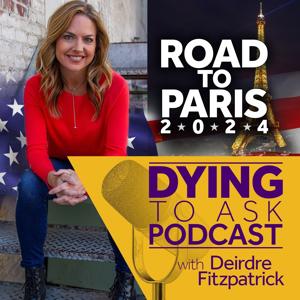


Based on Podcast App listening data
Stop the summer brain drain by getting your kids hooked on reading this summer.
This is part two of the 10th annual KCRA summer beach reads series. Last week, we took a look at the best summer beach reads for adults with Tina Ferguson, owner of "Face in a Book" bookstore.
This week, we're focusing on books for kids of all ages. Tina says the key to getting a kid to put a screen down is to offer a book that's more compelling than any video. And there are lots to choose from.
Have a reluctant reader? Tina says it's helpful to let your child drive the book bus. Let them pick out what interests them.
Graphic novels continue to be a huge trend for kids who aren't naturally drawn to reading.
Her favorite this year is a book called "The Cartoonists Club."
"I chose this one because graphic novels are great for reluctant readers. A lot of parents might think graphical novels aren't what they would choose for their child. But graphic novels actually have great vocabulary," Tina says.
CLICK HERE to listen on iTunes
See more coverage of top California stories here | Download our app | Subscribe to our morning newsletter | Find us on YouTube here and subscribe to our channel
It's time for our annual "Summer Beach Reads" episode on Dying to Ask. The 2025 summer titles will not disappoint.
Tina Ferguson, owner of Face in a Book bookstore, is back as our guide to all things literary.
Tina and I have been doing a beach reads segment or podcast episode for 10 years now. And her pics this summer are a delightful blend of non-fiction and fiction.
But our episode starts with a reality check on what the publishing industry looks like these days. Are people reading as much as they were during COVID-19 after they finished Netflix? Are romance sales as steamy as they were last year? Is Mark Twain about to follow in Hamilton's steps and be the next great musical thanks to a hot new offering from Ron Chernow?
Don't miss this episode and please be sure to share it with your bookish friends and book clubs!
CLICK HERE to listen on iTunes
Feeling blah? Head outside. Mother Nature may be the ultimate mood booster.
Science has long backed the health benefits of the great outdoors.
In this re-release, we're looking at how spending time outdoors impacts your physical and emotional health. Going outside can fight depression and lower blood pressure.
Feel cranky after a long day indoors at school or work? A 10 minutes walk outside soaking in some sun can radically change how you feel and ultimately perform.
Can't think?
Go outside.
Feeling down?
Go outside.
Can't sleep?
Go outside.
You get the idea.
Can you fidget your way to fitness? You can if you're a NEAT person.
We're not talking about the organized type of neat.
NEAT stands for non-exercise activity thermogenesis.
It's the energy you burn when you're moving about the day and *not when you're in a purposeful workout at the gym.
It's things like walking to your car, folding the laundry, pacing on a phone call, taking the garbage cans out, and yes even fidgeting.
Those are the calories a lot of us aren't burning enough and they are crucial to weight management and longevity.
A Mayo Clinic study found people who sit at a job for six or more hours a day have a 35-40% increased risk of shorter lifespan.
You can offset that by moving more.
The key is being active in small spurts all day longer and not just an hour in a workout class.
Move over, hustle culture. An Ivy League school says we're not lazy enough.
Yale University researchers studied stressed-out students. They discovered that a scheduled day of doing nothing had powerful health benefits. Read more about the study here.
Students reported improvements in mood, sleep, and anxiety almost immediately.
Love being productive? That's great.
But scheduling some downtime might make you happier, healthier and ultimately more motivated to get things done.
Say this, not that. Knowing what to say in the heat of the moment is key to defusing workplace drama.
Karin Hurt and David Dye should know. They wrote the book on it.
Karin and David are leadership experts and the founders of Let's Grow Leaders. They surveyed 5,000 people in 45 countries to gauge the most common forms of workplace conflict.
The results aren't good. Workplace conflict is more complicated than ever before, thanks to an uncertain economy, remote work and a changing workforce.
"And so that is all of that really combines to make complex conflict cocktails," says David.
Karin Hurt and David Dye are the authors of "Powerful Phrases for Dealing with Workplace Conflict."
It offers 300 phrases to diffuse everything from micromanagers to bullies to passive-aggressive types.
"Well, the first thing you do is don't call them passive-aggressive," says Karin. "One of the most important things that you can do there is to start with a connection, you know. So start, you know, making the human connection. 'You know, hey? I know we both want the same thing here.' And then you give the thing."
It's like having a script for difficult people. The advice works for a workplace and your personal life, too.
David says, "sometimes people will say, well, you can't script a whole conversation, can you? And no, you can't, because we're human beings and we're messy. But if we can open the door with connection by introducing clarity and getting curious about the other person's perspective, then we can land on a firm commitment that opens the door to a meaningful conversation."
Have you ever kept up a streak? A mini streak is a great way to start a new habit.
A mini streak is a short period of time of intense focus on a behavior you hope to make a long-term habit. It's a bite sized commitment that can be easily attainable and perhaps inspire bigger, more meaningful change at a later date.
In this re-release of a "5 with Fitz," episode, we're looking at three ways to try out a habit mini streak.
Grab a timer and get ready to say goodbye to procrastination.
The Pomodoro Method is a data-backed way of getting stuff done.
The time management technique is named after Francesco Cirillo. He was an Italian student in the 1980s who struggled with procrastination.
Francisco had a tomato-shaped kitchen timer on his desk. Pomodoro is the Italian word for tomato.
He set it for 25 minutes and committed to focusing on his work until the timer went off. Then he took a five-minute break.
Timing work and break intervals had a remarkable effect on his productivity and mood.
And the Pomodoro Technique was born.
It's easy to try and very effective with getting work, homework and even household chores done.
It's easy to try and very effective with getting work, homework and even household chores done.
CLICK HERE to listen on iTunes
All I need is three more hours in the day and life would be great. I've told myself that a million times.
But Laura Vanderkam says it's not the number of hours in a day that's the problem. It's how you use them.
This episode is a re-release of one of my favorite author experts to follow on social media. Vanderkam is a time and productivity expert.
Vanderkam is the New York Times best-selling author of eight books on time management and host of the daily productivity podcast Before Breakfast.
Her books include "What the Most Successful People Do Before Breakfast" and "168 Hours: You Have More Time Than You Think."
"We all have 24 hours in a day," she said. "And many of the things we think are happening in our lives are based mostly on impressions."
Vanderkam says the easiest way to unlock free time is to keep a time log of what you actually do in a day. Often, we think we're busier than we are and can change our relationship with the clock. Vanderkam has tracked every minute of her day for years.
"People track their time, and they tend to realize well, maybe I do have some free time. It's probably not as much as I want, but it's some. And then once you realize that you're like well, let's figure out ways to work with this," says Vanderkam.
Mentioned in the episode:
Want to see our documentary 'Always Remember Your Name?'
Olympic gold medalist Jonny Moseley's workout secret? ChatGPT.
"You can be like hey, give me a give me a six week routine for getting ready for skiing that Olympic champion Hannah Kearney would do. And it just like spits out stuff that they used to have whole departments for at the U.S. Ski Team," says Moseley.
Moseley is a two-time Olympic freestyle skier who won gold in moguls at the 1998 Nagano Games.
He transitioned easily into a TV career. Decades later, he's still active in his sport and mentors the current team of mogulists hoping to podium at the 2026 Milan-Cortina Olympics.
Decades after winning gold, Jonny approaches health and fitness in a totally different way than he did as a pro athlete.
"I do like high-intensity stuff. But now I have to prioritize a lot of stuff. Like the yoga comes first. Otherwise, I pay for it!" Moseley said.
From the publisher's feed
Ranked by our users in the last 21 days
12,884 Listeners

1,846 Listeners

1,957 Listeners
3,307 Listeners
1,486 Listeners

4,952 Listeners

3,385 Listeners
9,148 Listeners
280 Listeners

29,204 Listeners
41,388 Listeners

19,254 Listeners

10,690 Listeners

1,041 Listeners
223 Listeners