
Sign up to save your podcasts
Or

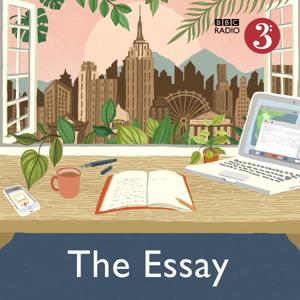

A five-part series of essays that explore the dichotomy between being a deaf professional and working with music. Each essayist tells their own story from across the deaf spectrum, including a sign language performer with a passion for music, a violinist who switched to classical piano after a cochlear implant, and a flautist who uses visual art to describe music to deaf children. From horn players to punchy performance artists, all of the essayists consider music from a deaf perspective with illuminating results.
From her childhood immersed in music to her early career as a professional violinist, Elizabeth Elliott's passion for classical music endured even as she became deaf. Despite the shock of losing her hearing, she muses on how she found solace in teaching and performing in smaller groups, before concentrating on bringing up her young family.
In middle age, she had a cochlear implant fitted, and she describes how this felt - reclaiming her ability to hear note by musical note. Filling us all in with a very different way to listen, Elizabeth details how through careful trial and error she pieces together a piano piece and drills herself to perform it to a high standard. She shares with us how it felt to once again be able to perform music publicly, through dedication and technology.
A Different Way to Listen is produced by Sophie Allen and Emma Glassar with Mark Rickards as Executive Producer. It is a Flashing Lights Media production for BBC Radio 3. A British Sign Language version was filmed, edited and subtitled by Fifi Garfield.
 View all episodes
 By BBC Radio 3

4.2
8282 ratings
A five-part series of essays that explore the dichotomy between being a deaf professional and working with music. Each essayist tells their own story from across the deaf spectrum, including a sign language performer with a passion for music, a violinist who switched to classical piano after a cochlear implant, and a flautist who uses visual art to describe music to deaf children. From horn players to punchy performance artists, all of the essayists consider music from a deaf perspective with illuminating results.
From her childhood immersed in music to her early career as a professional violinist, Elizabeth Elliott's passion for classical music endured even as she became deaf. Despite the shock of losing her hearing, she muses on how she found solace in teaching and performing in smaller groups, before concentrating on bringing up her young family.
In middle age, she had a cochlear implant fitted, and she describes how this felt - reclaiming her ability to hear note by musical note. Filling us all in with a very different way to listen, Elizabeth details how through careful trial and error she pieces together a piano piece and drills herself to perform it to a high standard. She shares with us how it felt to once again be able to perform music publicly, through dedication and technology.
A Different Way to Listen is produced by Sophie Allen and Emma Glassar with Mark Rickards as Executive Producer. It is a Flashing Lights Media production for BBC Radio 3. A British Sign Language version was filmed, edited and subtitled by Fifi Garfield.

7,665 Listeners
147 Listeners

1,049 Listeners

5,536 Listeners

1,797 Listeners
295 Listeners

1,763 Listeners

1,041 Listeners

1,923 Listeners
493 Listeners

582 Listeners
69 Listeners

414 Listeners
307 Listeners

758 Listeners
850 Listeners
128 Listeners
78 Listeners
244 Listeners
61 Listeners
53 Listeners

183 Listeners
4,161 Listeners

3,172 Listeners