
Sign up to save your podcasts
Or

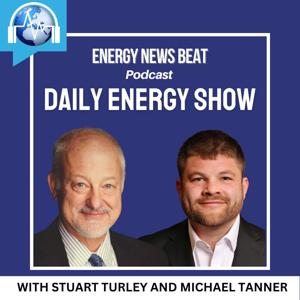


In this episode of the Energy Newsbeat podcast, host Stu Turley sits down with Clare Anne Ath, co-founder of Vita et Terra, a Catholic-focused organization dedicated to environmental stewardship rooted in pro-life, pro-family values. Clare shares her personal frustration with skyrocketing energy bills in Virginia—up 26% year-over-year—and reveals how progressive green policies are failing to deliver affordable energy while simultaneously outsourcing emissions to other states. The conversation explores the critical intersection of energy policy, family affordability, and political accountability, examining why an "all-of-the-above" energy strategy is essential for grid reliability and economic stability. From data center infrastructure costs to AI concerns and personal preparedness for predicted blackouts, Stu and Clare discuss how energy independence isn't just an environmental issue—it's a fundamental family issue that affects every American household.
Connect with Clare on her LinkedIn here: https://www.linkedin.com/in/clareath/
Check out Vita et Terra at; https://www.vitaetterra.org/
1. Vita et Terra Organization & MissionClare Anne Ath introduces her organization, Vita et Terra (Latin for "life and earth"), a Catholic-focused environmental group that prioritizes people over the planet. The organization aims to unite conservative Catholics around environmental and energy issues while maintaining a pro-life, pro-family perspective.
2. Virginia Energy Crisis & Rising CostsA central focus is Clare's op-ed in the Richmond Times Dispatch about skyrocketing energy bills in Virginia. Her electricity bill has increased 26% year-over-year, with an additional $11 monthly flat fee from Dominion Energy due to the Greenhouse Gas Initiative. This directly impacts families trying to afford basic necessities.
3. Policy Failures & Political HypocrisyThe discussion critiques Governor Spanberger's energy policies, which prioritize green initiatives over affordability. Virginia imports energy from other states while restricting nuclear and natural gas expansion, allowing the state to meet emissions targets on paper while outsourcing actual emissions—a form of environmental accounting that lacks substance.
4. Data Centers & Grid StrainVirginia's "data center alley" in Loudoun County is creating massive energy demand. Bloomberg reported a 200% increase in consumer electrical bills due to data center infrastructure costs being passed to consumers. The conversation contrasts this with Texas's more measured approach to data center expansion.
5. Energy Independence & All-of-the-Above StrategyBoth speakers advocate for an "all-of-the-above" energy approach, including nuclear, natural gas, oil, wind, and solar. They argue that restricting energy options leads to higher costs and grid vulnerability, not sustainability.
6. AI & Technology ConcernsClare discusses her Daily Wire article about AI risks, particularly the outsourcing of human connection and responsibility. She uses the example of an AI bot writing love letters or handling personal tasks—arguing that certain human activities shouldn't be automated.
7. Environmental Movement CritiqueThe speakers criticize progressive environmentalism for viewing people as the problem rather than the solution. They argue that innovation and human stewardship—not population reduction—are the answers to environmental challenges.
8. Personal Preparedness & ResilienceThe conversation shifts to practical home energy backup solutions, including generators, propane tanks, and solar systems. They discuss Virginia's predicted rolling blackouts in 2027 and the importance of individual preparedness.
9. Media Corruption & Truth-SeekingBoth speakers express concerns about mainstream media bias and AI-generated misinformation ("AI slop"), emphasizing the importance of independent voices and fact-based reporting.
10. Family-Centered Energy PolicyA recurring theme is that affordable energy is fundamentally a pro-family policy—lower energy costs mean more money for families to spend on children's needs and quality time together.
We just did several articles on Virginia and the Energy Hypocrisy in the State.
We would also like to give our sponsors a shout-out.
Check out the World’s Greatest Podcast Show Notes at EnergyNewsBeat.co or EnergyNewsBeat.com, and the Energy News Beat Substack at:
Energy News Beat
At The Intersection of Energy and Finance - By Sandstone Group
By Stu Turley
A shout-out to Steve Reese and the Reese Energy Consulting group for sponsoring the Podcast https://reeseenergyconsulting.com/.
Data2 if you have any business systems, can you trust A? Well, they have the patent on validation. . https://data2.zoholandingpage.com/energy
And we have WellDatabase rolling, and we use their tools for the Energy News Beat weekly Rig Reports: https://welldatabase.com/
Also entering Sponsor Rey Trevino, Pecos Operating https://pecos.energy/
In this week's Energy News Beat podcast, host Stu Turley tackles the critical energy challenges facing America, from skyrocketing diesel prices and refinery closures to the political policies driving energy costs higher. With diesel at $6.32 per gallon and heating oil up 77% year over year, the administration is exploring ways to reopen shuttered refineries under the Defense Production Act. However, the real story lies in how state-level policies—particularly California's net-zero mandates and Virginia's renewable energy push—are exacerbating the crisis rather than solving it.
Turley examines refining margins, Middle East geopolitical tensions, and corporate earnings, making a compelling case that America's energy security depends on dominance in domestic production, not foreign reliance or ideologically driven policies that undermine the oil and gas industry.
1. U.S. Refinery Crisis & Diesel ShortageThe host emphasizes that diesel prices have surged to $6.32/gallon (up from $3.63 a year ago), driven by refineries running at maximum capacity (98%). With heating oil up 77% and diesel stocks at their lowest levels since 1982, the administration is exploring reopening closed refineries using the Defense Production Act (DPA). Key projects include the U.S. Holdings refinery in Tyler, Texas (74,000 barrels/day) and the Valero refinery in California.
2. California's Energy Policy ImpactThe host heavily criticizes California's net-zero policies under Governor Newsom, arguing they've destroyed the oil and gas industry and created a "national security risk." California residents pay $1.85 more per gallon on regular gas and $2.18 more on diesel. The Valero refinery closure exemplifies this problem, with the state preferring to import fuel rather than support domestic production.
3. Virginia's Rising Energy CostsGovernor Glenn Youngkin's administration is addressing skyrocketing electricity bills (up $50/month in three years), but the host warns that new policies promoting solar, wind, and storage—without proper grid reliability measures—will continue driving costs up. The state's participation in regional greenhouse gas initiatives is criticized as creating "slush funds" rather than reducing emissions.
4. Defense Production Act & Pipeline ExpansionSecretary Chris Wright is using $42 million in DPA funding to advance the Constitution Pipeline, aiming to lower energy costs for New York and New England by increasing natural gas supply.
5. Middle East Oil & GeopoliticsSaudi Aramco evacuated headquarters due to attacks, but Middle East oil production remains stable. Iranian sanctions are effectively starving Iran's economy, with tankers sitting idle.
6. Canadian Oil & Political LeadershipAlberta's oil industry is critical to North American energy security, with 20% of U.S. oil imports coming from Canada. The host criticizes Canadian leadership for misaligning with U.S. interests.
7. Refining Margins & Stock PerformanceValero earned $6.8 billion with a $72 diesel margin crack spread, while Halliburton and other energy companies report strong earnings despite softer U.S. activity.
8. Bloom Energy AnalysisThe host questions Bloom Energy's "green" marketing claims, noting their fuel cells run on natural gas and emit similar levels to the grid average—not significantly cleaner than conventional power plants.
9. Energy Dominance & National SecurityThe overarching theme: energy security depends on domestic production, not reliance on foreign suppliers. The host argues that California and other blue states' policies pose a national security risk comparable to a "zombie apocalypse" if fuel supply chains fail.
Main Stories for Today.
1.Washington Is Pushing Refiners for More Diesel. Relief at the Pump Will Take Time
2.Could the DPA Reopen Benicia? The Legal Path Exists. Will Valero and California Play Along?
3.Spanberger Wants a Six-Year Rate Freeze. Her Merger Terms Push Clean Energy, Too
4.Secretary Chris Wright Targets $42 Million in Defense Production Act Funding to Advance Constitution Pipeline, Aiming to Cut Costs for New York and New England Consumers
5.Saudi Aramco Evacuates HQ, How Is the Oil and LNG Shipping Going?
6.As Alberta Votes to Not Leave Canada, They Need to Understand Their Plight
7.Halliburton Beats Q3 Forecasts as Overseas Work Offsets a Softer U.S. Oil Patch
8.Citgo’s Profit Outlook Jumps $2 Billion While Diesel Drivers Pay $6.32
9.Valero Earns $6.8 Billion on a $72 Diesel Margin as Drivers Pay $6.31
We would also like to give our sponsors a shout-out.
Check out the World’s Greatest Podcast Show Notes at EnergyNewsBeat.co or EnergyNewsBeat.com, and the Energy News Beat Substack at:
Energy News Beat
At The Intersection of Energy and Finance - By Sandstone Group
By Stu Turley
A shout-out to Steve Reese and the Reese Energy Consulting group for sponsoring the Podcast https://reeseenergyconsulting.com/.
Data2 if you have any business systems, can you trust A? Well, they have the patent on validation. . https://data2.zoholandingpage.com/energy
And we have WellDatabase rolling, and we use their tools for the Energy News Beat weekly Rig Reports: https://welldatabase.com/
Also entering Sponsor Rey Trevino, Pecos Operating https://pecos.energy/
This was a fun podcast, and we covered a lot, including Bloom Energy and Neil's Substack, The AI Grid Report. We highly recommend subscribing.
In this episode of the Energy Newsbeat Podcast, host Stu Turley sits down with Neil Winward, founder of Dakota Ridge Capital and author of the AI Grid Report Substack, to explore one of the most consequential intersections in modern energy markets: the explosive demand for grid infrastructure driven by artificial intelligence. As data centers consuming unprecedented amounts of electricity proliferate across the country, the conversation delves into how investors should navigate this complex landscape—examining which grid stocks offer genuine value versus those merely riding the semiconductor wave, analyzing the technological solutions competing to power AI facilities, and confronting the regulatory, financial, and environmental challenges that threaten to constrain growth. From the intricacies of ERCOT's Texas grid to the geopolitical energy crisis unfolding in Europe, Turley and Winward unpack the critical decisions facing policymakers, utilities, and investors in determining whether America can build the infrastructure necessary to lead the AI revolution—or whether regulatory overreach and misaligned incentives will cede that advantage to competitors like China.
1. AI and Grid Infrastructure InvestmentThe conversation centers on how AI data centers are driving massive demand for grid infrastructure and energy. Neil discusses his research into which grid-related stocks are worth investing in, noting that many grid stocks are trading like semiconductor stocks due to their correlation with AI chip demand.
2. Stock Market Correlation and VolatilityA key theme is how grid stocks (like GE Vernova and Bloom Energy) are highly correlated with semiconductor stocks (SMH, SOX indices) rather than behaving as traditional grid stocks. This creates unpredictable volatility—orders and earnings announcements don't always drive stock prices the way investors expect.
3. Energy Generation TechnologiesThe discussion explores various power generation solutions for data centers:
Extensive discussion of Texas's ERCOT grid, transmission line projects (like the 765 kV lines from the Permian), and the costs of expanding grid infrastructure. The conversation addresses who should pay for transmission upgrades—data centers or ratepayers.
5. Wind and Solar Subsidies vs. NuclearA critical examination of the $10.3 trillion spent on wind and solar subsidies versus nuclear, with the argument that similar investment in nuclear would have built 173 additional reactors instead.
6. Grid Reliability and Regulatory IssuesDiscussion of grid stability challenges, the impact of renewable variability, regulatory overreach in blue states driving up electricity costs, and the need for better energy policy.
7. European Energy CrisisBrief coverage of Europe's energy challenges following sanctions on Russian energy and over-reliance on wind/solar without adequate backup capacity.
8. Environmental and Land Use ConcernsConcerns about wind turbine blade disposal, solar panel recycling, land reclamation costs ($89 billion liability), and the land footprint differences between renewable and traditional energy sources.
9. Tesla and Distributed Energy ResourcesDiscussion of Tesla's battery storage, vehicle-to-home technology, and automation in manufacturing as solutions for distributed energy management.
We would also like to give our sponsors a shout-out.
Check out the World’s Greatest Podcast Show Notes at EnergyNewsBeat.co or EnergyNewsBeat.com, and the Energy News Beat Substack at:
Energy News Beat
At The Intersection of Energy and Finance - By Sandstone Group
By Stu Turley
A shout-out to Steve Reese and the Reese Energy Consulting group for sponsoring the Podcast https://reeseenergyconsulting.com/.
Data2 if you have any business systems, can you trust A? Well, they have the patent on validation. . https://data2.zoholandingpage.com/energy
And we have WellDatabase rolling, and we use their tools for the Energy News Beat weekly Rig Reports: https://welldatabase.com/
Also entering Sponsor Rey Trevino, Pecos Operating https://pecos.energy/
In this episode of the Energy Newsbeat podcast, host Stu Turley sits down with David Blackmon (Forbes contributor and Energy Impacts podcast host) and Mike Umbro (energy innovator and founder of California for Energy and Science) to explore a groundbreaking solution to California's energy crisis. The conversation centers on Geologic Thermal Energy Storage (GeoTES)—a revolutionary technology that harnesses solar energy to heat oil reservoirs, enabling zero-emission, dispatchable power generation while simultaneously producing oil from existing fields. Against the backdrop of California's soaring electricity prices, refinery closures, and grid instability, the hosts examine how this innovative approach could reshape the state's energy landscape. They also delve into the regulatory obstacles, climate policy contradictions, and the broader implications of energy independence, revealing how domestic energy production—far from being incompatible with environmental goals—may be essential to achieving them.
Connect with Mike Umbro on his LinkedIn here: https://www.linkedin.com/in/mikeumbro/
Check out Californians for Energy & Science: https://www.energyandscience.com/
Connect with David Blackmon on his LinkedIn: https://www.linkedin.com/in/david-blackmon-2325189/
1. Geologic Thermal Energy Storage (GeoTES) TechnologyThe core focus of the discussion is Mike Umbro's innovative GeoTES project—a novel energy technology that uses solar arrays to heat water, which is then injected into oil reservoirs to create synthetic geothermal systems. This allows for zero-emission, dispatchable power generation while simultaneously producing oil from existing fields.
2. California's Energy CrisisThe hosts extensively discuss California's severe energy challenges:
A critical issue highlighted is California's loss of refinery capacity:
Mike discusses the 7-year permitting process in California:
The hosts critique California's climate programs:
Discussion of recent Jones Act waivers allowing foreign tankers to supply California:
Mike explains the financial structure:
The broader implications of GeoTES:
A key theme is the environmental paradox:
We would also like to give our sponsors a shout-out.
Check out the World’s Greatest Podcast Show Notes at EnergyNewsBeat.co or EnergyNewsBeat.com, and the Energy News Beat Substack at:
Energy News Beat
At The Intersection of Energy and Finance - By Sandstone Group
By Stu Turley
A shout-out to Steve Reese and the Reese Energy Consulting group for sponsoring the Podcast https://reeseenergyconsulting.com/.
Data2 if you have any business systems, can you trust A? Well, they have the patent on validation. . https://data2.zoholandingpage.com/energy
And we have WellDatabase rolling, and we use their tools for the Energy News Beat weekly Rig Reports: https://welldatabase.com/
Also entering Sponsor Rey Trevino, Pecos Operating https://pecos.energy/
In this episode of the Energy News Beat Podcast, host Stu Turley sits down with Samuel Gibson, CEO and founder of Hadron Energy, to discuss a breakthrough solution to America's urgent energy crisis. As data centers demand unprecedented power and the electrical grid strains under intermittent renewables, Hadron is developing a game-changing 10-megawatt microreactor designed for rapid, flexible deployment across remote communities, military bases, and data centers.
From securing a complete U.S.-based fuel supply chain to going public on NASDAQ in record time, Gibson shares how Hadron is positioning itself to bring the first commercially operating microreactor to market by 2031-2032—and why nuclear energy is essential to ending energy poverty while strengthening America's energy independence.
Connect with Samuel on his LinkedIn: https://www.linkedin.com/in/sam-gibson/
Here is Hadron's website: https://www.hadronenergy.com/
1. Hadron Energy's Microreactor TechnologySamuel Gibson introduces Hadron Energy's 10-megawatt electric microreactor design, which uses light water technology with low-enriched uranium. The reactor is designed to be transportable on semi-trucks and deployable in modular configurations (one-pack, six-pack, and 12-pack setups). The company was founded in July 2024 and went public on NASDAQ in May 2025—a remarkably fast trajectory from inception to public listing.
2. Market Demand & Target ApplicationsHadron has identified three primary markets: remote communities, military bases, and data centers. The company has already secured over 5 gigawatts of signed MOUs and LOIs, with the vast majority from data centers. The discussion emphasizes the urgent need for reliable power as data center demand skyrockets due to AI and computing infrastructure expansion.
3. Supply Chain & ManufacturingA key differentiator for Hadron is that they've already secured the complete U.S.-based fuel supply chain (uranium ore, conversion, enrichment, and fuel fabrication). The company is partnering with an established manufacturer for the first ~10 reactors, with plans to build their own manufacturing facility as production scales up.
4. Timeline & Regulatory PathHadron has submitted pre-application materials to the Nuclear Regulatory Commission and projects their first commercial reactor to come online in 2031-2032. The company is proactively engaging with suppliers to manage lead times, with the longest lead item being approximately two years.
5. Business Model: Build-Own-OperateRather than just selling reactors, Hadron operates on a build-own-operate model with power purchase agreements that include construction, maintenance, refueling, and operations. This creates recurring revenue streams and positions Hadron as a utility-like operator.
6. Grid Resilience & Energy Infrastructure ChallengesThe conversation highlights critical issues with the current U.S. electrical grid:
A major advantage of microreactors is deploying power where it's needed (behind-the-meter), eliminating expensive transmission infrastructure and grid dependency. This is particularly valuable for data centers, remote communities, and military bases.
8. Energy Poverty & Global ImpactThe discussion connects nuclear energy to ending energy poverty worldwide. Access to reliable, affordable power has a direct relationship with GDP and economic prosperity. Nuclear's high capacity factor (94%) versus renewables (21-30%) makes it superior for reliable baseload power.
9. Military & Defense ApplicationsProject Janice aims to deploy microreactors at 19 U.S. military bases. Hadron is actively exploring partnerships with the Department of Defense to replace diesel generation with clean, reliable nuclear power.
10. Repurposing Existing InfrastructureThe conversation explores opportunities to deploy microreactors at decommissioned coal plants (which already have transmission infrastructure) or alongside existing nuclear facilities to provide auxiliary power.
This is a huge discussion, and they are rolling. I look forward to being a resource and news outlet for them as they bring their product to market. We need their nuclear power yesterday, and I look forward to more discussions as they make a huge impact on the U.S. energy market. - Stu
We would also like to give our sponsors a shout-out.
Check out the World’s Greatest Podcast Show Notes at EnergyNewsBeat.co or EnergyNewsBeat.com, and the Energy News Beat Substack at:
Energy News Beat
At The Intersection of Energy and Finance - By Sandstone Group
By Stu Turley
A shout-out to Steve Reese and the Reese Energy Consulting group for sponsoring the Podcast https://reeseenergyconsulting.com/.
Data2 if you have any business systems, can you trust A? Well, they have the patent on validation. . https://data2.zoholandingpage.com/energy
And we have WellDatabase rolling, and we use their tools for the Energy News Beat weekly Rig Reports: https://welldatabase.com/
Also entering Sponsor Rey Trevino, Pecos Operating https://pecos.energy/
Data centers are powering the AI revolution—but who's paying the bill? In this episode of Energy News Beat, host Stu Turley digs into a $29.4 billion question that's about to hit your electricity bill. Federal regulators just rejected most of PJM's plan to make data centers bring their own power, and the consequences are staggering. Your electric bill could jump by $26.87 in June 2025, and that's just the beginning. With capacity costs skyrocketing 46% over four auctions, Americans are waking up to a hard truth: energy dominance doesn't mean anything if grandma in Ohio can't keep the lights on at a fair price. In this episode, we break down the data center crisis, explore why the U.S. is losing refinery capacity at an alarming rate, examine the geopolitical stakes of the Russia-Ukraine diesel deal, and ask the tough questions about America's energy future. Buckle up—this is the energy story nobody's talking about, and it's already on your power bill.
1. Data Center Power Costs & Grid Impact (Primary Focus)The host extensively covers the controversial $29.4 billion question of who pays for data center capacity on the PJM grid. Key points include:
Discussion of Chinese refiners slowing inventory drawdowns and increasing oil purchases:
Response to recent hurricane disruptions:
Trump administration's energy ceasefire and Russian diesel imports:
Budget and timeline failures of the bullet train project:
Energy security in the Middle East:
Long-term energy infrastructure challenges:
Broader themes throughout:
1.FERC Rejects Most of PJM’s Data Center Plan, and the $29.4 Billion Question of Who Pays Is Still Open
2.Trump’s Diesel Deal With Putin Runs Into The Ban Congress Passed On Russian Energy
3.Chinese Refiners to Slow Inventory Drawdowns as Imports Pick Up: What It Means for the Oil Market
4.U.S. Gulf of America Oil and Gas Activities in Response to Hurricane Isaias
5.Trump’s Energy Truce Hinges on Russian Refineries, and Seven Senators Say the Diesel Deal Defies a 2022 Law
6.California’s Bullet Train Faces a Cash Cliff by December 2027 — While Morocco’s French-Built Line Runs On Time and Under Budget
7.Trump Weighs Joining Saudi Campaign Against Houthis After Deadly Riyadh Airport Attack; Kingdom Targets 10 Million BPD Pipeline Capacity
8.Energy Department Authorizes Limited SPR Exchange Amid Hurricane Disruptions as Reserve Hits 1980s Lows
9.Is Geologic Thermal Energy Storage (GeoTES) the Holy Grail of Energy for Data Centers?
10.Should the Trump Administration Use the Defense Production Act to Expand Refineries and Pipelines?
We would also like to give our sponsors a shout-out.
Check out the World’s Greatest Podcast Show Notes at EnergyNewsBeat.co or EnergyNewsBeat.com, and the Energy News Beat Substack at:
Energy News Beat
At The Intersection of Energy and Finance - By Sandstone Group
By Stu Turley
A shout-out to Steve Reese and the Reese Energy Consulting group for sponsoring the Podcast https://reeseenergyconsulting.com/.
Data2 if you have any business systems, can you trust A? Well, they have the patent on validation. . https://data2.zoholandingpage.com/energy
And we have WellDatabase rolling, and we use their tools for the Energy News Beat weekly Rig Reports: https://welldatabase.com/
Also entering Sponsor Rey Trevino, Pecos Operating https://pecos.energy/
In this high-energy episode of the Energy News Beat Podcast, host Stu Turley breaks down nine interconnected stories that reveal a troubling pattern in global energy markets and geopolitical stability. From the Houthi attacks disrupting crude flows through the Strait of Hormuz to record-breaking heating oil prices threatening Northeast households, the energy landscape is under unprecedented pressure.
Add to this a controversial Canadian trade deal with the EU, Chinese security threats embedded in America's power grid, and soaring tanker rates reshaping oil shipping routes, and you get a complex web of challenges that Stu argues are not random—they're symptoms of a larger strategic realignment. Whether it's policy decisions cutting refinery capacity, NATO tensions, or potential cyberattacks on critical infrastructure, this episode connects the dots on why energy security has never been more critical for American consumers and national defense.
1. The Hormuz Strait & Saudi Oil CrisisThe episode opens with the central story: crude oil flowing through the Strait of Hormuz has dropped 27% in a week due to Houthi tanker attacks. With OPEC spare capacity at just 0.02 million barrels per day and the U.S. Strategic Oil Reserve at 283 million barrels, there's minimal cushion for disruptions. Saudi Arabia's East-West pipeline and alternative routes are helping mitigate the crisis, but the situation remains precarious.
2. Hurricane Isaias & Gulf Oil ProductionThe storm has already shut in 62.9% of Gulf oil output—exceeding impacts from Hurricanes Michael, Sally, and Harvey. While the track looks favorable for major refineries in Louisiana, the East Coast faces severe diesel shortages, with stocks at their lowest levels since 1982.
3. Heating Oil Crisis in the NortheastHeating oil prices have opened the season at a record $6.04 per gallon, up 70% from last fall. The government expects 21% of oil-heated homes to struggle this winter, though some estimate it could be closer to 50%. Homeowners could face bills exceeding $2,100 this winter.
4. Mark Carney's EU-Canada Trade DealStu expresses strong concern about Canadian Premier Mark Carney's planned EU trade alliance launching October 29-30 in Montreal. He argues this could eliminate approximately 102,000 Canadian jobs, with 98,000 potentially moving to the U.S., and views it as crossing President Trump's red lines regarding NATO and trade.
5. Nord Stream Pipeline NegotiationsCiting Russian-focused analyst Andrew Corey Bokel, Stu discusses reports that U.S. Special Envoy Jared Kushner is quietly negotiating with Russian counterparts about U.S. investment in Nord Stream pipelines—potentially as a carrot to bring Russia to the negotiating table.
6. Devon Energy & Coterra Merger ChallengesThe $4.2 billion merger announced in February 2026 is facing investor scrutiny over debt levels and execution pace. The company plans an Eagleford exit by October 8th to concentrate capital in the Delaware Basin while oil prices remain elevated.
7. Chinese Grid Security ThreatThis is a major concern: Chinese companies have delivered over 70 gigawatts of inverters to U.S. solar plants. Reuters found undocumented cellular radios in some units. While there's no proof of a "kill switch," the potential for cyberattacks is real and well-documented. The grid's reduced tolerance for equipment failures makes this increasingly dangerous.
8. Tanker Rates & Oil Shipping RoutesSuper tanker rates are at record highs, with 15-year-old tankers now selling for more than new ones. The Houthi attacks in the Red Sea have forced longer shipping routes from Saudi Arabia to Asia, adding $30 million in tanker fees per delivery and reshaping global crude trade patterns.
9. India's Venezuela Crude Imports & Global RefiningIndia is hitting a 7-year high in Venezuelan crude imports as refineries like Reliance load up. India has become the world's second-largest refined product exporter, with the U.S. and Netherlands also major players. Russia and the UAE have blocked exports, reducing global refining capacity.
Underlying Theme: Stu connects these stories as part of a larger geopolitical pattern—energy security is being compromised by policy decisions (green energy policies cutting refinery capacity), geopolitical tensions (Houthi attacks, NATO concerns), and potential vulnerabilities (Chinese grid infiltration). He emphasizes the need for energy independence, grid hardening, and preparation for potential disruptions.
Main Stories covered today.
1.Hormuz Traffic Sinks and Saudi Oil Comes Under Fire: How Many Escape Routes Are Left?
2.Hurricane Isaias Update: Track Stays East of the Big Louisiana Refineries, but Diesel and Florida Fuel Remain at Risk
3.The Latest Nord Stream News Might Lead To Something Much More
4.How Many Canadian Jobs Will Be Lost When Carney Signs the EU Trade Deal?
5.Devon’s Coterra Bet Faces the Portfolio Test
6.Is the U.S. Grid Open for Cyber Attacks? Chinese Inverters, Hidden Radios and a Years-Long Wait for Transformers
7.Nearly $1,700 to Fill the Tank: The Heating Oil Shock Hits Northeast Kitchen Tables
8.Tanker Rates Are Redefining Oil Distribution Routes
9.India Hits Seven-Year High in Venezuelan Crude as Reliance Loads Up Jamnagar
We would also like to give our sponsors a shout-out.
Check out the World’s Greatest Podcast Show Notes at EnergyNewsBeat.co or EnergyNewsBeat.com, and the Energy News Beat Substack at:
Energy News Beat
At The Intersection of Energy and Finance - By Sandstone Group
By Stu Turley
A shout-out to Steve Reese and the Reese Energy Consulting group for sponsoring the Podcast https://reeseenergyconsulting.com/.
Data2 if you have any business systems, can you trust A? Well, they have the patent on validation. . https://data2.zoholandingpage.com/energy
And we have WellDatabase rolling, and we use their tools for the Energy News Beat weekly Rig Reports: https://welldatabase.com/
Also entering Sponsor Rey Trevino, Pecos Operating https://pecos.energy/
Doomberg, Charlie Garcia, and Stu Turley have way too much fun covering the world of finance and energy.
Global energy markets are undergoing a dramatic rebalancing, and most people have no idea what's happening.
While politicians argue about which energy sources to cancel, real-world supply constraints are forcing a reckoning. Ukraine sanctions have wiped out Russian refinery capacity, diesel prices are spiking worldwide, and the U.S. is caught in a policy whiplash China would never tolerate.
Meanwhile, Canada's new Prime Minister Mark Carney is quietly executing a 180-degree pivot toward hydrocarbon dominance—and it's working. In this episode, we sit down with two of Substack's most influential energy analysts, Charlie Garcia of Capital Mischief and Doomberg , to break down the diesel crisis, expose why refinery capacity matters more than new drilling, explain why blue states are paying 42% more for energy than red states, and reveal how AI's insatiable appetite for power is about to reshape the entire energy landscape. If you care about energy security, geopolitics, or your wallet, you'll want to listen to this conversation.
I truly had an absolute blast learning from Doomberg and Charlie about their success and how they are growing their Substack audience. We all have different strengths, and I am truly honored to be in the same set with them.
This was our first successful live feed to Substack, and I hope to work out the bugs and get better at it. Doomberg’s and Charlie’s past episodes were very well received by our subscribers. Let us know your thoughts.
1. Canadian Energy Policy & Mark Carney’s LeadershipThe hosts discuss how Mark Carney, Canada’s new Prime Minister, is dramatically shifting energy policy away from Justin Trudeau’s climate-focused approach. Carney is pursuing LNG expansions, gas pipeline projects, and new oil pipelines—governing like a “Texas conservative” to position Canada as part of North American energy dominance.
2. Global Diesel Crisis & Refinery CapacityA critical focus is the global diesel shortage, particularly after Ukraine sanctions cut Russian refinery capacity. The discussion explains that diesel represents only 7 million barrels of competitive global supply, and Russia previously supplied 800,000 barrels daily. U.S. refineries are operating at 93% capacity, and the solution is to flexibilize existing refineries rather than build new ones.
We covered the refinery and diesel issue, along with the pre-game or pre-podcast notes.
The people who buy and sell the physical stuff say the same. Chevron CEO Mike Wirth said on Oct. 6 that “the landed price of physical oil in Asia is currently closer to $150 per barrel than $100, where Brent oil futures are trading” (Reuters via ETEnergyworld). Aramco CEO Amin Nasser said some physical barrels are changing hands at $20 to $50 over Brent (Business Upturn). Wood Mackenzie says Norway’s Johan Sverdrup moved from a typical 3% discount to a record $24 premium to Brent, with medium-sour crude in Europe priced above $140 (Wood Mackenzie). And the same West African oil that looks cheap at the dock looks dear on arrival: Indian Oil bought Angolan Nemba for November delivery at Dated Brent plus $18, and Murban at plus $13 to $14 (Reuters via Egypt Oil & Gas). Chinese independents paid $12 to about $20 over ICE Brent delivered for Iraqi and Qatari crude (Reuters via Economic Times).
This also reconciles ENB’s earlier Hormuz coverage, which found physical Brent running well above futures at times (ENB, Oct. 6). Both things are true at once. Atlantic Basin crude that can reach a refinery quickly commands a big premium. Gulf and West African crude that needs an expensive, risky voyage has to be marked down at the dock to compete. Brent futures sit in the middle, and the tanker owners and insurers collect the spread.
3. U.S. Refinery Challenges & State-Level Energy PolicyThe hosts highlight how blue states have closed most refineries over the past 50 years, while red states have expanded theirs. This has created a 42% energy cost differential between blue and red states. California faces particular challenges due to the Jones Act and global market dependence.
In getting ready for the podcast, I posted out my pre-podcast show notes generated by AI, and it had some key points we covered in the podcast.
One that I did not get to cover was that the price of physical delivery of oil has been priced over paper for a year, and that bill is about to get evened out.
4. China’s Strategic Energy IndependenceCharlie Garcia emphasizes China’s comprehensive energy strategy—building solar, wind, coal, hydro, nuclear, and synthetic fuel plants simultaneously while stockpiling resources. This contrasts sharply with U.S. political gridlock over which energy sources to support.
5. AI Boom & Energy DemandThe hosts discuss how AI data centers will drive massive electricity demand, making nuclear power a strategic imperative. Companies like EQT and Constellation Energy are positioning themselves as utilities to serve hyperscalers.
6. Political & Economic CyclesA key theme is how the U.S. political cycle (2-4 years) is shorter than heavy industry’s capital planning cycle (30+ years), creating policy whiplash that discourages long-term investment—unlike China’s strategic continuity.
7. Investment Opportunities & RiskThe discussion covers private oil & gas investments, cryptocurrency/Bitcoin as long-term wealth preservation, and the importance of evaluating deals carefully before committing capital.
8. Demand Description: real abroad, mild at homeENB has argued that oil is not running to $200 because high prices are killing demand. The evidence is strongest outside the United States. The IEA’s September report forecast world oil demand to fall 2.5 million barrels a day in 2026, 940,000 b/d steeper than a month earlier, with losses concentrated in diesel-type fuels and petrochemical feedstocks in Asia (IEA). EIA’s October outlook trimmed 2026 world consumption to about 102.4 million b/d, from 102.6 in September, and 2027 to 104.6 from 105.0 (EIA STEO; ENB comparison of vintages). FGE NexantECA and Energy Aspects cut China’s fourth-quarter crude import forecasts by about 400,000 b/d, to 9.2 to 9.3 million b/d, well below last year’s 11.6 million (OilPrice). Refinery runs in Shandong fell to about 55% by late September as margins turned negative (Reuters via Economic Times). Breakwave’s tanker desk wrote that “demand destruction has become the primary mechanism required to rebalance the market” (Breakwave).
At home the picture is softer. EIA’s implied U.S. gasoline demand averaged 8.78 million b/d over the four weeks to Oct. 2, just 0.3% below the same weeks of 2025. Distillate was down 1.6% and 3.0% below the 2021–25 average. Jet fuel was up 6.0% (EIA; ENB calculation). EIA’s outlook has U.S. gasoline use averaging 8.75 million b/d this year, about 2% below 2025. That is a bend, not a break.
Chart 5. U.S. product supplied (4-week average) for gasoline, distillate and jet fuel: 2026 vs. 2025 and ...
In this wide-ranging political and energy analysis podcast, hosts David Blackmon and Stu Turley sit down with renowned political analyst and historian Larry Schweikart to discuss the critical issues shaping the 2026 midterm elections and beyond. With just 27 days until election day, Schweikart—who famously predicted Donald Trump's exact 312 electoral votes in 2024—breaks down Senate and House race projections, exposes the flaws in mainstream polling, and reveals four major factors that pollsters are missing.
The conversation extends beyond politics to tackle the intersection of energy policy and elections, examining how Democratic governance has driven electricity and fuel costs 38-42% higher in blue states.
The trio also explores emerging challenges including AI regulation, California's governance collapse, and speculation about the 2028 presidential race. Throughout the discussion, they emphasize a central theme: that voter registration data, not polls, tells the real story of where American politics is headed.
1. 2026 Midterm Election Predictions & AnalysisLarry Schweikart provides detailed electoral forecasts, predicting Republicans will hold the Senate with 52-54 seats (potentially up to 56-57) and gain control of the House with around 220 seats. He discusses key races in states like Georgia, Michigan, Minnesota, and Texas, emphasizing that Republicans are in a stronger position than polls suggest.
I found the fact that there are so many illegal voters already removed from the country to be a huge potential win. But only if we show up and swarm the polling booths.
I will be upfront and say we have to overload the polls and vote to keep the House and Senate so that we can vote all RINOs out.
2. Polling Accuracy & BiasThe hosts extensively critique modern polling, arguing that mainstream polls are significantly biased against Republicans and undercount GOP voters by 7-10 points. They discuss four major factors skewing polls: deportations of Democratic voters, voter roll purges, voter registration changes, and the elimination of USAID’s influence on elections.
3. Energy Policy & Gasoline PricesStu Turley highlights the impact of Democratic energy policies on electricity and fuel costs, noting that energy prices are 38-42% higher in blue states versus red states. The discussion covers California’s refinery closures, pipeline issues, and the need for energy independence.
4. AI Development & RegulationThe hosts discuss AI’s rapid advancement and the need for Republican policy frameworks (similar to Newt Gingrich’s 1994 Contract with America) to regulate AI responsibly, particularly regarding data centers and their power consumption.
5. California’s Governance CrisisThey critique California’s government dysfunction, including slow permit processing, the failed high-speed rail project, and the state’s shift toward communist-style policies (such as car seat requirements for 16-year-olds and quartz countertop bans).
6. 2028 Presidential Election SpeculationDiscussion of potential 2028 Democratic and Republican nominees, including JD Vance vs. Marco Rubio for Republicans, and speculation about Democratic candidates like Gavin Newsom, Kamala Harris, and AOC.
7. Voter Registration & Election IntegrityAnalysis of voter registration trends, mail-in voting patterns, and the importance of voter roll purges in determining election outcomes, particularly in states like Florida and Georgia.
Here are Larry’s Books and links.
Here is his special:
Vote Like Your Energy Bill Depends on It.We have seen what is happening in Virginia, Massachusetts, and other states, and only 10 states have voter ID laws. As Isaac Orr said yesterday, there is a real cost difference between the Blue States and the Red States. At least today, I got the states right in the discussion.
Check out the World's Greatest Podcast Show Notes at EnergyNewsBeat.co or EnergyNewsBeat.com, and the Energy News Beat Substack at: https://theenergynewsbeat.substack.com/
A shout-out to Steve Reese and the Reese Energy Consulting group for sponsoring the Podcast https://reeseenergyconsulting.com/.
Data2 if you have any business systems, can you trust A? Well, they have the patent on validation. . https://data2.zoholandingpage.com/energy
And we have WellDatabase rolling, and we use their tools for the Energy News Beat weekly Rig Reports: https://welldatabase.com/
Also entering Sponsor Rey Trevino, Pecos Operating https://pecos.energy/
In this episode of the Energy Newsbeat podcast, host Stu Turley sits down with Isaac Orr, Vice President of Research at Always On Energy Research, to discuss a groundbreaking report on how alternative energy mandates are driving up electricity bills across America. The conversation reveals a stark divide between blue and red states in energy affordability and policy effectiveness, exploring how renewable energy requirements in regions with poor solar and wind resources create economic inefficiencies that ultimately burden consumers. From the hidden costs of transmission infrastructure to the challenges of grid reliability in an era of rapid data center expansion, this episode unpacks the complex relationship between energy policy, regulatory reform, and the future of America's power grid—with critical implications for voters heading into the midterm elections.
Connect with Isaac Orr on his LinkedIn: https://www.linkedin.com/in/isaac-orr-b0732665/
Energy Bad Boys: https://energybadboys.substack.com/
Always On Energy https://www.aoenergy.org/
1. In-State Solar Mandates & Their Economic ImpactThe podcast centers on a new report about how alternative energy mandates, particularly in-state solar requirements, drive up electricity bills by mandating uneconomical resources. States like Massachusetts, New Jersey, Maryland, and Washington DC are highlighted as examples where solar mandates are imposed in regions with poor solar resources, making them economically inefficient. The New Jersey in-state solar mandate alone costs an additional $650 million annually for just 4% of the state's electricity.
2. Blue States vs. Red States Energy CostsIsaac Orr discusses the "Blue States High Rates" report, which found that when plotting electricity prices against the national average, the most expensive states align with politically liberal states. The discussion explores how liberal states' hostile business climates, renewable energy mandates, and pipeline restrictions contribute to higher electricity costs compared to red states.
3. Renewable Energy Mandates & Grid ReliabilityThe hosts examine how renewable portfolio standards and mandates for wind and solar create problems for grid stability. They discuss how these policies don't account for intermittency issues and the true system-wide costs, including necessary battery storage and transmission infrastructure.
4. Levelized Cost of Energy (LCOE) MisrepresentationA critical discussion about how LCOE metrics used by organizations like Lazard underestimate the true cost of wind and solar by not including battery storage and grid integration costs. The podcast emphasizes the need for "Always On" LCOE metrics that capture the full system-wide cost.
5. Transmission Infrastructure CostsThe hosts discuss expensive transmission line projects, including New York's $3-6 billion Canadian hydroelectric line and Texas's proposed $33 billion Permian transmission line. They argue these costs are socialized while profits are privatized, and that data centers should be co-located with power plants rather than requiring massive new transmission infrastructure.
6. Wind Turbine Decommissioning & Recycling IssuesThe podcast addresses the environmental and financial challenges of aging wind turbines (79,000 in the US, with 15,000 aging out at 20 years). Topics include lack of recycling infrastructure, abandoned wind farms in California, and the practice of leaving concrete foundations buried rather than fully reclaiming land.
7. Data Centers & Grid StrainDiscussion of how rapidly growing data center demand is straining the electrical grid, particularly in ERCOT (Texas). The hosts highlight a near-blackout event when solar generation dropped at sunset and storage and wind didn't compensate in time. They advocate for co-locating data centers with power generation sources.
8. Natural Gas Expansion & Pipeline PermittingThe podcast covers the proposed addition of nearly 400 gigawatts of natural gas capacity in the US, with most development occurring in red states. The discussion emphasizes permitting challenges and how companies are strategically locating facilities in natural gas-producing states to avoid interstate pipeline complications.
9. Coal Industry FutureAnalysis of why new coal plants aren't being built despite increased capacity needs. The hosts discuss regulatory barriers (EPA carbon capture requirements) and suggest that co-locating data centers with coal plants on reclaimed mining sites could revitalize the coal industry.
10. Regulatory Reform & Permitting CrisisA broader theme throughout is the need for regulatory reform across both red and blue states. The comparison between Colorado (5 permits) and Texas (3,000 drilling permits) illustrates how permitting efficiency affects economic development and energy production.
11. Home Energy ResilienceThe hosts discuss the importance of hardening homes against potential blackouts through solar panels, battery storage (Jackery), and backup generators, particularly given California's intentional blackout policies during fire season.
The overarching message is that well-intentioned renewable energy policies in blue states are creating unintended economic consequences, while regulatory barriers prevent efficient energy infrastructure development nationwide.
Check out the World's Greatest Podcast Show Notes at EnergyNewsBeat.co or EnergyNewsBeat.com, and the Energy News Beat Substack at: https://theenergynewsbeat.substack.com/
A shout-out to Steve Reese and the Reese Energy Consulting group for sponsoring the Podcast https://reeseenergyconsulting.com/.
Data2 if you have any business systems, can you trust A? Well, they have the patent on validation. . https://data2.zoholandingpage.com/energy
And we have WellDatabase rolling, and we use their tools for the Energy News Beat weekly Rig Reports: https://welldatabase.com/
Also entering Sponsor Rey Trevino, Pecos Operating https://pecos.energy/
From the publisher's feed

3,059 Listeners

587 Listeners

1,247 Listeners

201 Listeners

129 Listeners
102 Listeners

85 Listeners

10,107 Listeners
153 Listeners

124 Listeners

411 Listeners

476 Listeners
9 Listeners

149 Listeners

68 Listeners