
Sign up to save your podcasts
Or

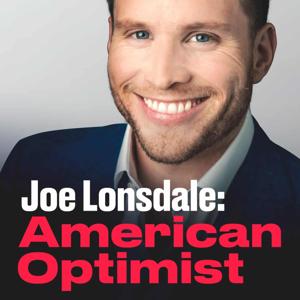

For decades, Philip Howard has been sounding the alarm: our government is broken, and tinkering around the edges won’t work. We need a new operating system. How did it break? What do both parties get wrong? And what will it take to revive the American spirit?
Philip is the Founder of the Common Good, best-selling author, and one of the leaders in government and legal reform. His book “The Death of Common Sense” became a powerful force for bipartisan reforms in the 1990s between President Bill Clinton and Congressional Republicans. I’ve followed his work for many years, and his newest book, “Saving Can-Do,” offers important frameworks for injecting accountability and human judgement back into governance.
We begin with the genesis of the red tape state, and why Philip believes the collective guilt of the 1960s led to well-intentioned but ill-designed policies that broke the government. He explains how law began to supplant human judgment, politicians stopped making hard decisions, and governance was outsourced to an instruction manual run by the professional class. Case in point: there are now 150 million words of binding federal rules, most added post-1970. The U.S Constitution, by contrast, is 7,500 words. Next, we dive into his new book, beginning with what makes the American “can-do” attitude unique. Then, he offers solutions for reinstating human authority into our institutions. And finally, a new framework for enabling America to build again. Philip makes the compelling case that what our republic needs most of all is a return to accountability over compliance, amateurs over professionals, and liberty over safetyism.
 View all episodes
 By Joe Lonsdale

4.6
157157 ratings
For decades, Philip Howard has been sounding the alarm: our government is broken, and tinkering around the edges won’t work. We need a new operating system. How did it break? What do both parties get wrong? And what will it take to revive the American spirit?
Philip is the Founder of the Common Good, best-selling author, and one of the leaders in government and legal reform. His book “The Death of Common Sense” became a powerful force for bipartisan reforms in the 1990s between President Bill Clinton and Congressional Republicans. I’ve followed his work for many years, and his newest book, “Saving Can-Do,” offers important frameworks for injecting accountability and human judgement back into governance.
We begin with the genesis of the red tape state, and why Philip believes the collective guilt of the 1960s led to well-intentioned but ill-designed policies that broke the government. He explains how law began to supplant human judgment, politicians stopped making hard decisions, and governance was outsourced to an instruction manual run by the professional class. Case in point: there are now 150 million words of binding federal rules, most added post-1970. The U.S Constitution, by contrast, is 7,500 words. Next, we dive into his new book, beginning with what makes the American “can-do” attitude unique. Then, he offers solutions for reinstating human authority into our institutions. And finally, a new framework for enabling America to build again. Philip makes the compelling case that what our republic needs most of all is a return to accountability over compliance, amateurs over professionals, and liberty over safetyism.

1,300 Listeners

541 Listeners
1,095 Listeners

2,339 Listeners
2,192 Listeners

10,192 Listeners

566 Listeners

596 Listeners

143 Listeners

459 Listeners

33 Listeners

152 Listeners
139 Listeners

41 Listeners

231 Listeners