
Sign up to save your podcasts
Or

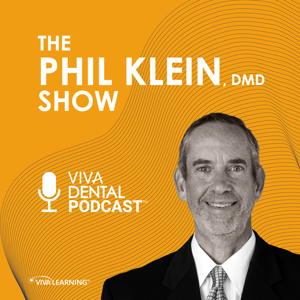

How many times have you delivered a crown that required extensive occlusal adjustment, leaving you wondering if there's a better way to predict how patients will actually function with their restorations?
Dr. Mark Kleive, DDS, brings over 25 years of restorative expertise to this conversation. A distinguished graduate of the University of Minnesota School of Dentistry and Fellow of the American College of Dentists, Dr. Kleive serves as visiting faculty at the renowned Pankey Institute, where he teaches advanced concepts in comprehensive dental care and has become a leading voice in digital dentistry integration.
This episode explores how jaw motion tracking technology is revolutionizing restorative dentistry by capturing real patient movement patterns and translating them into precise virtual articulators. Dr. Kleive demonstrates how this technology goes far beyond traditional face bow transfers and semi-adjustable articulators, which rely on straight-path condylar guidance and arbitrary measurements. Instead, jaw motion tracking records every boundary movement a patient can make, creating dynamic motion files that inform restoration design at the laboratory level.
The discussion covers the clinical workflow from data acquisition using facial scanners with motion tracking capabilities to software integration with design platforms. Dr. Kleive explains when jaw motion tracking provides the greatest clinical value, emphasizing its importance for high-risk patients with TMD history, excessive wear patterns, or complex multi-unit restorations, while acknowledging that low-risk single crown cases may not require this level of sophistication.
Key technical concepts include the difference between static occlusal checking with articulating paper versus dynamic functional analysis, how motion data files integrate with laboratory design software, and the critical relationship between restoration morphology and patient chewing efficiency. The episode also addresses the technology adoption curve in dentistry and return on investment considerations for practice integration.
Perfect for: General dentists considering advanced restorative workflows, specialists managing complex cases, dental team members involved in digital dentistry coordination, and clinicians seeking to differentiate their practices through enhanced patient experiences.
If you've ever had a patient say 'I like my new teeth, but I don't chew as well with them,' this episode provides the clinical roadmap for ensuring form truly follows function in your restorative cases.
 View all episodes
 By Dr. Phil Klein | Dentist

4.7
3131 ratings
How many times have you delivered a crown that required extensive occlusal adjustment, leaving you wondering if there's a better way to predict how patients will actually function with their restorations?
Dr. Mark Kleive, DDS, brings over 25 years of restorative expertise to this conversation. A distinguished graduate of the University of Minnesota School of Dentistry and Fellow of the American College of Dentists, Dr. Kleive serves as visiting faculty at the renowned Pankey Institute, where he teaches advanced concepts in comprehensive dental care and has become a leading voice in digital dentistry integration.
This episode explores how jaw motion tracking technology is revolutionizing restorative dentistry by capturing real patient movement patterns and translating them into precise virtual articulators. Dr. Kleive demonstrates how this technology goes far beyond traditional face bow transfers and semi-adjustable articulators, which rely on straight-path condylar guidance and arbitrary measurements. Instead, jaw motion tracking records every boundary movement a patient can make, creating dynamic motion files that inform restoration design at the laboratory level.
The discussion covers the clinical workflow from data acquisition using facial scanners with motion tracking capabilities to software integration with design platforms. Dr. Kleive explains when jaw motion tracking provides the greatest clinical value, emphasizing its importance for high-risk patients with TMD history, excessive wear patterns, or complex multi-unit restorations, while acknowledging that low-risk single crown cases may not require this level of sophistication.
Key technical concepts include the difference between static occlusal checking with articulating paper versus dynamic functional analysis, how motion data files integrate with laboratory design software, and the critical relationship between restoration morphology and patient chewing efficiency. The episode also addresses the technology adoption curve in dentistry and return on investment considerations for practice integration.
Perfect for: General dentists considering advanced restorative workflows, specialists managing complex cases, dental team members involved in digital dentistry coordination, and clinicians seeking to differentiate their practices through enhanced patient experiences.
If you've ever had a patient say 'I like my new teeth, but I don't chew as well with them,' this episode provides the clinical roadmap for ensuring form truly follows function in your restorative cases.

39,228 Listeners

153,989 Listeners
13,600 Listeners
181 Listeners
392 Listeners

2,455 Listeners

74 Listeners
149 Listeners
22 Listeners

27,584 Listeners
267 Listeners

10,254 Listeners

20,222 Listeners

182 Listeners
6 Listeners