Eusebius on TimesLIVE

Eusebius on TimesLIVE

By Arena Podcast NetworkNewsNews CommentaryPolitics
Download on the App Store

Eusebius on TimesLIVE episodes

  • Lebogang Maile: ‘Delegates must elect me so I can help renew the ANC’
    Eusebius on TimesLIVE was joined by Gauteng co-operative governance and human settlements MEC Lebogang Maile to hear why he believes he should be elected ANC provincial chairperson.
    They started with a discussion about the need for modernisation in the ruling party.
    McKaiser said voters of Maile’s age and younger are turned off by opaque ANC leadership contests. Maile partly agreed, but defended a mixture of some ANC traditions being maintained, and some cultural changes being introduced to engage voters not beholden to ANC traditions.
    McKaiser asked him to explain his leadership ambition. While pointing out that even if he loses the contest for chairperson he would happily be seconded anywhere within the party and state, Maile said he wishes to use his experience within government and the party to turn around the provincial electoral fortunes of the ANC.
    In response McKaiser said empirical data shows the ANC has failed to deliver services, and voters do not buy its promises. This is why surveys show declining trust levels in politics and towards democratic institutions.
    Maile asserted that the ANC’s record in government is better than the host of the podcast was arguing. He did, however, concede that data matters less than the experiences of citizens. He said unless Gauteng residents experienced effective service delivery, it would be difficult to attract their votes.
    McKaiser provocatively suggested education MEC Panyaza Lesufi might be seen as “calmer” than Maile, who many claim is “hot-headed”. The MEC defended his style of political engagement and said he is known to be “robust” because he values being “truthful” about his views and feelings.
    34 min
  • Is the business of media broken?
    Arena Holdings group CEO Mzi Malunga is the guest on this latest episode of Eusebius on TimesLIVE. They explored the question of whether the business model of media, as some might argue, is broken.
    They started with host Eusebius McKaiser briefly teasing out Malunga's career in journalism which goes back to the 1980s. He has performed many roles within the previous corporate  incarnations of Arena, first as a journalist and then on the commercial and managerial sides. About 10 years ago he exited and only returned in recent months in this new leadership role that requires a vision of how to make the business of media, sustainable. 
    McKaiser challenged Malunga to make the case for why and how newspapers, for example, could still create value for owners and shareholders. In the context of shrinking advertising budgets and decreasing circulation figures, Malunga is surprisingly optimistic, and in the recording of the episode provided details on why he maintains that posture despite what naysayers think. 
    McKaiser further questioned this optimism by suggesting that media companies are struggling to overcome their “original sin”, that is giving away content for free, and now unable to reverse a culture of consumer non-payment. Malunga conceded the challenge of monetisation, but explains in the interview why he does not see this revenue challenge as intractable. 
    They ended the conversation by discussing the strategic importance of multiple revenue streams and having a critical number of employees, especially editors, who truly get the 21st century challenge rather than yearning for pre-digital models that are permanently gone.
    27 min
  • EXCLUSIVE: Douglas Stuart speaks to Eusebius McKaiser about ‘Young Mungo’
    The 2020 Booker Prize winner, Douglas Stuart, spoke to Eusebius McKaiser about his sensational second novel, Young Mungo. Stuart became an international writing sensation after his debut novel, Shuggie Bain, won the Booker, and gained him countless readers and fans in the literary world. In this episode of Eusebius on TimesLIVE, they explored the story of Mungo in great detail.

    "Young Mungo is set in Glasgow and tells the story of Mungo and his family. They are a working-class Protestant family, with plenty of trials and tribulations. His mom, Maureen, is an alcoholic. His brother, Hamish, several years older, is addicted to violence, and his sister Jodie, desperate to escape the horror of their circumstances, is forced to play mother to her younger brother Mungo because Maureen is never around."

    Stuart and McKaiser ended with a discussion about the biographical aspects of being a writer (and now an internationally successful one at that), and finally about how his work should be classified (if at all). They meditated, in particular, on the pros and cons of being reduced to or regarded as "a queer writer".
    49 min
  • France vs Russia: the renewed scramble for Africa
    Africa is "the last business frontier" and that is why geopolitical tensions between countries like France and Russia include a renewed scramble for Africa. This is the view of Koffi Kouakou, an Africa analyst and senior fellow at The Centre of Africa-China Studies at the University of Johannesburg. He unravelled this claim in detail in the latest episode of Eusebius on TimesLIVE.
    Kouakou started off by narrating the continued effects of French colonialism on the African continent. He provided, and explained, evidence of economic, military and cultural domination from colonial times that still endure, in many concrete ways, today. When challenged by McKaiser about the role of neo-colonial, political predator elites that took over from the French, Kouakou explained how the relationship between France (and French companies and the French military) are self-serving, often repressive black-led governments result in economic ruin for ordinary citizens, quite apart from human rights abuses when there is popular dissent. Blame is to be apportioned between colonial powers and repressive post-colonial governments.
    McKaiser asked Kouakou what the core tension between France and Russia is geopolitically, and why Africans should care? In the remainder of this riveting political history and realpolitik discussion, Kouakou explains how France's lack of moral authority on the continent means that Russia is a competitor threat insofar as Russia is forging relationships with many African countries, focusing in particular on assisting governments with security support in the fight against (to take but one example) domestic terrorism in some African countries. In countries where the French military presence has not alleviated terrorism but simply acted as an extension of repressive government apparatus, citizens would be more receptive, potentially, to Russian overtures. This is true too of countries that remain very poor despite extractive industries that generate enormous value.
    38 min
  • EXPLAINER: Prof Pierre de Vos explains the legal questions president Cyril Ramaphosa must answer to
    University of Cape Town's professor Pierre de Vos joined Eusebius to explain the central legal terms in the allegations made against president Cyril Ramaphosa by former spy boss Arthur Fraser.
    De Vos explained the different elements of the Currency and Exchanges guidelines issued by the Reserve Bank, which must be read in conjunction with the Currency and Exchanges Act 9 of 1993. These set up several obligations that someone operating a business that gets US Dollars from their clients or customers must comply with. The factual investigation underway in the Ramaphosa matter should aim to determine whether there was in fact compliance. Failure to comply, explained professor De Vos, is a criminal offence with penalties that include a maximum fine of R250 000 or imprisonment not exceeding five years.
    Ramaphosa is also alleged by Fraser to be guilty, on the face of it, of money laundering. De Vos explains what the legal definition of money laundering is, and why the reported evidence suggests that, on this complaint, pending further investigation, Fraser may be on weaker legal ground than with the allegations about flouting currency regulations.
    The final legal issue de Vos discussed on Eusebius on TimesLIVE is what the implications are in law of the president allegedly having paid the alleged criminals to remain silent. If these specific factual claims from Fraser, on this issue, were to be corroborated, Ramaphosa would, as de Vos explains in the podcast, likely be guilty of flouting several different pieces of legislation.
    McKaiser and de Vos ended the discussion by reflecting on the non-legal implications of this fracas, such as the question of the president's trustworthiness, that may now be raised in the court of public opinion. De Vos slayed the legal myth that the fact that the matter is undergoing investigation means that the president cannot speak on it publicly. He can and should take the public into his confidence about the nexus facts.

    26 min
  • Trevor Manuel says JJ Tabane should, like DJ Sbu, apologise to him
    In a wide ranging interview on Eusebius on TimesLIVE, former finance minister Trevor Manuel made some explosive further claims in relation to the legal action he has initiated against broadcaster JJ Tabane.

    Manuel claims that well-known radio personality DJ Sbu, who had hosted Tabane on his podcast platform, had taken down the episode in which Tabane had claimed that Manuel had been part of conversations about setting up the nascent opposition party, Cope. Manuel also claimed that DJ Sbu had apologised to him.

    When pressed by McKaiser on why he wants to pursue legal action when his record speaks for itself, Manuel insisted that he is motivated by an affirmation of the truth, and opined that Tabane's apparent lack of evidence for his assertions is akin to Trump-style misinformation campaigns.

    McKaiser also pressed Manuel on whether Cope was a bad idea at the time of its conception, and he conceded that it was not a bad idea before explaining why the project, in his view, had failed.

    Manuel ended off by saying that he is not afraid of being litigious, citing his battles with EFF as an example. He branded the EFF leaders as racist, comparing them to Stellenbosch student Theuns du Toit (who had urinated on a black student's belongings).
    34 min
  • Black Business Council says ANC isn't a force for good
    In a wide ranging interview about the state of our economy, Eusebius McKaiser hosted Black Business Council president Elias Monage on his TimesLIVE podcast.
    Monage argued that the state of the economy is bad news for business and job creation, as a result of multiple causal factors. State-owned companies are meant to be engines of economic growth but instead, says Monage, they contribute too many economic uncertainties and weaknesses such as energy insecurity and public infrastructure decay.
    This isn't only bad news for industrialists in key sectors of the economy such as manufacturing. It also hurts, he explained, entrepreneurs and small businesses, such as a woman who cannot bake her amagwinya when the lights go off. Equally, the state of Prasa means that those lucky enough to have a job at all are at the mercy of public transport that is not reliable, safe and affordable. Monage pointed out that many workers end up working just in order to afford going to work, meaning they spend a large portion of money on transportation and have little left for their key needs, savings, etc. It is therefore both big business and ordinary citizens who suffer from the state of the state. Poor leadership, in his opinion, is a big driver of these weaknesses.
    When McKaiser pushed him about corporate culpability, he readily agreed that leadership failures exist both within the state and also within business. In fact, Monage went so far as to indirectly criticise the state capture commission for not making stronger recommendations about punishment for companies and CEOs that captured the state. He argues that many companies admit to their roles in state capture, simply pay a fine and then continue doing business with the state because they know consequences will not be tougher than that. He argues that we should see guilty corporate leaders criminally convicted, as well as political leaders they were and are in cahoots with.
    The discussion ended with a trenchant critique from Monage
    34 min
  • What if a pro-black organisation wanted to use the old SA flag to critique the ANC?
    The law only allows three exceptions to the use of symbols of hate such as the old SA flag. These exceptions include the usage of the symbol for purposes of bona fide artistic ends, academic endeavour or journalism. The gratuitous display of the old SA flag, for these reasons, have been declared as constituting hate speech.

    AfriForum is hoping to persuade the supreme court of appeal that general free speech rights are impermissibly restricted by such a declaration. The Nelson Mandela Foundation as well the Human Rights Commission argued that AfriForum's view, in turn, took inadequate account of the rights of dignity and equality which constrain the free speech rights AfriForum are asserting. The SCA now has to adjudicate the matter. In this edition of Eusebius on TimesLIVE, advocate Ben Winks, who represented the NMF, joined McKaiser to discuss an aspect of the case that has been under the radar. What happens if a black person or a black-led and pro-black organisation used the old SA flag as part of their political speech rights such as, say, waving it publicly as a trenchant critique of the quality of the current ANC government? Would such usage also be deemed to be a celebration of white supremacy? Or ought we to distinguish such cases from the gratuitous display of the flag by right-wing organisations? How should the law handle this? Besides, such an instance would not be artistic, academic or journalistic? Should the law be expanded to include political usage of such symbols as another exemption from the hate speech laws? Winks and McKaiser did not arrive at clear conclusions but framed the inherent legal, political and ethical complexities these questions occasion.
    22 min
  • Steinhoff should resist an appeal and hand over the PWC document
    In the latest edition of Eusebius on TimesLIVE we explain a judgment handed down on Tuesday in the Western Cape High Court that directs Steinhoff to hand over, within 10 days, a 2019 PwC report it had commissioned to look into the 2017 collapse of the company.
    Financial Mail editor Rob Rose, who is the second applicant in the matter, explained why the judgment is important.
    First, the court made it clear Steinhoff cannot rely on the status of being a private company to escape the reach and scope of the Promotion of Access to Information Act.
    McKaiser and Rose discussed the importance of this legal conclusion in helping to ensure that not only the public sector but also private players are held maximally accountable for their actions. Second, McKaiser pointed out that the judgment not only asserted the importance of media freedom but related it to freedom of expression more fundamentally. Rose said the reason this matters is not to allow journalists to dig up information as an end in itself but ultimately to enable the public to know the facts about what is happening in society. McKaiser, agreeing with Rose, explained these rights are often wrongly seen as workplace demands from journalists but, in reality, both the right to freedom of expression and media freedom exist to ensure citizens are able to enjoy their political rights. Without a free flow of information that is not possible. That is why accessing a document like the PwC report is important, and the ruse of “legal privilege” was not accepted by the court. Finally, Rose told McKaiser he hopes the PwC report will be handed over rather than there being further legal resistance.
    McKaiser and Rose ended the discussion by considering the business and ethical reasons why Steinhoff should choose transparency instead of further troubling the courts.
    17 min
  • #DebatingZondoPart4 — utterly pointless or closer to justice now?
    TimesLIVE contributor and analyst Eusebius McKaiser hosted a Twitter spaces conversation with senior Sunday Times investigative reporter Thanduxolo Jika in which they explored whether the latest instalment of the Zondo commission's report into state capture gets us closer to justice or not.

    The first part of the conversation delved into some of the commission's findings to then explore the implications for our democracy. Jika, who has covered the state capture story for many years, detailed examples from part four of the Zondo report, such as the Free State asbestos debacle, that establishes the facts of grand-scale looting from the state.

    Importantly, he points out, the commission was able to connect many dots forensically, such as former president Jacob Zuma's ubiquitous presence in the Gupta brothers' execution of their state capture project.

    The centrality of Zuma is now well established. The losers are millions of people who did not receive state services they were legally entitled to and politically promised, such as the removal of asbestos.
    54 min

About Eusebius on TimesLIVE

From the publisher's feed

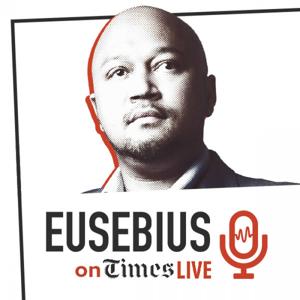
Eusebius McKaiser, well-known broadcaster, author, and now also contributor and political analyst for TimesLIVE, hosts a weekly podcast that journeys to the heart of major news items, dissecting politics, law, and ethics.

More shows like Eusebius on TimesLIVE

Stuff You Should Know by iHeartPodcasts

Stuff You Should Know

78,398 Listeners

The Joe Rogan Experience by Joe Rogan

The Joe Rogan Experience

227,497 Listeners

Global News Podcast by BBC World Service

Global News Podcast

7,618 Listeners

Focus on Africa by BBC World Service

Focus on Africa

372 Listeners

The Money Show by Radio 702

The Money Show

33 Listeners

The Clement Manyathela Show by Primedia Broadcasting

The Clement Manyathela Show

14 Listeners

The Diary Of A CEO with Steven Bartlett by DOAC

The Diary Of A CEO with Steven Bartlett

8,527 Listeners

Crime Junkie by Audiochuck

Crime Junkie

369,624 Listeners

Sunday Times Politics Weekly by TimesLIVE Podcasts

Sunday Times Politics Weekly

3 Listeners

BizNews Radio by BizNews

BizNews Radio

20 Listeners

True Crime South Africa by Killer Audio Creations

True Crime South Africa

174 Listeners

SMWX by Sizwe Mpofu-Walsh

SMWX

9 Listeners

In The Ring With Eusebius McKaiser by Eusebius

In The Ring With Eusebius McKaiser

11 Listeners

The Rest Is Politics by Goalhanger

The Rest Is Politics

3,010 Listeners

What Now? with Trevor Noah by Trevor Noah

What Now? with Trevor Noah

4,204 Listeners