
Sign up to save your podcasts
Or



Based on Podcast App listening data
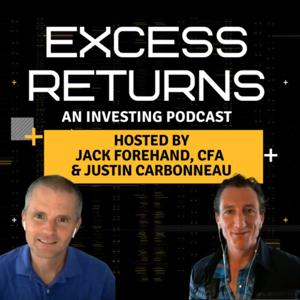
In this episode of Excess Returns, Kai Wu of Sparkline Capital returns to break down his latest research piece, Investing Amid Trade Wars. Using over two dozen insightful visuals, Kai explores how investors should think about global trade exposure in an era of rising tariffs, economic nationalism, and geopolitical uncertainty. He makes the case for staying invested in high-quality multinational companies—especially those rich in intangible assets—and offers four actionable ways to build more resilient global portfolios. Topics Covered:
Why the market reaction to tariffs is both rational and potentially short-sighted
The long-term outperformance of global vs. domestic firms
How to define and measure global trade exposure at the company level
Real-world trade shocks and what they reveal about investor behavior
The four traits of resilient global firms
Why intangible-heavy businesses are uniquely positioned to weather trade disruptions
International vs. U.S. multinationals: hidden value in non-U.S. stocks
Practical suggestions for portfolio construction in a deglobalizing world
In this episode, Kris Sidial joins Jack Forehand and Brent Kochuba to break down the mechanics of tail risk hedging, why most volatility strategies fail, and how his team approaches dislocations in the market. We explore what's really driving volatility behind the scenes, the evolving market structure, and why the current environment may be far more precarious than it appears. If you’ve ever wondered how professional vol traders monetize chaos—or why volatility can stick around far longer than people expect—this episode is for you.
Topics Covered:
What tail risk funds are and why many of them underperform
How to build a long volatility strategy that doesn’t bleed capital
Why rebalancing is a critical component of portfolio resilience
Liquidity fragility and how it amplifies market moves
Retail's role in the latest rally and the fading institutional bid
Structural risks created by passive flows and policy shifts
Monetizing volatility spikes
The psychological traps that lead to poor volatility trading decisions
Why volatility might stay elevated for far longer than most expect
Are we heading toward a recession—or just stuck in macroeconomic purgatory? In this episode of Excess Returns, Dave Nadig and Matt Zeigler sit down with Cameron Dawson, CIO of NewEdge Wealth, to explore the uncertain territory between headline-driven panic and hard data reality. From the implications of sweeping tariffs to the capital account war no one's talking about,
Cameron offers one of the sharpest macro takes we've heard. We cover where the market might go next, how investors should respond to volatility, and what signals to trust in a confusing environment.
Topics Covered:
Why we’re in a “no man’s land” between tariffs and hard data
The potential economic fallout of 145% tariffs on China
Capital account war: Why treasury demand may be fading
What the collapse in shipping and trucking data tells us
How margin compression could trigger job cuts
The case for value over growth after a Mag 7 blow-off
Using technicals, sentiment, and positioning to spot turning points
Why quality stocks may beat traditional defensives
Whether hedging is worth it vs. holding T-bills
Practical strategies for rebalancing through market chaos
In this episode of Excess Returns, Justin and Jack welcome Travis Prentice from Informed Momentum Company to discuss the ins and outs of momentum investing. Travis brings nearly three decades of momentum investing experience and shares valuable insights about momentum strategies, misconceptions, implementation challenges, and how momentum can be effectively combined with other factors. This conversation offers both beginning and experienced investors a comprehensive look at this powerful investment strategy.
Topics Covered:
What momentum investing is and how it differs from growth investing
The mechanics of cross-sectional momentum and relative strength
Common misconceptions about momentum strategies
How fundamental data can enhance momentum strategies
The significance of continuous vs. dynamic momentum
Portfolio construction, sector concentration, and rebalancing approaches
Momentum performance across different market caps and geographies
The risk profile of momentum vs. value strategies
Momentum crashes - what they are and how to mitigate them
Tax efficiency of momentum strategies
The impact of passive investing on momentum strategiesOptimal factor combinations for diversified portfolios
Join hosts Matt Ziegler and Jack Forehand as they interview Jared Dillian (@DailyDirtNap on Twitter) for a fascinating discussion on current market conditions, macroeconomic trends, and controversial investment perspectives. Jared shares his unique takes on everything from tariffs to portfolio construction, offering insights that often challenge conventional wisdom.
Topics Covered:
Jared's contrarian view that tariffs are deflationary rather than inflationaryThe potential long-term decline of the dollar despite possible short-term strengthHow financial wars have replaced hot and cold wars in global politicsThe future of US debt and potential parallels to past debt crisesJared's "Awesome Portfolio" strategy: 20% stocks, 20% bonds, 20% cash, 20% gold, 20% real estateWhy international stocks may continue to outperform US equitiesPossible recession indicators and economic headwindsFed policy predictions and why rates might not be cut as expectedThe value of sentiment indicators and Twitter as a market research toolWhy free trade benefits economies and the risks of protectionist policies
When we started Excess Returns, we wanted to come up with one way to boil down the best advice from the experts we have interviewed into one simple question. That led us to create a standard closing question that we ask all of our guests, “Based on your experience in the markets, if you could teach one lesson to your average investor, what would that be?”.
Over the history of the podcast, we have asked that question to close to 200 guests ranging from great investors to academic experts to options and macro traders. In this episode, we share the answers from our 50 most popular guests all in one episode. Featured guests include Liz Ann Sonders, Cliff Asness, Guy Spier, Michael Mauboussin, Mike Green, Cem Karsan, Chris Davis, Aswath Damodaran, Jack Schwager, Rick Ferri and many others.
Topics Covered:The fundamental purpose of investing: preserving and growing wealth rather than getting rich quick
The importance of base rates in investment decisions
Portfolio monitoring frequency and its impact on investment psychology
Viewing stocks as ownership in actual businesses rather than trading vehicles
The value of patience, humility, and self-forgiveness in the investment process
Diversification across asset classes, strategies, and time frames
The benefits of simplicity in investment approaches
The psychological challenges of investing and how to overcome them
Compounding as a fundamental wealth-building tool
The danger of performance chasing and overconfidence
The value of a rules-based investment process
In this episode of Excess Returns, Matt Zeigler sits down with Andrew Cohen, who shares his extraordinary journey from Goldman Sachs trader to working directly with Bernie Madoff and ultimately becoming a victim of history's largest Ponzi scheme. Now a respected finance professor, Cohen offers unique insights into Wall Street's trading culture, the shock of Madoff's fraud, and how he rebuilt his life in academia after losing almost everything.
Topics Covered:
Andrew's early career at Goldman Sachs and how basketball gambling on the trading floor taught him market-making skills
The trading operations and technology at Bernard L. Madoff Investment Securities in the early 1990s
Working dynamics with Bernie Madoff's sons, Mark and Andy, and office politics
How Andrew was invited to invest in Madoff's "exclusive" fund
Andrew's decision to leave Wall Street at the height of his success
The devastating moment Andrew learned about Madoff's arrest and the Ponzi scheme
The additional ordeal of facing clawback lawsuits after losing his investment
Transitioning to academia and finding a more fulfilling career path
Lessons for investors and finance students about risk, technology, and communication
Join hosts Matt Zeigler and Justin Carbonneau as they sit down with Richard Bernstein, CEO and Chief Investment Officer of Richard Bernstein Advisors. In this insightful conversation, Rich shares his expert perspective on today's market challenges, including the unprecedented narrowness of recent markets, the impact of tariffs on the US economy, and why the current environment calls for a shift toward value investing and greater diversification. Drawing on decades of experience, Bernstein offers practical wisdom for navigating today's uncertain investment landscape.
Topics Covered:
The difference between the 2008 financial crisis and today's economic challengesWhy 2023-2024 saw the most narrow stock market since the Great DepressionThe potential impact of tariffs as "the biggest tax on consumers in our professional careers"Why investors should err on the side of value over growth in the current marketHow US debt levels impact interest rates and economic competitivenessThe role of the Federal Reserve as a lagging rather than leading indicatorWhy gold serves as an effective hedge against uncertaintyBernstein's skeptical view on cryptocurrency and Bitcoin valuationThe limitations of index funds in today's market environmentTimeless advice for wealth building: stick to fundamentals and avoid "get rich quick" thinking
In this episode of Excess Returns, we are joined by Jim Paulsen of Paulsen Perspectives. We unpack the complexities of tariffs, Federal Reserve policies, and investor psychology amidst a turbulent market environment. Jim brings his decades of experience to provide context, rational analysis, and long-term perspectives, steering clear of bold predictions and focusing instead on practical advice for navigating these uncertain times.
Main Topics Covered:
Jim’s perspective on market corrections and advice for investors during volatile periods, emphasizing emotional discipline and long-term thinking.The economic implications of tariffs, debunking the notion that they’re inflationary and exploring their contractionary effects.Critique of Federal Reserve policy, including their unprecedented actions and failure to ease despite market signals of deflation risk.Analysis of the U.S. dollar’s value and its impact on trade competitiveness, proposing a weaker dollar as an alternative to tariffs.The resilience of the private sector, bolstered by strong balance sheets and liquidity, as a buffer against recession fears.Thoughts on government debt, executive overreach, and Trump administration policies like deregulation and immigration.Investment strategies for the current environment.
In this episode of Excess Returns, Matt Zeigler is joined by special co-host Bogumil Baranowski to sit down with Chris Mayer. As the author of the acclaimed book 100 Baggers: Stocks That Return 100-to-1 and How to Find Them, former editor of influential newsletters, and co-founder of Woodlock House Family Capital, Chris brings a wealth of experience and a unique perspective to the table. In this conversation, we dive deep into the world of long-term investing, exploring timeless principles, the impact of AI on future opportunities, and the mindset required to identify and hold onto extraordinary businesses. Whether you're a seasoned investor or just starting out, this episode is packed with wisdom to help you navigate the markets with patience and purpose.
Main Topics Covered:
The potential for 100-bagger stocks in emerging industries like AI and how time reveals the winners.
The "twin engines" of growth and multiples, and why great businesses often trade at high valuations.
The merits and challenges of concentrated investing in a market dominated by giants like the "Mag Seven."
Strategies for dealing with drawdowns and maintaining conviction in great companies through volatility.
The importance of aligning investment strategies with the right type of capital, especially for family wealth.
How experiences as a banker, newsletter editor, and board member shape a business-owner mindset.
The role of boards in capital allocation and setting incentives that drive long-term value.
Insights from general semantics as a tool for critical thinking and avoiding investment pitfalls.
The power of journaling to track evolving thoughts and foster humility in investing.
Why patience is the ultimate lesson for investors and how to tune out market noise.
From the publisher's feed
Ranked by our users in the last 21 days

3,064 Listeners
588 Listeners

946 Listeners

201 Listeners

793 Listeners

356 Listeners

298 Listeners

2,140 Listeners
206 Listeners

90 Listeners

426 Listeners

108 Listeners
266 Listeners

413 Listeners

149 Listeners