
Sign up to save your podcasts
Or



Based on Podcast App listening data
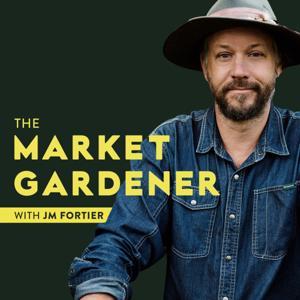
Today I will be talking with someone who likely inspired many of you to get into farming, to consider farming, or to farm better, not bigger.
I'll be talking to market gardener, Jean-Martin Fortier.
We'll start out talking about his days before he farmed and how he figured out exactly who Jean-Martin Fortier was and what he was about. And we'll end up in the fields talking about something that still gets JM excited today, the soil.
Growing Your Microgreens Business Course with Chris Thoreau: http://www.permaculturevoices.com/microgreens
Listen to past episodes at: https://www.paperpot.co/podcast
Increase farm efficiency with the Paperpot Transplanter and Other Small Farm Equipment at https://www.paperpot.co/
Follow PaperpotCo on Instagram: http://bit.ly/2B45VKQ
When you think about what your selling, don't forget that what you are selling isn't just what's in the cooler behind your booth.
You're selling yourself, your story, and the role that you play in a bigger movement; all intangible assets that can allow you to succeed without having a diversity of products.
But if you want to grow, and you don't have more products to sell to customers, then you need to find more customers, and that likely means diversifying beyond the farmers market.
That's the subject of today's show where farmers market is one of the market streams that we dig into as Chris talks about his experiences selling to a diversity of market streams without a diversity of crops.
Growing Your Microgreens Business Course with Chris Thoreau: http://www.permaculturevoices.com/microgreens
Listen to past episodes at: https://www.paperpot.co/podcast
Increase farm efficiency with the Paperpot Transplanter and Other Small Farm Equipment at https://www.paperpot.co/
Follow PaperpotCo on Instagram: http://bit.ly/2B45VKQ
Chris has shown what's possible. And given that and the relatively low capital investment required to start a microgreens business, it's a business that attracts a lot of people.
People that likely focus on the high dollar value per tray, and people that dream about how much money they can make.
This is where it gets dangerous, because you can't just look at the income side of the business. You have to look at the expenses as well.
When you do that with microgreens that high dollar per tray, isn't as high as it might appear.
There are a number of cost that need to be considered - the soil, the seed, and the big one - the labor.
There's a decent amount of labor that goes into producing each tray of microgreens. Labor that needs to be priced into the product, and labor that might turn some people off from growing microgreens.
When over 60% of your time will be spent harvesting, cleaning, and sanitizing trays, some of the allure of that $50 tray goes away.
Add in the need for rigorous observations and recording keeping, and you will find yourself in a position that Chris describes as part automaton and part scientist.
Not for everyone.
Especially when people enter the business looking to make a quick buck.
If you are thinking about starting a microgreens operation, there's a lot to consider, especially the negatives.
Growing Your Microgreens Business Course with Chris Thoreau: http://www.permaculturevoices.com/microgreens
Listen to past episodes at: https://www.paperpot.co/podcast
Increase farm efficiency with the Paperpot Transplanter and Other Small Farm Equipment at https://www.paperpot.co/
Follow PaperpotCo on Instagram: http://bit.ly/2B45VKQ
"They weren't just buying the product, they were buying the whole package."
That's how Chris Thoreau was able to go to a farmer's market selling one crop. Just one. Sunflower shoots. He was able to go to market with just one crop because he was selling a product that had a great story.
There's a lot in this one and at its core this interview focuses heavily on core success principles - relentless testing and experimentation, constant record keeping and analysis, and knowing what to focus on.
Growing Your Microgreens Business Course with Chris Thoreau: http://www.permaculturevoices.com/microgreens
Listen to past episodes at: https://www.paperpot.co/podcast
Increase farm efficiency with the Paperpot Transplanter and Other Small Farm Equipment at https://www.paperpot.co/
Follow PaperpotCo on Instagram: http://bit.ly/2B45VKQ
About one year ago Season 1, Episode 37 aired. It was us taking a look back at Curtis production for the 2015 season.
Today we will do something similar for 2016, because a lot has changed.
Let's start by rewinding the clock and go back that previous episode from December 2015...
"We are officially out of the main season and for the most part, Curtis is now done producing crops off of his farm.
In this episode we will take a look at what Curtis produced on the farm in 2016, and how much of it he produced.
And as a hint, he produced a lot.
All in Curtis produced about 17,500lbs of product off of his farm this year. That's a lot of food coming from a small space. Remember Curtis is only farming off of 15,000 sq.ft. which is spread out over 5 plots. And this year he made the most of it producing over 17,000lbs of produce on those 5 plots. And we aren't talking corn and potatoes here. For the most part many of the crops which he produced really aren't that heavy, he simply produced a lot of product. 3000lbs of tomatoes, 2500lb. of radishes, 2500lb. of spring mix, 2000lbs of turnips. Big numbers for a small farm."
That was then.
Now let's go to present day of December 2016.
And while a year ago the production season was over, this year, it's not. We are still in production season, because Curtis's farm now produces year round, with sales every week of the year.
That's just one of the many changes that took place at Green City Acres this year.
As we look back at 2016, it was a year where Curtis farmed less land than 2015, cut back on certain crops, and added others. Part of those changes came as a result of changes in his market streams as he cut back on restaurant sales, eliminated the farmers market, and started selling a lot more to local grocers.
Big changes, that have had a big effect on what he's growing and how much he's producing...
Let's jump into it and take a look at Curtis 2016 farm production... what was produced, what wasn't, and why it changed.
Listen to past episodes at: https://www.paperpot.co/podcast
Increase farm efficiency with the Paperpot Transplanter and Other Small Farm Equipment at https://www.paperpot.co/
Follow PaperpotCo on Instagram:http://bit.ly/2B45VKQ
Today we are going to start the series, by going back to the beginning. This is the story of how urban farmer Chris Thoreau started his microgreens farm almost 10 years ago.
Chris will take on questions such as:
Why microgreens? Why did he start with microgreen?
Who did he model and how much did he start with?
And how did he handle startup and work life balance.
As you will hear it was tough at times, because Chris started his farm at what on paper looks like an inopportune time.
He started this part time while in school full time and 2.5 months into his first semester his son was born.
Despite life presenting challenges that some people would say aren't worth the risk, Chris made a go of it taking on these early challenges he has managed to grow his operation to one that will do around $200,000 in sales in 2016.
And all that sales are coming from a farm that's in a shipping container taking up 320 sq. ft.
That's where Chris is at today, but it didn't happen overnight, let's get into it and find out how it all started.
Growing Your Microgreens Business Course with Chris Thoreau: http://www.permaculturevoices.com/microgreens
Listen to past episodes at: https://www.paperpot.co/podcast
Increase farm efficiency with the Paperpot Transplanter and Other Small Farm Equipment at https://www.paperpot.co/
Follow PaperpotCo on Instagram: http://bit.ly/2B45VKQ
Anytime that you do something for a long time, over and over again, how do you keep it fresh? Let's be honest, any time that you do something for weeks and years, eventually that honeymoon phase wears off. As should be expected, things changes, life changes, and you change. If that think that's getting old is your farm, and your livelihood is dependent upon it. How do you battle this evolution of getting stale? One way is to branch out and do other things. Maybe that's research and development, maybe that's teaching, maybe that's furthering a cause and maybe crowdsourcing inspiration globally as you try to get more people interested in farming. That's where Curtis finds himself now. After seven seasons of full time farming his farm has changed dramatically since day 1, and even going back to the beginning of 2016 things have changed quite a bit. It's those changes and the desire to grow and innovate that's helped Curtis stay motivated and keeps things fresh when it could just as easily get old... That's the topic of today's show on The Urban Farmer.
Listen to past episodes at: https://www.paperpot.co/podcast
Increase farm efficiency with the Paperpot Transplanter and Other Small Farm Equipment at https://www.paperpot.co/
Follow PaperpotCo on Instagram:http://bit.ly/2B45VKQ
A lot of people who want to start farming, don't start because they focus too much on what they don't have and not enough on what they do have.
Land's too expensive. Lack money to start a farm.
Common complaints that you hear about starting up a farming enterprise.
And I will fully acknowledge that those constraints are very real. But let's put those constraints aside today, and focus on what is possible.
Possible by all of us.
Everything that we are going to talk about today deals with getting better and NOT spending money.
If you stop and think about it, there are a lot of things that you can do to improve your business, make your business more competitive, and attract more customers that's free.
If you ever feel like you are at a disadvantage because of what you don't have, start looking at the situation in terms of what you do have, and what you can do, because it's a lot of those things that will make the difference and give you a leg up on the competition, money or not.
Today's episode is us exploring this idea - of what are some of things that you can do to make your farm better, without spending any money.
Listen to past episodes at: https://www.paperpot.co/podcast
Increase farm efficiency with the Paperpot Transplanter and Other Small Farm Equipment at https://www.paperpot.co/
Follow PaperpotCo on Instagram:http://bit.ly/2B45VKQ
Curtis is on vacation, so I am joined by bio-intensive farmer Jodi Roebuck. Jodi's been farming and studying under the originator of the Grow Bio-Intensive form of farming, John Jeavons, for 18 years. Jodi's well known for using Jeavon's bio-intensive method to build soil. Soil that's deep and loose enough to literally put your arm into up to your elbow. It's a soil that well known grower JM Fortier has called some of the best soil that he's ever seen. It's from this rich soil that Jodi farms, growing his own fertility, his own food, saving seeds, and educating the next generation of farmers. He's traveled the world studying under the masters and visiting a lot farms along the way. This summer Jodi made a stop in North America where he visited the home farms of both JM Fortier and Curtis. As a result, he's very familiar with their market gardening style. The question then becomes how can he apply his knowledge of bio-intensive practices to the context of market farming, and that's where we pick up the conversation today. Where do the worlds of bio-intensive growing and market gardening collide, and what's possible...
Listen to past episodes at: https://www.paperpot.co/podcast
Increase farm efficiency with the Paperpot Transplanter and Other Small Farm Equipment at https://www.paperpot.co/
Follow PaperpotCo on Instagram:http://bit.ly/2B45VKQ
Today Curtis takes on the question - Let's say you are starting a a new farm. And I gave you a bunch of land, 15 acres. All pretty flat, all pretty usable. How would you go about deciding how much of that land you would farm? We get into the ideas around how much land he would farm and why.
Listen to past episodes at: https://www.paperpot.co/podcast
Increase farm efficiency with the Paperpot Transplanter and Other Small Farm Equipment at https://www.paperpot.co/
Follow PaperpotCo on Instagram:http://bit.ly/2B45VKQ
From the publisher's feed
287 Listeners
261 Listeners
979 Listeners
679 Listeners
1,577 Listeners
1,847 Listeners
514 Listeners
395 Listeners

298 Listeners

1,273 Listeners
1,021 Listeners

63 Listeners
47 Listeners

10 Listeners

2 Listeners