
Sign up to save your podcasts
Or

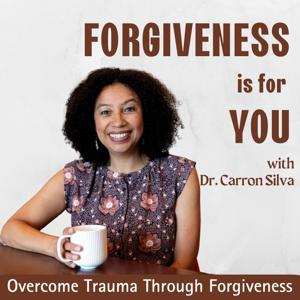
By Dr. Carron Silva: Forgiveness Guide, Christian Trauma Coach

5
4242 ratings


The podcast currently has 144 episodes available.
The most played episodes among Podcast App listeners.
Disgust is an oft-overlooked emotion in the healing of trauma and deciding to forgive. Moral disgust is the reaction to a physical reaction towards a person who violated the moral code, such as sexual, verbal, or physical abuse and betrayal in a relationship. If we are to forgive ourselves, we will need to take a good, hard look at how disgust is showing up in our thoughts and is manifested in our bodies. When disgust is internalized, we have a visceral reaction to our own thoughts, emotions, and actions. When disgust is externalized, we hyperfocus on one or two aspects of the offender and define them as a “disgusting person” based on their behavior. Recognize that feeling disgust is part of the healing journey and you are not wrong for feeling it toward yourself or the other person. It’s a natural reaction to a moral injustice. Avoid judging yourself for feeling disgusted. References: Pope St. John Paul II Theology of the Body If this podcast resonates with you, please subscribe. Write a review, share the link with a friend, take a screenshot, and share it on your social media. Sign up for my 5 Days to Forgiveness Self-Guided Mini-Audio Retreat. Connect with me HERE as your forgiveness guide. I will hold space for you as your Christian Life Coach as you work through your pain to a new you. Remember Friend, Forgiveness is for You.

It’s important to understand how our emotions can help us heal or keep us stuck in unforgiveness. In this episode, I talk about the role of anger in the forgiveness process. I make the distinction between the state of anger and the emotion of anger. We can allow ourselves to be in a state of anger, but not for too long. When we allow the emotion of anger to morph into a state of being, we become an angry person and our tendency toward sin increases. We can allow ourselves to experience the emotion of anger and decide to use that emotion to move us toward healing. Emotions are neutral, they are neither good nor bad. They just are. It’s what we do with them that matters. Our senses receive information and engage our imagination which informs our thoughts and leads to emotions, which can be governed by our will. Anger’s motivation is a desire for justice, but I can show up vicious or virtuous in my anger. If my anger compels me to take action towards a good, then it’s tempered by reason. If I understand that my anger is righteous and forgiveness is for me, not the offender, my anger can help me move forward to co-create a new reality with Christ. If this podcast resonates with you, please subscribe/follow. Write a review, share the link with a friend, take a screenshot, and share it on your social media. Sign up for my 5 Days to Forgiveness Self-Guided Mini-Audio Retreat. Connect with me as your forgiveness guide at www.drcarron.com. I will hold space for you as your Christian Life Coach as you work through your pain and rewrite your story. Sign up HERE for a discovery call. Remember Friend, Forgiveness is for You.
In this episode, I examine how our thoughts, words, and actions in unforgiveness can result in sin that we may not even be aware of committing. I also caution against advice I was given in the early stages of my recovery from sexual abuse. The advice I got was to retell my story in all the minute detail to anyone who would listen, with the understanding that validation cures trauma. However, with each retelling of my stories, I was strengthening the neural networks in my brain that held the trauma. I was making myself sicker by reliving the trauma with each retelling. We know now about neuroplasticity and the ability to form new neural networks through mind-body modalities in addition to the healing we receive through our relationship with God. As the term neuroplasticity indicates, our brains are not static, what we think and believe and how we behave as a result can change, and with it, the structures in the brain that hold those thoughts and memories can also change. We can’t change the circumstances, but we can change our thoughts and behavior about the circumstances to help us move through the pain to a healthier version of ourselves. I also sinned against God in how I retold my stories and formed judgments about my offenders, failing to see how my judgments hardened my heart in unforgiveness. By recognizing which sins I was committing, I was able to take full responsibility for how to respond rather than react to my trauma and make space for God to heal me. If this podcast resonates with you, please hit subscribe below. Write a review, share the link with a friend, take a screenshot, and share it on your social media. Connect with me as your forgiveness guide at www.drcarron.com. I will hold space for you as your Christian Life Coach as you work through your pain and rewrite your story. Sign up HERE for a discovery call. Not ready for coaching? Sign up for my 5 Days to Forgiveness Self-Guided Mini-Audio Retreat. Email me at [email protected] to schedule a speaking engagement at your church or small faith-sharing group. Remember Friend, Forgiveness is for You.
In this episode, I am tackling the belief that “good” Christians have to forgive because God tells us to love our enemies. But is loving the same as forgiving? So many Christians who are still in the process of working through forgiveness get trapped in unhealthy relationships because they feel guilty about not loving their enemies as Jesus exhorts us to do in Matthew 5: 43-45. Victims are often strongly encouraged to re-engage in relationships with offenders as their Christian duty to forgive. I challenge two concepts in this belief, (1) what it means to be a “good” Christian and (2) what it means to love our enemies. It is well and good to have standards, but when we start to define Christianity by a set of rules instead of a relationship with our triune God, we are missing the boat. It’s time to get back to basics. Drop the “good” in front of Christian and sit at the foot of the Master, Jesus Christ. In Luke 18 v. 19, the rich official calls Jesus a good teacher, and He responds, “Why do you call me good? No one is good but God alone.” We cannot earn grace. Forgiveness heals us and it frees us, but it has to be an act that is done in freedom and never under duress. Making someone believe that they somehow don’t make the cut as a “good Christian” to get them to forgive is manipulative and should stop. The love that Jesus refers to in Matthew 5: 43-45 is agape love, the love that God infuses into our hearts when we are in a relationship with Him. It’s the love that Saint Paul refers to in 1 Corinthians 13 that bears all things. Jesus gives us a way to express that love by saying, “...pray for those who persecute you” Simply put, praying for our enemies is loving them. Do we need to be in a close relationship with someone when we pray for them? Absolutely not. Are we supposed to tolerate behavior that insults our inherent dignity? NO. Jesus himself stated in Matthew 18:6, “Woe to the one by whom the stumbling block comes” about those who would tempt us to sin” What Jesus is asking of us here is to follow his lead and be merciful. But what does being merciful mean? It doesn’t mean we have to submit to manipulation or abuse. We can love from a distance. If you are in a situation where harm has been perpetrated against you, and you feel guilty for not having forgiven the offender and pressure from others to forgive, know this. You have free will. God respects your free will. He will never ask you to do something He has not already allowed His Son to suffer and redeem. If this podcast resonates with you, please hit subscribe. Write a review, share the link with a friend, take a screenshot, and share it on your social media. Connect with me as your forgiveness guide at www.drcarron.com. I will hold space for you as your Christian Life Coach as you work through your pain and rewrite your story. Sign up HERE for a discovery call. Not ready for coaching? Sign up for my 5 Days to Forgiveness Self-Guided Mini-Audio Retreat. Email me at [email protected] to schedule a speaking engagement at your church or small faith-sharing group. Remember Friend, Forgiveness is for You.
Today’s episode is about how we learn to forgive, what we can do to unlearn some bad forgiveness habits, and how to make a sincere apology. We are social beings and human brains develop in community. From a very young age, we observe how adults in our homes behave toward one another. We copy their behavior, but we are also directly impacted when we are instructed to do as they say. How we learn to forgive has a direct impact on our relationships throughout life. Forgiveness requires words and actions. Some of us believe that if they say they’re sorry without actually owning what they are sorry for it should be OK so relationship issues never get resolved and we end up with what marriage and family therapist Dr. John Gottman calls perpetual problems. We can tap into the graces we receive through the Sacraments and allow Christ to enter into the places where we need to forgive and be forgiven. A sincere apology does not contain any conditions, most especially the conjunction “if”. It shouldn’t put the victim on the defensive or leave room for doubt. For example, Don’t say, I’m sorry IF I did X. The truth is, I did what you did, and it impacted someone else negatively. Instead, say something like I did X to you, and I can see how much it hurts you, and I am sorry. What can I do to make it better? Describe in sufficient detail what you did so that the victim feels validated in their experience, but not so much detail that the victim re-experiences the injury. Allow the victim to respond to the apology in the way they feel is appropriate without trying to control the outcome. If this podcast resonates with you, please hit subscribe. Write a review, share the link with a friend, take a screenshot, and share it on your social media. Connect with me as your forgiveness guide at www.drcarron.com. I will hold space for you as your Christian Life Coach as you work through your pain and rewrite your story. Not ready for coaching? Sign up for my 5 Days to Forgiveness Self-Guided Mini-Audio Retreat. Email me at [email protected] to schedule a speaking engagement at your church or small faith-sharing group. Remember Friend, Forgiveness is for You.
The podcast currently has 144 episodes available.

15,692 Listeners

1,667 Listeners

4,746 Listeners

6,341 Listeners
4,172 Listeners
31,729 Listeners

658 Listeners

21 Listeners

901 Listeners

2,108 Listeners

19,258 Listeners

5,684 Listeners

12,433 Listeners
0 Listeners

217 Listeners