
Sign up to save your podcasts
Or

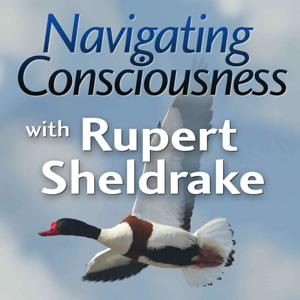

A talk Rupert gave at a symposium on the philosophy of form Cambridge University in May 2022. A long debate about the nature and causes of forms has been going on at least since the time of ancient Greece, and within the sciences has been most hotly contested in relation to the morphogenesis of plants and animals. Since the seventeenth century, mechanists – still the dominant orthodoxy – have tried to explain morphogenesis in terms of material causes present in eggs, whereas vitalists and holistic biologists have suggested explanations in terms of formative forces and, more recently, morphogenetic fields. This debate continues, and could well help to revolutionize not only biology, but also chemistry and physics.
 View all episodes
 By Rupert Sheldrake

4.9
6666 ratings
A talk Rupert gave at a symposium on the philosophy of form Cambridge University in May 2022. A long debate about the nature and causes of forms has been going on at least since the time of ancient Greece, and within the sciences has been most hotly contested in relation to the morphogenesis of plants and animals. Since the seventeenth century, mechanists – still the dominant orthodoxy – have tried to explain morphogenesis in terms of material causes present in eggs, whereas vitalists and holistic biologists have suggested explanations in terms of formative forces and, more recently, morphogenetic fields. This debate continues, and could well help to revolutionize not only biology, but also chemistry and physics.
10,573 Listeners

1,884 Listeners
2,631 Listeners

639 Listeners

91 Listeners

18 Listeners

269 Listeners

1,665 Listeners
271 Listeners

1,046 Listeners
5,399 Listeners
1,448 Listeners
625 Listeners
116 Listeners
1,091 Listeners

8,854 Listeners