
Sign up to save your podcasts
Or



Based on Podcast App listening data
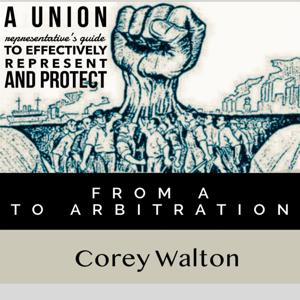
This episode of From A to Arbitration, hosted by Corey, features a special guest, Mike Caref, a National Business Agent from Region 3. The episode begins with Corey talking about the upcoming episode, which will feature JB, a National Business Agent from Region 3, who will be discussing the DOIS, 3996, and the PET. Corey then goes on to talk about a couple of grievances that he has received about votes, shop stewards, and the process of voting on shop stewards. He discusses how he would recommend that the shop steward is present during the vote count, as a way to ensure transparency.
Corey then brings up a topic about CCAs being used to case mail on Sunday. He talks about how this is a grievance that he has experienced, but says it is a tricky one to handle. He then gives a personal anecdote about his experience with this issue, and how he had to file a grievance for the right to be able to touch each piece of mail to ensure that it was going to the correct address. He talks about how some of the carriers were spending four minutes per stop because of this, which is an unbelievable amount of time. He encourages listeners to contact him if they experience this issue.
The majority of the podcast features a discussion about the Mittenthal award, which was a landmark arbitration ruling. The ruling specifically dealt with the use of emergency placement, which is the practice of placing a letter carrier on non-duty, non-pay status, without pay, without first giving them written notice of the charge against them. This award was significant, because it clarifies the process that is required for the Postal Service to use emergency placement.
Mike Caref speaks in detail about the case, going through the specifics of the Mittenthal award, and then giving further detail from a subsequent arbitration ruling on the same topic. He goes into the steps that must be taken for the Postal Service to utilize emergency placement, and also the necessary details that should be included in the written notice given to the employee.
The podcast ends with reiterating that emergency placement is discipline, and not administrative action. He then encourages listeners to educate themselves about the topic and make sure that they are familiar with the rules and regulations that govern their work.
http://www.fromatoarbitration.com/
This episode focuses on mitigating factors in grievances and a specific grievance related to unsafe scanner messages. Corey discusses the importance of worker safety, emphasizing that management's concern for safety is often only apparent during arbitration proceedings. He highlights a new shop steward's dedication and initiative, praising her approach to representing colleagues. Corey delves into the definition of mitigating factors, using personal anecdotes and examples from past grievances to illustrate factors such as a miscarriage, loss of a loved one, or an apology as potential mitigating circumstances. He emphasizes the importance of documenting these factors and utilizing them to support colleagues in need. The episode then transitions to a grievance concerning a recurring scanner message about taking approved rest breaks to combat the heat. Corey argues that this message, while seemingly innocuous, can potentially put workers in harm's way by encouraging them to wait for "approved" breaks instead of taking breaks as needed in extreme heat. He details the steps taken to grieve the message, emphasizing the importance of filing grievances for any potential danger, specifically citing Article 14 of the National Agreement as the basis for the grievance, and advocating for further support and education among union members. The episode ends by encouraging listeners to be proactive in safeguarding their safety and the safety of their colleagues and highlighting Corey's dedication to protecting fellow workers.
C-30679
C-32205
http://www.fromatoarbitration.com/
Corey talks to shop stewards about the importance of the formal Step A meeting in the grievance process. They emphasize that this step is crucial because it's where cases are often won or lost. He encourages stewards to be thorough in their preparation, to know their arguments well, and to be ready to rebut management's position. They also discuss the importance of having the correct documentation and evidence to support their case. He highlights a few specific examples of how grievances have been handled at the formal Step A level and provides advice on how to handle these situations.
http://www.fromatoarbitration.com/
Corey talks about the importance of the informal Step A meeting in the grievance process. He emphasizes the need for new shop stewards to understand what happens in these meetings and how to prepare themselves. He highlights that management often tries to intimidate stewards in these meetings, and it's important to remember that stewards have protected status. He provides guidance on what to include in a grievance file, the need for documentation and evidence, and how to build a strong case. He also encourages stewards to be assertive and not settle for a weak resolution.
http://www.fromatoarbitration.com/
This episode discusses how to approach grievances related to holiday scheduling. They emphasize the importance of building a strong case file with detailed information, including the holiday schedule, seniority rosters, employee earning statements, and any evidence of a past practice. It highlights the importance of understanding Article 11 of the national agreement and how it differs from Article 8 in the context of holiday scheduling. JB encourages listeners to file grievances if they believe their holiday pay has been denied or if management has not followed the proper scheduling procedure. They also discuss the importance of being organized, documenting everything, and not being afraid to challenge management.
http://www.fromatoarbitration.com/
Corey talks about past practice grievances and how they are often successful in arbitration. He discusses the importance of understanding the concept of past practice and the three elements required to establish a valid past practice: clarity and consistency, longevity and repetition, and acceptability. He also emphasizes the need for good-faith bargaining when management seeks to change a past practice. Corey highlights specific arbitration cases and provides guidance on how to build a case file and navigate these types of grievances.
Bahakel C-30984
August C-34447
Talmadge C-34614
Talmadge C-20253 (denied)
http://www.fromatoarbitration.com/
This episode discusses the concept of "dispatch of value, window of operation" and explains how management uses it to justify violating Article 8 of the national agreement. Corey provides several arbitration decisions, and encourages shop stewards to use this knowledge in their grievance process. He also stresses the importance of having proper staffing levels and how management often fails to do so, which leads to the violation of Article 8.
M-01548 The White Pages
http://www.fromatoarbitration.com/
Corey discusses the concept of dispatch of value, window of operation and how management uses it to justify violating Article 8 of the national agreement. He highlights the importance of understanding this concept and how it can be used to fight management's actions. He analyzes various arbitration decisions to illustrate how arbitrators have ruled on this issue and provide guidance for shop stewards on how to build a case. Corey also discusses the importance of evidence and documentation when fighting against management's actions and how to prepare for an arbitration hearing.
Britton C-13181
Dilts C-26675 (don't use as cite. Remedy is crap)
Roberts C-31146
August C-32315
Article 8.5.a, 8.5.d, 8.5.f, 8.5.g
http://www.fromatoarbitration.com/
This episode focuses on escalated monetary awards in arbitration cases related to the noncompliance with cease-and-desist orders by management. Corey emphasizes the importance of thorough documentation, including all past decisions, settlements, and relevant documents like M1517 (the Donahoe letter). He encourages listeners to study specific arbitration cases from Lake Charles, highlighting the successful arguments and remedies achieved in those instances, specifically referencing cases 31146, 31269, 31620, 33023 A and B, and 32792. He also provides guidance on formulating strong issue statements and remedies, advocating for the inclusion of Article 15 violations and providing a template for building a compelling case. He concludes by stressing the importance of learning from arbitrators' decisions and understanding their reasoning in awarding escalated monetary awards.
M-01517
M-01967 federal court decision
Roberts C-34197 Kingsport
Mittenthal C-6238
Gamser C-3200
Lake Charles decisions
Roberts C-31146, 31269, 33023 A-B
Wolitz C-31620, 32792
http://www.fromatoarbitration.com/
This episode focuses on understanding and utilizing escalated monetary awards in grievance arbitrations. Corey emphasizes the importance of documenting past cease and desist orders issued to management as evidence of repeated contract violations. He argues that while the goal is not to financially burden the Postal Service, these awards are sometimes necessary to ensure contract compliance when other avenues, like informal resolutions and prior arbitration decisions, have failed to stop the violations. Corey cites several arbitration decisions, emphasizing Arbitrator Roberts' decision which supports the argument that repeated disregard for cease and desist orders justifies escalating monetary remedies. He concludes by advising listeners on how to effectively build their cases, including providing specific examples of successful arguments and appropriate monetary amounts to request.
Roberts C-34731
Maier C-31812
August C-32315
Wolitz C-31620
http://www.fromatoarbitration.com/
From the publisher's feed
A Union Representative's in-depth Guide to the Dispute Resolution Process
Ranked by our users in the last 21 days

6,267 Listeners

5,641 Listeners

1,062 Listeners

18 Listeners

114 Listeners

99 Listeners

83 Listeners
13 Listeners

22 Listeners

19 Listeners

18 Listeners

41 Listeners

7 Listeners

24 Listeners

15 Listeners