
Sign up to save your podcasts
Or



"How can you get to the point where people are actually not moving around as much and reducing their carbon footprint in various ways? The main way we're planning on doing that is decarbonizing the economy. This means electrifying a lot of things. People still are moving around. They're now using electric cars, but they're still using cars. How can you build new cities that don't require that in quite the same way? And maybe we've got some visions as to the sort of things that might happen or should happen during the pandemic when people suddenly couldn't travel, or they were in lockdown, and they had to work from home. Increasingly people have been able to work from home. This was something I advocated a long time ago when I was working at NCAR is that we needed to develop better ways of going to a seminar without driving eight miles across town to a building where that was actually happening."
Kevin Trenberth is a Distinguished Scholar at the National Center of Atmospheric Research (NCAR) in Boulder and an Honorary Academic in the Department of Physics, Auckland University in Auckland, New Zealand. From New Zealand, he obtained his Sc. D. in meteorology in 1972 from Massachusetts Institute of Technology. He was a lead author of the 1995, 2001 and 2007 Scientific Assessment of Climate Change reports from the Intergovernmental Panel on Climate Change (IPCC), and shared the 2007 Nobel Peace Prize which went to the IPCC. He served from 1999 to 2006 on the Joint Scientific Committee of the World Climate Research Programme (WCRP), and chaired a number of committees for more than 20 years. He is the author of "The Changing Flow of Energy Through the Climate System".
The Changing Flow of Energy Through the Climate System
www.ipcc.ch
https://www.cgd.ucar.edu/staff/trenbert
www.oneplanetpodcast.org
www.creativeprocess.info
Kevin Trenberth is a Distinguished Scholar at the National Center of Atmospheric Research (NCAR) in Boulder and an Honorary Academic in the Department of Physics, Auckland University in Auckland, New Zealand. From New Zealand, he obtained his Sc. D. in meteorology in 1972 from Massachusetts Institute of Technology. He was a lead author of the 1995, 2001 and 2007 Scientific Assessment of Climate Change reports from the Intergovernmental Panel on Climate Change (IPCC), and shared the 2007 Nobel Peace Prize which went to the IPCC. He served from 1999 to 2006 on the Joint Scientific Committee of the World Climate Research Programme (WCRP), and chaired a number of committees for more than 20 years. He is the author of "The Changing Flow of Energy Through the Climate System".
"How can you get to the point where people are actually not moving around as much and reducing their carbon footprint in various ways? The main way we're planning on doing that is decarbonizing the economy. This means electrifying a lot of things. People still are moving around. They're now using electric cars, but they're still using cars. How can you build new cities that don't require that in quite the same way? And maybe we've got some visions as to the sort of things that might happen or should happen during the pandemic when people suddenly couldn't travel, or they were in lockdown, and they had to work from home. Increasingly people have been able to work from home. This was something I advocated a long time ago when I was working at NCAR is that we needed to develop better ways of going to a seminar without driving eight miles across town to a building where that was actually happening."
The Changing Flow of Energy Through the Climate System
www.ipcc.ch
https://www.cgd.ucar.edu/staff/trenbert
www.oneplanetpodcast.org
www.creativeprocess.info
“We have prepared a selection of solutions for the specific needs of cities – construction, ways to make buildings carbon neutral and much more efficient, new heating systems, mobility, of course, supply chains, waste management. We really focus on cities and would like to make an alliance of all cities interested in these solutions to start to use them and test them everywhere. So that's one of the actions we're doing now.”
Psychiatrist, aviator and explorer, Bertrand Piccard made history in 1999 by accomplishing the first ever non-stop round-the-world balloon flight, and a number of years later the first round-the-world solar-powered flight. Piccard has dedicated his life to demonstrating sustainable development opportunities. He is Founder and Chairman of the Solar Impulse Foundation, which has assembled a verified portfolio of over 1400 actionable and profitable climate solutions. As a pioneer of new ways of thinking that reconcile ecology and economy, he uses his exploration feats to motivate governments and industries to take action. He is a United Nations Goodwill Ambassador for the Environment and Special Advisor to the European Commission. He’s author of Réaliste, Changer d’Altitude, and other books.
Solar Impulse Foundation
bertrandpiccard.com
Solar Impulse Solutions Explorer (1400+)
Solutions for the Cities guide
Solutions for Cities Podcast
Réaliste
www.oneplanetpodcast.org
www.creativeprocess.info
Psychiatrist, aviator and explorer, Bertrand Piccard made history in 1999 by accomplishing the first ever non-stop round-the-world balloon flight, and a number of years later the first round-the-world solar-powered flight. Piccard has dedicated his life to demonstrating sustainable development opportunities. He is Founder and Chairman of the Solar Impulse Foundation, which has assembled a verified portfolio of over 1400 actionable and profitable climate solutions. As a pioneer of new ways of thinking that reconcile ecology and economy, he uses his exploration feats to motivate governments and industries to take action. He is a United Nations Goodwill Ambassador for the Environment, Special Advisor to the European Commission, and is author of Réaliste, Changer d’Altitude, and other books.
“We have prepared a selection of solutions for the specific needs of cities – construction, ways to make buildings carbon neutral and much more efficient, new heating systems, mobility, of course, supply chains, waste management. We really focus on cities and would like to make an alliance of all cities interested in these solutions to start to use them and test them everywhere. So that's one of the actions we're doing now.”
Solar Impulse Foundation
bertrandpiccard.com
Solar Impulse Solutions Explorer (1400+)
Solutions for the Cities guide
Podcast
Réaliste
Changer d’altitude
www.oneplanetpodcast.org
www.creativeprocess.info
Photo credit: Philipp Böhlen
"Cities are acting, local governments are acting, nations are acting, at all levels. The technologies for renewable energy, for energy storage, are increasing really rapidly. At the same time, we're starting to see what the pathway might actually look like to strongly mitigate climate change...
Some of the recent work that I've been doing has been to really start thinking about what happens after 2100? After 2100, the world could be one in which we're still emitting huge amounts of carbon. It's certainly possible. Or it could be one in which we have mitigated very strongly and are now getting to the point of removing CO2 from the atmosphere."
Dr. Charles D. Koven is an Earth System Scientist, working in the Climate Sciences Department at the Lawrence Berkeley National Laboratory. He investigates feedbacks between climate and the carbon cycle. Dr. Koven’s primary research focus is on high-latitude feedbacks to climate change, and in particular the role of soil carbon in permafrost soils, and its response to changing climate. Dr. Koven is a lead author on the IPCC report as part of Working Group I, The Physical Science Basis of Climate Change.
Charles D. Koven
www.ipcc.ch
www.oneplanetpodcast.org
www.creativeprocess.info
Dr. Charles D. Koven is an Earth System Scientist, working in the Climate Sciences Department at the Lawrence Berkeley National Laboratory. He investigates feedbacks between climate and the carbon cycle. Dr. Koven’s primary research focus is on high-latitude feedbacks to climate change, and in particular the role of soil carbon in permafrost soils, and its response to changing climate. Dr. Koven is a lead author on the IPCC report as part of Working Group I, The Physical Science Basis of Climate Change.
"Cities are acting, local governments are acting, nations are acting, at all levels. The technologies for renewable energy, for energy storage, are increasing really rapidly. At the same time, we're starting to see what the pathway might actually look like to strongly mitigate climate change...
Some of the recent work that I've been doing has been to really start thinking about what happens after 2100? After 2100, the world could be one in which we're still emitting huge amounts of carbon. It's certainly possible. Or it could be one in which we have mitigated very strongly and are now getting to the point of removing CO2 from the atmosphere."
Charles D. Koven
www.ipcc.ch
www.oneplanetpodcast.org
www.creativeprocess.info
"Certainly on the perimeter of urban centers, water farms are able to provide water and then brought into that city center or other ways. Roofs of buildings is an area where we can deploy hydropanels, where you can plumb directly into a building, so you can imagine in a more urban context, that's a way to bring water directly into that building itself... Water insecurity and water scarcity is affecting all people in almost every part of the world. By 2025, we expect 1.8 billion people to suffer from water scarcity. You fast forward to 2050, we expect 6 billion people will have water scarcity.”
Neil Grimmer is Brand President of SOURCE Global, innovator of the SOURCE Hydropanel, a renewable technology that uses the sun to transform water vapor in the air to clean, safe and perfectly mineralized drinking water. The Public Benefit Company’s mission is to bring perfect drinking water to every person, every place, and Neil leads its marketing, consumer packaged goods and last-mile water solutions for community, consumer and commercial customers in more than 50 countries.
www.source.co
How it Works
www.source.co/team/neil-grimmer
www.oneplanetpodcast.org
www.creativeprocess.info
Neil Grimmer is Brand President of SOURCE Global, innovator of the SOURCE Hydropanel, a renewable technology that uses the sun to transform water vapor in the air to clean, safe and perfectly mineralized drinking water. The Public Benefit Company’s mission is to bring perfect drinking water to every person, every place, and Neil leads its marketing, consumer packaged goods and last-mile water solutions for community, consumer and commercial customers in more than 50 countries.
"Certainly on the perimeter of urban centers, water farms are able to provide water and then brought into that city center or other ways. Roofs of buildings is an area where we can deploy hydropanels, where you can plumb directly into a building, so you can imagine in a more urban context, that's a way to bring water directly into that building itself... Water insecurity and water scarcity is affecting all people in almost every part of the world. By 2025, we expect 1.8 billion people to suffer from water scarcity. You fast forward to 2050, we expect 6 billion people will have water scarcity.”
www.source.co
How it Works
www.source.co/team/neil-grimmer
www.oneplanetpodcast.org
www.creativeprocess.info
"Changing cities is going to mean changing how we do politics in them. What kind of decisions do cities get to make? This changes pretty widely across countries and even states within the United States where cities can either get the benefit of the doubt that they get to decide what happens within their jurisdiction, unless explicitly stated otherwise in the United States, that's called Home Rule, which can be really useful, but it also sets up a race to the bottom in a lot of cases where they do they do not have the resources to say, have a legal team put together to go toe to toe with Amazon or Alibaba or Tesla."
David A. Banks is the Director of Globalization Studies at the University at Albany, SUNY and the author of the forthcoming book The City Authentic: How the Attention Economy Builds Urban America published by University of California Press. He is also a delegate to the Troy Area Labor Council and the co-host of the podcast Ironweeds.
www.davidabanks.org
www.e-flux.com/architecture/software/337954/where-do-you-live/
https://reallifemag.com/true-ish-grit/
www.reallifemag.com/new-haunts/
The attention economy of authentic cities https://doi.org/10.1080/09654313.2021.1882947
https://ironweeds.podbean.com
David A. Banks is the Director of Globalization Studies at the University at Albany, SUNY and the author of the forthcoming book The City Authentic: How the Attention Economy Builds Urban America published by University of California Press. He is also a delegate to the Troy Area Labor Council and the co-host of the podcast Ironweeds.
"Changing cities is going to mean changing how we do politics in them. What kind of decisions do cities get to make? This changes pretty widely across countries and even states within the United States where cities can either get the benefit of the doubt that they get to decide what happens within their jurisdiction, unless explicitly stated otherwise in the United States, that's called Home Rule, which can be really useful, but it also sets up a race to the bottom in a lot of cases where they do they do not have the resources to say, have a legal team put together to go toe to toe with Amazon or Alibaba or Tesla."
www.davidabanks.org
www.e-flux.com/architecture/software/337954/where-do-you-live/
https://reallifemag.com/true-ish-grit/
www.reallifemag.com/new-haunts/
The attention economy of authentic cities https://doi.org/10.1080/09654313.2021.1882947
https://ironweeds.podbean.com
From the publisher's feed
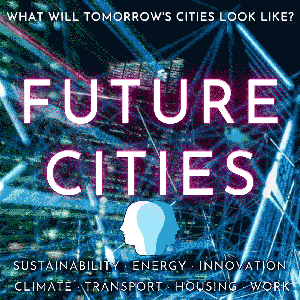
What will the city of tomorrow look like?
We are living in the Century of the City. Cities are the main drivers of creativity and innovation. Yet, a great number of people have little or no conception of what their future will look like when it comes to creating resilient, sustainable, and liveable cities. Even though a significant majority are intent on learning more about climate disruption, energy, transport, water, air, waste, education, and jobs.
In a decade of transformative change, Future Cities podcast tells stories about the best in democracy, culture, urbanism, and society. It is a story of the cities of tomorrow told in a relevant, exciting, and accessible way by the many stakeholders and changemakers reimagining and reshaping our future.
www.oneplanetpodcast.org
www.creativeprocess.info

7,579 Listeners

1,862 Listeners

74 Listeners

296 Listeners

1,161 Listeners

1,014 Listeners

459 Listeners

61 Listeners

276 Listeners
510 Listeners
93 Listeners

178 Listeners
149 Listeners

143 Listeners

433 Listeners

203 Listeners

229 Listeners

55 Listeners
55 Listeners
48 Listeners

35 Listeners

7 Listeners

89 Listeners

33 Listeners

13 Listeners

7 Listeners

18 Listeners

33 Listeners

40 Listeners

81 Listeners

11 Listeners

35 Listeners

2 Listeners
3 Listeners