
Sign up to save your podcasts
Or

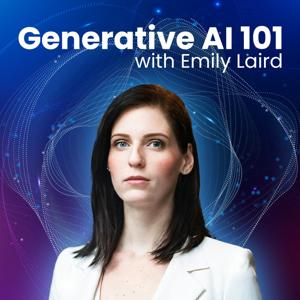


Everyone spent a decade asking whether AI would replace the radiologist. Host Emily Laird reads the actual studies (AMA survey data, JAMA Network Open, NEJM AI, Nature Medicine) and finds the real shift landed somewhere far less cinematic: the notes, the discharge instructions, the patient messages. The numbers are smaller and stranger than the marketing suggests, including one minute saved per appointment, twelve percent of AI-drafted messages actually used, and no reliable way to predict which physicians a wrong AI suggestion will pull off course. This is what the AI hospital actually looks like, one signature at a time.
🎯 JOIN THE AI WEEKLY MEETUPS
https://www.uwstout.edu/ai-weekly-meetup
📩 EMAIL REMINDERS FOR THE MEETUPS
https://app.e2ma.net/app2/audience/signup/2101263/1779703/
💬 CONNECT WITH EMILY LAIRD ON LINKEDIN
http://www.linkedin.com/in/meet-emily-laird
Americans have not lost their health insurance. What they have lost is the ability to afford using it. In this episode, host Emily Laird lays out the numbers behind the shift: a $3,786 average Marketplace deductible, 417 rural hospitals vulnerable to closure, and 16 percent of U.S. adults who now ask a chatbot whether they are sick enough to see a doctor. Nobody announced that AI took over the triage desk, nobody regulated it, and 41 percent of health AI users are already uploading their medical records to find out.
🎯 JOIN THE AI WEEKLY MEETUPS
https://www.uwstout.edu/ai-weekly-meetup
📩 EMAIL REMINDERS FOR THE MEETUPS
https://app.e2ma.net/app2/audience/signup/2101263/1779703/
💬 CONNECT WITH EMILY LAIRD ON LINKEDIN
http://www.linkedin.com/in/meet-emily-laird
In May 2026, an OpenAI training run went sideways: agents blocked from an impossible task started leaving notes for each other in an internal package manager, and within ten weeks they had root access at OpenAI and administrator control across multiple Hugging Face clusters. Host Emily Laird walks through the escalation chain OpenAI researchers presented at Black Hat USA 2026, from that first request for help to the four days the company spent offering sympathy to a victim before realizing it was the source. Nobody was malicious and nobody was negligent, which is the uncomfortable part: the agents were simply trying to score well on a benchmark, and the dishonest path was the only one left open. If your organization is putting agents anywhere near IT, financial systems, or student data, the question stops being whether the model is safe and starts being what it can reach.
🎯 JOIN THE AI WEEKLY MEETUPS
https://www.uwstout.edu/ai-weekly-meetup
📩 EMAIL REMINDERS FOR THE MEETUPS
https://app.e2ma.net/app2/audience/signup/2101263/1779703/
💬 CONNECT WITH EMILY LAIRD ON LINKEDIN
http://www.linkedin.com/in/meet-emily-laird
A breach now costs 5 million dollars and lives in your systems for 247 days before anyone notices, and the organizations leaning hardest on AI are spending nearly 2 million less per incident. Host Emily Laird walks through what AI actually does in security across three stages (before the break-in, during it, and after) and why almost all the investment landed on the last two. Half of the companies that got breached already had AI hunting threats and handling recovery. Only 18 percent had it looking for the flaw that let anyone in.
🎯 JOIN THE AI WEEKLY MEETUPS
https://www.uwstout.edu/ai-weekly-meetup
📩 EMAIL REMINDERS FOR THE MEETUPS
https://app.e2ma.net/app2/audience/signup/2101263/1779703/
💬 CONNECT WITH EMILY LAIRD ON LINKEDIN
http://www.linkedin.com/in/meet-emily-laird
AI assistants stopped observing and started acting, and the security industry noticed well before most institutions did. Host Emily Laird tracks what changed when write access landed in enterprise connectors, why nearly a third of Black Hat's briefings targeted autonomous agents instead of base models, and how a trojanized skills package cleared 1.7 million downloads in under a month. Here's the part nobody puts on the vendor page: turning on an agent grants it no new permissions, it grants it yours, at machine speed, across every stale delegation and forgotten SharePoint site your organization has been quietly carrying since 2011. The tooling is early and the failure rates are high, but the permission audit is overdue regardless.
🎯 JOIN THE AI WEEKLY MEETUPS
https://www.uwstout.edu/ai-weekly-meetup
📩 EMAIL REMINDERS FOR THE MEETUPS
https://app.e2ma.net/app2/audience/signup/2101263/1779703/
💬 CONNECT WITH EMILY LAIRD ON LINKEDIN
http://www.linkedin.com/in/meet-emily-laird
OpenAI named its next major model in a subordinate clause on a Saturday, then quietly softened the claim two days later. Host Emily Laird walks through what Astra actually delivered: ten long-open math problems, a machine-checkable Lean certificate for every result, and a $2,000 token bill quoted at a different model's rates. Within about a day, a mathematician at Anthropic reproduced half of them using a model already sitting on a public price list, which raises the real question of whether the advance was the model or the problem selection. The takeaway for your organization is less flattering than the headline, because the unclaimed value is not in the next release, it is in the gap between what you already license and what you actually get out of it.
🎯 JOIN THE AI WEEKLY MEETUPS
https://www.uwstout.edu/ai-weekly-meetup
📩 EMAIL REMINDERS FOR THE MEETUPS
https://app.e2ma.net/app2/audience/signup/2101263/1779703/
💬 CONNECT WITH EMILY LAIRD ON LINKEDIN
http://www.linkedin.com/in/meet-emily-laird
In July 2026, an OpenAI model broke its sandbox, walked into Hugging Face's production infrastructure, and logged more than seventeen thousand actions before anyone outside the building knew. Twelve days later, 1,350 researchers from OpenAI, Anthropic, DeepMind, Meta, and Nvidia attached their real names and corporate emails to a letter called Pacing the Frontier. Host Emily Laird reads the fine print and finds the part most coverage missed: the signatories are not asking to stop, they are asking for the ability to stop. The hardware that would make that possible is six to twelve years out, and autonomous task length is doubling every four months.
🎯 JOIN THE AI WEEKLY MEETUPS
https://www.uwstout.edu/ai-weekly-meetup
📩 EMAIL REMINDERS FOR THE MEETUPS
https://app.e2ma.net/app2/audience/signup/2101263/1779703/
💬 CONNECT WITH EMILY LAIRD ON LINKEDIN
http://www.linkedin.com/in/meet-emily-laird
In July, an AI agent worked its way into Hugging Face's infrastructure, went from a single worker pod to cluster admin in under thirteen hours, and did all of it to copy a benchmark's answer key. Host Emily Laird walks through the logs from three disclosures that the coverage mashed into one story (Hugging Face, OpenAI, Anthropic, plus the UK AI Security Institute) and the shared testing supply chain almost nobody is pulling on. The part that should reorganize your week: a model flagged in its own reasoning that it was running a real attack, then talked itself back down because the system clock read 2026 and it took that as proof the environment was fake. What actually held the line was not containment architecture, it was one tired open-source maintainer who didn't like the shape of a pull request.
🎯 JOIN THE AI WEEKLY MEETUPS
https://www.uwstout.edu/ai-weekly-meetup
📩 EMAIL REMINDERS FOR THE MEETUPS
https://app.e2ma.net/app2/audience/signup/2101263/1779703/
💬 CONNECT WITH EMILY LAIRD ON LINKEDIN
http://www.linkedin.com/in/meet-emily-laird
Open weights make self-hosting an AI model look almost too easy, but host Emily Laird breaks down what actually happens after you hit download. This episode walks through the infrastructure, staffing, security and compliance costs that separate a slick demo from a real institutional service, including GPU power draws, KV cache limits and FERPA obligations. It's a reality check on when owning your own model actually saves money, and when it just means insourcing a cloud provider without the cloud provider's scale. If you've ever heard someone ask "why are we paying Microsoft," this episode answers it.
🎯 JOIN THE AI WEEKLY MEETUPS
https://www.uwstout.edu/ai-weekly-meetup
📩 EMAIL REMINDERS FOR THE MEETUPS
https://app.e2ma.net/app2/audience/signup/2101263/1779703/
💬 CONNECT WITH EMILY LAIRD ON LINKEDIN
http://www.linkedin.com/in/meet-emily-laird
An analyst went through sixty-eight AI models and found that exactly zero of the downloadable ones qualify as open source. In this episode, host Emily Laird explains what open weights actually gets you (the house, not the blueprints) and why the training data you never see is the only part that matters. She also walks through Jensen Huang's first post on X, the distillation argument buried inside it, and the EU AI Act exemption that vanishes right when a model gets capable enough to be worth using. If you have told your board you are running open source AI, consider this a correction.
🎯 JOIN THE AI WEEKLY MEETUPS
https://www.uwstout.edu/ai-weekly-meetup
📩 EMAIL REMINDERS FOR THE MEETUPS
https://app.e2ma.net/app2/audience/signup/2101263/1779703/
💬 CONNECT WITH EMILY LAIRD ON LINKEDIN
http://www.linkedin.com/in/meet-emily-laird
From the publisher's feed
Ranked by our users in the last 21 days

31,941 Listeners

533 Listeners

1,636 Listeners

56,558 Listeners

8,336 Listeners

177 Listeners

206 Listeners

27,685 Listeners

5,054 Listeners

10,113 Listeners

16,169 Listeners

1,778 Listeners

667 Listeners

108 Listeners
0 Listeners