
Sign up to save your podcasts
Or

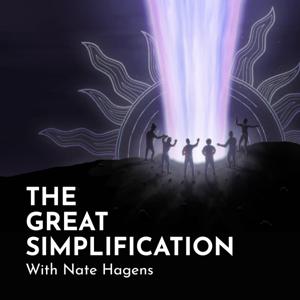

(Recorded August 5 2024)
As a problem-solving species, technology is an embedded part of the human experience – we assess, innovate, invent and adapt. But as we move out of the anomalous era we have just lived through and into less stable economic, social, geopolitical and ecological circumstances, humanity will require different kinds of innovation for a livable future.
In this Frankly, Nate offers preliminary guidelines for what might be termed 'Goldilocks Technology' – not too hot (dopaminergic gadgets) and not too cold (stone age tech) inventions for the future. Can governance upstream of designers and engineers use prices and policy to incentivize more appropriate and reliable technology? Can values and behavioral choices change demand, shifting the products available toward more sustainable options? What would the materials, supply chains, and disposal of technology that is 'just right' look like - and how would it change our wider boundary relationship with the biosphere?
Show Notes
Watch this episode on YouTube
Support Institute for the Study of Energy and Our Future
Join our Substack newsletter
Join our Discord channel and connect with other listeners
 View all episodes
 By Nate Hagens

4.8
400400 ratings
(Recorded August 5 2024)
As a problem-solving species, technology is an embedded part of the human experience – we assess, innovate, invent and adapt. But as we move out of the anomalous era we have just lived through and into less stable economic, social, geopolitical and ecological circumstances, humanity will require different kinds of innovation for a livable future.
In this Frankly, Nate offers preliminary guidelines for what might be termed 'Goldilocks Technology' – not too hot (dopaminergic gadgets) and not too cold (stone age tech) inventions for the future. Can governance upstream of designers and engineers use prices and policy to incentivize more appropriate and reliable technology? Can values and behavioral choices change demand, shifting the products available toward more sustainable options? What would the materials, supply chains, and disposal of technology that is 'just right' look like - and how would it change our wider boundary relationship with the biosphere?
Show Notes
Watch this episode on YouTube
Support Institute for the Study of Energy and Our Future
Join our Substack newsletter
Join our Discord channel and connect with other listeners
26,380 Listeners

1,884 Listeners

2,631 Listeners

1,167 Listeners

180 Listeners

380 Listeners

1,025 Listeners
507 Listeners

4,167 Listeners
466 Listeners

1,635 Listeners

1,046 Listeners

152 Listeners
91 Listeners

71 Listeners