
Sign up to save your podcasts
Or

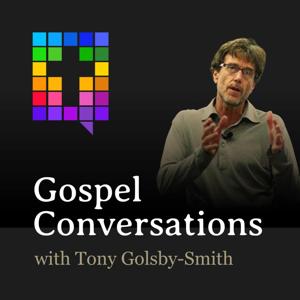


Moses was the most innovative designer of a social system in world history. The ten commandments sit at the heart of this design. But where does the Sabbath fit? It is the only ritualistic member of the ten words, and it seems out of date in today's world. Tony claims that in fact the Sabbath is the linchpin of the whole design, and is vitally relevant to today's world. Discover why in this talk.
Tony looks at Moses as a social designer—which is a modern way of describing his role as prophet and king/leader. And not just any designer, but arguably the most innovative social designer in history. For in fundamental ways, he laid the foundation for the modern world. How did he do it, and what can we learn from him about how we might act, out of faith, in the public space?
In this talk, Tony introduces our theme for the year—the theology of Hope lays the foundation for action in the world. But Hope has not been well understood or developed by the church over the centuries, so we have narrowed this foundation down to a mere 'return of Jesus'. Tony explains that Hope in the Bible reframes how we look at everything in reality. It thus becomes the grounds for reform, optimism, and design.
If the traditional evangelical gospel does not work for the postmodern world, what is the alternative? This is the question that Tony explores on this talk. His answer is to shift our framing of the argument from sin to creation. This does not deny sin, but it starts with a far bigger picture of the issues and one that is much more relevant to the hearts and minds of the postmodern generation.
Tony Morgan describes how he found God in Insurance. For years he was stuck in a dual carriage pathway that separated his faith from his work, but then he discovered that ‘insurance’ was not just the context for expressing his faith—it was co-working with God and thus it was true worship. Insurance also brought him face to face with one of the most imponderable areas of God at work—i.e. areas of huge natural loss.
Tony begins our Faith at Work series by stretching the scope from 'Faith at work' to 'God at work'. This immediately opens up the topic beyond the normal approaches of evangelism and ethics, to the role and nature of faith in the public space—indeed to the broad question of the relationship between the individual and the state. He gives us a broad framework with which to think about this important area in a fresh and expansive way.
Tony interviews Mark Scott about his experience of leading large organisations as a 'follower of Jesus'. Mark ran the Australian Broadcasting Commission (Australia's equivalent of the BBC) and helped it transform into the digital era. He now leads the NSW Dept of Education. How does a believer lead such large 'secular' organisations? Mark talks with remarkable candour and authenticity about how his worldviews framed his leadership and how his inner journey is fed by his highly personal walk with Jesus.
Lots of people think Iain shines best in question and answer sessions. He really ponders the questions and welcomes tough questions. He does not offer glib answers but has the gift of going behind the face value of the questions and addressing the assumptions they are making. The questions in this extended session were deep and wise—so it brought out the very best of Iain.
Iain finishes these first three talks by asking ‘So what?’ How are we expected to live in the face of the vast tension between our view of creation, and our experience of suffering and evil? He makes a very significant claim at the start of this talk—how we frame our response to this tension will dictate our choices and views of the world and our faith. He gives us a simple but profound series of pathways to living the good life in the face of the Jerusalem view of the world—the Jerusalem Guide.
Perhaps this talk is the most radical of all the talks in this series. Having painted a wondrous picture of the Jerusalem view of creation and humanity, Iain confronts the question of evil and suffering. In fact, he claims that you simply cannot just paint a positive picture without addressing the dark side as well. How do we interpret the presence of evil and suffering in the face of Jerusalem story? Why do I say this talk is so radical? Because Iain differentiates from suffering and ‘evil’ that was caused by sin, from suffering and pain that existed in creation BEFORE the Fall and cannot be attributed to the Fall. This is a very important, bold and clarifying talk.
From the publisher's feed

5,716 Listeners

572 Listeners

14,279 Listeners
4,427 Listeners

1,475 Listeners

291 Listeners

34 Listeners

3,296 Listeners

867 Listeners

2,053 Listeners
352 Listeners

577 Listeners

16 Listeners
85 Listeners

16 Listeners