
Sign up to save your podcasts
Or

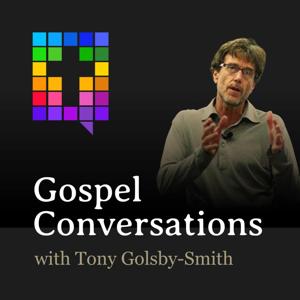


In this talk, Tony advances Gregory of Nyssa's picture of the Restitution of all things. The question of 'universal salvation' needs to fall onto a big eschatological landscape not onto a narrow one. Only then does it make sense. That is what Gregory does. Tony gives us a detailed summary of his epic eschatological vision of creation in 'On the Making of Man', which explores the profound implications of being made in the image of God.
Our second talk builds a richer view of 'judgment'. What house is God building? is a better question—and it immediately opens up a new view of judgment. Architects judge as part of their creative process. This positions 'judgment' out of the penal system and inside a creation system. Tony explores this new perspective in this talk.
We recorded the questions and discussions that followed Tony's first talk. We have not done this before, so we hope that some of you will find it valuable to hear the inquiries and comments that followed the talk.
Hell is the question we all avoid but it is the corollary of hope. How do we fit the two together? Is the traditional model of hell right? Or scriptural? Could everyone get saved in the end? Tony begins to address these vexed questions by first examining the landscape of the debate—the language and assumptions, the possibilities, the history and the problems of all the usual positions. He ends by suggesting a better question to frame our thinking.
Rikk finishes his series on Design as the new Theology in this talk. He spends time synthesising his argument thus far—that the language of design offers a fruitful lens to view the gospel because it makes sense of some of the deep paradoxes of creation like change and agency—in fact, more sense than traditional theology does. Then he concludes with a breathtaking reading of Genesis through the lens of design—which leaves us with the picture of God as the original designer.
Rikk lays out the groundwork for why 'design' is a richer angle to understand God and His work than 'theology'. Design opens up a messier world and a world where change is a good thing—which in turn challenges our traditional picture of the omnipotent and unmoving God. Instead, we find a God who is dynamic and involved in life's dramas—in fact, an incarnate God.
This series is deliberately provocative. Rikk takes us on a journey to rid ourselves of the prison of religious language and open up a broader, more accessible and more comprehensive vocabulary to both explore and express the wonders of our God and his working. He calls this 'the grammar of life'. Rikk has been on this journey personally—with great effect and he begins his talk with that personal experience.
Coleridge famously defined imagination as the human mind's replication of the divine creation of the world. In this pyrotechnic talk, Sarah unfolds Coleridge's extraordinary grasp of human creativity—and how we mirror the divine—through his touching introspective poem 'Frost at Midnight'. This poem is both a theological tour-de-force, as well as one of the great pieces of literature on the creative dynamic. Sarah completes the picture with her dynamic and passionate delivery.
How can we be confident about what we know—especially in an age of scepticism? This is the question that John addresses in this compelling talk on the 'Need to Know'. You would think that Christians are on the back foot here because we rely on faith to know—but John turns the tables on the sceptics and proves that 'radical doubt' is everybody's lot in life. Strangely this leads to the only conclusion—'radical faith' must match radical doubt. The Q and A session at the end is a treasure.
Leisa Aitken is a practising psychologist who has discovered the significance of hope in human flourishing—but equally, she has discovered the shallowness of the profession's grasp of hope. She is now advancing a doctorate to integrate the richness of Christian hope with the practice of psychology. In the first talk, she takes us on her personal journey and introduces the points of interaction between theology and psychology.
In the second half of her talk, Leisa takes us into more detail into the applications and consequences of her new frameworks of hope. This is very significant and promising, as it lays the groundwork for a new paradigm in Christian growth as well as an enriched paradigm in counselling.
Slides:
Hope: Psychology and Theologyin conversation
From the publisher's feed

5,716 Listeners

572 Listeners

14,279 Listeners
4,427 Listeners

1,475 Listeners

291 Listeners

34 Listeners

3,296 Listeners

867 Listeners

2,053 Listeners
352 Listeners

577 Listeners

16 Listeners
85 Listeners

16 Listeners