
Sign up to save your podcasts
Or

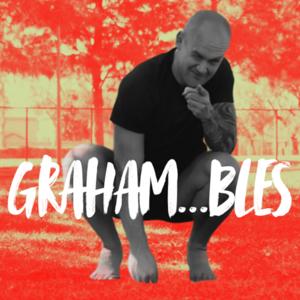


Unfortunately there is a lot of mis information on the internet about how to effectively train your core and a lot of people still think that doing sit-ups for a minute for max reps is the best test. However, your core is designed to resist movement and protect the spine. Plain and simple. So anything that works the repetitive motion of the spine, like crunches and sit ups, is basically just loading the spine over and over until the point of injury. But the spine is still designed to move, hence the vertebral segments. The difference here is that we want to encourage and reinforce the controlled aspect.
I've included a link to a progression of my favorite core exercises, the ones that challenge breathing, posture, and movement most effectively. Start with the beginner levels and once you can complete the reps smoothly, move on up! The point here is not to "pass a test", rather we are looking at developing a high quality of movement skill. Breath while you do these!
Last note here, don't work your core to failure. That's just a bad idea. Focus on quality! Once you can hold a static position, like a plank, for more than a minute, you've got it down. Move on and make it more difficult with single leg or single arm variations. Also. keep the neck moving as part of the torso, don't crank it around or put stress on it. Your neck is part of your spine, not your core, so don't try to change that. And please, please, stop doing crunches!
What is the core?
Mid thigh to diaphragm
What is the purpose of the core?
Protect the spine
Anti Flexion/Extension, Anti rotation, Anti Lateral Flexion/extension
How do you train it?
Static vs Dynamic
Braced vs exhale for dynamic
Why breathing is important for core training
Explain the dynamics of air in vs air out
Toothpaste analogy
Without breathing core is not braced
5 Best movements
Hollow hold, Side Plank top leg elevated , Ice Pickers (Anti rotational), Pot Stirs/Rollouts, Straight leg Pike Lifts
5 Worst Movements
Crunches, Sit Ups, Cable/Machine Crunches, Long Planks, Back Extensions
Weight loss is simple, but not easy.
You don’t need some super specialized program.
You don’t need to start doing the keto diet
You don’t need to go to the gym
You don’t need to start exercising
You don’t need to hire a personal trainer and spend thousands of dollars
You don’t need to have a surgery
You don’t need to take supplements
You don’t need to change your life entirely
You do need these three things however
1) A reason to lose weight that is significant enough to motivate you
2) A system
3) Accountability
Movement is like nutrition
Exercise vs. movement
3 reasons to go to the gym
If you need access to equipment and space to supplement for the movements your not getting.
Education – Learning how to move from a professional
Accountability, social contact, enjoyment
Why dogs stretch into downward dog and upward dog after waking up
What a warm up Should Do
3 Parts you need to include:
Activation– Easing into the workout
· Moving in multiple planes of motion – Rotation and lateral planes
· Improving mobility – Active form of stretching
· Coordination – unilateral, balance, multidirectional
Ground Work – Posterior Chain and Core Activation
· Engage movements and muscles you don’t use but wouldn’t otherwise activate because of gravity (Hip Bridges)
· Improve neuromuscular activation patterns (i.e. Glute/Ham/Low back)
· Strengthen weaker muscles you need more activity (hip flexor)
Dynamic – Neuromuscular control/specific to activity
· Practice pattern components – skipping for running.
· Improves skills – speed, frequency, muscle engagement
· More exposure to activity in a different setting.
Do’s and Don’ts
Why training like an athlete is important
· Training in multiple planes of motion, movements you wouldn’t typically hit with traditional lifting
· Keeps power and strength applicable to actual life
· Improves muscle elasticity and tensile strength – prevents injury from joint laxity and strains
· Foot Speed and leg strength are two biggest indicators of fall risk
· Use it or lose it!
Throwing stuff – Reflexive strength, rotational power, aggression and force production, and very small load on body
Introducing Plyometrics – anything that produces stretch shortening cycle from muscles, improves elasticity, and requires a quick muscle response.
o Start off small – skips, marching patterns, Ropes,
o Progress as you get comfortable (mental confidence and joint stability!) to bounding, throwing, small hurdle jumping, hill sprints
o More advanced level drills include – box jumping, unilateral hurdle jumps, drills in lateral and rotational planes of movement including pivoting
o Depending on desire, health, and history – Full speed sprints, depth drops..
Foot Speed Drills– speed Ladders, quick steps, jump ropes, high knees, butt kicks
Things to consider –
Be honest about your starting point! 30+ lbs overweight? Past injury? Arthritis/chronic pain? Athletic experience?
Doesn’t mean to not train this way, just changes where you start
Be patient with the process – changes take time, don’t rush but be consistent. Allow a at least 6 weeks before moving up to the next level
2-3 times a week tops for this stuff. It does present a different and substantial load for body to get used to.
If you’re not confident, find a coach for form/reference/feedback, guidance!!Graham covers why you should train like an athlete, the three ways you can easily implement this style into your training immediately, and how to know when you’re ready to progress.
I swim through the pool of diet misinformation and miracle juice cleanses so that you don’t have to.
Brief Description of popular diets – Macro adjustment, elimination, calorie focus
· Low Carb (50-100g/day)
o Good to improve insulin sensitivity, reduce energy crashes,
· Adkins – Similar to keto but higher protein allowed
o 4 part diet that slowly reintroduces healthy carbs.
· Ketogenic (~20g/day)
o Use bodyfat and ketones as energy source
o Mistakes – too much carbs, too much protein, not enough sodium, not enough fat, not being patient enough, not taking it seriously
· Zone Diet – Even macro allotment ~30% of each, but Only Low GI carbs allowed
o ** Talk about difference between GI and GL
· Low Fat diets (10% or less) – High carb focus, low protein
o Fat has the most calories per gram – cutting it out helps weight loss
o May be beneficial for some auto immunes
o Long term health consequences from lack of fat.
· -Talk about benefits of FAT in the human body. Brain, nerves, cell membrane
· Shifting tide from high carb no fat focus of 80’ and 90’s. People cut fat out and still the heart disease is skyrocketing.
· Saturated fat is not linked to heart disease in recent studies. It does increase LDL (Bad) but also HDL (Good)
· Ration of total cholesterol to HDL is what matters in blood work, different cholesterol densities
· ALSO – Everyone has a different NORM for cholesterol and blood levels
· IIFYM – Find Macros (Activity + BMR + weight goals + rough estimate ranges for macros) Anything goes as long as it fits your macros!
· Reverse Dieting
o Slowly reintroducing calories after long period of deficit
o Improves NEAT, raises metabolism, normalized hormone levels, allows you to eat more
o Mistakes – contingent on your activity increasing as well, only focused on calories, hard to do since most weight loss is more about habit change and adding food back in can be a trigger
· Paleo – Only foods available to ancestors, NO grains, dairy, legumes, and processed foods
· No Animals
o Vegetarian – No Meat
o Pescetarian – No meat except for fish
o Vegan – No meat or animal products
o Mistakes – Not taking it seriously to replace the nutrients you would be getting from eliminated foods. Vegan DOES NOT mean Healthy (Brownie)
· Carnivore Diet – Only meat. No plant fiber or carbs (Super elimination diet)
· Intermittent Fasting – Limiting your time window for eating AT LEAST 12 hours
o Changes habits of eating, not as focused on what you’re eating
o 14:10, 16:8, 18:6…. Skip Meals basically
o Lowers Inflammation, improves blood markers, Improve cholesterol numbers, increases HGH profile, increases insulin sensitivity, and cell repair (autophagy)
o Women tend not to respond as well as men – body likes to have extra fat.
o Mistakes - Don’t go crazy when you do eat, it’s not a get out of jail free, also, you’re eating less food so make sure you get what you need when you do eat.
A diet is a sustainable long term eating plan. The ok diet you follow is better than the perfect diet you don’t. If it sounds too good to be true – it is. Don’t believe any hype about juice cleanses, or macro elimination diets. Watch out for BLUE ZONE myths.
Diets that claim to be miracle cures almost always involve some processed food reduction. Shitty food affects everyone differently, but food sensitivities are a real thing – It’s not the diet fixing you, it’s the fact that you stopped punching yourself in the face
In this episode I cover the 10 biggest things you need to do to lose the unwanted fat.
1) Know your numbers - How many calories do you eat on a typical day? You have to know where you're starting from to know where you're going.
2) Set your expectations for how you much weight you should lose each week - 1-2% BW loss per week, starting with a 500 cal deficit each day.
3) Don’t drink your calories – Calories from drinks are mostly empty calories. You'll get more nutritional benefit and SATIETY from real food.
4) Cut out sugar/empty calories – Think about the nutritional value of what you're eating. Weight loss means eating on a budget which means you have little room for unaccounted for splurges.
5) Stop Snacking – Calories add up quickly and you're rarely eating quality nutrition in snacks. Remember that real food is hard to package long term. Stick to meals for your main source of food
6) Build in fasts – Setting boundaries about when you eat can make it MUCH easier to stay out of trouble. This also is great practice to help you deal with breaking the bored eating habit. Eating bigger meals will keep you fuller longer. AND you will get better at using your own body fat as a fuel source.
7) Sleep More – Sleep is your body's way to naturally deal with stress and cortisol. When you sleep more you have more energy, you'll eat less because of this. Also, when you sleep enough your body will hold on to muscle and let go of body fat easier.
8) Move after eating – Blood diverting glucose to the muscles will keep that from going to fat. A little movement mitigates a big insulin rush and energy crash.
9) PLAN a cheat meal once a week – Once a week, having a caloric surplus keeps your metabolism from dropping to compensate for long periods of caloric deficit and gives you a mental break!
10) Understand the plateau/body readjustment process. You need to spend about 4-6 months at a new set point before your body will readjust to that weight. So don't be upset when you plateau after a significant weight loss - it's part of the process!
AND LASTLY, REMEMBER - It's not about how hard you work, it's about how much your willing to sacrifice!!!
PLEASE, Please, Rate and review!! Thank you so much! Also, share this will someone who needs to hear it. Love you all, take care.
In this episode Graham talks about how mismanaged stress is killing your training, how to assess, improve, and strengthen your wrists and grip, and why people do upper body plyometric exercises wrong more often than not!
Stress - https://www.instagram.com/p/B0PZsfxHVMg/
Wrist Assessment - https://www.instagram.com/p/B0R1oMrH-C5/
Wrist Mobility - https://www.instagram.com/p/B0UShabnatT/
Wrist and Grip Strengthening - https://www.instagram.com/p/B0V6ictnFSQ/
Upper Body Plyos - https://www.instagram.com/p/B0ZcEBandlC/
Email any questions or feedback to [email protected]! I always appreciate the feedback. AND PLEASE, if you like this, leave a 5 star rating and review, I would really appreciate it.
In the first episode of the Athlete’s Advantage podcast I talk about how to set up your diet, breathing well, exercising on one leg, and jumping on one leg! Plus, I talk about how to keep your mind right for a long transition or process!
Different types of breathing - https://www.instagram.com/p/Bz_-RB5nwWJ/
Core Bracing Exercise - https://www.instagram.com/p/B0Cd3mUHjM6/
Single Leg Hurdle Exercise Ideas - https://www.instagram.com/p/B0HK1oQnAeJ/
Breathing Exercises - https://www.instagram.com/p/B0KGzXenk1Z/
From the publisher's feed

227,404 Listeners

2,445 Listeners

12,106 Listeners

1,531 Listeners

111,708 Listeners
568 Listeners
92 Listeners

28,980 Listeners

16,072 Listeners