
Sign up to save your podcasts
Or

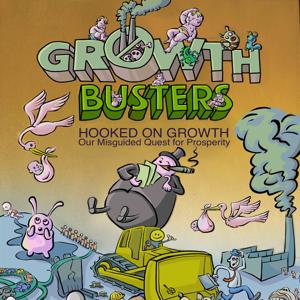


If we were on a spaceship, the end really would be near – August 22. That is Earth Overshoot Day for 2020. We all know we can't graze 100 head of cattle for long on a one-acre patch of land. We'd have a barren wasteland and a bunch of dead cattle in no time. It's a little more challenging for us to make this calculation about meeting the needs of 7.8 billion people on a larger patch of land – the entire planet. But the laws of physics equally apply.
Analysts at Global Footprint Network do an impressive job of performing this worldwide calculation. Since 2003, they've been analyzing UN data and satellite imagery to estimate the planet's capacity to meet our needs (biocapacity), and humankind's footprint - or demand (ecological footprint) - on that capacity. Their analysis suggests we have been in overshoot since about 1970.
If you have too many people, consuming resources faster than the planet can regenerate them, and generating waste faster than the planet can convert that waste, you are in overshoot. This bonus episode of GrowthBusters features the Conversation Earth special, Welcome to Overshoot: Have a Nice Day. This is a 2020 update of the special we shared a year ago. Welcome to Overshoot explores overshoot's causes, effects, and possible solutions, as well as some of the barriers to solving the problem. It features a who's who of environmental and economic experts:
William Catton, author of Overshoot: The Ecological Basis of Revolutionary Change
Brian Czech, author of Supply Shock: Economic Growth at the Crossroads and the Steady State Solution, and executive director of the Center for the Advancement of the Steady State Economy
Herman Daly, author of Beyond Growth: The Economics of Sustainable Development
Paul Ehrlich, Stanford Biologist, author of The Population Bomb
Kerryn Higgs, author of Collision Course: Endless Growth on a Finite Planet
Ian Johnson, former World Bank vice president, former secretary general of Club of Rome
Bill McKibben, environmental journalist, author of Falter: Has the Human Game Begun to Play Itself Out?, co-founder of 350.org.
Dennis Meadows, lead scientist, The Limits to Growth
Kate Raworth, author of Doughnut Economics: 7 Ways to Think Like a 21st Century Economist
William Rees, co-originator of ecological footprint analysis
Bill Ryerson, President of Population Media Center and Chair of Population Institute
Juliet Schor, Professor of Sociology at Boston University and author of True Wealth: How and Why Millions of Americans Are Creating a Time-Rich, Ecologically Light, Small-Scale, High-Satisfaction Economy
John Seager, CEO of Population Connection
Gus Speth, former chair, White House Council on Environmental Quality, Co-Chair of the Next System Project
Mathis Wackernagel, founder of Global Footprint Network and co-author of Ecological Footprint: Managing Our Biocapacity Budget
Rex Weyler, environmental journalist
LINKS:
Earth Overshoot Day
The Limits to Growth
Conversation Earth podcasts
Ecological Footprint: Managing Our Biocapacity Budget by Mathis Wackernagel and Bert Beyers
Footprint Calculator
Move the Date Solutions to accelerate the shift to one-planet living
Past Earth Overshoot Days
OTHER LINKS:
Join the conversation on Facebook
Make a donation to support this non-profit project.
Archive of all episodes of the GrowthBusters podcast
Subscribe to GrowthBusters email updates
See the film – GrowthBusters: Hooked on Growth
Explore the issues at www.growthbusters.org
View the GrowthBusters channel on YouTube
Subscribe (free) so you don't miss an episode:
Physician Sofia Pineda Ochoa became so concerned about the future of life on Earth that she wrote, produced and directed the new documentary, Endgame 2050. "There is no human health without planetary health," she tells us. She interviewed several notable experts in the film, but musician/environmental activist Moby provided the most brutally candid assessment of our situation: "Things are not fine." He told Sofia we "are destroying the only home that we know of in the universe that will support life…. if we can't change ourselves, if we can't learn how to live in sustainable harmony with the only world that will support us, we need to go away."
The film doesn't shy away from human overpopulation as a chief contributor to our ongoing destruction of Earth's life-supporting ecosystems. Dr. Ochoa does more than diagnose our problem; she also offers some solutions: "I think we have a moral obligation to raise awareness about the unsustainability of our current population growth rate, and the importance of slowing that rate down, as well as changing our consumption patterns." On the consumption side, Endgame 2050 makes a compelling case for eliminating meat from our diet.
Alec Baldwin, Brad Pitt, "nature porn," and the United Nations all come up in our free ranging conversation. The film is free to view on several streaming services. Visit endgame2050.com for screening information (and for good resources if you want to dig deeper into the subjects raised in the film).
DISCUSSED IN THIS EPISODE:
Welcome to Overshoot: Have a Nice Day – Conversation Earth Special Podcast Version Radio Broadcast Version
Endgame 2050
MeatYourFuture.com – Sofia's website supporting a plant-based diet
Lie Down in Darkness – by Moby
The Game Changers
Bad science and bad arguments abound in 'Apocalypse Never' by Michael Shellenberger – by Dr. Peter H. Gleick
Decoupling Nonsense – episode 35 of the GrowthBusters podcast
OTHER LINKS:
Join the conversation on Facebook
Make a donation to support this non-profit project.
Archive of all episodes of the GrowthBusters podcast
Subscribe to GrowthBusters email updates
See the film – GrowthBusters: Hooked on Growth
Explore the issues at www.growthbusters.org
View the GrowthBusters channel on YouTube
Subscribe (free) so you don't miss an episode:
If you're planning your wedding, or have a friend planning theirs, this episode is for you. The idea of a virtual wedding seemed pretty geeky a year ago, but in the COVID era, suddenly the notion isn't so far-fetched. But if you're not going virtual, we have some other recommendations for you to shrink the footprint of your wedding.
In this follow-up to episode 25 of the GrowthBusters podcast, Sarah Baillie reports on how she made her wedding "wildlife friendly." Sarah wrote the Wildlife Friendly Wedding Guide, and told us about this before her own wedding in episode 25 (link below). At the time she was just embarking on planning her own wedding, so we invited her back to report on the blessed event.
Sarah is Endangered Species Condoms Coordinator at the Center for Biological Diversity, so we also asked her for an update on this program (we are big fans), especially during the pandemic period of isolation.
The Wildlife-friendly Wedding Guide (e-version is free)
How to Have a Green Wedding – GrowthBusters Episode 25
Bury Mom in the Back Yard? The Ins and Outs of Green Burial – GrowthBusters Episode 41
The SoKind Registry (register your wedding for small-footprint gifts - homemade gifts, charitable donations, secondhand goods, experiences, time, day-of-event help, and more.)
Center for Biological Diversity
Endangered Species Condoms
Avoid Unplanned Parenthood (video of Dave handing out Endangered Species Condoms) How To Make Vegetable Broth With Kitchen Scraps Sustainable Gift Giving in the Time of Coronavirus – by Sarah Baillie Our Webinars (video and podcast versions) about Planet of the Humans:
VIDEO: Planet of the Humans: a Sequel (Webinar) Planet of the Humans Webinar Part 2 PODCASTS: Planet of the Humans: What Did the Film Get Right? (webinar part 1) 1-See Planet of the Humans; 2-Resolve Overshoot (webinar part 2)
OTHER LINKS:
Join the conversation on Facebook
Make a donation to support this non-profit project.
Archive of all episodes of the GrowthBusters podcast
Subscribe to GrowthBusters email updates
See the film – GrowthBusters: Hooked on Growth
Explore the issues at www.growthbusters.org
View the GrowthBusters channel on YouTube
Subscribe (free) so you don't miss an episode:
What should we do in response to the key messages of the 2020 documentary, Planet of the Humans? This is a continuation of the discussion begun in part one of the webinar, Planet of the Humans: a Sequel. In part 2, our panel explores actions we can take now – to avoid terminating human civilization. Both parts of the webinar addressed the roles of overpopulation, overconsumption and economic growth in the most serious environmental crises we face.
The webinar was co-hosted by GrowthBusters and World Population Balance.
Panelists:
Kristine Mattis: An interdisciplinary environmental scholar with a background in Biology and Earth System Science, Kristine has worked as a medical researcher, a science reporter for the congressional record in the U.S. House of Representatives, and a science teacher. She holds a PhD in Environment and Resources. Her writing encompasses issues of social and environmental justice, public health, risk, and science.
Brian Czech: Executive director of the Center for the Advancement of the Steady State Economy (CASSE). With a Ph.D. in renewable natural resources, his specialties intersect ecological economics, conservation biology, and public policy. The author of several books, Czech recently edited Best of The Daly News: Selected Essays from the Leading Blog in Steady State Economics.
Dave Gardner: Co-host of the GrowthBusters podcast about sustainable living; co-host of The Overpopulation Podcast; director of the documentary GrowthBusters: Hooked on Growth; host of the syndicated radio series, Conversation Earth; and executive director of World Population Balance.
Erika Arias: Co-host of the GrowthBusters podcast about sustainable living; co-host of The Overpopulation Podcast; Programs & Engagement Coordinator for World Population Balance, and a childfree researcher and advocate.
LINKS
VIDEO:
Planet of the Humans: a Sequel (webinar part one)
Planet of the Humans Webinar Part 2
BOOKS:
Small Is Beautiful: Economics as if People Mattered - by E.F. Schumacher
Enough Is Enough: Building a Sustainable Economy in a World of Finite Resources - by Rob Dietz and Dan O'Neill
Shoveling Fuel for a Runaway Train: Errant Economists, Shameful Spenders, and a Plan to Stop Them All - by Brian Czech
Plenitude: The New Economics of True Wealth - by Juliet Schor
Bullshit Jobs: A Theory - by David Graeber
PODCASTS:
The Overpopulation Podcast
GrowthBusters podcast about sustainable living
PAPERS & ESSAYS:
Works by Kristine Mattis
Degrowth A Vocabulary for a New Era (2014)
Nobody Takes the Renewable Energy Transition Seriously - by Richard Heinberg
Beyond Green Growth - by Dan O'Neill
Wake Up Call on the Environment: A Student Manifesto
Exiting the Fast Lane: Job Sharing is One Route to Discovering the Personal and Environmental Benefits of Working Less
How to Make a Job Sharing Situation Work
Planning for Post-Corona: A Manifesto for the Netherlands
Crossroads for Planet of the Humans – by William Rees
PEOPLE & ORGANIZATIONS:
World Population Balance
GrowthBusters
Center for the Advancement of the Steady State Economy
Herman Daly
Transition Network
Transition U.S.
Common Future (formerly Business Alliance of Local Living Economies)
Wellbeing Economy Alliance
Doughnut Economics Action Lab
Take Back Your Time
The Simplicity Collective
OTHER LINKS:
Join the conversation on Facebook
Make a donation to support this non-profit project.
Archive of all episodes of the GrowthBusters podcast
Subscribe to GrowthBusters email updates
See the film – GrowthBusters: Hooked on Growth
Explore the issues at www.growthbusters.org
View the GrowthBusters channel on YouTube
Subscribe (free) so you don't miss an episode:
"There are too many human beings, using too much, too fast." Those are the words of Richard Heinberg in a controversial new documentary executive produced by Michael Moore. Planet of the Humans presents us with some inconvenient truths – far more inconvenient than just the greenhouse gas effect. Yet because the film skewers some renewable energy advocates for painting an overly rosy picture that's not 100% accurate, there's been a lot of backlash and effort to keep the film from being seen. In the film, director Jeff Gibbs notes:
"It was becoming clear that what we had been calling green, renewable energy, and industrial civilization are one and the same – desperate measures not to save the planet, but to save our way of life."
We think the most important messages of the film are just too critical to avoid, so GrowthBusters teamed up with World Population Balance to co-host the webinar, Planet of the Humans: a Sequel. You can view a video replay of that webinar here. Or you can listen to the audio of the webinar in this episode of the GrowthBusters podcast.
We just recorded a continuation of the panel discussion begun in that webinar. Watch for that as another episode of the podcast in the very near future. Subscribe to our email updates or the GrowthBusters YouTube channel to be notified immediately when that video is posted.
LINKS:
Planet of the Humans film
Planet of the Humans: a Sequel webinar video replay
World Population Balance
One Planet, One Child Billboard Campaign
Center for the Advancement of the Steady State Economy
Fact Check at Planet of the Humans Website
Full and Sustainable Employment Act (post in Steady State Herald)
The Real Green New Deal Project
Green New Deal
Panelists' reviews of Planet of the Humans:
The Inconvenient Truth of Planet of the Humans – by Dave Gardner
Climate Crisis: Our Ecological Dysfunction Has a Marketing Problem (and it's not Michael Moore) – by Kristine Mattis
Planet of the Humans Puts Sacred Cows Out to Pasture – by Brian Czech
Other Insightful Reviews:
Sequence Matters – by Herman Daly
Review: Planet of the Humans – by Richard Heinberg
Crossroads for Planet of the Humans - by William Rees
OTHER LINKS:
Join the conversation on Facebook
Make a donation to support this non-profit project.
Archive of all episodes of the GrowthBusters podcast
Subscribe to GrowthBusters email updates
See the film – GrowthBusters: Hooked on Growth
Explore the issues at www.growthbusters.org
View the GrowthBusters channel on YouTube
Subscribe (free) so you don't miss an episode:
Is there any use in choosing to live more sustainably if you're surrounded by an unsustainable system? There are those who argue there is little value in making efforts to trim your own ecological footprint. They lament, "It's difficult to skinny up your life when you live within a system that needs structural change," built to drive itself off a cliff. The GrowthBusters disagree. But who can you turn to for good advice on this? An astrophysicist, of course!
We're joined in this episode by NYU professor Joshua Spodek. Yes, he has a degree in astrophysics, but these days he's busy teaching and coaching leadership and entrepreneurship, doing TEDx talks, authoring best-selling books, blogging daily, and hosting his own podcast. It takes Joshua a year to accumulate a load of trash, and he hasn't hopped on a plane in four years. So when it comes to both the joy, and the value, of individual planet-saving action, Josh is our guy.
Here is the complete email from Rob Boman in Oregon (we shared a portion of it on the podcast) Links promised are below this.
Hello, I just listened to podcast #35 (uncoupling nonsense). I could send a lot of stuff and I'm in the process of developing a website, but for now, you might find this interesting: I call it The Fifteen Criteria Points of Genuine, Meaningful Sustainability Thanks for your work, Robert Bolman
1) What people commonly refer to as "sustainability" is not truly sustainable. For example, people will refer to "sustainably harvested lumber". Lumber may be harvested in a manner that is not destructive of forest ecosystems, but in order for lumber to be sustainably harvested, not only would the chainsaws and logging trucks need to be running on something other than fossil fuels, but the chainsaws and logging trucks would need to be MANUFACTURED using something other than fossil fuels. When you consider the amount of energy required to make a large metal object like a logging truck, it is clear that even Forest Stewardship Council certified lumber is far from sustainable
2) Genuine, meaningful sustainability is defined by a rigorous set of criteria including, but not limited to the use of nonrenewable resources and the impossibility of infinite growth on a finite planet.
3) It therefore follows that achieving genuine, meaningful sustainability is a dauntingly complex, remote, far-flung ideal. It will be VERY difficult to achieve.
4) As difficult as it may be, genuine, meaningful sustainability WILL be achieved because to do anything less is unsustainable. Whatever the human family fails to do voluntarily, we WILL do involuntarily. It is possible that we will become a sustainable, advanced, complex civilization. On the other hand, dust blowing on the wind is sustainable.
5) The longer we wait, the longer we procrastinate, delay and make excuses, the more wrenching and traumatic the transition to sustainability will be. We are squandering precious time and resources presently. We have used up approximately half of our one-time geological allotment of fossil fuels. The remaining half will be increasingly more expensive and energy intensive to extract. We should be feverishly using the remaining half to construct the post-fossil fuel infrastructure that we will need. This is especially the case when considering Climate Change. Fully preparing for life without fossil fuels could take decades. Also, it is not at all clear just HOW everything we do with fossil fuels can be accomplished with wind, solar and biofuels. The time to begin that transition is NOT when the fossil fuels are dwindling and the economy is collapsing.
6) Growth is unsustainable. Period. Within a closed, finite system like a petri dish, an island or a planet, growth of the physical environment cannot be continued. Thus, mainstream economics with its emphasis on perpetual growth is quite misguided and unsustainable. (The joke goes that an economist is someone who believes that given sufficient water and fertilizer, a tree can grow to be 100 miles tall.)
7) The best efforts at sustainability will be in vain if population isn't addressed. It has been consistently shown that the best way to encourage poorer populations to have fewer children is to provide them with education, health care and a more humane quality of life, generally. Therefore, arguably, the extremely poor distribution of the world's wealth is unsustainable.
8) When the consequences of a given action are not fully understood, it is best to err on the side of caution. This is called The Precautionary Principle and if so called "conservatives" were genuinely conservative, it would be the bedrock of their philosophy. It is safe, prudent and truly conservative. When looked at in the context of genuine, meaningful sustainability, so called "conservatives" are not conservative at all. They are radical, cavalier and dangerous.
9). Carrying on with business-as-usual, assuming that technology will emerge to save us is optimistic to the point of irresponsibility. This is a good place to invoke The Precautionary Principle. No doubt new technologies will emerge to help us through the coming transition to sustainability, but we are facing some serious challenges and there is no guarantee that technology will make this an easy transition. Technological optimism IS NOT a sound basis for public policy.
10) Human labor is environmentally neutral. So, wherever any toxic, energy intensive industrial or agricultural practice can be replaced with a different process using human labor, that's what we should do. Seen in the context of the approaching depletion of fossil fuels, we perhaps don't need to worry about unemployment. There will be plenty of work for people to do.
11) In order for market forces to govern a sustainable world, environmental and social costs must be accounted for. The way mainstream economists view the world, countless true environmental and social costs are nonchalantly brushed aside – dismissed as "externalities". Then, with a straight face, these same economists insist that the "wise and invisible hand of the free market" should be allowed to decide things for us. We might as well have a chimpanzee with a Ouija board making some of society's more important decisions. It's absurd. For example, if the true environmental and social costs of fossil fuels were accounted for, they would be far more expensive and we would be living in a very different world with dramatically different transportation, land use, manufacturing and agriculture.
12) So many powerful economic interests make so much money from such unsustainable business practices and so many people enjoy such great levels of comfort, convenience and entertainment through such unsustainable means that achieving genuine, meaningful sustainability will be very upsetting to a lot of people. In other words, the necessary and inevitable changes are gonna PISS PEOPLE OFF.
13) Therefore, in order to achieve genuine, meaningful sustainability, those in positions of power must carry out dramatic, sweeping changes for which there may not yet be widespread, popular support. The practice of politicians tiptoeing around, reluctant to upset people must end. True leaders must be ready to say, "Here's what we're gonna do. Here's why. And this pallet of document boxes is the scientific research supporting our decision, so please stop shouting and start reading."
14) It follows that in order to achieve widespread, popular support for sustainability, the public must be educated – a task too important to be left to the mainstream media & "education" as it commonly exists. Corporate lawyers should not earn ten times the income of a public school teacher. Rather than cutting funding for National Public Radio and Television, funding should be dramatically increased with the condition that all corporate underwriting be eliminated. We should consider a national public print media to provide an alternative to the New York Times and Washington Post.
15) In order to function better as a species, human beings must develop an enhanced faculty of discernment whereby we will tend to believe what is true as distinct from believing what happens to be convenient. It has been articulated by people ranging from Albert Einstein to Shirley MacLane that HUMAN CONSCIOUSNESS MUST CHANGE for the world's problems to be resolved, but this idea is viewed as being vague or abstract – better discussed by philosophers and psychologists than by policy makers. But there is nothing vague or abstract about the DENIAL, DELUSION and sometimes SOCIOPATHIC BEHAVIOR being exhibited by those in positions of power in the world. The hierarchies of power don't groom and condition the finest people among us to rise to the positions of leadership. In order to achieve and thrive in positions of power, people often find it necessary to embrace a deeply flawed view of reality. Or in many cases, sociopathic behavior can serve those in power very nicely as they dig, claw, kick and gouge their way to the top. This is how politicians and corporate executives wake up in the morning, look in the mirror, genuinely believe that their behavior is acceptable and then spend their days doing a gross disservice to future generations. It is high time we bring the full weight of modern psychology to bear on those running the world.
LINKS: (We didn't get around to discussing all these, but we want to share them with you, anyway.)
Joshua Spodek website
Leadership and the Environment (Joshua Spodek's podcast)
Dave Gardner episodes of Leadership and the Environment
What everyone Gets Wrong About the Environment – TEDx Talk by Joshua Spodek
Find Your Delicious: Leadership and the Environment – TEDx Talk by Joshua Spodek
Joshua Spodek on flying:
What a Year Without Flying Taught Me About Responsibility, Empathy, and Community – in Inc. Magazine
Covid-19: Addiction to Flying and Other Polluting Behavior Was a Lack of Motivation and Imagination
Year 4, Day 1 of Not Flying
The Longer I Go Without Flying, the More People Talking About Flying Sounds Like They're Talking About Heroin
The Longer I Go Without Flying, the More People Talking About Flying Sounds Like They're Talking About Heroin, Part 2
Joshua's 20-Minute Vegetable Stew
A Christmas Thought on Climate and Population - by Joshua Spodek
Towards the 'Walden Wage"
Waiting for the World to End - by The Mavericks
Join the conversation on Facebook
Make a donation to support this non-profit project.
Archive of all episodes of the GrowthBusters podcast
Subscribe to GrowthBusters email updates
See the film – GrowthBusters: Hooked on Growth
Explore the issues at www.growthbusters.org
View the GrowthBusters channel on YouTube
Subscribe (free) so you don't miss an episode:
Stanford biologist Paul Ehrlich reflects on more than 50 years of effort to educate the public about the unsustainability of endless economic and population growth. In this special Earth Day 50th Anniversary episode, Ehrlich discusses the challenges of getting a good university education, his work with butterflies, and a few of his over 40 books, including The Population Bomb (he shares a 50-year-old secret about a mistake on the front cover).
Plus: Dinner with Johnny Carson, butterfly graffiti, and why the climate crisis has never captured our full attention like the COVID-19 pandemic has.
We also make an important announcement: In honor of the 50th anniversary of Earth Day, and the fact that most of us are sheltering in place, we're making access to the documentary, GrowthBusters: Hooked on Growth, and archived recordings of a series of GrowthBusters webinars, free from April 22 through April 29 (2020). Here's the link to get access.
EARTH DAY 50th ANNIVERSARY LINKS:
GrowthBusters Documentary Free Screening
Free Screening Facebook Event
GrowthBusters Webinars Free Access
Earth Day 2020 (50th Anniversary)
BOOKS DISCUSSED (some recommended by Paul Ehrlich):
Rattlesnake Under His Hat by Sam Hurst
The Wisest One in the Room – by Thomas Gilovich and Lee Ross
Human Natures: Genes, Cultures, and the Human Prospect by Paul Ehrlich
Ecoscience: Population, Resources, Environment by Paul R. Ehrlich, John P. Holdren and Anne H. Ehrlich
MENTIONED IN THIS EPISODE:
The Population Bomb by Anne and Paul Ehrlich
The Silver Lining of COVID Induced Recession - GrowthBusters episode 42
Noam Chomsky on the U.S. media
The Climate Mitigation Gap - study by Seth Wynes and Kimberly Nicholas
One Planet, One Child Billboard Campaign
Beware the Left's 'Degrowth' Movement by Stephen Moore (example of unenlightened growth boosting)
The Earth Is Telling Us We Must Rethink Our Growth Society by William Rees
The End Of Economic Growth by Sarmishta Subramanian
Environmental Consequences of Moral Disinhibition by Richard York
Join the conversation on Facebook
Make a donation to support this non-profit project.
Archive of all episodes of the GrowthBusters podcast
Subscribe to GrowthBusters email updates
See the film – GrowthBusters: Hooked on Growth
Explore the issues at www.growthbusters.org
View the GrowthBusters channel on YouTube
Subscribe (free) so you don't miss an episode:
Coronavirus has brought the economies of the world to a grinding halt. The world is (almost) universally mourning the recession – almost. There is a small, but rising chorus of hopeful speculation that the increasingly apparent deficiencies of our growth-obsessed economic system make it ripe for this crisis to shock it onto a more sustainable path.
We invited Brian Czech, executive director of the Center for the Advancement of the Steady State Economy (CASSE) to explain how this recession is "setting up a brighter future for the generations to come." Our "suicidal obsession with economic growth has caused us to make some bad deals. What happens at the end of the recession is what really matters. Have we learned enough about the shortcomings of GDP growth on a full planet to NOT climb right back on that horse?
LINKS:
Center for the Advancement of the Steady State Economy (CASSE)
Shoveling Fuel for a Runaway Train by Brian Czech
Supply Shock: Economic Growth at the Crossroads and the Steady State Solution by Brian Czech
The Steady State Press
Best of the Daly News
The Silver Lining of the COVID-Caused Recession – by Brian Czech
How To Avert Economic Catastrophe: Ideas From 5 Top Economists (NPR)
Herman Daly and Kate Raworth on Pandemic-Resistant EconomiesFacebook Live Event hosted by Andrew Revkin
An Act of Congress for the Steady-State Timeline
Full Employment and Balanced Growth Act (1978)
Join the conversation on Facebook
Make a donation to support this non-profit project.
Archive of all episodes of the GrowthBusters podcast
Subscribe to GrowthBusters email updates
See the film – GrowthBusters: Hooked on Growth
Explore the issues at www.growthbusters.org
View the GrowthBusters channel on YouTube
Subscribe (free) so you don't miss an episode:
Did you know we bury enough metal in caskets each year to build a new Golden Gate Bridge? You're living your life trying to be green. Have you given any thought to the impact of the way you exit the planet? What's your final act? In this episode we explore how to exit gracefully, with a lighter footprint.
Funeral director Elizabeth Fournier is known as the "green reaper," for her and work to make information about "going green," as your last heroic act of volunteerism, readily available to the public. Families can feel pressure, sometimes of their own making, to send someone off in high style. Fournier's book, The Green Burial Guidebook: Everything You Need to Plan an Affordable, Environmentally Friendly Burial, is a practical guide that can help you make decisions that are lighter on the planet, and happen to reduce funeral and burial costs.
She owns and operates Cornerstone Funeral Services in the small town of Boring, Oregon. But we can promise you this episode is anything but boring.
LINKS:
The Green Burial Guidebook: Everything You Need to Plan an Affordable, Environmentally Friendly Burial
Cornerstone Funeral Services (includes excellent green burial resources)
Why a 'Green' Burial is Best for the Environment
Join the conversation on Facebook
Make a donation to support this non-profit project.
Archive of all episodes of the GrowthBusters podcast
Subscribe to GrowthBusters email updates
See the film – GrowthBusters: Hooked on Growth
Explore the issues at www.growthbusters.org
View the GrowthBusters channel on YouTube
Subscribe (free) so you don't miss an episode:
The documentary, GrowthBusters: Hooked on Growth is guaranteed to provoke conversations. Over eight years after it originally premiered, it's still being screened. Is it still relevant? What kind of conversations does it spark? After he first watched, famed Stanford biologist Paul Ehrlich wrote, "This could be the most important film ever made."
You may want to screen the film in your community around Earth Day this year.
It sparked such a spirited discussion as part of an Earth Day screening attended by filmmaker Dave Gardner in 2019, that he invited one of the audience members to join him in the studio to discuss his response. This conversation was recorded nearly a year ago; it just kept being pushed aside as more time-sensitive topics and guests arose. Finally, we're sharing it now. Erika had not yet joined the podcast when we recorded this.
Sean Svette is very active in the local food community/movement in Colorado Springs. He's an instructor at the University of Colorado at Colorado Springs, and played a key role in the development of SWELL (Sustainability, Wellness & Learning).
If you'd like to organize a screening of the GrowthBusters documentary, the project makes it easy and very affordable. Visit the DVD store (links below) to order a community screening licensed DVD. Contact us if you have questions or special needs around this.
DISCUSSED IN THIS EPISODE:
GrowthBusters: Hooked on Growth documentary website
DVD Store
Community Screening DVD
Rent or Buy Digital Version
SWELL (Sustainability, Wellness & Learning)
Join the conversation on Facebook
Make a donation to support this non-profit project.
Archive of all episodes of the GrowthBusters podcast
Subscribe to GrowthBusters email updates
See the film – GrowthBusters: Hooked on Growth
Explore the issues at www.growthbusters.org
View the GrowthBusters channel on YouTube
Subscribe (free) so you don't miss an episode:
From the publisher's feed
102 Listeners

939 Listeners
575 Listeners
101 Listeners

102 Listeners

118 Listeners
206 Listeners

48 Listeners
460 Listeners
292 Listeners
573 Listeners
88 Listeners
754 Listeners
437 Listeners
48 Listeners