
Sign up to save your podcasts
Or

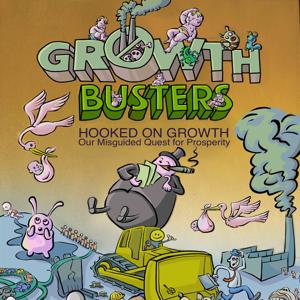


On a full planet, where human civilization is already in overshoot and in the process of crippling life-supporting ecosystems, it's unfortunately not possible for the world's poor, en masse, to rise out of poverty and live as richly as the even the average family in the industrialized world. There's not enough biocapacity for 8 billion people to live high on the hog, and technology has not changed that. But "reputable" economists and technology Pollyanna's like Andrew McAfee routinely fail to recognize this.
In this episode, Dave and Erika respond to the surge of listener feedback from GrowthBusters Episode 35, Decoupling Nonsense, in which they critiqued the unrealistic premise of Andrew McAfee's latest book, More from Less: The Surprising Story of How We Learned to Prosper Using Fewer Resources-and What Happens Next.
After listening to that episode, Terry Spahr, executive producer of the film 8 Billion Angels, sent a thoughtful email with some particularly interesting ideas. So we invited him to join us on the podcast to discuss. He offers an interesting challenge to some of the things we advocate on this podcast. He's not necessarily impressed with the things you do that you THINK are shrinking your footprint. Find out why in this episode.
How can we react to all this information and behave fairly and ethically? Let us know what you think.
The conversation with Terry Spahr was recorded in November of 2019. He is in the process of planning screenings around the world for his film. Visit the film website to learn more.
*In case you haven't already, we recommend listening to Episode 35, Decoupling Nonsense, prior to listening to this episode. Enjoy!
Links:
8 Billion Angels (film)
Earth Overshoot nonprofit
Decoupling Nonsense – Episode 35 of the GrowthBusters podcast
Join the conversation on Facebook
Make a donation to support this non-profit project.
Archive of all episodes of the GrowthBusters podcast
Subscribe to GrowthBusters email updates
See the film – GrowthBusters: Hooked on Growth
Explore the issues at www.growthbusters.org
View the GrowthBusters channel on YouTube
Subscribe (free) so you don't miss an episode:
We're back! Today's episode of the GrowthBusters podcast welcomes the New Year with the Telegraph's 11 Green New Year's Resolutions That Put the Planet First. But do they really? Whether you're considering switching to electric, eating less meat, or choosing some combination of this year's most popular green resolutions, Dave and Erika unpack the good and the confusing, and pick apart the not-so-great.
"You cannot get through a single day without having an impact on the world around you. What you do makes a difference, and you have to decide what kind of difference you want to make."
– Jane Goodall
Get some unusually good sustainability resolution recommendations from us in this episode, and learn how Dave and Erika are challenging themselves. Erika makes a VERY big footprint-reducing resolution. Listen to find out what it is. Will she be able to keep it? They tell us 80% of people give up on their resolutions by February, but that doesn't mean you can't be the change you want to see! Being one of her favorite holidays, Erika shares about what the new year means to her and questions what this statistic tells us about social influence and our search for living more sustainably.
In your journey towards becoming an eco-hero, we understand there will be times when you will want to give up, and perhaps even break your resolution(s), but we encourage you to be the example, get back up, and stick with it!
On the GrowthBusters podcast, Erika and Dave explore the joy of sustainable living and provide a recovery program for our society's growth addiction (economic/consumption and population). This podcast is part of the GrowthBusters project to raise awareness of overshoot and end our culture's obsession with and pursuit of growth.
Dave Gardner directed the documentary GrowthBusters: Hooked on Growth, which Stanford Biologist Paul Ehrlich declared "could be the most important film ever made." Erika Arias is researching the childfree/environment connection and is about to enter grad school.
LINKS:
Sustainable Energy Without the Hot Air – David MacKay Book – online and free
A Reality Check on Renewables – David Mackay TEDx Talk
11 Green New Year's Resolutions that Put the Planet First
America's Top New Year's Resolutions for 2020
Green Goals for 2020 – 10 Green Goals to Jumpstart Your New Year!
The Best New Year's Resolution Is the Easiest One
Join the conversation on Facebook
Make a donation to support this non-profit project.
Archive of all episodes of the GrowthBusters podcast
Subscribe to GrowthBusters email updates
See the film – GrowthBusters: Hooked on Growth
Explore the issues at www.growthbusters.org
View the GrowthBusters channel on YouTube
Subscribe (free) so you don't miss an episode:
We could use some good news. According to the four scholars who wrote A Finer Future, we are already experiencing some of the dramatic changes our system must undertake in order for our planet to meet the needs of future generations. This episode features a conversation with L. Hunter Lovins about the wellbeing economy and how sustainable behavior makes good business sense. Interestingly, this book grew out of a homework assignment from the King of Bhutan.
Please think of us in your year-end giving. GrowthBusters is a non-profit project funded by YOU. DONATE HERE
Hunter Lovins is President and Founder of Natural Capitalism Solutions. She co-founded the Rocky Mountain Institute, and co-authored (with Paul Hawken and Amory Lovins) the landmark book, Natural Capitalism. Lovins consults on sustainability for corporate giants and world leaders. She also finds time to serve as professor of sustainable business at Bard MBA.
This conversation was recorded in February of 2019, with introduction and close recorded in December of 2019.
LINKS:
A Finer Future – book, blog, resources
Human and Nature Dynamics (HANDY): Modeling Inequality and Use of Resources in the Collapse or Sustainability of Societies - Study
Wellbeing Economy Alliance
Capital Institute
Club of Rome
The Limits to Growth
The Limits to Growth: The 30-Year Update
A Finer Future report for/by Club of Rome
Happy Planet Index
Global Alliance for Banking on Values
Business End of Climate Change - Study
Green Illusions by Ozzie Zehner
Planet of the Humans - film
Follow us on Facebook
Follow us on Twitter
Subscribe (free) so you don't miss an episode:
When the world's scientists are concerned enough about something that they issue a warning – to the world, you might think we'd all take notice. Once you get to three warnings, however, well, you start to wonder just how intelligent we humans really are.
After a 1992 warning, and another in 2017, world scientists have this month issued what our guest, Stuart Scott, has termed, a "final notice." In this episode we visit with the man who offered to help the world's scientists step up to the microphone and be heard.
Scott is the founder and Executive Director of the Union of Concerned Citizens of Earth. He's taken on the mission of helping the world's scientists communicate well with everyday people.
The most recent warning, by the Alliance of World Scientists, is titled World Scientists' Warning of a Climate Emergency, and was published in the November issue of the professional journal, Bioscience. It begins:
"Scientists have a moral obligation to clearly warn humanity of any catastrophic threat and to 'tell it like it is.' On the basis of this obligation and the graphical indicators presented below, we declare, with more than 11,000 scientist signatories from around the world, clearly and unequivocally that planet Earth is facing a climate emergency."
The piece goes on to summarize "six critical and interrelated steps…that governments, businesses, and the rest of humanity can take to lessen the worst effects of climate change.
LINKS:
Donate to Support this Podcast
Scientistswarning.org This site has links to original 1992 warning, 2017 warning, and 2019 climate warning
Robert Newman – History of Oil
ScientistsWarningTV
Alliance of World Scientists
World Scientists Declare Climate Emergency Brief video featuring one of the warning co-authors, Dr. Thomas Newsome from the University of Sydney
We Don't Have Time
Greta Thunberg message to world leaders at COP24
Rewriting Our Cultural Narrative – episode 105 of Conversation Earth
We're In Deep: Earth Overshoot Day 2019 – GrowthBusters episode with Mathis Wackernagel
William Rees' two recent "Am I Wrong" queries:
Don't Call Me a Pessimist on Climate Change. I Am a Realist (part one) by William Rees
Memo from a Climate Crisis Realist: The Choice before Us (part two) by William Rees
Follow us on Facebook
Follow us on Twitter
Subscribe (free) so you don't miss an episode:
Technological innovation cannot take the environmental destruction out of economic growth. Get the real facts, not the blind faith and hope, about whether "decoupling" can allow more and more "prosperity" for more and more people without also delivering more and more ecosystem collapse.
Decoupling is Not a ThingIn this episode, Dave and Erika take serious exception to Andrew McAfee's misguided thesis in his latest book, More from Less: The Surprising Story of How We Learned to Prosper Using Fewer Resources—and What Happens Next. Erika really likes Sam Harris' podcast, Making Sense, but when it comes to his episode interviewing McAfee, Dave assures her it is utter nonsense.
But first…
Individual Action vs. Waiting for System ChangeDo individual actions really matter in the face of the climate crisis? Or are they a distraction from critically needed system change? Should we all be flying less, reducing our meat consumption, and/or having fewer children? Or do we wait until government regulations incentivize us to behave better? Erika and Dave agree with Greta Thunberg, but add a few more reasons to do the right thing, and do it now.
They review a piece by BBC Chief Environment Consultant Justin Rowlatt that includes a conversation with Greta Thunberg, plus insights from Princeton University Professor Peter Singer ("the world's most influential living philosopher") and Professor Kelly Fielding of the University of Queensland in Brisbane, Australia. These experts agree that our actions do matter, and we have an opportunity to be the change we want to see. Following Greta's lead, we can and should signal to others with our actions, if we want to inspire the next environmental movement. Spoiler alert: Free will is real!
Next…
Can the Next President Get Us to Net-Zero Carbon Emissions?Presidential candidates are promising to deliver the high levels of greenhouse gas emissions targeted by the IPCC. Politicians' climate policy platforms have been characterized as an "auction of promises," by analysts. Are these promises realistic? Don't get your hopes up. What will it really take to achieve net-zero carbon emissions by 2050? Would you believe we have to turn on 1500 new wind turbines every day, if we're not going to give up our overconsuming ways and our quest for eternal economic growth? Good luck with that! Erika and Dave discuss some interesting analysis by Roger Pielke in Forbes.
How to Be SustainableLast, but certainly not least, we have a quick chat with a hero at California State University Northridge. Lecturer Dev Vrat teaches classes in sustainability, and caught our attention with an excellent list of…wait for it…individual actions you can take to behave more sustainably. The list was created by his students and published in the student newspaper. We were particularly impressed that the list includes choosing to adopt rather than bring new children into the world.
LINKS:
Climate Change Action: We Can't All be Greta, But Your Choices Have a Ripple Effect – BBC piece by Justin Rowlatt
The Great Uncoupling- A Conversation with Andrew McAfee – Making Sense podcast
How We Learned to Prosper Using Fewer Resources: The Very Nature of Technological Progress is Being Radically Transformed – book review
Decoupling is Dead! Long Live Degrowth! – Resilience.org piece we recommend reading
Study: Decoupling Debunked
Net-Zero Carbon Dioxide Emissions By 2050 Requires a New Nuclear Power Plant Every Day – by Roger Pielke
How to be Sustainable – guide by CSUN Students
14 Mayors Commit to Slashing Meat Consumption in Major Cities Worldwide
Planet of the Humans – new film
Free Will Is Real – some recommended reading
Follow us on Facebook
Follow us on Twitter
Support this Vital Work
Subscribe (free) so you don't miss an episode:
More and more young women are declaring their intention not to conceive children. BirthStrike, Conceivable Future and Alexandria Ocasio-Cortez have all made headlines on this point. Erika and Dave unpack the issues surrounding womanhood without motherhood in this conversation with the author of the new book, Childfree by Choice, sociologist Amy Blackstone.
Amy is a professor of Sociology at the Margaret Chase Smith Policy Center at University of Maine. Her research into the childfree choice has appeared in a variety of academic and media sources including the New York Times, National Public Radio, and other national, regional, and international outlets.
Childfree by Choice: The Movement Redefining Family & Creating a New Age of Independence is a definitive investigation into the history and current growing movement of adults choosing to forgo parenthood: what it means for our society, economy, environment, perceived gender roles, and legacies, and how understanding and supporting all types of families can lead to positive outcomes for parents, non-parents, and children alike.
Amy writes about her own experience as a childfree woman, as well as the stories of other childfree men and women, and uses academic research to shed light into the choice that remains culturally misunderstood. As more people are choosing to forgo parenthood today than ever before, it's important to ask how this affects our society, economy, and environment. We dig deep into this topic and hear from Amy herself about whether she thinks we should keep having kids, and more about her view on the population-environment connection, an area Erika hopes to study in graduate school.
Being childfree herself, Erika is a firm advocate, and hopes to add more positive attention to the childfree choice in the media as co-host for the GrowthBusters podcast and in her future research endeavors.
Get Your Childfree Sticker! Wanting to make childfree and small-family decisions cool and a point of pride, Dave created small family stickers for you to put on the rear window of your car (a variation on the common stick figure families). Order yours here. Display it proudly to change the norm, making it "okay" to be childfree, even "cool."
Apply to be a Producer or Editor on the GrowthBusters PodcastWe need a little help cranking out episodes. If you have the skills, we definitely want to hear from you. If you just have the aptitude but interest in learning and helping, you could be a great candidate. Send us a note with a little bit about your skills, experience, availability and interest.
LINKS:
Book Signing Event Schedule and Event Requests
Will Not Having Children Save the Planet?The Stream on Al Jazeera English
I Chose Not To Have Kids Because I'm Afraid For The Planet by Ash Sanders
Childfree by Choice: The Movement Redefining Family and Creating a New Age of IndependenceAmy's new book
What Gets Left Behind for Future Generations? Reproduction and the Environment in Spey Bay, ScotlandJournal of the Royal Anthropological Institute
World Vasectomy Day
Film: To Kid or Not to Kid
Further Reading:
Keeping Families Small a Patriotic Act: ModiIndia Prime Minister Narendra Modi urges adoption of small families I Had 2 Kids. Now I Work to Influence People Against Having Their Own
It's Given Me Freedom': Three Women on Being Childless by Choice
Toward a Small Family Ethic by Travis Rieder
Follow us on Facebook
Follow us on Twitter
Support this Vital Work
Subscribe (free) so you don't miss an episode:
There may be beer in your fridge when you open it, but that doesn't mean we aren't in the early stages of climate catastrophe. The crisis is now, this is a present threat, not a future threat, according to our guest on this episode, Jeff Nesbit. He compiled an attention-getting catalog of things unraveling around the planet in his book, This Is the Way the World Ends. Is Nesbit predicting the end of the world? Listen to this episode to find out.
In their discussion of Jeff's book and interview, Erika and Dave agree he places too much faith in technology and wish he shared their belief that changing individual behavior and contracting our population are both critical parts of limiting climate disruption.
Erika has a great notion: there is a "sweet spot" between too much technology and not enough. And don't get them started on economic growth (oops, too late!).
PLUS: Erika can't help but laugh at a piece critical of ecological footprint accounting and Earth Overshoot Day, written by Michael Schellenberger of the Breakthrough Institute. Dave is not a fan.
And listeners have been sending their recommendations for additions to our Overshoot Playlist: Top 10 Environmental Songs. We share three links below. Listen to the podcast episode that plays our top 10 songs here.
LINKS:
This Is the Way the World Ends by Jeff Nesbit
Climate Nexus
Small Family Stickers
Songs Recommended by Listeners to Our Overshoot Playlist Episode:
Earth Song by Michael Jackson
Earth by Lil Dicky
Poi Dog Pondering, by "The Ancient Egyptians"
Overshoot Playlist: Top Environmental Songs playlist on YouTube
GrowthBusters playlist on Spotify
Follow us on Facebook
Follow us on Twitter
Support this Vital Work
Subscribe (free) so you don't miss an episode:
Since 1972, study after study, and report after report, has warned we are in overshoot – the sum total of human activity is too much for the Earth's ecosystems to bear. Welcome to Overshoot explores overshoot's causes, effects, and possible solutions, as well as some of the barriers to solving the problem. This is an in-depth follow up to episode 31 of the GrowthBusters podcast, which included a lengthy conversation with Mathis Wackernagel, co-originator of ecological footprint analysis and founder of Global Footprint Network.
The best scientific estimates tell us human civilization is in overshoot. Were you aware of this? Do you know what overshoot is? This one-hour special is particularly relevant in the days leading up to, and immediately following, Earth Overshoot Day on July 29, 2019.
Computer modeling by a team of MIT scientists in 1972 estimated the scale of human activity on the planet would cause systems to fail within a hundred years. Such failure is expected when humanity's footprint on the planet consistently exceeds its carrying capacity. Since 1972, study after study, and report after report, has warned we are in overshoot – the sum total of human activity is too much for the Earth's ecosystems to bear.
Since 2003, scientists at Global Footprint Network have been analyzing UN data and satellite imagery to estimate the planet's capacity to meet our needs (biocapacity), and humankind's footprint - or demand (ecological footprint) - on that capacity. Their analysis suggests we have been in overshoot since about 1970. Welcome to Overshoot explores overshoot's causes, effects, and possible solutions, as well as some of the barriers to solving the problem.
Participants:
Reported by: Dave Gardner
Interviews:
William Catton, author of Overshoot: The Ecological Basis of Revolutionary Change
Brian Czech, author of Supply Shock: Economic Growth at the Crossroads and the Steady State Solution, and executive director of the Center for the Advancement of the Steady State Economy
Herman Daly, author of Beyond Growth: The Economics of Sustainable Development
Paul Ehrlich, Stanford Biologist, author of The Population Bomb
Kerryn Higgs, author of Collision Course: Endless Growth on a Finite Planet
Ian Johnson, former World Bank vice president, former secretary general of Club of Rome
Bill McKibben, environmental journalist, author of Falter: Has the Human Game Begun to Play Itself Out?, co-founder of 350.org.
Dennis Meadows, lead scientist, The Limits to Growth
Kate Raworth, author of Doughnut Economics: 7 Ways to Think Like a 21st Century Economist
William Rees, co-originator of ecological footprint analysis
Bill Ryerson, President of Population Media Center and Chair of Population Institute
Juliet Schor, Professor of Sociology at Boston University and author of Plenitude: The New Economics of True Wealth
John Seager, CEO of Population Connection
Gus Speth, former chair, White House Council on Environmental Quality
Mathis Wackernagel, founder of Global Footprint Network and co-author of Ecological Footprint: Managing Our Biocapacity Budget
Rex Weyler, environmental journalist
Links:
Earth Overshoot Day
The Limits to Growth
Conversation Earth
Ecological Footprint: Managing Our Biocapacity Budget by Mathis Wackernagel and Bert Beyers (pre-order the book now, publication date is September 3, 2019)
Footprint Calculator
Move the Date Solutions to accelerate the shift to one-planet living
Overshoot Index
Past Earth Overshoot Days
Follow us on Facebook
Follow us on Twitter
Support this Vital Work
Subscribe (free) so you don't miss an episode:
In seven months humanity has burned through the resources it takes the Earth a full year to replenish. This is overshoot, and yes, it is a very big deal. In 2019, Earth Overshoot Day falls on July 29. Find out how we know when "Earth Overshoot Day" falls, how and why we're operating in ecological deficit, what it means for us and our children, and what – if anything – we can do about it.
Ecological footprint co-originator Mathis Wackernagel joins Erika and Dave for an in-depth discussion of overshoot. He explains the rigorous analysis done by the Global Footprint Network (which he founded) to calculate the biocapacity of the planet and the demands we place on it. Calculate your own ecological footprint using this footprint calculator and compare yours with Dave's and Erika's.
We discuss much of the information and ideas in his new book, Ecological Footprint: Managing Our Biocapacity Budget, co-written with Bert Beyers (available September 3, 2019). One of the most interesting and important is the idea that governments at every level, including cities, that continue today to invest in infrastructure designed around fossil-fuel powered transportation, will not be competitive in the new world we're entering.
Plus: A new study claims cutting beef consumption by 40% will allow us to feed a world population of 10.9 billion people. Dave has a few problems with the reporting on this story and the rationale for doing the research. He suggests, "Let's not put heroic efforts into feeding 10.9 billion. Let's focus our efforts on not reaching 10.9 billion." We know having fewer children doesn't wreck the planet. We DON'T know the unintended consequences of the next "green revolution."
LINKS:
Ecological Footprint: Managing Our Biocapacity Budget by Mathis Wackernagel and Bert Beyers (pre-order the book now, publication date is September 3, 2019)
Cut Beef Consumption in Half to Help Save the Earth, Says New Study
Creating a Sustainable Food Future: A Menu of Solutions to Feed Nearly 10 Billion People by 2050World Resources Institute report
Footprint Calculator
Move the Date Solutions to accelerate the shift to one-planet living
For further exploration:
Overshoot Index (2016)
Past Earth Overshoot Days
Mentioned or recommended by Wackernagel:
The One Planet Life by David Thorpe
The Challenge of Man's Future by Harrison Brown
The Next Hundred Years: A Discussion Prepared for Leaders of American Industry published in 1957 by Harrison Brown, James Bonner, and John Weir
Invisible Walls: Why We Ignore the Damage We Inflict on the Planet — and Ourselves by Peter Seidel (According to Wackernagel, "This was such a fabulous book; I believe the first ever to so clearly lay out the psychological and cultural barriers we are up against in the transformation to sustainability.")
Follow us on Facebook
Follow us on Twitter
Support this Vital Work
Subscribe (free) so you don't miss an episode:
What's the soundtrack of human civilization's time on Earth? If we were to put ten songs into a time capsule to help historians in the future piece together what the hell humankind was doing as the planet crumbled beneath our feet, the ten songs in this episode would tell half the story. We'll have to share another ten songs in a future episode to tell the rest of the story. So here's our top ten (five curated by Erika and five picked by Dave).
Music licensing restrictions prevent us from sharing these songs in full on our normal podcast episode, so we've posted a special episode with the complete songs at a site that licenses the music for us. Listen to the full-music version here.
Also, doing this episode inspired us to create a special public playlist on Spotify. You can hear all these songs, plus the runners up, at the GrowthBusters Spotify Playlist.
Let us know what important songs you feel we left out in this podcast or on our Spotify playlist (we'll add them). Comment on this page, or on the GrowthBusters Podcast Facebook page, or email us.
We're posting videos (in most cases, the official video) to these songs at this episode's page on the GrowthBusters website. These videos can also be found on the Overshoot Playlist: Top 10 Environmental Songs playlist on YouTube.
10. Love Song To The Earth – Paul McCartney, Jon Bon Jovi, Sheryl Crow, and many more (2015) "See mama earth is in a crazy mess…. She under crazy stress" website: www.lovesongtotheearth.org
9. Big Yellow Taxi – Joni Mitchell (1970) "Paved paradise, and put up a parking lot."
8. Mercy, Mercy Me – Marvin Gaye (1968) "How much more abuse from man can she stand?"
7. First World Problems – Weird Al Yankovich (2014) "My house is so big, I can't get WiFi in the kitchen"
6. Sleeping In – Postal Service (2003) "People thought that they were just being rewarded… for mailing letters with the address of the sender. Now we can swim any day in November"
5. How Far We've Come – Matchbox Twenty (2007)"Where you going man you know the world is headed for hell? I guess we're gonna find out, Let's see how far we've come"
4. Gone – Jack Johnson (2011) "What about your soul? Is it cold? Is it straight from the mold, and ready to be sold?"
3. Full Steam – David Gray & Annie Lennox (2009) "We all saw it coming but we still bought it"
2. Idioteque – Radiohead (2000) "We're not scaremongering. This is really happening"
1. Road to Hell – Chris Rea (1989) "This ain't no upwardly mobile freeway. Oh no, this is the road…to hell"
LINKS:
This episode with the complete songs included (at MixCloud)
Overshoot Playlist: Top Environmental Songs playlist on YouTube
GrowthBusters playlist on Spotify
Joshua Spodek's podcast, Leadership and the Environment Ep 183: Reusing and Recycling Are Tactical, Reducing is Strategic Ep 123 Dave Gardner : Busting the Growth Myth
Initiative – new book by Joshua Spodek
Our Moral Obligation to Conceive Just One Child (Ep 7 of The Overpopulation Podcast, with Travis Rieder)
Toward a Small Family Ethic by Travis Rieder
What a Wonderful World – Louis Armstrong
Jake Fader Music (Jake wrote and recorded the GrowthBusters theme)
Carlos Jones (Carlos sang the GrowthBusters theme)
Follow us on Facebook
Follow us on Twitter
Support this Vital Work
Subscribe (free) so you don't miss an episode:
Subscribe (free) so you don't miss an episode:
From the publisher's feed
102 Listeners

939 Listeners

575 Listeners
101 Listeners

102 Listeners

118 Listeners
206 Listeners

48 Listeners
460 Listeners
292 Listeners
573 Listeners
88 Listeners

754 Listeners

437 Listeners
48 Listeners