
Sign up to save your podcasts
Or

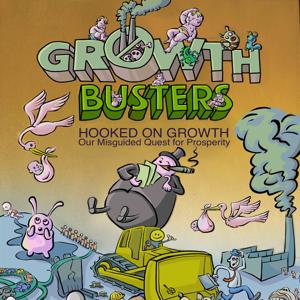


Yes, they are related. Our business-as-usual response to Hurricane Florence last month starts the conversation. (This episode was recorded before Hurricane Michael devastated the Florida panhandle.) Grace and Dave do also share some good news: climate change is getting more attention (of course the recent IPCC report has turned that volume up to 11, and we'll discuss that in the next episode).
Also in this episode: Does Dave need to shut up already about using condoms? How reliable are various forms of contraception? A challenge to the top environmental NGOs to start telling the truth about the unsustainability of economic growth. And a politician startles the world by quitting because his government isn't doing enough about the climate.
NOTE: Dave heard back from Final Straw about his problem getting the cleaning squeegie out of his straw. They informed him he had purchased a "bootleg" product made by someone else. The real Final Straw is scheduled to start deliveries in November.
LINKS:
New York Timess: 'It's Back': Underwater Yet Again, the Carolinas Face a New Reality
The Guardian: World is Finally Waking Up To Climate Change, Says 'Hothouse Earth' Author
World Bank Video: What a Waste 2.0: Everything You Should Know About Solid Waste Management
How Global Footprint Network is working to improve data
Living Planet Report
CASSE challenges NGOs
Final Straw
The 5 Best Reusable Straws
France24 The Debate episode about Hulot: Hulot Slams the Door: Popular Environment Minister Quits Macron Cabinet
Is Earth Overshoot Day meaningful? How sound is ecological footprint and biocapacity data behind it? Dave and Grace examine a critique from Robert B. Richardson, Associate Professor of Sustainable Development at Michigan State University.
Plus: This summer's heat and fires are NOT "the new normal." (It will get worse. Sorry.) More forest fire destruction comes with climate change. If you want to be a green hero, recycling is not nearly enough. How women who decide not to have children are treated. Men should take more responsibility for contraception.
MENTIONED IN THIS EPISODE:
The Conversation: Yes, Humans are Depleting Earth's Resources, but 'Footprint' Estimates Don't Tell the Full Story
Earth Overshoot Day episode (#16) of the GrowthBusters podcast
Overshoot Day Website
Global Footprint Network Ecological Footprint Data
Calculate Your Footprint
To Kid or Not to Kid documentary
The Race of Our Lives Revisited by Jeremy Grantham
James Hansen's Temperature Updates
Science Says: Hotter Weather Turbocharges US West Wildfires
We should NOT be celebrating (or pursuing) 4.1% economic growth, according to co-host Dave Gardner. Listen to this podcast to find out why pursuing GDP growth today is suicidal. Also on tap, listener comments about Earth Overshoot Day (the subject of our last podcast), and more single-use plastics we want to avoid. Dave stumps us with this question: What single-use disposable item do we want to see used more widely? Try to guess before Dave gives you the answer halfway into this episode.
In this episode we hear U.S. President Donald Trump brag about economic growth at a 4.1% annualized rate. Even his sharpest critics celebrate robust growth, as we hear from Joe Scarborough and Mika Brzezinski on Morning Joe. Many economists responded to this news that they don't think we can keep that growth rate up, but their reasons differ from Dave's. On a finite planet, perpetual growth in economic throughput is impossible.
Here's the spreadsheet Dave discusses in this episode:
Forget an economy 1 million times the size of today's, do you think one planet Earth can support even twice today's level of resource extraction, energy use, and waste (including carbon) emissions?
Here's one of the GrowthBusters videos mentioned in which Dave gives away Endangered Species Condoms:
One of the Endangered Species Condoms packages courtesy of the Center for Biological Diversity:
Explore the relationship between economic growth and sustainability at these websites and books:
Economics in a Full World by Herman Daly in Scientific American
The Center for the Advancement of the Steady State Economy
Limits to Growth (1972 MIT Study)
Degrowth
Shoveling Fuel for a Runaway Train: Errant Economists, Shameful Spenders, and a Plan to Stop Them All
Supply Shock: Economic Growth at the Crossroads and the Steady State Solution
Enough Is Enough: Building a Sustainable Economy in a World of Finite Resources
OTHER LINKS MENTIONED:
Sustainability News+Views (newsletter we recommend)
Laura Carroll (we mentioned her tweet and book)
GrowthBusters: Hooked on Growth (documentary Dave recommended - and directed!)
The Single-Use Plastics You Never Thought About and 13 Simple SwapsBy Heidi Bischof on Medium
Collapsible Straws:
A collapsible straw to attach to keychain
https://finalstraw.com/ (subscribe and order links don't seem to be working; we've reached out to see what's going on here)
Another collapsible straw
Endangered Species Condoms (Center for Biological Diversity)
Did you know we are in overshoot? What does that mean, and what should we do about it? Also in this episode, which has a smaller footprint – milk, or milk alternatives like almond milk? Dana informs us that, "Eating food is one of the worst things you can do for the environment." Are some health departments preventing bulk filling of reusable containers? Carrying reusable utensils and napkin on your travels. And choosing carefully the trash can in which to deposit your refuse.
August 1, 2018 is Earth Overshoot Day. Data collected and analyzed by the Global Footprint Network tells us this is the date when humanity's annual demand on nature begins to exceed what Earth's ecosystems can regenerate in the entire year. If it falls anytime before December 31, it means we're using more ecological resources and services than nature can regenerate - through activity like overfishing, overharvesting forests, and emitting more carbon dioxide into the atmosphere than ecosystems can absorb.
According to Global Footprint Network's co-founder, Mathis Wackernagel, "Our current economies are running a Ponzi scheme with our planet…. We are borrowing the Earth's future resources to operate our economies in the present. Like any Ponzi scheme, this works for some time. But as nations, companies, or households dig themselves deeper and deeper into debt, they eventually fall apart."
Dana and Dave interview random people to find out:
Check out our Overshoot Day interview video here.
Please share it, and let us know what you're doing to #movethedate. We welcome your comments, emails and tweets. And watch the GrowthBusters podcast Facebook page or Global Footprint Network's page for the #MoveTheDate live stream on August 1 at noon U.S. Eastern Daylight Time.
LINKS:
Overshoot Day Website
GrowthBusters Earth Overshoot Day Video
Video: Earth Overshoot Day Falls on August 1, 2018
Footprint Data
Solutions
Share your actions
Footprint calculator
The Four Lifestyle Choices that Most Reduce Your Carbon Footprint (Lund University study)
When It Comes to Nut Milk, What's the Most Sustainable Option?
Is Almond Milk Bad for the Planet?
Environmental & Social Impacts of Soy
Benefits of Pea Milk
Drink Pea Milk and Save the World: But What If The Peas are Shipped from France?
In Avengers: Infinity War the villain Thanos wants to solve overpopulation by exterminating half the population of the universe. Whenever overpopulation pops up in the movies, it's always a villain with an inhumane solution. Dave and Dana discuss whether this helps or harms the cause of achieving a sustainable human population (yes, the world IS overpopulated today, and the forecasts are to add several billion more). Aren't there humane, noble solutions to overpopulation?
Plus: Are we hardwired to reproduce? Population control, Paul Ehrlich, Thomas Malthus, Dan Brown's Inferno novel and movie, Soylent Green, ZPG, and Dave's Top 10 Overpopulation Films also come up. (See links below)
A number of listener comments are included. Thanks for writing in. Your comments are welcome either via posts on the episode page at GrowthBusters.org or Libsyn, on the GrowthBusters Podcast Facebook page, or on Twitter.
Also in this episode: Listener comments about disposable straws and the movie, Downsizing (episode 13 of the GrowthBusters Podcast).
LINKS:
Maybe Thanos Was Right (by Sparky, at Medium)
Thanos' plan in Avengers: Infinity War has historical precedent, but he applies it wrong (by Alessandra Potenza, at The Verge)
Inferno (the novel)
Inferno (the movie)
Soylent Green
ZPG
Top 10 Population Films of All Time
While the U.S. announced intention to pull out of the Paris Climate Agreement is bad news, it seems to have inspired a lot of carbon-reducing promises at other levels across the country. And that is good news. Dana and Dave lament the biggest hurdle in the path to a survivable climate – the fact that economic growth is the number one public policy goal around the world. In many cases it is the one thing policymakers won't sacrifice in efforts to curb the growth of greenhouse gases in our atmosphere.
We seem to be putting all our eggs in the technology basket, hoping we can run an ever-growing economy on more and more solar, wind, geothermal and hydro power and use technology to shrink that mushrooming global economy's carbon footprint. Some economists think we can do that. Many scientists do not. Ozzie Zehner, in his 2012 book Green Illusions, noted several studies that indicate we might need to change our ways beyond just switching power sources.
"Alternative energy is not a free ride, just a different ride...and there's no reason to believe it will offset fossil fuel use in a society that has high levels of consumption and is growing exponentially." – Ozzie Zehner
"…many of us, like Koningstein and Fork, have been asking the wrong questions of renewables. We've been demanding that they continue to power a growth-based consumer economy that is inherently unsustainable for a variety of reasons (the most obvious one being that we live on a small planet with finite resources). The fact that renewables can't do that shouldn't actually be surprising." – Richard Heinberg
The most optimistic economists believe we can "decouple" economic activity from environmental impacts. A number of realities intrude into that daydream. For a more thorough exploration, see the links below.
The GrowthBusters team also wonders why few, if any, climate-focused environmental groups are pushing citizens to modify their own lives to shrink their carbon footprints. We also remind ourselves that we face limits to growth in many areas beyond our climate's capacity as a carbon sink.
Plus, in the earth-shattering sustainability news department, did you know the cardboard core of your roll of toilet paper is recyclable? And, finally, Dana explains to Dave why she is a pescatarian.
LINKS:
Paris deal: a year after Trump announced US exit, a coalition fights to fill the gap
The decoupling delusion: rethinking growth and sustainability
Ozzie Zehner's 'Green Illusions' Ruffles Feathers
Study suggests choice between green energy or economic growth
Our Renewable Future
Can the world thrive on 100% renewable energy?
Imagine you can live large – trophy house, fancy toys, caveman diet – but the costs are miniscule. Would you find that appealing? Or would you rather simplify your lifestyle and make your footprint the thing that's miniscule? Is downsizing simply a way to supersize your consumption without maximizing your footprint? The latest episode of the GrowthBusters podcast examines these questions, as explored in the film, Downsizing.
"Downsizing may be about a small world, but it is an audacious, out-sized peach of a picture." Ian Freer, Empire Magazine
The film, starring Matt Damon and Kristen Wiig, is now available for rent and purchase – on Amazon, GooglePlay and YouTube. The DVD is available on Netflix. GrowthBusters director Dave Gardner is joined by new co-host Dana Hicky to discuss the film, and that means overpopulation, overshoot, overconsumption, and climate change are on the agenda.
Are we humans capable of doing the right thing and scaling back our footprint? If so, will we scale back our consumption or curb our procreation? The fact is, we're so far into overshoot we need to do both. Is the film a pretty accurate mirror of how most of us think about "the good life?" Does Downsizing do a good job of raising these issues without preaching and putting off the audience?
Also on tap: Are you still allowing restaurants to serve your drink with a disposable plastic straw?
LINKS:
Downsizing Feature Film
Surfrider Foundation DitchTheStrawPDX Campaign
The 5 Best Reusable Straws
YouTube Video: Straw Lodged in Sea Turtle's Nose
From the publisher's feed

102 Listeners

939 Listeners
575 Listeners
101 Listeners

102 Listeners

118 Listeners

206 Listeners

48 Listeners
460 Listeners
292 Listeners

573 Listeners
88 Listeners

754 Listeners

437 Listeners

48 Listeners