
Sign up to save your podcasts
Or

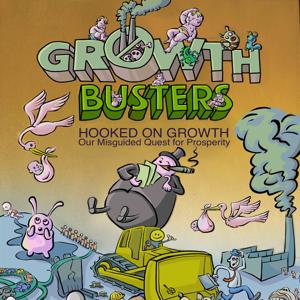


Did the heroes solve a problem or make it worse? Did super-villain Thanos in the blockbuster movie, Avengers: Infinity War, solve the overshoot problem when he killed off half the beings in the universe to end overpopulation? Should the Avengers undo his deed if they can? Dave and Erika dissect Avengers: Endgame and how it treats these sustainability issues.
We're looking for a podcast editor or producer with great audio editing skills. If you're interested, email us.
LINKS:
The Science of Avengers: Endgame Proves Thanos Did Nothing Wrong by JV Chamary
Do Only Villains Care About Overpopulation? We dissected last year's Avengers: Infinity War in GrowthBusters episode 15.
Follow us on Facebook
Follow us on Twitter
Support this Vital Work
Subscribe (free) so you don't miss an episode:
Bill Maher and Steven Colbert become the first honorees on the GrowthBusters podcast's "Wall of Excellence." You'll find out why in this episode. We want to thank and celebrate influencers who help alert the public that we are in overshoot, demonstrate sustainable living in their own lives, or help educate the public about important ways we can shrink our footprints.
New co-host Erika Arias introduces herself. She is very interested in the voluntary child-free choice and hopes to do research in this area in the future. She shares a clip from a recent episode of Real Time with Bill Maher about how it's actually good news that millennials are having less sex and therefore fewer children. Maher is, of course, famous for being bold enough to make "politically incorrect" statements, but Dave thinks talking about overpopulation is finally becoming politically correct after a few decades of "population taboo."
Maher celebrates the declining birth rate in the over-developed world because it is the single most effective thing you can do to reduce your carbon footprint. See this Lund University report for the detail: The Four Lifestyle Choices That Most Reduce Your Carbon Footprint.
On the other hand, Senator Mike Lee thinks having more babies will solve climate change. And even CNN prime time host Chris Cuomo gets some criticism here for painting population contraction as a loss of human potential. Dave finds it astonishing that even some very smart people are not aware that we are in overshoot.
Also in this episode, Dave thought he recalled the U.S. Department of Agriculture's latest estimate of the average cost to raise a child in the U.S. is $237,000. We looked that up after recording this episode and the most recent figure we could find is $233,610, a 2015 figure announced in January, 2017.
NOTE: We're looking for a podcast producer, or at least a podcast editor, to help out. Comment here or send us an email.
LINKS MENTIONED IN THIS EPISODE:
New Rule: Masturbate, Don't Procreate - Bill Maher
Are Millennials Having Less Sex Than Older Generations? A New Report Explores The Phenomenon
Families Projected to Spend an Average of $233,610 Raising a Child Born in 2015 (News release for most recent USDA study we could find)
Expenditures on Children by Families reports by USDA
Senator Mike Lee: More Babies Will Solve Climate Change(Steven Colbert Gives Mike Lee The Mike Lee Treatment)
The World Economy is a Pyramid Scheme, Steven Chu Says
Climate Change Will Take Food Off Your Table(Episode 27 of the GrowthBusters podcast with Michael Brownlee, author of Taking Back Our Food Supply: How to Lead the Local Food Revolution to Reclaim a Healthy Future)
Subscribe (free) so you don't miss an episode:
Will you be able to feed your family in ten or fifteen years? Mass starvation in industrialized countries due to climate change – in the near future – is not something we read or hear about. But it's a real probability, according to Michael Brownlee, author of Taking Back Our Food Supply: How to Lead the Local Food Revolution to Reclaim a Healthy Future. In this fascinating conversation Brownlee explains that not only is the global industrial food system the largest contributor to climate change; it also will not be able to feed us as we weather the storm.
In the face of this, Michael believes "we need to stop participating in the current system, and build regional, localized food systems…. Building our own regional food system is a matter of life and death." And that involves much more than farmer's markets and CSAs. Brownlee also wrote The Local Food Revolution: How Humanity Will Feed Itself in Uncertain Times, published in 2015. He and partner Lynette Marie Hanthorn have launched the online Local Food Academy, to identify, train and support leaders of the local food revolution.
The newest book, Taking Back Our Food Supply, will be available in book stores beginning around Earth Day (April 22, 2019).
Michael Brownlee aptly described our situation in this paragraph from The Local Food Revolution:
"Today we are living in a moment of historic transition. We are moving from a food and farming system that erodes soil, wastes water, diminishes biodiversity, wastes fossil fuels, spews carbon, relies on mechanization, modifies genes, pollutes water and air, poisons the land, depletes the spirit, destroys community, and creates economic disparity ... to a food and farming system that restores and rebuilds soil, recycles and conserves water, increases biodiversity, sequesters carbon, produces its own energy, relies on human labor, breeds for resilience, saves seeds, purifies the water and the air, heals the land, feeds the spirit, builds community, and creates economic parity."
Audition to become a co-host of the GrowthBusters podcast.
LINKS:
Taking Back Our Food Supply by Michael Brownlee
Local Food Academy
The Local Food Revolution by Michael Brownlee
Michael Brownlee episodes on Conversation Earth radio series & podcast:
Surviving a Hostile Climate on Local Food
Local Food Revolution
Running Out of Gas - GrowthBusters Episode 26
Forum - Tackling the Population Taboo: Creating a Sustainable Future for Children
Writing by Michael Brownlee:
Igniting a Revolution in the Way Humanity Feeds Itself
Reclaiming the Future: How to Lead the Local Food Revolution in Your Community (free e-book)
GrowthBusters Earth Day Screenings:
Colorado Springs, CO – April 8 at the Tim Gill Center for Public Media
Pittsboro, North Carolina – April 23 at the Chatham Community Library
Subscribe (free) so you don't miss an episode:
What if we told you the coming climate catastrophe MAY not turn out to be as bad as we all thought? I'm not sure I'm ready to buy that, but one of our guests on this episode tells us just that. IPCC worst-case scenarios seem to forget peak oil. Limited fossil fuel supplies on the planet could be a factor. But don't break out the champagne; we still have enough fossil fuels to screw things up pretty badly. See what you think!
Our two guests for this episode:
Dr. James Ward, a sustainability science and ecological engineering researcher and educator from the University of South Australia.
Professor Paul Sutton from the Department of Geography & the Environment at the University of Denver.
We recorded this conversation just a week before Ward and Sutton were scheduled to present at the Global Scenarios Forum in Denver, March 11-13, 2019. They planned to present data and suggestions that the IPCC has up to this point not considered the full range of possible economic scenarios in evaluating various outcomes. The forum will inform scenarios used by the International Panel on Climate Change.
James Ward's research indicates there is likely not enough recoverable coal, oil and natural gas to drive the worst-case climate change scenarios.
Paul Sutton is using nighttime satellite imagery to map and estimate human population distribution, energy consumption, economic activity, urban extent, CO2 emissions, and ecological footprints. He also teaches population geography and ecological economics.
Our conversation covered limits to growth, climate change, peak oil, and economic growth. Is the future "all about growth?" Climate change is just one part of a bigger picture need for us to shift away from our expansionist mindset. An economy that's "already transgressing planetary boundaries" cannot be expected to "multiply by a factor of ten," we're told. Ward tells his classes that "growth is viewed as inevitable, possible, and desirable, and it's none of those things."
We have a good discussion of "the decoupling delusion" (believing we can divorce economic growth from resource depletion and negative environmental impacts). Just switching our growth-obsessed society to renewable energy won't ensure the survival of our civilization.
Paul shares about the Grand Challenge Impact 2025 urban sustainability group he's a part of, and how difficult it is for scientists and other sustainability advocates to wrap their heads around the idea that our population needs to contract.
Also:
- Which countries are today using more than their share of biocapacity, and which are not?
- James talks about the 3 D's: denial, despair and delusion.
- Fantasies of the future. A pod metropolis on Mars? (Listening to PODcasts, no doubt.)
- Sutton: Killing all the bees will create jobs and grow GDP and tax revenue. "The idiot lights on the economists' dashboard are jobs, GDP, tax revenue."
- Al Bartlett's explanation of exponential growth
- Ward: "We've got one planet here; we've got to get it right."
- Running out of Soylent Green
Ultimately, we arrive at the conclusion that we need a cultural change. We need to figure out how to "thrive and enjoy a future that's not based on growing."
LINKS:
The Influence of Constrained Fossil Fuel Emissions Scenarios on Climate and Water Resource Projections
Soylent Green Trailer
Global Footprint Network
The Decoupling Delusion: Rethinking Growth and Sustainability
Wellbeing Economy Alliance
Doughnut Economics
Subscribe (free) so you don't miss an episode:
Love is in the air on Valentine's Day, so this seems the perfect time to learn what you can do to green up your wedding. With over 2 million weddings per year just in the U.S., greening your wedding can make a real difference. The Center for Biological Diversity's Sarah Baillie shares low-impact wedding tips from the new Wildlife-Friendly Wedding Guide. Listen for more tips and information. And by all means get the guide if you have a wedding to plan!
Your choice of wedding location can make a big difference. So can menu choices. Did you know a vegetarian menu has 75% less emissions than a meat-based menu? For a vegan menu the reduction is 90%. And have you considered that renting attire for the wedding party vs. buying can substantially cut your wedding's impact? Attending a wedding has its share of impacts and costs. According to LendEDU, the average wedding attendee spends $1,386 per wedding.
LINKS:
The Wildlife-Friendly Wedding Guide
Center for Biological Diversity
Population & Sustainability Program (of Center for Biological Diversity)
Valentine's Day in Times Square (Center for Biological Diversity action)
Dave's documentary about bystander behavior
Endangered Species Condoms
So Kind registry (a registry and wishlist service that encourages the giving of homemade gifts, charitable donations, secondhand goods, experiences, time, day-of-event help and more)
The Good Beginning registry (an online registry for donating to charitable causes throughout the world)
Rapid Population Growth in West, South Comes at High Cost to Wildlife (Press Release about U.S. Census Announcement)
As Weddings Become More Elaborate, Guests Send More Regrets
Loop circular shopping platform
When you've had a tough day and need some comfort, do you go for a long hike and commune with nature, or do you get on Amazon? What gives us joy, yet what do we strive to achieve? Are we in dominion over nature, or are we part of nature? Suez Jacobson (believe it or not, an economics professor) shares why she produced the film Wild Hope, which premieres February 23, 2019 at the Colorado Environmental Film Festival.
The film includes Naomi Klein, Bill McKibben, George Monbiot and several other luminaries, including Patagonia CEO Rose Marcario.
Host Dave Gardner also engages Jacobson in a fascinating conversation about the shortcomings of college-level economics education. She also shares how she has begun teaching economics.
"The more clearly we can focus on the wonders and realities of the universe around us, the less taste we will have for its destruction." - Rachel Carson
LINKS:
Wild Hope film
Wild Hope Premiere: The Colorado Environmental Film Festival (CEFF), Golden, CO, February 23
Great Old Broads for Wilderness
The Impossible Hamster video
Reimagining Economics 101 – paper by Suez Jacobson
The Greenpeace PolluterWatch Charles Koch University Funding Database
Economists and educators mentioned by Suez who are doing excellent work:
Tim Jackson
Kate Raworth – Doughnut Economics
Robin Wall Kimmerer
Braiding Sweetgrass by Robin Kimmerer
TEDx talk by Robin Wall Kimmerer
How do we handle the despair of knowing we may not win this battle with climate change (which is really a battle with ourselves)? Should we keep fighting? And if we do, WHO needs to be making the drastic changes we know are needed to avoid the worst of climate change disaster? Is it you and me? The big corporations? Or is it our elected policymakers? Are we assuming too much personal responsibility for goosing climate change or not enough? Are we in such a dire situation that we shouldn't even bother "greening" up our lives, because that is so far from enough?
In this episode former UK Guardian columnist and author of All You Need is Less, Madeleine Sommerville, joins host Dave Gardner to ponder these questions.
LINKS:
Spaceship Earth Passenger Safety Briefing (short GrowthBusters film)
All You Need is Less (Madeleine Sommerville's Guardian Column)
All You Need is Less: The Eco-Friendly Guide to Guilt-Free Green Living and Stress-Free Simplicity (Madeleine Sommerville's book)
In our conversation, Madeleine mentioned she felt she could only write so many times about buying green products. Well, what about NOT buying? The next day I read 5 Things You Need (No Purchase Required) To Go Zero Waste by Lindsay Miles (her blog is Treading My Own Path: Steps Toward a Sustainable Lifestyle. She's written a few e-books, including Enough is Enough: 18 Ideas for Embracing a Life with Less Waste and Less Stuff, and Beginners Guide to Living with Less Plastic). Check it all out.
Sweet Madeleine blog
Neoliberalism has Conned Us into Fighting Climate Change as Individuals by Martin Lukacs (The article Madeleine mentioned about the danger of assuming a lot of personal responsibility for climate change)
How to Cope with the End of the World by Madeleine Sommerville
You Are Stealing Our Future (15-year-old Greta Thunberg at COP24)
Greta & Svante Thunberg - Straight Talk (Discussion at COP24 with Greta Thunberg)
To brush up on just how long some scientists have been trying to get the world into motion on greenhouse gas reduction, read:
Losing Earth: The Decade We Almost Stopped Climate Change by Nathaniel Rich
When you think of laundry, typically you're after the whitest whites, and no shrinkage. How about we think outside the box and "green" our laundry practices by shrinking their footprint? This episode answers your questions and offers advice on how to minimize the environmental impact of washing your clothes. Also an often forgotten, but important aspect, of making recycling work.
Did you know 75 to 90 percent of the energy your washer uses goes to warming up the water? You can save $60 or more per year on your energy bill by washing in cold water, according to Consumer Reports. But not all laundry detergents work well in cold water. We address that in this episode and offer additional information in the links below.
LINKS:
Heidi Bischof's Earth Ethic blog at Medium
After recording this podcast, Heidi found this indicating laundry pods are probably safe for people and planet:
Detergent Pods are Handy, but Can I Use Them With a Clean Conscience? – Grist's Ask Umbra
Also, here's a related tip not discussed in the podcast: Washing your dishes by hand probably wastes water!
Why You Should Never Wash Dishes by Hand
Two products designed to capture plastic microfibers in our washing machines:
The Cora Ball
Guppyfriend Washing Bag
Essential Working Group Guide to Laundry Detergents
Why Are You Still Washing Your Clothes In Warm Water?
6 Reasons to Cold-Water Wash
9 Ways to Save Energy Doing Laundry
The Best Laundry Detergent
Life expectancy is declining in one of the richest countries on Earth, the U.S., due to suicides and drug overdoses. Several noted millionaires have checked out in the last few years. Why? Do you fear you're a failure because you aren't ahead of the Joneses? Are you unhappy because you don't have it all? Are you short on time or money? Are you constantly scrapping for something you don't have? The conversation in this episode may start you on a course that can set you free and bring you peace of mind.It may be your key to sustainable living. GrowthBusters' Dave Gardner is joined by Jennifer Cohen and Gina LaRoche, authors of The Seven Laws of Enough: Cultivating a Life of Sustainable Abundance for a discussion of "Sustainable Abundance."
Also in this episode: David Attenborough's recent COP 24 address on behalf of the people of the world. Plus, do you want help reducing your carbon footprint? There's a new UN social media program that may help.
LINKS:
Join or make a one-time donation to GrowthBusters (yes, we're a 501C3 nonprofit!)
GrowthBusters Podcast Facebook Page
Video of David Attenborough Address
United Nations Facebook Page
United Nations ActNow Bot
Book: The Seven Laws of Enough
Scarcity Assessment
Seven Stones Leadership
A climate emergency has finally been declared. Grace and Dave explain the bad news from the IPCC and evaluate media, public and policymaker response. Has sugar-coating the news and projections in the past been useful? Is it time to "take the gloves off?" Some say even this new, alarming report is understating the seriousness of what we face.
What should we be doing about it? Now that denial of the science is pretty much behind us, what stands in the way of an appropriate response? Is apathy an issue? Saturday Night Live may have summed up our predicament a little too accurately. The agenda includes the Trump administration's approach to climate.
Plus: World premiere announcement of a new documentary, To Kid or Not to Kid, at Doc NYC, World Vasectomy Day is a thing, and a new segment featuring Heidi Bischof, the head and heart of Earth Ethic.
LOTS OF LINKS FROM THIS EPISODE'S DISCUSSION:
Documentary World Premiere: To Kid or Not to Kid
World Vasectomy Day
IPCC Report Executive Summary: GLOBAL WARMING OF 1.5 °C
UN Report on Global Warming Carries Life-or-Death Warning - AP Story
8 Things You Need to Know About the IPCC 1.5˚C Report by Kelly Levin, World Resources Institute
Saturday Night Live Weekend Update
Can Civilization Survive What's Coming? By Jeff Goodell in Rolling Stone
Climate Change Threatens Extinction but Politicians Only Care About Next Election by former London Mayor Ken Livingstone
"I Simply Don't Care' About Climate Change
The Trump Administration Knows the Planet is Going to Boil. It Doesn't Care by Bill McKibben
Talking points: 1.5°C = No Fossil Fuels from 350.org
Heidi Bischof on Medium
Saving the Planet: How to Find Your Missing Why by Heidi Bischof
Less Is More: Bringing Back Quality And Simplicity To Our Kitchens (And Our Lives) by Heidi Bischof
Earth's Population is Skyrocketing. How Do You Feed 10 Billion People Sustainably?
The Adorable Optimism of the IPCC by Peter Watts
Overwhelmed by Climate Change? Here's What You Can Do by Matthew Taylor and Adam Vaughan at UK Guardian
Eco Crises: Doom & Gloom, Truth & Consequences by Kristine Mattis
From the publisher's feed
102 Listeners

939 Listeners
575 Listeners
101 Listeners

102 Listeners

118 Listeners
206 Listeners

48 Listeners
460 Listeners
292 Listeners
573 Listeners
88 Listeners
754 Listeners
437 Listeners
48 Listeners