
Sign up to save your podcasts
Or

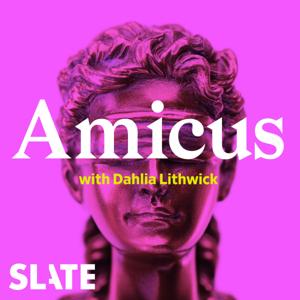

The Supreme Court handed down a unanimous ruling this week in United States v. Hemani, holding that a marijuana user cannot be stripped of his Second Amendment right to own a firearm simply because he sometimes uses cannabis. Justice Neil Gorsuch wrote the majority opinion, leaning heavily on the founders' own well-documented love of alcohol to argue that responsible substance use has never historically disqualified Americans from bearing arms. Dahlia Lithwick and Mark Joseph Stern unpack the ruling, note what it does not settle about the still-murky Bruen test, and reflect on how dramatically the justices’ posture toward marijuana has shifted since the "Bong Hits for Jesus" case they decided less than two decades ago.
Then, Dahlia sits down with David Gans, director of the Human Rights, Civil Rights, and Citizenship Program at the Constitutional Accountability Center, to discuss his forthcoming Stanford Law Review article, Forgotten Framers: Black Conventions and the Second Founding. Between 1864 and 1869, Black Americans gathered in more than fifty conventions in packed churches and meeting halls across the country to demand equal citizenship, voting rights, bodily autonomy, protection from racial violence, and access to education. These conventions molded the Reconstruction amendments in ways that originalist jurisprudence ignores.
Gans explains how the Roberts court's colorblind reading of the Fourteenth and Fifteenth Amendments distorts this history by ignoring the explicitly race-conscious vision the conventions—and the amendments themselves—championed. He also explains how the Guarantee Clause, long a "sleeping giant," could still offer a constitutional path to combat partisan and racial gerrymandering after Calais and Milligan. Gans wrote about this facet of the history recently in Slate.
This is part of Opinionpalooza, Slate’s coverage of the major decisions from the Supreme Court. The best way to support our work is by joining Slate Plus. (If you are already a member, consider a donation or merch!)
Want more Amicus? Join Slate Plus to unlock weekly bonus episodes with exclusive legal analysis. Plus, you’ll access ad-free listening across all your favorite Slate podcasts. You can subscribe directly from the Amicus show page on Apple Podcasts and Spotify. Or, visit slate.com/amicusplus to get access wherever you listen.
Need to set up your Slate Plus feed? If you subscribed through Slate.com, check out our FAQ at slate.com/podcastfaqs for easy instructions. Members subscribed via Apple Podcasts get automatic access—no setup required.
Hosted on Acast. See acast.com/privacy for more information.
 View all episodes
 By Slate Podcasts

4.6
33203,320 ratings
The Supreme Court handed down a unanimous ruling this week in United States v. Hemani, holding that a marijuana user cannot be stripped of his Second Amendment right to own a firearm simply because he sometimes uses cannabis. Justice Neil Gorsuch wrote the majority opinion, leaning heavily on the founders' own well-documented love of alcohol to argue that responsible substance use has never historically disqualified Americans from bearing arms. Dahlia Lithwick and Mark Joseph Stern unpack the ruling, note what it does not settle about the still-murky Bruen test, and reflect on how dramatically the justices’ posture toward marijuana has shifted since the "Bong Hits for Jesus" case they decided less than two decades ago.
Then, Dahlia sits down with David Gans, director of the Human Rights, Civil Rights, and Citizenship Program at the Constitutional Accountability Center, to discuss his forthcoming Stanford Law Review article, Forgotten Framers: Black Conventions and the Second Founding. Between 1864 and 1869, Black Americans gathered in more than fifty conventions in packed churches and meeting halls across the country to demand equal citizenship, voting rights, bodily autonomy, protection from racial violence, and access to education. These conventions molded the Reconstruction amendments in ways that originalist jurisprudence ignores.
Gans explains how the Roberts court's colorblind reading of the Fourteenth and Fifteenth Amendments distorts this history by ignoring the explicitly race-conscious vision the conventions—and the amendments themselves—championed. He also explains how the Guarantee Clause, long a "sleeping giant," could still offer a constitutional path to combat partisan and racial gerrymandering after Calais and Milligan. Gans wrote about this facet of the history recently in Slate.
This is part of Opinionpalooza, Slate’s coverage of the major decisions from the Supreme Court. The best way to support our work is by joining Slate Plus. (If you are already a member, consider a donation or merch!)
Want more Amicus? Join Slate Plus to unlock weekly bonus episodes with exclusive legal analysis. Plus, you’ll access ad-free listening across all your favorite Slate podcasts. You can subscribe directly from the Amicus show page on Apple Podcasts and Spotify. Or, visit slate.com/amicusplus to get access wherever you listen.
Need to set up your Slate Plus feed? If you subscribed through Slate.com, check out our FAQ at slate.com/podcastfaqs for easy instructions. Members subscribed via Apple Podcasts get automatic access—no setup required.
Hosted on Acast. See acast.com/privacy for more information.

9,237 Listeners
8,465 Listeners
4,038 Listeners

1,377 Listeners
2,842 Listeners

993 Listeners
1,027 Listeners

5,623 Listeners

6,294 Listeners
1,866 Listeners
53 Listeners

32,328 Listeners
2,067 Listeners
237 Listeners
23,901 Listeners
7,649 Listeners
9,370 Listeners
1,285 Listeners
12,633 Listeners

4,630 Listeners

8,473 Listeners
1,195 Listeners
5,866 Listeners
444 Listeners

15,950 Listeners
10,446 Listeners

61 Listeners
7,020 Listeners
48 Listeners
97 Listeners
6 Listeners

131 Listeners

0 Listeners
48 Listeners