
Sign up to save your podcasts
Or

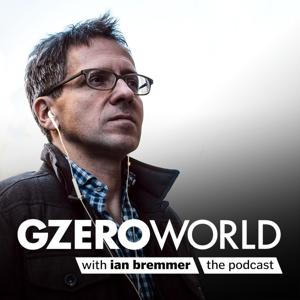
By GZERO Media


4.7
744744 ratings


The podcast currently has 537 episodes available.
The most played episodes among Podcast App listeners.
More than half a century after humans last walked on the Moon, the next era of space exploration is taking shape. Getting there is cheaper, private companies are playing a much bigger role, and discoveries like vast reserves of lunar water have made the prospect of establishing a permanent presence on the Moon far more realistic. Ian Bremmer sits down with Canadian astronaut Chris Hadfield to talk about what this new space age could look like. They discuss the growing competition between the US and China, whether rivals can cooperate on the lunar surface, and who gets to write the rules as governments and companies begin looking beyond simply planting a flag. Hadfield also breaks down the practical challenges of living on the Moon – from powering a settlement through long lunar nights to the unanswered question of whether humans can develop normally in low gravity. He explains how private companies are turning space into a commercial marketplace, why regulation will inevitably struggle to keep pace, and why robots alone can never satisfy humanity’s drive to explore Mars. And drawing on nearly six months aboard the International Space Station, Hadfield reflects on the surprisingly wonderful experience of sleeping in zero gravity, circling Earth 2,600 times, and how seeing the planet from above fundamentally changed his perspective on humanity and our place in the universe. Subscribe to the GZERO World with Ian Bremmer Podcast on Apple Podcasts, Spotify, or your preferred podcast platform, to receive new episodes as soon as they're published. Hosted by Simplecast, an AdsWizz company. See pcm.adswizz.com for information about our collection and use of personal data for advertising.

What happens when the world’s safety net disappears? For decades, international aid has helped fight poverty, stop disease outbreaks, and keep fragile societies from falling over the edge. But after the shutdown of USAID last year, the relief system is in danger of collapsing entirely. International Rescue Committee President & CEO David Miliband joins Ian Bremmer on the GZERO World Podcast to talk about the long shadow cast by America’s retreat from global aid and what comes next. In truth, there has never been enough humanitarian aid to help the millions of people who desperately need it each year. But amid two major global crises–the Ebola outbreak in the Democratic Republic of the Congo and the war in Iran–the system is under more strain than ever before. Humanitarian aid is more than charity, it’s what keeps crises from spiraling out of control and conflict from spilling over borders. Can anything be done to keep the system from collapsing entirely? Who, if anyone, is stepping up to fill the vacuum left by the United States? Fresh from a trip to Ukraine, Miliband talks about the humanitarian need on the ground there, the ripple effects of the US pullback, and where the international relief system goes from here. Subscribe to the GZERO World with Ian Bremmer Podcast on Apple Podcasts, Spotify, or your preferred podcast platform, to receive new episodes as soon as they're published. Hosted by Simplecast, an AdsWizz company. See pcm.adswizz.com for information about our collection and use of personal data for advertising.
Ten years ago, Britain voted to leave the European Union in one of the most consequential political decisions of the 21st century. Supporters promised greater sovereignty, stronger economic growth, and a more independent future. Instead, Brexit ushered in a decade of political upheaval, economic uncertainty, and a fundamental rethinking of Britain's role in the world. On this episode of the GZERO World podcast, Ian Bremmer sits down with former UK cabinet minister Rory Stewart to assess Brexit's legacy a decade later. They discuss whether the referendum's core promises have been fulfilled, why Britain's economy has struggled to regain momentum, and how the global shift toward tariffs, industrial policy, and geopolitical competition changed the landscape just as the UK struck out on its own. The conversation also explores the remarkable rise of Nigel Farage—from Brexit architect to leader of Reform UK—and the financial scandal that now threatens his anti-establishment image. Stewart explains why Britain has cycled through seven prime ministers in ten years, whether Manchester Mayor Andy Burnham represents a new political alternative, and why voter frustration continues to reshape British politics. Finally, Bremmer and Stewart examine Britain's changing relationship with Europe and the United States, the future of the transatlantic alliance, and what the UK's experience can tell us about the broader challenges facing Western democracies. Subscribe to the GZERO World with Ian Bremmer Podcast on Apple Podcasts, Spotify, or your preferred podcast platform, to receive new episodes as soon as they're published. Hosted by Simplecast, an AdsWizz company. See pcm.adswizz.com for information about our collection and use of personal data for advertising.
For more than four years, Russia has wagered that it can outlast Ukraine. The Kremlin has more troops, more resources, and a greater tolerance for casualties, betting that Kyiv—and its Western allies—will eventually lose the will to keep fighting. But that assumption is being tested. Ukraine is carrying out increasingly sophisticated strikes deep inside Russian territory, forcing Moscow to defend military bases, energy infrastructure, and even symbolic strongholds like Crimea. At the same time, NATO support has strengthened, Europe is expanding its defense cooperation with Kyiv, and President Donald Trump has struck a noticeably warmer tone toward Ukraine than he did just months ago. On the latest episode of the GZERO World podcast, Ian Bremmer sits down with former Ukrainian Foreign Minister Dmytro Kuleba to discuss whether the momentum in the war is truly beginning to shift. They examine Ukraine's strategy of bringing the war home to Russia, why Kyiv believes pressure inside Russia is essential to changing the course of the conflict, and what Putin's remaining options look like if the costs continue to rise. Kuleba also weighs in on Trump's changing approach to Ukraine, NATO's long-term commitment, Ukraine's path toward the European Union, and why he believes Europe's future security is inseparable from Ukraine's future. Subscribe to the GZERO World with Ian Bremmer Podcast on Apple Podcasts, Spotify, or your preferred podcast platform, to receive new episodes as soon as they're published. Hosted by Simplecast, an AdsWizz company. See pcm.adswizz.com for information about our collection and use of personal data for advertising.
This week marks 25 years since 9/11—the deadliest terror attack the world has ever seen and a defining moment in American history. The attacks transformed US politics and national security. The war on terror became the organizing principle of American foreign policy. Former Secretary of Defense Mark Esper joins Ian Bremmer on the GZERO World Podcast to reflect on the day that forever changed how Americans thought about national security, and how the United States wielded its enormous power around the world. How much did we learn from the post-9/11 era and do we risk repeating the same mistakes? 25 years after the US launched its war on terror, America is once again fighting a war in the Middle East without a clear endgame or exit strategy. The United States is on the back foot in its war with Iran, Esper says. The original goal of getting Tehran to the negotiating table about its nuclear program isn’t even being discussed anymore. And meanwhile, the United States is dropping the ball on countering its biggest existential threat: China. Host: Ian Bremmer Guest: Mark Esper Subscribe to the GZERO World with Ian Bremmer Podcast on Apple Podcasts, Spotify, or your preferred podcast platform, to receive new episodes as soon as they're published. Hosted by Simplecast, an AdsWizz company. See pcm.adswizz.com for information about our collection and use of personal data for advertising.
The podcast currently has 537 episodes available.

3,399 Listeners

1,975 Listeners

26,261 Listeners

9,642 Listeners

608 Listeners
720 Listeners
32,301 Listeners
27 Listeners

7,111 Listeners
5,384 Listeners

15,888 Listeners

480 Listeners

3,512 Listeners
1,448 Listeners

1,535 Listeners