
Sign up to save your podcasts
Or



Based on Podcast App listening data
This week on the podcast we have Cara Brosnahan from Beef and Lamb NZ (B+LNZ) discussing the latest research being done to gauge the prevalence and impact of facial eczema (FE) in New Zealand.
As the global climate shifts, the disease is migrating further southward, causing new challenges for regions and livestock previously unaffected. B+LNZ are trying to understand the spread and severity of the disease, with the aim of devising effective strategies to manage it.
North Island farmers will be very familiar with what FE is - for those that aren't, sheep and cattle consume a toxin known as sporidesmin, produced by a fungus living in the pasture, which causes liver damage and subsequent photosensitivity, resulting in the clinical sign of facial eczema. Subclinical signs of the disease can lead to significant liver damage, reduced production, fertility issues and - in dairy cattle - a drop in milk production.
B+LNZ's three-year research endeavour aims to enhance understanding of the prevalence of facial eczema in New Zealand and the impacts on livestock in both the North and South Islands of New Zealand.
B+LNZ need 350 dedicated farmers (with 22 participants from each of the 16 regions across New Zealand) to gather samples between October and May for three consecutive years. The objective is to obtain a comprehensive nationwide understanding of facial eczema, regardless of previous farm exposure to the condition.
B+LNZ will provide sampling kits and cover the cost of shipping samples to the laboratory. Study participants will be responsible for collecting samples from the ground, approximately every two weeks, amounting to 16 collections from their flock of sheep each year during the research period.
Farmers interested in participating in the facial eczema research study can express their willingness to participate by registering their details below.
https://www.cognitoforms.com/BLNZGenetics/FacialEczemaThreeYearResearchStudy
Head Shepherd is brought to you by neXtgen Agri International Limited.
We help livestock farmers get the most out of the genetics they farm with. Get in touch with us if you would like to hear more about how we can help you do what you do best: [email protected].
Thanks to our sponsors at MSD Animal Health and Allflex, Heiniger Australia and New Zealand, and ProWay Livestock Equipment. Please consider them when making product choices, as they are instrumental in enabling us to bring you this podcast each week.
Check out the MSD range HERE
Check out Allflex products HERE
Check out Heiniger's product range HERE
Check out ProWay's product range HERE
Breeding a balanced sheep is no easy feat. But with a head for numbers and a great mindset, our guest this week, Alan Rissmann, is doing just that.
With the business tagline 'We breed sheep to work for you, not make work for you', it's no surprise that Rissmerino breeds sheep for higher welfare traits and reduced workload. In his conversation with Mark, Alan dives into the 'why' behind this.
"In the industry, there's been this perception that sheep are hard work and they just have to be hard work," says Alan. Quoting the adage, "Whether you think you can or you think you can't, you'll be right," Alan shares why the belief that sheep are hard work can hold producers back from improving their sheep production.
"If you don't think sheep can survive without a drench, without a foot trim, you're not going to try to fix it.... But, if you do think that this is a stupid waste of time, like I do, then you're going to do something to fix it and there are ways to fix that."
Mark and Alan discuss the traits that Rissmerino base their breeding decisions on and what they are looking for in a sheep - low micron, low adult weight, good growth curve, increased fertility, worm and fly resistance, structural soundness and clean skin. Sounds like a dream sheep!
Alan is a firm believer in running large mobs of sheep so that they face the same challenges. "They're all in one mob pretty much all year. There are just five weeks they get pulled out to be single-sired and then five weeks again over lambing time. The rest of the year the sheep run just on grass, all in one big mob so they go compete with each other for survival and I think that's very important," he says.
The location of the Rissmann's property offers many environmental challenges, which means their flock is "pretty bombproof", as Alan puts it. They face heavy rain leading to pressure on wool colouring and fly, more worms and also feet issues. This, along with Rissmerino's dedicated data collection, hard work in genetic selection and strict culling policy, have rewarded them with some exciting merino sheep with plenty of potential for handling future challenges.
This is an inspiring podcast that highlights the success that can come when you put all of the best-practice principles into action.
Head Shepherd is brought to you by neXtgen Agri International Limited.
We help livestock farmers get the most out of the genetics they farm with. Get in touch with us if you would like to hear more about how we can help you do what you do best: [email protected].
Thanks to our sponsors at MSD Animal Health and Allflex, Heiniger Australia and New Zealand, and ProWay Livestock Equipment. Please consider them when making product choices, as they are instrumental in enabling us to bring you this podcast each week.
Check out the MSD range HERE
Check out Allflex products HERE
Check out Heiniger's product range HERE
Check out ProWay's product range HERE
Tune in to hear Dr Nicola Lambe and Dr Mark Ferguson discuss sheep genetics, methane emissions and their intersection with climate change.
With an impressive 25-year career at Scotland's Rural College (SRUC), Nicola brings a wealth of knowledge and experience to our listeners. From her beginnings as a poultry research assistant, Nicola is now a teacher and project manager at SRUC.
Throughout her career, she has played a crucial role in CT scanning work in Scotland, helping farmers breed for better meat and carcass quality in their sheep.
20 years ago they started with a second-hand CT scanner from a hospital that wasn't mobile. Now, they have one on the back of a truck trailer that travels around the country. Through the years this has produced a wealth of data to analyse.
"It takes cross-sectional images through the body," she explains. "We have software that can calculate fat, muscle and bone in different areas of the body. You can look at the 3D reconstruction of the images and examine it in different planes to measure muscle dimensions and body part volumes."
From this, a lot can be recorded. Muscle mass, fat percentages and even rumen capacity and pelvis size and Nicola goes through the results of this research, plus the more recent methane and feed efficiency work Nicola and SRUC have been involved with. They are currently recording methane via portable accumulation chambers, the CT traits listed above, feed efficiency, rumen microbiome, disease resistance and commercial performance.
Mark and Nicola dive a little deeper and discuss the impact of methanogens, organisms that generate methane in sheep. The relationship between methanogens and sheep genetics is an intriguing subject that still lacks complete understanding. However, advances in technology over the past ten years have greatly influenced the industry and, with research happening globally, answers aren't far away.
Head Shepherd is brought to you by neXtgen Agri International Limited.
We help livestock farmers get the most out of the genetics they farm with. Get in touch with us if you would like to hear more about how we can help you do what you do best: [email protected].
Thanks to our sponsors at MSD Animal Health and Allflex, Heiniger Australia and New Zealand, and ProWay Livestock Equipment. Please consider them when making product choices, as they are instrumental in enabling us to bring you this podcast each week.
Check out the MSD range HERE
Check out Allflex products HERE
Check out Heiniger's product range HERE
Check out ProWay's product range HERE
This week Nicola Peddie shares her insights into the wool industry, the power of sustainable innovation, and the potential for personal growth when you put your mind to it.
Born and raised on a sheep and beef farm in New Zealand, Nicola's passion for wool came from a black and coloured stud flock her mother ran. "From a young age, I used to prepare the wool with Mum and become naturally very fond of it," she says.
Nicola gained her wool-classing ticket, but found it difficult to find a run in New Zealand. So, with her usual determination, she headed to Kangaroo Island and got her Australian wool-classing ticket as well. Nicola worked to gain enough experience to get a run in North Otago and she also began instructing part-time, which Nicola says was a fantastic experience and gave her exposure to mentoring others.
"Following that, I got an opportunity and I worked for three months in the wool store. I worked hard and made a point that I wanted to get on the road and they gave me the opportunity to do that. But it was a hard road," Nicola explains. "I didn't get a client list, so I was cold calling and knocking on doors and utilising my network. I was lucky that through my family I had some contacts - and also through wool handling and wool-classing. I worked for them for a couple of years and then got an opportunity with The New Zealand Merino Company (NZM)."
Nicola's hard graft and tenacity shine through, showing that with a strong work ethic and professionalism, you can shape your career's trajectory to reach your goals. Her latest role for NZM, 'Northern Regional and Offshore Manager', involved building a strong nucleus of influential growers in Australia, focusing on ethical sourcing. She was also highly involved in developing the strong wool supply from North Island farmers.
A few months ago, Nicola left NZM to pursue a Master of Business Administration (MBA). "I was always an ideator in the organisation, and it was something I enjoyed. However, you also need to know the mechanics, and that's the next stage of actually being able to drive change," she explains. "When I think about the future that I want after the MBA, I want to be able to support and drive transformational change in the agricultural sector and support growers and make sure that they're set up for the future, and to be able to do that effectively, I needed to round out my skill set.
Nicola's story serves as a testament to the potential of professionalism, personal development and seizing future opportunities. Whether you're an aspiring young professional in ag, or someone older seeking growth in their career, we hope Nicola's story encourages you to take that next step.
Head Shepherd is brought to you by neXtgen Agri International Limited.
We help livestock farmers get the most out of the genetics they farm with. Get in touch with us if you would like to hear more about how we can help you do what you do best: [email protected].
Thanks to our sponsors at MSD Animal Health and Allflex, Heiniger Australia and New Zealand, and ProWay Livestock Equipment. Please consider them when making product choices, as they are instrumental in enabling us to bring you this podcast each week.
Check out the MSD range HERE
Check out Allflex products HERE
Check out Heiniger's product range HERE
Check out ProWay's product range HERE
Lamb survival is always a hot topic, especially as producers increase their scanning percentages and improve their feeding practices, leading to more multiples. This week on the podcast we have Dr Amy Lockwood, whose research has focused on lamb survival - from paddock size to feed availability.
In this conversation with Dr Mark Ferguson, Amy shares the findings from her PhD research on mob size and lamb survival, illustrating how producers can reduce the size of their lambing paddocks, and manage smaller mobs, for maximum economic value.
Amy explains, "The effects that we've seen for singles, twins and triplets have all been linear. The smaller the mob, the better the lamb's survival. In terms of the economic optimum for mob size, there is a tipping point and that tipping point will vary depending on the enterprise. But just in terms of the relationship between mob size and lamb survival, the smaller the mob, the better - and the more lambs that are going to be marked out of that paddock," which is what every producer wants.
Mark and Amy also discuss how, with advances in technology, it is now possible to monitor lamb behaviour remotely, allowing for more accurate and efficient data collection and better answers to what constitutes a 'good' lambing paddock.
Mark and Amy briefly cover her ongoing projects at Murdoch University. Amy is currently working with Serena Hancock on the 'Edible Shelter Project' (a collaboration with UWA). She is also involved in a project focused on genetic solutions for sheep foot health, a collaboration between Murdoch University, neXtgen Agri, key industry bodies and merino breeders in Australia.
We are fortunate that Amy has recently become part of the neXtgen team (based in Western Australia) and will be sharing more of her wisdom with our clients there.
Head Shepherd is brought to you by neXtgen Agri International Limited.
We help livestock farmers get the most out of the genetics they farm with. Get in touch with us if you would like to hear more about how we can help you do what you do best: [email protected].
Thanks to our sponsors at MSD Animal Health and Allflex, Heiniger Australia and New Zealand, and ProWay Livestock Equipment. Please consider them when making product choices, as they are instrumental in enabling us to bring you this podcast each week.
Check out the MSD range HERE
Check out Allflex products HERE
Check out Heiniger's product range HERE
Check out ProWay's product range HERE
Maximising the potential of the grass you grow is a critical component of pasture-based agriculture; doing it well is what separates the good farmers from the great. In this episode of the Head Shepherd podcast, we discuss this and more with Michael Gooden, an Angus seed stock business expert and a champion of sustainable cattle farming practices.
Michael hails from NSW, Australia, where he and his family have taken a unique, future-focused approach to their Angus seed stock business. They have been instrumental in emphasising the importance of breeding animals that can thrive on grass.
"The reality in our business is that we manage grass, so we had to sell our grass to the highest bidder and, for us, that seed stock business was going to be an enterprise that could be the highest bidder for the grass that we grow."
Michael gives us an insightful tour of the mechanics of a grass-based farming system. He explains how they match stocking rates with pasture growth curves and how they make economic decisions about what stock stays and goes during the ebb and flow of the farming year, highlighting how data collection can play a crucial role in making informed decisions during stressful times.
"One upside to having a performance-recorded beef herd is that we've got every animal ranked, so we know where that [stocking rate] line can go," says Michael.
Michael touched on the challenges and strategies for agricultural businesses. He shared his thoughts on the importance of having everyone on the same page and working in the same direction to maximise efficiency and progress.
Michael also covers the impending price drops in the agriculture industry and stresses the importance of controlling what you can and being aware of the situation.
Michael has an inspiring, forward-thinking approach to farming; his insights and experiences serve as a valuable guide for anyone interested in improving their production and making a commitment to sustainable farming practices for the future.
Head Shepherd is brought to you by neXtgen Agri International Limited.
We help livestock farmers get the most out of the genetics they farm with. Get in touch with us if you would like to hear more about how we can help you do what you do best: [email protected].
Thanks to our sponsors at MSD Animal Health and Allflex, Heiniger Australia and New Zealand, and ProWay Livestock Equipment. Please consider them when making product choices, as they are instrumental in enabling us to bring you this podcast each week.
Check out the MSD range HERE
Check out Allflex products HERE
Check out Heiniger's product range HERE
Check out ProWay's product range HERE
Are we aware of where our food comes from? What about the subtle complexities in our food production systems? Join us as we get a fresh perspective on this and more from Jill Griffiths, a science writer, journalist, and author.
Her recently launched book, "What's for Dinner?", dives into how our food is grown and our role as food-eaters. With a mix of science, history, and personal stories, she takes us on a fascinating journey to meet the plants, animals, and people who make our meals possible.
But what inspired Jill to write this book in the first place?
"I've been a science writer in ag and environment for a long time and, before that, I studied biology and journalism. I grew up in the country and then lived a lot of my life in the city, so I came to the whole question of "food and farming" from various viewpoints. What I was hearing from researchers and farmers didn't always match up with what I was hearing in the public discourse and from my city-based friends. So I went looking for where the answers to some of those questions lay."
Jill says it was an eye-opening journey that gave her access to unique people and places she otherwise might not have experienced. And what did Jill discover?
Well, firstly, our food supply isn't as diverse as you might think. Jill shines a spotlight on how limited our choices are. We rely heavily on just a few species for our meals.
"75% of the world's food comes from 12 species of plant and five species of animal. But within those species, there's a narrow range of breeds. 90% of the dairy herd in Australia are Holstein Friesian. So, from that one species, not even the whole genetic range of that species is present in our food chain. I'm not sure that that's a good point."
Mark and Jill also cover the nutrient density of food.
"We often hear that that modern food is lower in nutrient density and there's a grain of truth in that," says Jill. "The grain of truth is that in increasing yield, we have increased water and starch content, so there is a dilution factor that happens with minerals and nutrients as starch and water increase." But, Jill explains there is so much variation during a season that the argument of modern food being less nutrient dense "just gets shot in the water really quickly."
And finally, we cover the 'eat local’ slogan - and it’s not as simple as it sounds.
"It's a difficult thing to sit in an agricultural exporting country, as you and I both are, and say we should all eat local because our farmers rely on us exporting a certain amount of agricultural products, so the people that are eating that aren't eating local."
Beyond sourcing and eating, we also confront the reality of food insecurity. By the end of this conversation, you’ll be left with a deeper understanding of the agricultural industry and the importance of knowing our food sources, and you'll never look at a can of tomatoes the same way again!
Head Shepherd is brought to you by neXtgen Agri International Limited.
We help livestock farmers get the most out of the genetics they farm with. Get in touch with us if you would like to hear more about how we can help you do what you do best: [email protected].
Thanks to our sponsors at MSD Animal Health and Allflex, Heiniger Australia and New Zealand, and ProWay Livestock Equipment. Please consider them when making product choices, as they are instrumental in enabling us to bring you this podcast each week.
Check out the MSD range HERE
Check out Allflex products HERE
Check out Heiniger's product range HERE
Check out ProWay's product range HERE
Do you vaccinate your livestock correctly? Do you read the label every time? Is your fridge at the correct temperature to store the vaccine? Today we're discussing gold star vaccination protocol with Kim Kelly, a Veterinary Technical Advisor from MSD Animal Health.
Mark and Kim discuss the common pitfalls people often stumble into when administering vaccines. These range from improper storage to incorrect administration and dosage. Kim lends us her expertise in avoiding these errors and how to make the most out of vaccines, so you're getting every cent's worth.
This episode will help you navigate the complexities, including mastering vaccination techniques, avoiding lumps and getting the maximum coverage.
Kim has a few key tips. First up is location, "The location of the injection is really important. Pretty much all the vaccines say to use in the anterior half of the neck, which is right up close, behind the back of the ear. Not the shoulder. There is no reason to inject them as far back as the shoulder."
Next up is the route of administration. "Vaccines will say to inject under the skin. That means you really need to tent the skin and inject it into that tent. I have seen plenty of people say they don't need to do that, that they could use one hand and flick it out with a short needle. They might be able to, but I almost guarantee some of it isn't going where it needs to."
Mark and Kim also discuss the economics of vaccinology. How can you effectively protect large numbers of animals with production costs rising? Kim provides insights into how to prioritise vaccine usage. "We sometimes see people who just do one shot across all their sheep, and they are doing a half job on everyone. It would be better to do a full job on a proportion of your animals rather than a half job on everyone."
Kim also gives more examples of how flexible your vaccination protocol can be if you know your farm and stock well. "For a long time, farmers thought they needed to use "this" vaccine across all their sheep and now we can be a little bit more targeted. So [for] diseases like, for example, clostridial, it's more young animals that are more likely to be naive and haven't come across it naturally. So if we can give them their vaccinations, we can prioritise them."
Mark and Kim also cover minerals in your vaccines and how they can present a toxicity risk when combined with your other veterinary applications. You can find their handy tool for avoiding this here: https://www.sheepvax.co.nz/selenium-dose-calculator/.
Head Shepherd is brought to you by neXtgen Agri International Limited.
We help livestock farmers get the most out of the genetics they farm with. Get in touch with us if you would like to hear more about how we can help you do what you do best: [email protected].
Thanks to our sponsors at MSD Animal Health and Allflex, Heiniger Australia and New Zealand, and ProWay Livestock Equipment. Please consider them when making product choices, as they are instrumental in enabling us to bring you this podcast each week.
Check out the MSD range HERE
Check out Allflex products HERE
Check out Heiniger's product range HERE
Check out ProWay's product range HERE
Our guest this week, Robynne Anderson, is an authority on global agricultural and food policy. Robynne grew up on a farm and started her career in agricultural publishing. After selling her first business and taking a short break to contemplate her next move, she founded Emerging Ag Inc. Robynne realised there was a lot of talk about 'food security', but very little understanding of what it takes to grow, share, and distribute food.
"Clearly, there was a gap between what we in the farming community understood as baseline knowledge and what those who are making agricultural policy, let alone more broadly, food, trade, finance, environmental policy, etc....have as an understanding of what we do. So, in that lies the origins of Emerging Ag," says Robynne. "The goal is to bring the practical reality of farming to the policy sphere," she says.
She groups the common challenges faced by farmers into three categories:
1. Growing and harvesting the crop, often under highly adverse biological and climatic realities.
2. Regeneration or sustainability, with a long-term view to the production system, often within multi-generational family businesses, staying open to doing things differently.
3. Resilience - Covid, climate, financial, policy challenges - finding ways to adapt (acknowledging and being proactively part of the changes).
For Robynne, it's essential for farmers to speak up and be part of the conversation, without being defensive. She elaborates, "We don't have to be bashful, but suddenly a conversation has turned, and we may feel defensive. Instead of being the rural 'local yokel,' you're now the villain destroying the planet." While both of those narratives exist in the world, a lot of people do have an appreciation of how difficult it is to be a farmer; Robynne's aim is to help more people understand what farmers do.
Robynne encourages farmers to take the time to explain and connect. "We tend to talk about things in terms that make sense to us as farmers," she says. "We tend to cut to the chase without explaining that we share the underpinning value that they're asking for." By adjusting our tone and unpacking what we mean, we can find a point of connection with the non-farming community.
When Mark asks her to run through what an effective issues management strategy looks like, Robynne shares three key points:
1. Identify the outcome you want.
2. Don't be wedded to the method of getting there.
3. Be open to working together and leave space for people to do their part.
Listen in for some absolute gems with on-farm applications!
You can find Robynne on social media at @Robynne_A or visit Emerging Ag or Agrifood.net.
And a final note from Robynne, "There's nothing we love more than a farmer who loves to speak up! We welcome the whole world of farmers to come and be part of the conversation."
Head Shepherd is brought to you by neXtgen Agri International Limited.
We help livestock farmers get the most out of the genetics they farm with. Get in touch with us if you would like to hear more about how we can help you do what you do best: [email protected].
Thanks to our sponsors at MSD Animal Health and Allflex, Heiniger Australia and New Zealand, and ProWay Livestock Equipment. Please consider them when making product choices, as they are instrumental in enabling us to bring you this podcast each week.
Check out the MSD range HERE
Check out Allflex products HERE
Check out Heiniger's product range HERE
Check out ProWay's product range HERE
This week, we have our first lawyer on the show, Pat Barrett. He is both a lawyer and farmer in Wagga Wagga, Australia.
Pat grew up with a passion for agriculture with friends and family involved in the industry and studied Agribusiness and Law at the University of New England with the intention of using the degree in a management position. “I never thought I was going to be a lawyer,” says Pat. But, after an interview planned by his mother with a local lawyer, Pat found himself shaking hands and accepting a job at the practice.
Today's conversation focuses on the common pitfalls in succession, which is a significant part of Pat's work.
“We’re made up of 50% succession work, the other 50% doing rural property/commercial work. I love getting to work with really good people and trying to find those solutions. It is a delicate and sometimes difficult ride, succession. But I really love looking at the opportunities in every farm and farming business, because there are always opportunities.”
Pat reminds us never to look over the fence and copy what the neighbours do. “There's all these factors that affect succession and it’s never a one-off transaction.” With the individual complexities behind each farming business, no story is ever the same.
Mark and Pat run through what might be preventing someone from starting the conversation of succession. “They’re always going to be there, those risks”, says Pat. “It’s about looking at the opportunities to grease the wheel and keep things moving and work through those risks.”
Mark asks who needs to be involved in the discussion. “A lawyer, an accountant and a farm consultant, if they have one - it does really help - and bank managers are going to tell you how you can go through it and facilitate it from a funding point of view,” says Pat.
Not a particularly exciting, or cheap, mix of people, but Pat says it’s essential to maintain a circular discussion with each of these people to make sure no-one is heading down a biased, unproductive path.
“Ultimately, the things that I've seen work really well is where someone comes home onto the farm, they get paid properly, that person can then go and generate their own assets - that's buying a house in town or shares or whatever it is," says Pat.
Ultimately, Pat hopes people see the positives in succession.
“Being able to get through that process and hand something on to the next generation is unreal. Doing it via will, who gets the satisfaction in that? Seeing your family working and seeing your business go forwards,” says Pat. “I don't think that's celebrated anywhere near enough. And hopefully it's providing opportunity for other family members as well. Because of the way property prices have risen, it's a great way to spread wealth and opportunity amongst family.”
https://walshblair.com.au/our-lawyers/patrick-barrett/
Head Shepherd is brought to you by neXtgen Agri International Limited.
We help livestock farmers get the most out of the genetics they farm with. Get in touch with us if you would like to hear more about how we can help you do what you do best: [email protected].
Thanks to our sponsors at MSD Animal Health and Allflex, Heiniger Australia and New Zealand, and ProWay Livestock Equipment. Please consider them when making product choices, as they are instrumental in enabling us to bring you this podcast each week.
Check out the MSD range HERE
Check out Allflex products HERE
Check out Heiniger's product range HERE
Check out ProWay's product range HERE
From the publisher's feed
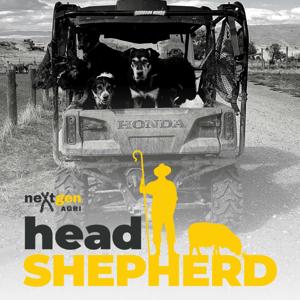
Mark Ferguson from neXtgen Agri brings you the latest in livestock, genetics, innovation and technology. We focus on sheep and beef farming in Australia and New Zealand, and the people doing great…
Ranked by our users in the last 21 days

323 Listeners

12 Listeners
3 Listeners
28 Listeners

1 Listeners

4 Listeners
0 Listeners

1 Listeners

265 Listeners

13 Listeners

29 Listeners
66 Listeners

1 Listeners

5 Listeners

63 Listeners