
Sign up to save your podcasts
Or



Based on Podcast App listening data
This week on the Head Shepherd podcast we’re heading back over to the US to speak to Brad A. Freking, a research geneticist in the Livestock Bio-Systems Research Unit, Clay Center in Nebraska.
Originally, Brad grew up on a small mixed farm. Brad's first connection to genetics came when he went to study at university, working on beef cattle efficiency. Brad then went on to work with pigs; since 2016, he has been devoted entirely to sheep research.
Brad currently works in the Livestock Bio-Systems Research Unit, Clay Center, a research institute with 8,000 head of beef cows, about 2,000 head of ewes and 500 sows. It is one of the largest livestock research centres in the world.
Mark and Brad cover a whole range of topics this week, including the genetics behind scrapie, MV, the sheep breeds of the US, sow uterine capacity and much more.
Brad also runs us through some of the research going on at Clay Center. “The current focus, obviously with this administration, is climate adaptation.” Brad and his team at Clay Center, alongside colleagues around the US, are creating linkages amongst populations so they can look at genotype/environmental interactions. “We're just attempting to try to identify animals that might be more resilient to different climate changes in different regions of the country. And see if we can get a handle on that, some kind of indicator trait”, says Brad.
You can find more of Brad's work here: https://www.ars.usda.gov/people-locations/person/?person-id=1842
Head Shepherd is brought to you by neXtgen Agri International Limited.
We help livestock farmers get the most out of the genetics they farm with. Get in touch with us if you would like to hear more about how we can help you do what you do best: [email protected].
Thanks to our sponsors at MSD Animal Health and Allflex, Heiniger Australia and New Zealand, and ProWay Livestock Equipment. Please consider them when making product choices, as they are instrumental in enabling us to bring you this podcast each week.
Check out the MSD range HERE
Check out Allflex products HERE
Check out Heiniger's product range HERE
Check out ProWay's product range HERE
This week on the podcast we're switching up species and discussing cashmere goats with David Shaw.
In 2017, David undertook a self-directed R&D project to see if he could ‘resurrect’ the cashmere industry. David found that New Zealand had some of the best cashmere fibre in the world.
“We know our fibre is whiter and longer. Research indicates that the fibre from this part of the world is relatively softer. We have people wanting the fibre, we have a market, but we don’t have a supply.”
So, David founded “New Zealand Cashmere” to solve the problem. While David has passed ownership of New Zealand Cashmere on, he is still a passionate champion of the industry.
David farms on the north side of the Catlin Ranges. “Three rows of hills before the south coast of New Zealand” and, beyond that, Antarctica. Their farm is usually summer safe and winter wet, finishing around 7,000 lambs and several hundred cattle a year. David explains how the goats integrate into the “typical” New Zealand farming system.
“We farm them quite differently here. Goats eat from the top of the pasture down, sheep eat from the bottom up. If you put the goats in second, you're forcing them to the bottom of the pastures. So, we put the goats in first and they take out the fibrous material and the thistles and the other weeds on the top of the pasture. And then the other stock come in behind them. That lowers the interaction with worms and it also benefits our existing stock.”
“I saw something in the animal that was quite different to sheep and beef. They cleaned up all the weeds, so we technically didn't have any weeds on the farm any longer. Goats were utilising parts of the pasture other animals did not utilise”, explains David. “The goats in my mind are a huge tool that people have ignored or forgotten or aren't aware of.”
So what is the financial return on cashmere farming? David’s flock averages about 400g of 16 micron cashmere. Their doe hoggets are doing around 200g at 14 micron.
“Goats with up to half a kilo of cashmere in them, if you put that in a relative sense, that's $50-70 dollars worth of fleece value and the goat adult weight is half of an adult sheep. So you’re looking at well over $100 a stock unit from fibre returns alone”, says David.
“So, the question is, how quickly can farmers build up to that from a foundation flock and then capture that out of the processing?”, David asks. It doesn’t take as long as you would think. With the work David has been doing over the past 40 years, he explains, “You can go from a multicoloured foundation doe flock to all white, 14-15 micron cashmere in one generation. Genetically, we’ve come a long way. The flock is homozygous white, so we’re at a very different starting point. It's our role as breeders to offer the highest genetic gains into flocks as quickly as possible.”
Head Shepherd is brought to you by neXtgen Agri International Limited.
We help livestock farmers get the most out of the genetics they farm with. Get in touch with us if you would like to hear more about how we can help you do what you do best: [email protected].
Thanks to our sponsors at MSD Animal Health and Allflex, Heiniger Australia and New Zealand, and ProWay Livestock Equipment. Please consider them when making product choices, as they are instrumental in enabling us to bring you this podcast each week.
Check out the MSD range HERE
Check out Allflex products HERE
Check out Heiniger's product range HERE
Check out ProWay's product range HERE
In this podcast, two genetics enthusiasts delve into IMF, methane, mature cow weight, immune competence and more, exploring the latest developments in livestock genetics and breeding strategies for Angus cattle.
Yes that's right, we are heading back into the Angus world with Christian Duff, general manager of genetic improvement at Angus Australia. As Mark puts it, Christian is "involved in genetics in a fairly big way."
He is very passionate about the power of quantitative genetics to change a species. "It's an amazing tool - if you're patient", says Christian.
Mark and Chris bounce around some thoughts on various traits and their influence on Angus. From methane, the current focus for Angus Australia, to immune competence, to mature cow weight, to IMF and much more. They dive into each topic and talk about the heritability, the recent changes and how they affect other traits.
Chris has been involved in exploring links between specific diseases and genetic markers, particularly in the area of immune competence. This has led to promising research showing that cattle with higher immune competence have lower mortality rates, which could have significant implications for the beef industry.
Chris chats about current research studying the relationship between pink eye resilience and immune competence. He also talks about the efficiency of vaccines on animals, based on their immune competence. "You assume they're all going to have the same coverage... it's not the case. Some respond really well to the vaccine and some you may as well not have vaccinated".
While production traits have long been the primary focus for breed societies, Chris explains there has been a change in the R&D focus to include more resilience and sustainability traits.
To find out more about the the ImmuneDEX value, take a look here:
https://www.angusaustralia.com.au/education/breeding-and-genetics/understanding-rbvs/immunedex
This podcast is crammed full of knowledge and and we thank Chris for sharing his time with us.
Head Shepherd is brought to you by neXtgen Agri International Limited.
We help livestock farmers get the most out of the genetics they farm with. Get in touch with us if you would like to hear more about how we can help you do what you do best: [email protected].
Thanks to our sponsors at MSD Animal Health and Allflex, Heiniger Australia and New Zealand, and ProWay Livestock Equipment. Please consider them when making product choices, as they are instrumental in enabling us to bring you this podcast each week.
Check out the MSD range HERE
Check out Allflex products HERE
Check out Heiniger's product range HERE
Check out ProWay's product range HERE
Have you ever wondered why some cattle thrive better through an unusually hot summer?
Our guest this week, Dr. Raluca Mateescu, Professor of Quantitative Genetics and Genomics at the University of Florida, has been focusing on the impact of heat and climate on beef production in the southern regions of North America.
Raluca and her team have been looking into how to breed cattle to handle increasing temperatures, with a focus on improving productivity and achieving food security through genetic selection.
“Not all of our breeds are adapted to this environment so if we're going to try and raise cattle in these regions we need to figure out a way to do it to increase their adaptability to their environment", explains Raluca.
“In Florida, the purebred Angus is not going to be able to survive, because it's too hot.” Many of the producers in California cross the Angus with the Brahman to get better thermotolerance.
Mark asks what the biological differences are between an animal that can handle heat and one that can’t.
“The traits involved in the sweat gland area contribute to the adaptability in the Brahman cattle. Beef cattle are able to lose 85% of the heat they produce through sweating.” Raluca also explains that the smaller rumens of the Brahman also mean the breed produce less heat themselves during rumination.
Raluca tells Mark how they are looking for those animals with better adaptability to heat.
“Our resource population is about 5,000 head of cattle that we have collected a lot of data on in the last 6 or 7 years. We measure their body temperature, take a skin biopsy for the measures we are taking in the lab. We're measuring their coats and a bunch of other traits that are related to thermotolerance. We also extract bloods and run a genomic profile on them.”
Their aim is to find genetic markers that will help producers identify animals with a higher thermotolerance without the need for expensive lab tests. Something that could benefit us here in the future.
Until then, Raluca explains, “The coat score is something that's very easy for the producer to do right now."
If you would like to read more of Raluca’s research, you can visit her website here: https://www.ralucamateescu.com/
Head Shepherd is brought to you by neXtgen Agri International Limited.
We help livestock farmers get the most out of the genetics they farm with. Get in touch with us if you would like to hear more about how we can help you do what you do best: [email protected].
Thanks to our sponsors at MSD Animal Health and Allflex, Heiniger Australia and New Zealand, and ProWay Livestock Equipment. Please consider them when making product choices, as they are instrumental in enabling us to bring you this podcast each week.
Check out the MSD range HERE
Check out Allflex products HERE
Check out Heiniger's product range HERE
Check out ProWay's product range HERE
This week we're back chatting about Angus cattle with another great livestock producer with a passion for genetics.
Born and raised on the family farm, Lucinda always knew she was going to be involved in the agricultural industry. After growing up on a merino sheep property, she gained a first class honours degree in Agricultural Science, followed by a formative time in the goat industry. Since the mid-1980s, she has been farming with husband Bryan, at one point with multiple livestock breeding enterprises, now specialising in breeding Angus cattle.
We start off by talking about Landcare, something close to Lucinda's heart.
"When Landcare started in the late 80s, that was a lot of fun, just thinking and learning about how to do things differently and working more in tune with the environment. That has had a number of iterations and now it's very focused on climate change and how we work with what is a changing environment to run our businesses with a degree of resilience and profitability. It's all about leaving a better environmental legacy in the farming business."
Mark and Lucinda then dive into the main focus of the podcast, breeding good Angus cattle, something Lucinda has a lot of experience with the Rennylea Angus herd.
Rennylea Angus is based in the Murray Valley in Southern NSW. The Angus cattle were introduced in 1952 alongside merino sheep. Today there are 2,300 recorded cows in the herd, and a total of 4,500 cattle on various properties.
"We are very much a tier 1 performance herd." We came through the 80s when we were just measuring weights. BREEDPLAN started in 1985 and we were a foundation herd at that time. Then we went on and became involved in the Beef CRC project."
Lucinda gives Mark a run down of where the Rennylea Angus herd is heading towards.
"We aim for a well-under breed average for birth weight, a calf that grows quickly to 400 days. We're interested in elite carcass performance - cows that have positive genetic fat, but not too much."
"We're very interested in the maturity pattern, how you select for performance but don't end up with a really big maternal flock in terms of the individual animal."
Diving into the maternal efficiency trait, Mark asks about bending the curve of maternal efficiency, so that mature cow weight doesn't increase with 400 day weight - a topic they are both passionate about.
We round the podcast off with talk of the future. From securing succession at home, the future of branding beef to consumers in Australia, to innovation in seed stock. As Lucinda says, "The future isn't what it used to be and we know it will change. It's up to us how we play in that changing space."
Rennylea:
https://www.rennylea.com.au/
You can find out more about Landcare Australia here: https://landcareaustralia.org.au/
Head Shepherd is brought to you by neXtgen Agri International Limited.
We help livestock farmers get the most out of the genetics they farm with. Get in touch with us if you would like to hear more about how we can help you do what you do best: [email protected].
Thanks to our sponsors at MSD Animal Health and Allflex, Heiniger Australia and New Zealand, and ProWay Livestock Equipment. Please consider them when making product choices, as they are instrumental in enabling us to bring you this podcast each week.
Check out the MSD range HERE
Check out Allflex products HERE
Check out Heiniger's product range HERE
Check out ProWay's product range HERE
Welcome to the latest episode of the Head Shepherd podcast, where Ferg is chatting with Dr. Susan Robertson, a senior lecturer in ruminant production at Charles Sturt University.
Susan has a wide range of research interests - from a PhD looking at staple strength in ewes, then delving more into pasture production, before transitioning into a full-time research role in 2016 with the EverGraze project (which aims to improve sheep reproduction). More recently, Susan has conducted a trial on the impact of caffeine on lamb survival.
Caffeine is used in human medicine to mitigate the lack of oxygen at birth and Susan wanted to know if it could have a similar impact on lamb survival. The results were fascinating with a 21% survival improvement in the first trial. However, due to the nature of livestock trials, the results did not repeat.
Susan and Ferg also speak about the work she has been involved with in mating ewes in confinement. With such a broad range of "confinement" styles across Australia, Sue said the work has been very interesting.
For more information about the EverGraze project, check out https://www.agric.wa.gov.au/pasture-management/evergraze-project.
You can read the results of "Frequency of feeding during the periconceptional period did not alter reproduction in Merino sheep" here:
https://www.publish.csiro.au/AN/pdf/AN22161.
And, the guidelines for breeding ewes in containment that Susan referenced can be found here: https://www.mla.com.au/globalassets/mla-corporate/extensions-training-and-tools/documents/managing-breeding-ewes-in-containment-areas.pdf.
Head Shepherd is brought to you by neXtgen Agri International Limited.
We help livestock farmers get the most out of the genetics they farm with. Get in touch with us if you would like to hear more about how we can help you do what you do best: [email protected].
Thanks to our sponsors at MSD Animal Health and Allflex, Heiniger Australia and New Zealand, and ProWay Livestock Equipment. Please consider them when making product choices, as they are instrumental in enabling us to bring you this podcast each week.
Check out the MSD range HERE
Check out Allflex products HERE
Check out Heiniger's product range HERE
Check out ProWay's product range HERE
Today we discuss the bigger part of how you make money on the farm - how well you feed the animals. Nutrition of your livestock is one thing that you can get right, or wrong, on a daily basis; genetics is a longer burn. With nutrition, you can see the results almost immediately. To discuss this, our guest this week is Charlotte Westwood.
Charlotte got her vet degree from Massey University and spent the first years of her career in the Waikato working mainly with dairy cattle. After a back injury, Charlotte headed off to Australia to do a PhD looking at cattle reproduction.
Now, Charlotte is a Veterinary Nutritionist at PGG Wrightson Seeds and the focus of her chat with Mark today is intramuscular fat (IMF).
When we talk about the genetics of IMF, the words “Wagyu” and “Angus” come up, and it’s often considered to be predominantly genetics that influence levels of IMF. Charlotte explains why that’s not the case. She also explains why it’s a longer game than you might think.
“The bizarre thing is, we think [the influence around IMF is] about the [nutrition] weeks or maybe a couple of months before the animal is processed,” explains Charlotte. But it starts much, much earlier than that. “A lot of what is happening, when the animal reaches its finished stage for processing, has actually started whilst still inside mum's tum.”
Charlotte explains what “The Marbling Window” is.
“The nutrition of mum in that last trimester can influence both the number and also the potential for the future growth of the fat cells within the muscle itself. So if mum has a hard time during the last trimester of pregnancy, that may influence the decision of stem cells - whether they’re going to turn themselves later into muscle, fat or fibre cells. There’s a drafting gate there and if we don't get it right inside mum's tum, in a small way that can influence IMF deposition.”
Charlotte runs through how fat is laid down in an animal once it’s growing, and it’s quite fascinating.
“Fat is laid down in a specific order. You've got your internal, visceral fat... then they'll move onto all subcutaneous fat around the body. When that starts to get laid down, they move on to the fat that's laid down between the muscles.... and then the final stage of fattening is when the animal's older, through maturity typically, or getting close to its mature live weight, then IMF gets laid down.”
IMF is the last to be laid down, and unfortunately it is the first to go. Charlotte explains. “When animals hit stress for any reason [...], enough to go through a short period of negative energy balance, they'll start to mobilise fat. And they'll mobilise it out in the order it was laid down. So that IMF you've lovingly sculpted… for a sake of a period of stress, the IMF is the first to peel out.”
If you’d like to hear more from Charlotte, she has her own podcast, The Rumen Room, where you can listen to episodes on the basics of nutrition, reproduction and much more.
Head Shepherd is brought to you by neXtgen Agri International Limited.
We help livestock farmers get the most out of the genetics they farm with. Get in touch with us if you would like to hear more about how we can help you do what you do best: [email protected].
Thanks to our sponsors at MSD Animal Health and Allflex, Heiniger Australia and New Zealand, and ProWay Livestock Equipment. Please consider them when making product choices, as they are instrumental in enabling us to bring you this podcast each week.
Check out the MSD range HERE
Check out Allflex products HERE
Check out Heiniger's product range HERE
Check out ProWay's product range HERE
Do you want to develop your understanding of estimated breeding values (EBVs) in cattle? This week's podcast guest, Tom Gubbins, and our host Mark Ferguson chat about breeding values and Te Mania Angus, giving us a great insight into the role of genetics in a farm business.
Te Mania started in New Zealand in 1928 with the closing of the Angus herd book. They have been involved in genetics from the very start, to which Tom credits some of Te Mania's success to. "We've watched, over a long time now, the targets and objectives being reached."
From 23 cows in the 1980s, Te Mania now has 900 cows joined, 690 heifers and a 500 cow embryo herd. The top 10% of cows are now producing 500 calves per year through that embryo transfer program allowing for some amazing genetic gain.
Mark and Tom then run through various data that Te Mania is recording.
"We've been involved in structural EBVs for quite a while [and] been collecting structural data since the validation project in the 80's."
Structure and temperament are what Mark refers to as "stockman's traits" and people wonder why we need EBVs for them, but Tom says their buyers are selecting on them.
"The structural EBVs have been really good at explaining to people the genotypic vs phenotypic effect of structure. Because you can see an animal standing there in front of you with perfectly good feet, but it doesn't have perfectly good EBVs", explains Tom.
"If the animal's going off [to somewhere] that's a bit wet and the feet are prone to growing out badly, then the animal phenotypically standing there with good feet, well the genotypic information from the EBVs are saying that the progeny isn't going to be nearly as good as the father".
"And people are making decisions on that... whereas they might be sceptical on the 600 day weight EBV." And the same goes for temperament. So why is there more reluctance to trust other EBVs?
Tom runs through all of the phenotypic information they have been collecting at Te Mania and how that turns into breeding values, giving us a great insight into what data builds an EBV.
The commitment of Te Mania to the future of the Angus breed is very impressive. From feed efficiency, to IMF, to growth and structure, their level of recording is huge.
Te Mania have their 2023 2 Year Bull Sale on Tuesday 8th August at 11:30am. Click for full details -
https://www.temaniaangus.com/sales-events/event/2023-northern-spring-angus-bull-sale-walgett-nsw-and-on-auctionsplus
Head Shepherd is brought to you by neXtgen Agri International Limited.
We help livestock farmers get the most out of the genetics they farm with. Get in touch with us if you would like to hear more about how we can help you do what you do best: [email protected].
Thanks to our sponsors at MSD Animal Health and Allflex, Heiniger Australia and New Zealand, and ProWay Livestock Equipment. Please consider them when making product choices, as they are instrumental in enabling us to bring you this podcast each week.
Check out the MSD range HERE
Check out Allflex products HERE
Check out Heiniger's product range HERE
Check out ProWay's product range HERE
In this podcast, we sit down with Rick, a seasoned farmer whose parents moved to his family farm in the 70s as a child, as part of the family's succession plan. Rick now runs a self-replacing composite flock, focusing on early maturity, fat, muscle, and health traits such as worm resistance. Rick also sheds light on his involvement in the Farm Owners Academy as an accountability coach and how he's creating a legacy that his daughter can carry on in the future.
Rick lives on his family farm which he moved to as a young boy in the 70's when his father took it on as part of the family succession plan. "From then on it's been a really mixed operation. Dad ran it with the approach of having many enterprises and spreading risk. We were doing the same based on that conditioning for quite a while... and soon worked out we weren't doing anything really well. [We were] just working ourselves into the ground basically."
So, things had to change. "l knew what i enjoyed doing, which is the most important thing in my opinion." After attending a production day and coming across breeding values for the first time, he was blown away. "You can dial up what you want, and you can just go for it. And they work." Rick decided that was the route to take. They now have a self replacing composite flock selling store lambs and surplus ewe lambs as breeders.
Genetically they focus on early maturity, fat, muscle and health traits such as worm resistance.
Their challenges now are doing a better job of triplets and hoggets, with Rick saying they're 0.25 of a CS below where they'd like to be.
Farming in 575mm rainfall area, footrot COULD also be a big challenge, and is why Rick farms composites. And, of course, Mark poses the question if they could have a footrot free Merino, would they?
You'll have to listen to hear that answer.
Rick is heavily involved in the Farm Owners Academy as an accountability coach. Something he really enjoys.
Rick also covers the great efforts of volunteers after the Kangaroo Island fires. And it wasn't just the recovery effort that was a positive from the fire.
"Our daughter came home and spent two years with us." Rick says he's proud of himself for not 'putting her off' during that two year period. "I worked really hard in terms of getting the right mindset and I'm proud to say that [my daughter] is on a path that will more than likely see her come home to the farm"
Rick's changes in mindset, outlook and farm practices is what allows a farming family going through a successful succession, not only from Rick taking over from his father, but also creating a place his daughter wants, and can, return to.
Head Shepherd is brought to you by neXtgen Agri International Limited.
We help livestock farmers get the most out of the genetics they farm with. Get in touch with us if you would like to hear more about how we can help you do what you do best: [email protected].
Thanks to our sponsors at MSD Animal Health and Allflex, Heiniger Australia and New Zealand, and ProWay Livestock Equipment. Please consider them when making product choices, as they are instrumental in enabling us to bring you this podcast each week.
Check out the MSD range HERE
Check out Allflex products HERE
Check out Heiniger's product range HERE
Check out ProWay's product range HERE
This week, our guest is Ben Todhunter from Cleardale Station in Canterbury NZ.
Ben's grandfather purchased Cleardale in 1943 and is named after its geographical "snow shelter" attributes. Cleardale is only 4 km from Mount Hutt as the crow flies.
Stud breeding is in Ben's genetics, with his great grandfather founding the Blackford stud in 1924. In Ben's time, they had a traditional first cross English Leicester/Merino flock. But, since Ferg has been around they've been doing things a "bit different".
One of those things is breeding the Cleardale SX Fine Wool. A 21-24 micron sheep with crossbred performance.
"We'd been getting similar results in production traits from the SX fine wools.. finer micron, similar reproduction and growth rates." Ben explains. "We've made the choice to go that way, and go quite fast that way. Given the way we're going with disease resistant traits its giving us confidence to go fast that way too"
Cleardale has been involved with the Footrot breeding value since the start of the programme. And because of that, Cleardale has not only one of the most linked flocks on the footrot trait. putting them in the top 5% of the breed.
Alongside the sheep, Cleardale run an Angus stud producing cattle for a high country environment. "Functional and efficient cows that have progeny that provide a first class eating experience" is the aim of their breeding plan says Ben,
Ben recently visited the US to have a look at the genetics there and also their market chain for beef. Ben says it's hard to compare genetics as it's mainly grain/feedlot based systems. However they are bringing a 3-5 back to the country to give them a try.
What impressed Ben in the US was the Certified Angus Beef Headquarters, a programme where they have a value chain trying to line up products to consumers and then the profits returned back to producers.
Ben says this has led to an increased demand for the product in a country which already has the highest consumption of beef per capita in the world.
One thing that's never too far from Ben's mind is value chains; working out which consumer sets are going to be doing what. Mark asks what Ben sees playing out in the future.
"Breeding for the consumer." is very much the focus at Cleardale. But as ever with genetics, it's not as easy as it sounds.
"You've got to predict what the consumer wants before they want it." Explains Mark. "Because if you want to put a lot more IMF in your beef you have to start now, because it's going to take time."
Mark and Ben discuss the importance of writing those bets down. "It's awesome when you pull the document up from 8 or 10 years ago and you can tick off those boxes, that there's an objective that's been met".
Cleardale is a great example of where commitment and enthusiasm can take a breeding plan in a short time.
Head Shepherd is brought to you by neXtgen Agri International Limited.
We help livestock farmers get the most out of the genetics they farm with. Get in touch with us if you would like to hear more about how we can help you do what you do best: [email protected].
Thanks to our sponsors at MSD Animal Health and Allflex, Heiniger Australia and New Zealand, and ProWay Livestock Equipment. Please consider them when making product choices, as they are instrumental in enabling us to bring you this podcast each week.
Check out the MSD range HERE
Check out Allflex products HERE
Check out Heiniger's product range HERE
Check out ProWay's product range HERE
From the publisher's feed
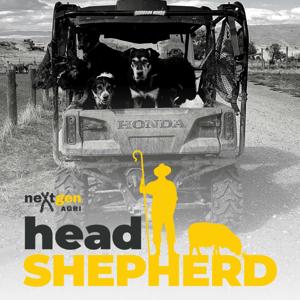
Mark Ferguson from neXtgen Agri brings you the latest in livestock, genetics, innovation and technology. We focus on sheep and beef farming in Australia and New Zealand, and the people doing great…
Ranked by our users in the last 21 days
323 Listeners
12 Listeners

3 Listeners

28 Listeners

1 Listeners

4 Listeners
0 Listeners
1 Listeners
265 Listeners
13 Listeners

29 Listeners
66 Listeners

1 Listeners

5 Listeners

63 Listeners