
Sign up to save your podcasts
Or

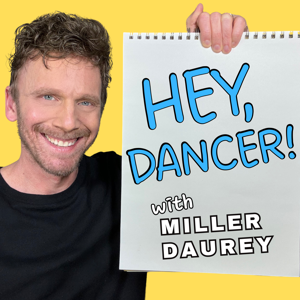


Ray Bolger is immortalized as the Scarecrow in The Wizard of Oz. But the dance story behind that performance is far deeper, stranger, and more hard-won than most people realize.
This episode traces his path from a premature baby in Dorchester, Massachusetts… to a teenager studying eccentric dancers on Boston sidewalks… to a vaudeville performer who built his entire vocabulary out of instinct, rubber-limbed comedy, and sheer invention.
How did a boy who couldn't afford lessons end up sneaking into dance studios — only to discover that his style was so unusual, no partner could match him? How did years of improvisation on the road turn him into one of Broadway's most distinctive comic dancers? And what surprising thing happened when he entered rehearsals for On Your Toes — and George Balanchine's classical discipline met his improvisational style?
We'll also explore how MGM kept cutting his dances… right before casting him in The Wizard of Oz, and how he rebounded with films like The Harvey Girls and stage triumphs that cemented his legacy.
From vaudeville circuits to Broadway breakthroughs to that iconic wobbling walk down the Yellow Brick Road, this episode uncovers the full story of the dancer who gave the Scarecrow his looseness, his warmth, and one of the most unforgettable movement signatures in American film history.
If you enjoy this kind of work and want to support my Rest of the Story podcast, my docuseries, and my return-to-dance journey 👇
Buy Me a Coffee!
Check out my Return to Dance docuseries!
Support my Instagram — where I post daily dance inspo, insights and fun! @backtogreat
The first-ever Dance Hall of Fame ceremony brought together some of the most influential artists in American dance, and in this episode, I share what it was like to be in the room for this historic night. Led by Anita Mann and made possible by philanthropist Glorya Kaufman, the inaugural celebration honored legends including Martha Graham, Gene Kelly, Jerome Robbins, Bob Fosse, Alvin Ailey, Twyla Tharp, Mikhail Baryshnikov, Kenny Ortega, Stephen "tWitch" Boss, and Misty Copeland.
Shirley MacLaine received the Lifetime Achievement Award (which will now bear her name), and her speech about why dance matters had the entire room in tears. I walk through that moment, the atmosphere inside the event, the origins of the Dance Hall of Fame, and how this new institution intends to celebrate dance history in a meaningful way. I also share a small but memorable detail from the night: Baryshnikov dedicated his award to a dancer he felt should have been part of this inaugural class.
If you enjoy this kind of work and want to support my podcast, my docuseries, and my return-to-dance journey, you'll now find an option below. Your support is never expected, but always appreciated. Thank you so very much.
If you enjoy this kind of work and want to support my podcast, my docuseries, and my return-to-dance journey 👇
Buy Me a Coffee!
Check out my Return to Dance docuseries!
Support my Instagram — where I post daily dance inspo, insights and fun! @backtogreat
Moira Shearer became the global face of The Red Shoes — the film that changed ballet on screen forever. But before Technicolor fame, she was a Scottish child prodigy who trained in Africa, stunned teachers in London, and caught the eye of one of the toughest Russian ballet masters of the era.
At just ten, she was invited into Nicholas Legat's elite class — an offer he almost never gave to children — and by her teens she was touring wartime Britain, stepping into roles far beyond her age. Her rise at Sadler's Wells was fast, surprising, and powered entirely by craft.
So why did she say no when a major film director asked her to star in a groundbreaking ballet movie?
And what finally made her accept — leading to a performance that reshaped film history, inspired generations of dancers, and created international expectations she never wanted?
In this episode of The Rest of the Story on the Hey, Dancer! podcast, we trace her journey from Africa to London, from prodigy to principal, and through the grueling reality behind The Red Shoes — the stunts she insisted on doing herself, the brutal filming conditions, the technical breakthroughs, and the fame she walked away from.
You'll also hear how she moved through her later films — The Tales of Hoffmann, The Jealous Lover, Peeping Tom, Black Tights — not as a movie star chasing the spotlight, but as a dancer protecting the purity of her craft.
Her story isn't just about a film.
It's about the dancer who made that film possible — and why her legacy deserves far more than the myth.
Check out my Return to Dance docuseries!
Support my Instagram — where I post daily dance inspo, insights and fun! @backtogreat
James Cagney is remembered as Hollywood's original tough guy — the streetwise gangster, the rapid-fire talker, the Oscar winner whose intensity lit up the screen. But behind that persona was something most people don't know:
He was a dancer first.
Before the fame, before Public Enemy, before he became one of the most iconic actors of the 20th century, Cagney grew up in vaudeville — tapping, clowning, singing, and performing for pennies long before Hollywood ever called. He always considered himself a "song and dance man," not a gangster star.
And in Yankee Doodle Dandy, the film that won him his Academy Award (playing George M. Cohan), you can see the truth of it: the rhythm, the physical storytelling, the movement vocabulary shaped by years on the stage.
In this episode of The Rest of the Story on the Hey, Dancer! podcast, we trace the path you've never heard in full — from his Lower East Side childhood to his early vaudeville partners, to the stage training that made his footwork so distinct, to the moment his dancing finally broke through the tough-guy image Hollywood built around him.
You'll hear the real story of how a kid from New York became one of cinema's most legendary figures… and why, underneath it all, he never stopped being a dancer.
This is James Cagney like you've never seen him: not just the gangster… but the dance artist behind the legend.
Check out my Return to Dance docuseries!
Support my Instagram — where I post daily dance inspo, insights and fun! @backtogreat
Chita Rivera originated Anita in West Side Story, Rosie in Bye Bye Birdie, Velma in Chicago, and Aurora/Death in Kiss of the Spider Woman — four dance-driven roles that became Broadway touchstones and still carry her imprint today.
But the path to those roles? Almost nobody knows it.
In this episode of The Rest of the Story on the Hey, Dancer! podcast, we go back to the moment a hyperactive seven-year-old crashed through her family's bamboo coffee table… and how that accident led her mother to place her in a small, disciplined ballet school that would reshape the entire trajectory of her life.
You'll hear how a shy teenager from Washington, D.C., ended up in an audition room with George Balanchine, why classical ballet was both her foundation and her ceiling, and the moment she first realized her real fire lived somewhere outside that world.
We follow the turning points:
the auditions she wasn't supposed to get, the mentors who saw her spark before she did, and the fusion of ballet precision, Latin rhythm, and raw instinct that made casting directors sit up and take notice.
You'll also hear how she built the performances that redefined her career — roles that demanded comedy, danger, musicality, and heat — and how one life-altering car accident nearly ended everything… until she came back stronger than before.
And we trace her late-career transformation into a Tony-winning force in Kiss of the Spider Woman, proving that a dancer's power doesn't fade — it evolves.
This is Chita Rivera's full dance story — the one Broadway knows in pieces, but has never heard told like this.
Check out my Return to Dance docuseries!
Support my Instagram — where I post daily dance inspo, insights and fun! @backtogreat
Jeni LeGon danced with Bill "Bojangles" Robinson, signed a historic long-term contract at MGM, and became one of the first women — black or white — to build a solo tap career.
So how did her Hollywood dream suddenly change course?
In this episode of The Rest of the Story on the Hey, Dancer! podcast, I trace the path from her self-taught beginnings in Chicago… to the moment she stopped a room cold in her very first film (Hooray for Love)… to the surprising twist that left her outside the MGM machine almost as quickly as she entered it.
But how did she rebuild into a teenager sent across the Atlantic to perform in London… then back to Harlem to sharpen her craft… before landing scene-stealing moments in Ali Baba Goes to Town, Fools for Scandal, and Double Deal?
And what turned her into the pants-wearing tap pioneer whose legacy still isn't fully recognized?
This is the dance history Hollywood overlooked — brought together through deep research and archival footage never before revealed in one place. Until now.
Check out my Return to Dance docuseries!
Support my Instagram — where I post daily dance inspo, insights and fun! @backtogreat
Patrick Swayze starred in Dirty Dancing, Ghost, and Point Break — but few know the full dance story that built the Hollywood legend.
Before fame, he was a natural-born performer from Houston — trained by his mother, choreographer Patsy Swayze. Equally gifted in movement, music, and sport, his future seemed almost prewritten in the stars. But one night in high school, a single moment would change — and ultimately define — his path forever.
What came next was a journey marked by resilience and reinvention — from a devastating setback to ballet stages, Broadway lights, and Hollywood stardom. Again and again, he tried to move beyond dance… but it never stopped finding him. And years later, alongside his wife, Lisa Niemi, that pull would return in the most personal way imaginable.
In this episode of The Rest of the Story on the Hey, Dancer! podcast, discover why, for Patrick Swayze, dance wasn't just a skill — it was his first love, his fiercest teacher, and the force that shaped everything that followed.
This is Patrick Swayze's complete dance story — revealed in full, at last.
Check out my Return to Dance docuseries!
Support my Instagram — where I post daily dance inspo, insights and fun! @backtogreat
Teri Garr — the Oscar-nominated star of Tootsie, Young Frankenstein, and Close Encounters of the Third Kind — was one of film's most beloved comedic actresses. But before the fame, she was one of Hollywood's most prolific dancers.
What led her there?
A family tragedy — and a Rockette legacy — would set her on a path toward the soundstages of 1960s Hollywood.
She danced in nine Elvis Presley movies, appeared in What a Way to Go! (choreographed by Gene Kelly), and performed behind music legends like The Supremes and Chuck Berry.
By her twenties, she was a regular face on screens big and small — from beach musicals to variety shows — working nonstop under choreographers David Winters and Toni Basil.=
In this episode of The Rest of the Story on the Hey, Dancer! podcast, we dive deep into her dance life — the side of Teri Garr's story rarely told — and how those early years shaped the performer she became.
It's the story of how one of Hollywood's most recognized faces built her career the hardest way possible: one eight-count at a time.
Check out my Return to Dance docuseries!
Support my Instagram — where I post daily dance inspo, insights and fun! @backtogreat
Grover Dale danced beside the legends — Jerome Robbins, Michael Kidd, Michael Bennett, Gene Kelly — yet his name rarely makes the spotlight.
He went from a small-town kid with makeshift tap shoes… to a Broadway dancer in West Side Story… to a Hollywood performer in The Unsinkable Molly Brown and The Young Girls of Rochefort.
And just when it seemed his rise couldn't go further, he shifted behind the scenes — choreographing, directing, and helping redefine how choreographers are credited and paid.
But his story isn't just about success — it's about loyalty, erasure, and what really happened when one of Broadway's biggest shows won big… without saying his name.
This episode of The Rest of the Story on the Hey, Dancer! podcast traces how a kid from McKeesport became the dancer Jerome Robbins kept turning to — and the advocate who changed how dance is remembered.
Many of the photos and materials in this episode come directly from Grover Dale's recent autobiography, A Boy Like That: Hits, Misses, Messes, and Miracles as I Danced Across the Stages of Broadway and Hollywood (2024). It's an insightful, heartfelt look at his extraordinary career — and it served as my primary source for this episode. Highly recommended reading for any dancer, choreographer, or lover of musical history.
Images and excerpts from the book are used here under Fair Use for educational and documentary purposes.
Here's a link to the book!
Check out my Return to Dance docuseries!
Support my Instagram — where I post daily dance inspo, insights and fun! @backtogreat
Donna McKechnie didn't just dance in Broadway's greatest shows — she helped build them.
Promises, Promises. Company. A Chorus Line.
Her artistry and emotional intelligence defined a generation of musical theatre.
But this episode isn't just about the roles that made her famous — it's about everything that led there:
a Michigan childhood spent dancing in borrowed classrooms, her move to New York at sixteen, and the partnership with Michael Bennett that changed Broadway forever.
Then came the turning point: a devastating illness that left her nearly immobile. Doctors said she'd never walk again, let alone dance.
This episode uncovers how she proved them wrong — the treatment, the discipline, and the unbreakable spirit that brought her back to the stage.
From The Music and the Mirror to Sweet Charity, this is the definitive story of a dancer who defined Broadway through movement, survived what should've ended her career, and came back stronger than ever.
Check out my Return to Dance docuseries!
Support my Instagram — where I post daily dance inspo, insights and fun! @backtogreat
From the publisher's feed

91,022 Listeners

38,016 Listeners
3,802 Listeners

1,111 Listeners

3,012 Listeners

111,799 Listeners
4,830 Listeners
57,598 Listeners

8,047 Listeners
286 Listeners

9,344 Listeners
10,690 Listeners
3,500 Listeners
2,206 Listeners

12,486 Listeners