
Sign up to save your podcasts
Or

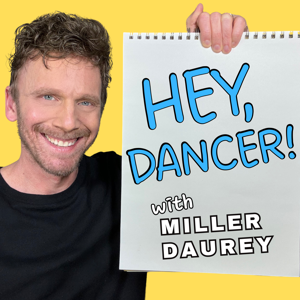


Derek Hough is one of the most recognizable dancers of the 21st century — six-time Dancing with the Stars champion, Emmy-winning (and record-breaking) choreographer, World of Dance judge, and Las Vegas headliner.
But his story didn't start under spotlights.
It began in a Utah kitchen — a restless kid who couldn't sit still, whose mother dragged him into a dance class kicking and screaming.
From there came discipline, drive — and one decision that would change everything.
At eleven, he made a move so bold it would alter the course of his entire life — a choice that took him far from home, into a world of champions, and set him on a path few dancers ever dare to take.
Years later, that risk paid off. By eighteen, he was a world Latin champion.
Then came the leap few dancers ever make: from competition floors to theatre on the West End. Dancing with the Stars. Choreographing Olympic gold for Meryl Davis and Charlie White. Creating a sold-out national tour (often with his sister, Julianne Hough) that proved dance alone could fill arenas.
In this episode of The Rest of the Story on the Hey, Dancer! podcast, I trace how he turned a childhood obsession into a career that redefined what a dance star could be in the 21st century — one built entirely on movement, music, and mastery.
He didn't just make dance popular again.
He made it personal.
Check out my Return to Dance docuseries!
Support my Instagram — where I post daily dance inspo, insights and fun! @backtogreat
Eleanor Powell starred in some of MGM's most dazzling musicals, like Broadway Melody of 1936, Born to Dance, Rosalie, Honolulu, and Broadway Melody of 1940 — where she matched Fred Astaire step for step in the legendary 'Begin the Beguine.'
Dubbed the Queen of Tap, Gene Kelly called her the best dancer ever put on film. Critics hailed her "eloquent feet." And yet, at the height of her fame, she stunned Hollywood by walking away.
In this episode of The Rest of the Story on the Hey, Dancer! podcast, I trace Powell's rise from a painfully shy child in Springfield, Massachusetts, to Broadway prodigy, MGM headliner, and Vegas comeback star. Along the way, you'll hear how she trained, what set her apart, and why her artistry remains unmatched.
History may have pushed her name to the margins. But let's be clear: Eleanor Powell belongs in the same breath as Astaire and Kelly. She was the pinnacle of screen (and stage) tap — and this is the rest of her story.
Special thanks to authors Paula Broussard & Lisa Royére and their book: Eleanor Powell, Born to Dance. It proved a monumental resource in my research for this ep. I highly recommend checking it out! You can grab it here!
Check out my Return to Dance docuseries!
Support my Instagram — where I post daily dance inspo, insights and fun! @backtogreat
Ben Vereen is widely considered one of the greatest modern showmen — a true song-and-dance force.
But behind the fame is a dance story that's never been fully told. From gospel quartets and Brooklyn dance studios to the moment Bob Fosse took a chance on him — and kept returning, again and again — this episode uncovers how Vereen's artistry was built long before the spotlight.
He stole the spotlight in Pippin, broke hearts in Jesus Christ Superstar, became a household name in Roots, and closed All That Jazz in unforgettable style.
And now, for the first time, you'll hear the dance beginnings, mentors, and turning points that shaped his rise into superstardom.
Check out my Return to Dance docuseries!
Support my Instagram — where I post daily dance inspo, insights and fun! @backtogreat
Suzanne Charny's dance journey was anything but ordinary. From a childhood training path that veered far from the usual ballet–tap–jazz pipeline, to being personally chosen by Bob Fosse to lead Sweet Charity's "Rich Man's Frug" on film, her story is one of singular talent meeting the right moment.
In this episode of The Rest of the Story on the Hey, Dancer! podcast, you'll hear how her unique training and early influences (Luigi, Mattox, Graham) shaped her into a dancer who could embody Fosse's language like no one else. You'll also discover why Fosse — and Gwen Verdon — fought for her, how Hollywood took notice, and how one number cemented her place in dance history.
For the first time ever in this series, I spoke directly with the subject herself. That means this episode is filled with never-before-seen photos and details from Suzanne's own life — plus, in the outro, I'll share my personal reflection on that conversation.
Her name may not be as instantly recognizable as Verdon or Reinking, but her contribution to dance is unforgettable. And this episode uncovers why.
Suzanne's sculpting website!
Check out my Return to Dance docuseries!
Support my Instagram — where I post daily dance inspo, insights and fun! @backtogreat
Russ Tamblyn flipped, tumbled, and changed the movie musical forever.
From a daredevil kid climbing telephone poles, to winning tumbling championships, to early tap training and a stage break with Lloyd Bridges — his path snowballed fast.
Soon he was thrown into the barn-raising of Seven Brides for Seven Brothers — even though he wasn't supposed to dance at all. He was choreographed by Hermes Pan while partnering Debbie Reynolds (Hit the Deck), and staged by Alex Romero for a jaw-dropping shovel routine in The Fastest Gun Alive. He even left a mark on Elvis Presley in Jailhouse Rock. And then came Jerome Robbins' ultimatum in West Side Story: no flips, no tricks… just dance. Could he live up to it?
In this episode of The Rest of the Story on Hey, Dancer!, I uncover how a gymnast-turned-actor became a dancer in Hollywood's greatest musicals — and why his movement still resonates on film today.
Check out my Return to Dance docuseries!
Support my Instagram — where I post daily dance inspo, insights and fun! @backtogreat
Joan McCracken turned a bit part in Oklahoma! into overnight stardom — her pratfall in the chorus made her Broadway's "girl who falls down," and it caught Hollywood's attention, leading to starring roles in movie musicals like MGM's Good News and Hollywood Canteen.
She worked with game-changing choreographers: George Balanchine, Agnes de Mille, Jerome Robbins, and Eugene Loring… helping shape their earliest experiments in American dance.
And she became Bob Fosse's greatest influence (his words). She pushed him beyond nightclubs and onto the path that redefined Broadway.
But behind the spotlight was a young woman battling a secret life-threatening illness. And yet, she refused to stop performing.
In this episode of The Rest of the Story on the Hey, Dancer! podcast, I trace her journey from a Philadelphia childhood and early ballet/acro training to Broadway fame, Hollywood contracts, and her lasting influence on some of the greatest choreographers of the 20th century.
Her story is bigger than a pratfall. It's the story of a dance pioneer whose legacy must be remembered.
Check out my Return to Dance docuseries!
Support my Instagram — where I post daily dance inspo, insights and fun! @backtogreat
Matt Mattox was everywhere — from partnering Marilyn Monroe in Gentlemen Prefer Blondes to stealing the show in Seven Brides for Seven Brothers. Choreographers like Jack Cole, Michael Kidd, and Eugene Loring singled him out. Broadway welcomed him. And yet… his biggest legacy wasn't onstage or onscreen.
Trained in tap, ballet, jazz, and acrobatics, Mattox fused it all into a codified jazz technique that reshaped how dancers train around the world. But his path wasn't straightforward — from learning a waltz clog as a kid, to surviving brutal rehearsals, touring internationally, and reinventing himself more than once.
So how did this one dancer become one of the most influential figures in jazz training — even if his name isn't always in the spotlight? All of that (and more!) is what we're uncovering in this episode!
Check out my Return to Dance docuseries!
Support my Instagram — where I post daily dance inspo, insights and fun! @backtogreat
Barrie Chase danced beside Fred Astaire — hand-picked by the legend himself for his groundbreaking television specials.
She stole scenes in White Christmas with a single line and redefined cool in cult classics like It's a Mad, Mad, Mad, Mad World.
So why isn't Barrie Chase a household name?
In this episode of The Rest of the Story on the Hey, Dancer! podcast, we uncover the remarkable journey of a child ballet prodigy — trained by Ballets Russes and Kirov greats. She was set to join Balanchine's company… until a family crisis changed everything.
From chorus lines in MGM musicals to blacklisting threats from Central Casting, assisting Jack Cole, and headlining in Las Vegas — Chase's career was a masterclass in talent, precision, and resilience.
We'll also explore her most iconic moment: An Evening with Fred Astaire, a groundbreaking special that won multiple Emmys.
And finally — why she disappeared from Hollywood at the top of her game.
Join us as we trace the path of a dancer who didn't just share the stage with a legend — she matched him, step for step.
And for a moment, she was one of the most famous dancers in the world.
Check out my Return to Dance docuseries!
Support my Instagram — where I post daily dance inspo, insights and fun! @backtogreat
Gene Nelson starred (and danced!) in iconic films like Lullaby of Broadway, Tea for Two, and Oklahoma!. He was once hailed as the next Fred Astaire or Gene Kelly, yet his name is often left out of the conversation about the dance greats.
In this episode of The Rest of the Story on the Hey, Dancer! podcast, we trace Gene's journey from a Seattle-born acrobat to a Hollywood triple threat — a dancer, actor, and singer.
We'll dive into his teenage performances in major Hollywood revues, his U.S. Army tour as a dancer during World War II, and his rise to fame in cinema. Along the way, we'll explore the devastating injury that nearly ended his career and how it redirected his path.
Nelson's athleticism, balletic precision, and raw showmanship helped redefine screen dance. So why isn't he celebrated alongside Astaire and Kelly?
Listen to discover the story of Gene Nelson's rise, resilience, and a dance legacy that deserves far more recognition! 🎙️
Check out my Return to Dance docuseries!
Support my Instagram — where I post daily dance inspo, insights and fun! @backtogreat
Julie Newmar became iconic as Catwoman in the original Batman TV series — but long before the catsuit, she was a trained dancer under Jack Cole (the father of theatrical jazz), performing in Technicolor musicals and stealing the spotlight on Broadway.
In this episode of The Rest of the Story on the Hey, Dancer! podcast, we uncover her dance roots:
– Ballet at five – Spanish dance with Rita Hayworth's family – Uncredited roles in Gentlemen Prefer Blondes, The Band Wagon, and more – Breakout stage roles in Li'l Abner and Silk Stockings – Cast (then sidelined) in Seven Brides for Seven Brothers – A full-circle cameo in To Wong Foo, Thanks for Everything! Julie Newmar
This is the dance life behind the pop culture legend — and the movement that helped shape an icon across decades.
Check out my Return to Dance docuseries!
Support my Instagram — where I post daily dance inspo, insights and fun! @backtogreat
From the publisher's feed

91,018 Listeners

38,012 Listeners
3,802 Listeners

1,111 Listeners

3,012 Listeners

111,865 Listeners

4,830 Listeners
57,618 Listeners

8,047 Listeners
286 Listeners

9,344 Listeners

10,690 Listeners

3,500 Listeners

2,206 Listeners
12,497 Listeners