
Sign up to save your podcasts
Or



Ray McDonald was positioned as a rising tap star at MGM during Hollywood's golden age of movie musicals.
He had the billing. The featured numbers. The comparisons to Fred Astaire.
And yet today, most people have never heard his name.
So what happened?
In this episode of The Rest of the Story, I trace the full arc — from the New York sibling dance act he built with his sister Grace, to Broadway's Babes in Arms, to becoming an MGM contract player whose duet with Joan McCracken in Good News is still considered one of the studio's finest dance sequences.
Then the momentum shifted.
Using rare newspaper clippings, trade reporting, and overlooked archival material, this episode reconstructs a career that didn't collapse — it simply moved out of the spotlight.
The films remain. The technique still holds. But the history left him behind.
This is the most complete dance-centered portrait of Ray McDonald to date — and the story of a Golden Age tap dancer whose work never deserved to fade.
If you enjoy this kind of deep-dive storytelling and want to help keep The Rest of the Story coming weekly — carefully researched, independently made, and quality-driven — you can support here: Buy Me a Coffee! Much appreciated!!!
Check out my Return to Dance docuseries!
Support my Instagram — where I post daily dance inspo, insights and fun! @backtogreat
Baayork Lee originated Connie Wong in A Chorus Line.
But that's not the rare part.
At five years old, she was on Broadway in The King and I. She trained at the School of American Ballet for twelve years. Then walked away. Why?
And how does a 4'10" dancer who once threw away her pointe shoes become the person Michael Bennett trusted most?
From Flower Drum Song to Promises, Promises ("Turkey Lurkey Time"), from working with Gene Kelly and Michael Kidd to assisting Bennett in the studio that built A Chorus Line — this episode traces the full arc.
And then comes the moment few people know:
After opening night in 1975, Bennett made her a promise.
A promise that would define the next fifty years of Broadway dance history.
She didn't just stand on the line.
She became the one responsible for carrying it.
In this episode of The Rest of the Story, I examine her career through the lens that matters most: the dance itself.
If you enjoy this kind of deep-dive storytelling and want to help keep The Rest of the Story coming weekly — carefully researched, independently made, and quality-driven — you can support here: Buy Me a Coffee! Much appreciated!!!
Check out my Return to Dance docuseries!
Support my Instagram — where I post daily dance inspo, insights and fun! @backtogreat
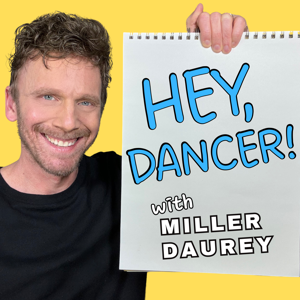
Ever leave dance class feeling totally off your game?
You're not alone. And here's the thing… that feeling might have nothing to do with how class actually went.
In this episode of Hey, Dancer!, I'm breaking down a phrase you may or may not know:
"You can't see the forest for the trees."
And I'll show you exactly how this expression applies to dance class!
Because what if the reason you keep feeling like you failed… is simply that you're standing too close to see what's really happening?
What if you're improving… but you literally can't see it from where you are?
This one's for dancers who spiral after class, replay every mistake, and miss the bigger picture of their own progress.
If you've ever walked out thinking…
"That was a bad class." or "I got nothing from that today."
…this episode might completely shift your perspective. And THAT is my hope!
If you enjoy this kind of deep-dive into dance, you can support my podcast here: Buy Me a Coffee! Much appreciated!!!
Check out my Return to Dance docuseries!
Support my Instagram — where I post daily dance inspo, insights and fun! @backtogreat
Bobby Van starred in MGM musicals, danced alongside Ann Miller and Bob Fosse, and held his own in films like Kiss Me, Kate, Small Town Girl, and Because You're Mine.
For a brief moment in the early 1950s, the studio treated him like a sure thing.
So why does his name feel unfamiliar today?
Before Hollywood, he was trained by his vaudeville father — no studios, no formal classes — learning timing, comedy, and musical precision the hard way. That foundation carried him from New York television and Broadway (working under Jack Cole, alongside performers like Gwen Verdon) straight into MGM's musical pipeline.
On screen, he wasn't introduced quietly. He was centered, credited, paired with Debbie Reynolds, and given choreography that demanded speed, endurance, and absolute control — including one jaw-dropping dance sequence that resurfaced in That's Entertainment and, decades on, the Tony Awards stage (with Hugh Jackman).
But just as quickly as that momentum arrived, it stopped.
In this episode of The Rest of the Story on the Hey, Dancer! podcast, I trace Bobby Van's rise — from vaudeville roots to MGM stardom — and the unexpected choices that reshaped his career across Broadway, television, and live performance.
This isn't the story of a dancer with one famous number.
It's the story of how someone once positioned among the era's greats became a question mark — and why his work deserves to be seen clearly, at last.
If you enjoy this kind of deep-dive storytelling and want to help keep The Rest of the Story coming weekly — carefully researched, independently made, and quality-driven — you can support here: Buy Me a Coffee! Much appreciated!!!
Check out my Return to Dance docuseries!
Support my Instagram — where I post daily dance inspo, insights and fun! @backtogreat
Leslie Caron was just a teenager when Gene Kelly noticed her dancing in Paris. And within a year, she was crossing the ocean to star opposite him in An American in Paris.
What followed wasn't just a Hollywood success story — it was the making of one of the most distinctive dancing leading ladies of classic film.
In this episode of The Rest of the Story on the Hey, Dancer! podcast, I trace Caron's extraordinary path from wartime childhood and rigorous Paris ballet training to MGM stardom… and the discipline that shaped every step along the way.
From An American in Paris and Lili to Daddy Long Legs (opposite Fred Astaire), The Glass Slipper, and beyond, this episode reveals how Caron helped carry ballet-trained performance into a new, more dramatic screen language… arriving at the exact moment Hollywood was changing.
And in the end, we look at the choice she made quietly — without farewell, without spectacle — that says everything about who she believed herself to be.
This isn't just a story about stardom.It's the story of a dancer… and the legacy she built on her own terms.
If you enjoy this kind of deep-dive storytelling and want to help keep The Rest of the Story coming weekly — carefully researched, independently made, and quality-driven — you can support here: Buy Me a Coffee! Much appreciated!!!
Check out my Return to Dance docuseries!
Support my Instagram — where I post daily dance inspo, insights and fun! @backtogreat
Adele Astaire was the star before Fred Astaire became a legend.
Trained from childhood and forged through vaudeville circuits, Adele Astaire rose from Omaha dance studios to dominate the world's most important stages. Alongside her brother, she headlined landmark Broadway productions like Lady, Be Good!, Funny Face, and The Band Wagon — shows written for them, built around their dancing, and celebrated on both sides of the Atlantic.
Critics followed. Audiences crossed oceans.
And then — at the absolute height of her fame — she walked away.
Why?
This isn't just the story of a sister who stepped aside.
It's the story of a dancer who helped launch one of the most influential figures in dance history — and whose own brilliance helped shape the golden age of live performance.
This is the story of Adele Astaire.
And it's time her name belongs at the center of the conversation.
If you enjoy this kind of deep-dive storytelling and want to help keep The Rest of the Story coming weekly — carefully researched, independently made, and quality-driven — you can support here: Buy Me a Coffee! Much appreciated!!!
Check out my Return to Dance docuseries!
Support my Instagram — where I post daily dance inspo, insights and fun! @backtogreat
Tommy Tune won more Tony Awards than almost anyone in Broadway history.
He starred in Hello, Dolly! opposite Barbra Streisand (chosen by Gene Kelly), Seesaw, and My One and Only.
He directed and choreographed landmark Broadway shows like Nine, Grand Hotel, and The Will Rogers Follies.
So why was he told — again and again — that he didn't fit the mold?
Why did ballet shut its doors on him?
Why was he pushed to disappear inside the chorus?
And why was he constantly urged to change his name?
In this episode of The Rest of the Story on the Hey, Dancer! podcast, I trace Tommy Tune's unlikely rise… from a Texas childhood shaped by tap, ballet, and backyard shows… to surviving Broadway ensembles… to redefining what a director-choreographer could be.
You'll hear how a chance elevator meeting with Michael Bennett changed his trajectory, how Gene Kelly's blunt advice followed him for life, and why Hollywood ultimately wasn't to his liking.
You'll also find rare, previously unreleased photos from Tune's early life, uncovered through original research for this episode — images that reveal how early his instincts for movement, staging, and control were already forming.
This is the most revealing look yet at the dance life behind one of Broadway's defining architects.
If you enjoy this kind of deep-dive storytelling and want to help keep The Rest of the Story coming weekly — carefully researched, independently made, and quality-driven — you can support here: Buy Me a Coffee! Much appreciated!!!
Check out my Return to Dance docuseries!
Support my Instagram — where I post daily dance inspo, insights and fun! @backtogreat
Ann-Margret danced opposite Elvis Presley in Viva Las Vegas, exploded onto screens in Bye Bye Birdie, and became one of the most recognizable performers of her generation.
But her dance story has rarely been examined — let alone in full.
In this episode of The Rest of the Story on the Hey, Dancer! podcast, I trace her path from a tiny village in northern Sweden to childhood dance training outside Chicago, late-night club stages as a teenager, national television talent shows, and an unusually fast rise through Hollywood musicals.
Rather than focusing on fame, this episode follows the throughline that shaped everything: how her body moved — onstage, on camera, and under pressure — and how that physicality set her apart at a moment when screen dance was changing.
We dig into her early film musicals, her electric partnership with Elvis Presley, and the stretch of work that helped redefine movement in 1960s movies — before a devastating onstage accident nearly ended her career.
What followed was not a reinvention, but a return — through live performance, television, and film (including an Oscar nom for Tommy) — driven by discipline, resolve, and an unshakable connection to movement.
This is the untold dance journey behind a performer known for many things — and the story of how dance was always at the center.
If you enjoy this kind of deep-dive storytelling and want to help keep The Rest of the Story coming weekly — carefully researched, independently made, and quality-driven — you can support here: Buy Me a Coffee! Much appreciated!!!
Check out my Return to Dance docuseries!
Support my Instagram — where I post daily dance inspo, insights and fun! @backtogreat
Adolfo "Shabba-Doo" Quiñones became the face of street dance when it burst onto movie screens around the world — most famously through the global hit Breakin', a film that turned real street dancers into international stars.
But long before that explosion, his story began in Chicago's Cabrini-Green housing projects — a place defined by danger, instability, and fear. When his mother made a drastic decision to leave everything behind and drive her family across the country to Los Angeles, it changed the course of his life — and dance history.
In this episode of The Rest of the Story on the Hey, Dancer! podcast, I trace how a teenager searching for belonging found locking, entered a tight inner circle of era-defining street dancers, and became part of the original Soul Train movement — just as street styles were breaking onto television. From there, he joined The Lockers, the groundbreaking group that brought street dance into American living rooms for the first time.
We follow his pivotal connection with Toni Basil, the moment that pulled him onto major stages, and the path that led to Breakin' — a global hit that didn't just succeed, but helped launch street dance onto the world stage.
From television to Broadway, from documentary to film, from clubs to worldwide screens, this is the rarely told, fully contextualized dance legacy of Shabba-Doo — a performer whose talent, presence, and visibility helped define what street dance looked like when the world first saw it. Which is why he's often referred to as the Godfather of Street Dance and the Bob Fosse of the Streets.
If you enjoy this kind of deep-dive storytelling and want to help keep The Rest of the Story coming weekly — carefully researched, independently made, and quality-driven — you can support here: Buy Me a Coffee! Much appreciated!!!
Check out my Return to Dance docuseries!
Support my Instagram — where I post daily dance inspo, insights and fun! @backtogreat
John Brascia is the dancer audiences notice every year in White Christmas.
He's the one partnered with Vera-Ellen in the film's most demanding numbers — and for decades, viewers have asked the same question: Who is that dancer?
In this episode of The Rest of the Story on the Hey, Dancer! podcast, we trace John Brascia's dance journey in full — from his athletic upbringing and early training in Hollywood, to rapid work across MGM musicals, Broadway recognition, and his unforgettable performances on screen.
You'll hear how a business deal gone wrong unexpectedly led him into dance, how he moved quickly from studio classes to films like Summer Stock and Royal Wedding, and why choreographers trusted him with increasingly complex work — including White Christmas and the physically uncompromising finale of Meet Me in Las Vegas.
We also explore his later career with Tybee — the dance team that became a major Las Vegas headliner and one of the most respected acts of its era.
Along the way, I'll share a brief personal note from my research — a conversation that helped fill in key gaps in his story.
This episode offers the most in-depth, dance-focused portrait of John Brascia to date — not a résumé, but the throughline of a dancer whose work never stopped being noticed.
And today, we finally answer why.
If you enjoy this kind of deep-dive storytelling and want to help keep The Rest of the Story coming weekly — carefully researched, independently made, and quality-driven — you can support here: Buy Me a Coffee! Much appreciated!!!
Check out my Return to Dance docuseries!
Support my Instagram — where I post daily dance inspo, insights and fun! @backtogreat
From the publisher's feed

91,022 Listeners

38,016 Listeners
3,802 Listeners

1,111 Listeners

3,012 Listeners

111,799 Listeners

4,830 Listeners
57,598 Listeners
8,047 Listeners
286 Listeners

9,344 Listeners
10,690 Listeners
3,500 Listeners
2,206 Listeners
12,486 Listeners