
Sign up to save your podcasts
Or

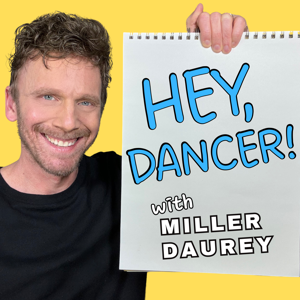


Are dancers in movies actually... extras?
That question came up after someone left a comment on one of my most popular episodes about legendary dancer Bobby Banas. Their argument was simple: Bobby wasn't credited because he was "an extra."
The more I thought about it, the more I realized this wasn't really about one comment. It's about a misconception that's been floating around Hollywood for decades.
So what is the difference between an extra and a professional movie dancer? Why were so many extraordinary dancers left out of the credits? And what happens when the historical record fails to recognize the people who actually did the work?
In this episode, I unpack the realities of working as a dancer in film, the history behind movie credits, and why this conversation still matters today.
If you enjoy this kind of deep-dive into all things dance, you can support my podcast here: Buy Me a Coffee! Much appreciated!!!
Check out my Return to Dance docuseries!
Support my Instagram — where I post daily dance inspo, insights and fun! @backtogreat
How did Shari Lewis — the legendary creator of Lamb Chop and one of history's greatest ventriloquists — become one of the most fascinating dance stories you've probably never heard?
Most people remember Lamb Chop.
Few realize that before Shari Lewis became a beloved Emmy-winning television icon, she had already spent years training as a dancer and performing professionally.
In this episode of The Rest of the Story, I uncover her hidden dance life: from ballet classes in New York and starring roles in Bye Bye Birdie and Damn Yankees, to a childhood dream fulfilled alongside Fred Astaire, and the surprising role dance continued to play throughout her extraordinary career.
It's a story about dance, puppetry, movement, and one remarkable performer whose greatest artistic gift may have been hiding in plain sight.
Have you ever noticed that you always seem to stand in the exact same spot during dance class?
The front left. The back corner. Your favorite place at the barre. The same row every time it's time to learn the combination.
In this episode, I share a simple experiment that completely changed the way I experienced class. By moving just a few feet to a different part of the room, I found myself paying closer attention, relying less on familiar visual cues, and learning choreography in a surprisingly different way.
That experience sent me down one of my favorite research rabbit holes.
We'll explore what dance science and motor-learning research have to say about changing the conditions under which we practice, including concepts like variable practice, desirable difficulties, and how our brains use information from the environment to organize movement. Along the way, we'll also talk about neuroplasticity, adaptability, and why something as simple as standing somewhere different might make you a more resilient learner… not just in dance, but in life.
If you're a dancer, dance teacher, or anyone who loves learning through movement, I hope this episode inspires you to try one very small experiment the next time you walk into class.
Research & Resources Mentioned
If you enjoy this kind of deep-dive into all things dance, you can support my podcast here: Buy Me a Coffee! Much appreciated!!!
Check out my Return to Dance docuseries!
Support my Instagram — where I post daily dance inspo, insights and fun! @backtogreat
Hinton Battle won three Tony Awards — a record in his category that still stands today. So why isn't he a household name?
In this episode of The Rest of the Story, I trace his journey from an elementary school production of The Nutcracker that revealed a remarkable talent no one knew he had, to the legendary Jones-Haywood School of Ballet, and eventually to a scholarship at the School of American Ballet in New York… all while still a teenager.
Then came one of the wildest stories in Broadway history: a chorus dancer in The Wiz suddenly finds himself playing the Scarecrow with just fifteen minutes to prepare. And yes… he's still a teenager.
Then, just as his lifelong dream of joining the New York City Ballet finally seemed within reach, one of the most influential figures in dance told him it wasn't going to happen.
What looked like a devastating rejection became the redirection that changed everything.
First came Fosse's Dancin'. Then Sophisticated Ladies, Dreamgirls, The Tap Dance Kid, Miss Saigon, and beyond — transforming him into one of the most versatile dance stars Broadway has ever produced.
If you enjoy this kind of deep-dive into all things dance, you can support my podcast here: Buy Me a Coffee! Much appreciated!!!
Check out my Return to Dance docuseries!
Support my Instagram — where I post daily dance inspo, insights and fun! @backtogreat
Is starting dance class with jumping jacks, high knees, and other impact-heavy movement actually the best way to warm up? After noticing this in class after class, I decided to dig into the research on dance injury prevention.
Along the way, I surveyed my audience, explored recommendations from dance medicine specialists, and looked at what sports science actually says about preparing the body for impact and avoiding joint pain.
In this episode, I share all of that! Plus, my own experience returning to dance after three decades away, why this dance warm-up question kept following me for years, and what finally sent me down the research rabbit hole.
Whether you're a dancer, dance teacher, studio owner, or simply someone who wants to keep dancing for as long as possible, I trust you'll find this conversation fascinating and important.
If you enjoy this kind of deep-dive into all things dance, you can support my podcast here: Buy Me a Coffee! Much appreciated!!!
Check out my Return to Dance docuseries!
Support my Instagram — where I post daily dance inspo, insights and fun! @backtogreat
Studies mentioned in the episode (in the order they were mentioned):
1. IADMS Resource Paper https://iadms.org/media/5788/iadms-resource-paper-the-importance-of-a-good-warm-up.pdf
2. Shellock & Prentice 1985 — Sports Medicine https://pubmed.ncbi.nlm.nih.gov/3849057/
3. https://www.webmd.com/fitness-exercise/how-to-do-jumping-jacks
4. Kaufmann et al. 2022 — Journal of Dance Medicine and Science https://pubmed.ncbi.nlm.nih.gov/36096663/
5. Dr. Carrie Skony 2024 — Perform Active Wellness https://www.academydancearts.com/post/ready-set-dance-understanding-the-importance-of-warming-up-for-dancers
Mitzi Gaynor was one of the last great stars of Hollywood's golden age of musicals. She danced alongside Gene Kelly, worked (repeatedly) under the legendary choreographer Jack Cole, and carried one of the most anticipated film adaptations in Hollywood history in South Pacific.
But that's only part of the story.
In this episode of The Rest of the Story on the Hey, Dancer! podcast, I trace Mitzi's full dance life: from her childhood classical ballet training in Detroit under one of the most extraordinary teachers in American dance history, to Broadway, to Twentieth Century Fox, to Paramount, and beyond.
What did Jack Cole see in her that no one else had unlocked? How did she outlast the death of the Hollywood musical when so many of her contemporaries simply disappeared? And how did she go on to build a second (GIGANTIC) career in Las Vegas and television that thirty million people a week tuned in to watch?
This is the story behind one of the last great stars of the Hollywood musical… and the dance foundation that made it all possible.
If you enjoy this kind of deep-dive into all things dance, you can support my podcast here: Buy Me a Coffee! ☕️ Much appreciated!!!
Check out my Return to Dance docuseries!
Support my Instagram — where I post daily dance inspo, insights and fun! @backtogreat
Can dancers actually predict each other's movements?
A fascinating new study from the University of Colorado Boulder suggests that when dancers move together in sync, their brains may begin syncing too.
In this episode of Hey, Dancer!, I explore the emerging science of "interbrain coupling," what researchers discovered when they studied experienced tango dancers, and why a response time of just 200 milliseconds has scientists paying attention.
But what does any of that have to do with dance class?
Why does a combination sometimes feel impossible alone but suddenly click when you're surrounded by other dancers? Why do certain classes, rehearsals, and performances stay with us for years? And why can dancing with other people feel so different from dancing by yourself?
I'll break down the research in plain English, share some personal experiences from my recent return to dance classes after a three-and-a-half-year healing journey, and explore whether science may finally be catching up to something dancers have felt all along.
Let me know what you think! Have you ever experienced a moment where a room of dancers seemed to lock in together?
Here's the study, if you're curious!
My episode on Debbie Allen (mentioned in the podcast)!
If you enjoy this kind of deep-dive into all things dance, you can support my podcast here: Buy Me a Coffee! Much appreciated!!!
Check out my Return to Dance docuseries!
Support my Instagram — where I post daily dance inspo, insights and fun! @backtogreat
Buddy Ebsen is one of the most recognizable faces in American television history — Jed Clampett on The Beverly Hillbillies, Barnaby Jones on the long-running CBS detective series.
What most people don't know is that long before television fame, he was one of the most original dancers Hollywood ever put on film — dancing alongside Eleanor Powell, Shirley Temple, and Judy Garland during the golden age of MGM musicals.
In this episode of The Rest of the Story on my Hey, Dancer! podcast, I trace Buddy Ebsen's full dance journey — from his childhood in a family-run dance studio, to the brother-and-sister act he built with Vilma Ebsen, to Broadway, MGM, The Wizard of Oz, and the devastating makeup disaster that nearly destroyed his career.
But the deeper story is what came after.
Because even after Hollywood stopped seeing him as a dancer — and America came to know him instead as a television icon… the dancing never fully disappeared.
How good was Buddy Ebsen, really? This episode is the answer.
If you enjoy this kind of deep-dive into all things dance, you can support my podcast here: Buy Me a Coffee! Much appreciated!!!
Check out my Return to Dance docuseries!
Support my Instagram — where I post daily dance inspo, insights and fun! @backtogreat
So You Think You Can Dance has officially been cancelled by FOX after 18 seasons… but I don't think you can really tell the story of modern dance culture without it.
In this episode of the Hey, Dancer! podcast, I break down the REAL legacy of So You Think You Can Dance — and why its impact goes far beyond television.
How did the show change the visibility of dancers forever? Why did choreographers suddenly become recognizable names? Did SYTYCD help create the very online dance culture that eventually made it less necessary? And why are so many dancers divided about the show's long-term influence on dance itself?
We'll also talk about:
I also share my own unusual relationship with the show!
And at the end of the episode, I share an important update about the future of The Rest of the Story series, this podcast moving forward, and the return of my long-awaited dance docuseries.
If you enjoy this kind of deep-dive into all things dance, you can support my podcast here: Buy Me a Coffee! Much appreciated!!!
Check out my Return to Dance docuseries!
Support my Instagram — where I post daily dance inspo, insights and fun! @backtogreat
Audrey Hepburn is remembered as one of the most iconic presences in the history of cinema — the elegance, the posture, the way she moved through every frame.
But what if that wasn't just natural?
What if everything the world fell in love with — the way she carried herself, the way she inhabited every moment — was built on a dance life most people never knew existed?
She was taking ballet classes by age five.
Performing secretly during wartime occupation.
Dancing on a body being slowly destroyed by malnutrition.
And when it was over, she rebuilt herself from scratch — determined to become a ballerina — only to be told she didn't have what it took.
In this episode of The Rest of the Story on my Hey, Dancer! podcast, I trace her full dance life — from wartime Holland to the London stage, from her first major film role as a ballet dancer in Secret People, to Sabrina, War and Peace, and Funny Face opposite Fred Astaire, to My Fair Lady, Breakfast at Tiffany's, and her final performance in Always.
Drawn from primary biography and original film analysis.
This is Audrey Hepburn like you've never seen her — not just a Hollywood icon… but the dancer who built everything from the inside out.
If you enjoy this kind of deep-dive storytelling and want to help keep The Rest of the Story coming weekly — carefully researched, independently made, and quality-driven — you can support here: Buy Me a Coffee! Much appreciated!!!
Check out my Return to Dance docuseries!
Support my Instagram — where I post daily dance inspo, insights and fun! @backtogreat
From the publisher's feed

90,991 Listeners

37,994 Listeners
3,801 Listeners

1,111 Listeners
3,008 Listeners

111,868 Listeners
4,831 Listeners
57,607 Listeners
8,041 Listeners
285 Listeners

9,377 Listeners
10,629 Listeners
3,490 Listeners
2,220 Listeners
12,519 Listeners