
Sign up to save your podcasts
Or

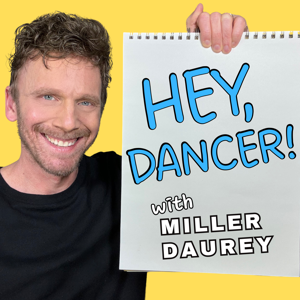


Peter Gennaro danced Bob Fosse's original "Steam Heat," co-choreographed West Side Story with Jerome Robbins, and won a Tony Award for choreographing Annie. So why isn't his name better known today? And just how much of the dancing in West Side Story was actually his?
In this episode of The Rest of the Story, I uncover for the first time the extent of Gennaro's early dance training and follow a career that would take him from Broadway to decades of television, Hollywood, Radio City Music Hall and the Rockettes... as a dancer, teacher and choreographer. Along the way, he worked with Bob Fosse, Jerome Robbins, Chita Rivera, Judy Garland, Mitzi Gaynor and so many others... while helping shape the developing language of theatrical jazz dance.
There was so much more to Peter Gennaro than even I realized when I started researching him. And by the end of this story, I think you'll understand why his name belongs in the conversation about the dancers and choreographers who helped define American musical theater.
If you enjoy this kind of deep-dive into all things dance, you can support my podcast here: Buy Me a Coffee! Much appreciated!!!
Check out my Return to Dance docuseries!
Support my Instagram — where I post daily dance inspo, insights and fun! @backtogreat
The Dance Hall of Fame has announced its 2026 class, honoring Debbie Allen, George Balanchine, Katherine Dunham, Mandy Moore, The Nicholas Brothers, Savion Glover, Toni Basil, George Chakiris, Rita Moreno, and Russ Tamblyn.
In this episode, I take a closer look at the second-ever class, the remarkable range of dance history it represents, and some of the questions that come with building a new Hall of Fame from scratch.
I also dive into the West Side Story connection between three of this year's inductees.
And with five members of the 2026 class already featured on my ongoing series, The Rest of the Story, I share why some of the Hall's choices really resonate with the kinds of dance stories I've been drawn to telling.
And then there's Fred Astaire. After Mikhail Baryshnikov himself raised the question of Astaire's absence onstage at the inaugural ceremony in 2025, his name is still missing from the Hall's second class. It opens up a larger conversation about chronology, legacy, and how a Dance Hall of Fame begins deciding who comes first.
If you enjoy this kind of deep-dive into all things dance, you can support my podcast here: Buy Me a Coffee! Much appreciated!!!
Check out my Return to Dance docuseries!
Support my Instagram — where I post daily dance inspo, insights and fun! @backtogreat
My ep on the inaugural Dance Hall of Fame!
Lucille Bremer danced alongside Fred Astaire in some of MGM's most lavish musical numbers. So why isn't she remembered today?
For this episode, I traced her story all the way back to childhood... through ballet, the Radio City Rockettes, Broadway, New York nightclubs and eventually MGM... uncovering newspaper clippings, photographs and details about her dance life that have simply never been included in the stories told about her.
And then there's Fred Astaire. Ziegfeld Follies. Yolanda and the Thief. "This Heart of Mine." "Limehouse Blues." "Coffee Time." She reached extraordinary heights as a dancer... and then, almost as quickly as she arrived, her Hollywood dance career was over.
Stick around after the story, because I'll also share a little about what happened after her Hollywood life.
If you enjoy this kind of deep-dive into all things dance, you can support my podcast here: Buy Me a Coffee! Much appreciated!!!
Check out my Return to Dance docuseries!
Support my Instagram — where I post daily dance inspo, insights and fun! @backtogreat
Do you ever get nervous before dance class? Or an audition, a performance... anything where you suddenly feel like all eyes are on you?
On my way to a new class recently, my heart was racing and I suddenly realized... I was genuinely nervous. Why can dance class feel so high-stakes when there are really no stakes at all? That experience sent me digging into the science of performance anxiety, nervousness and excitement... and I discovered a surprisingly simple way of reframing those pre-class butterflies.
I also had a realization about my own nerves and what they might actually say about how much dance still means to me.
Whether you're a dancer, artist, performer... or just someone who gets nervous when it's time to put yourself out there... I really hope this episode helps. Because understanding those nerves might not just change the way you think about them. It might change the entire experience for you!
Study mentioned in the episode: HERE
If you enjoy this kind of deep-dive into all things dance, you can support my podcast here: Buy Me a Coffee! Much appreciated!!!
Check out my Return to Dance docuseries!
Support my Instagram — where I post daily dance inspo, insights and fun! @backtogreat
Jacques d'Amboise was one of America's great male ballet stars — a longtime principal dancer with New York City Ballet, with more roles created specifically for him by George Balanchine than any other dancer.
But how did a boy who didn't even want to take ballet become one of its biggest stars? What happened when Hollywood came calling with Seven Brides for Seven Brothers? And why did his struggle with Balanchine's Apollo change the way he approached his dancing?
From his little-known childhood and early training to Carousel, a devastating accident and decades at New York City Ballet, Jacques d'Amboise's journey was extraordinary.
And then came a second act perhaps even more meaningful than the first. Through the National Dance Institute (NDI), which he founded in 1976, d'Amboise took everything dance had given him and spent the rest of his life giving it to millions of children.
If you enjoy this kind of deep-dive into all things dance, you can support my podcast here: Buy Me a Coffee! Much appreciated!!!
Check out my Return to Dance docuseries!
Support my Instagram — where I post daily dance inspo, insights and fun! @backtogreat
Why am I STILL so often the only guy in dance class?
Male dancers are more visible than ever, and the dance world has changed enormously since I first started training. But after returning to dance more than three decades later, there's one thing that feels surprisingly familiar: I'm once again often the only guy in the room.
In this episode of Hey, Dancer!, I'm looking at men in dance through my own experience — then and now — from ballet, jazz and jazz funk to even hip-hop. I also found a Southern California study that looked at the gender breakdown of nearly 300 young dancers across seven different types of dance… and the numbers genuinely surprised me. So how much has really changed? And why might guys still not be finding their way into dance class?
Nearly four decades after I was often the only boy in the room, I'm looking at why this still matters to me… and why I think more guys finding their way into dance class would be a very good thing.
If you enjoy this kind of deep-dive into all things dance, you can support my podcast here: Buy Me a Coffee! Much appreciated!!!
Check out my Return to Dance docuseries!
Support my Instagram — where I post daily dance inspo, insights and fun! @backtogreat
Study mentioned in ep: Dance Class Structure Affects Youth Physical Activity and Sedentary Behavior: A Study of Seven Dance Types
Lola Falana was everywhere in the 1970s... television, movies, music, Las Vegas. But underneath it all was a seriously trained dancer.
So where did that dancer come from? And how did dance help take Lola from performing as a teenager to becoming an international superstar... and eventually the "Queen of Las Vegas"?
In this episode of The Rest of the Story, I uncover a part of Lola's early dance training that has never really been brought to light before... including the teachers who shaped her in ballet, modern and African cultural dance. Then we follow that training through Dinah Washington, Broadway's Golden Boy with Sammy Davis Jr., stardom in Italy, American television and, of course, Las Vegas.
It's a dance story that has largely been hidden behind the superstar Lola Falana eventually became... and one that makes watching her dance all these years later even more fascinating.
If you enjoy this kind of deep-dive into all things dance, you can support my podcast here: Buy Me a Coffee! Much appreciated!!!
Check out my Return to Dance docuseries!
Support my Instagram — where I post daily dance inspo, insights and fun! @backtogreat
She Dances, starring Steve Zahn and his real-life daughter Audrey Zahn, takes us inside the world of competitive dance... but how accurately does it actually portray that world? And what happens when a dance movie turns out to be about much more than dance?
In my first-ever dance movie review on Hey, Dancer!, I'm watching She Dances with a completely open mind, sharing my reactions along the way and digging into the real-life story behind the film, including Mackenzie Ziegler's return to the dance competition world.
How much of Steve and Audrey Zahn's own experience made it onto the screen? And why did this movie leave me in tears?
I also asked members of my own community with real dance competition experience to watch the film and weigh in. What did She Dances get right? And wrong? And ultimately, is this a dance movie worth watching?
If you enjoy this kind of deep-dive into all things dance, you can support my podcast here: Buy Me a Coffee! Much appreciated!!!
Check out my Return to Dance docuseries!
Support my Instagram — where I post daily dance inspo, insights and fun! @backtogreat
Sandahl Bergman is best known for Conan the Barbarian and Red Sonja. What far fewer people know is that, long before she ever picked up a sword, she had already built one of the most extraordinary dance careers of the 1970s... eventually finding herself at the center of one of the most iconic dance sequences ever put on film in Bob Fosse's All That Jazz.
That almost never happened... until Bob Fosse personally called her in the middle of the night to rescue the number. WHAT.
In this episode of The Rest of the Story on my Hey, Dancer! podcast, I dive deep into where it all began... her dance training in Kansas City, where her progress was documented in local newspapers year after year, long before New York or Hollywood ever entered the picture.
From there, I trace the remarkable path that led her to work with the legendary choreographers who defined a generation of Broadway dance... Tommy Tune, Michael Bennett, Onna White, Gower Champion, and Bob Fosse (in shows like: Pippin, Dancin', A Chorus Line and beyond!)…
But how did one dance opportunity keep leading to the next? And how did that foundation in dance shape every chapter of the remarkable career that followed?
Get ready for a deep dive into one of the most extraordinary dance careers of the twentieth century!
If you enjoy this kind of deep-dive into all things dance, you can support my podcast here: Buy Me a Coffee! Much appreciated!!!
Check out my Return to Dance docuseries!
Support my Instagram — where I post daily dance inspo, insights and fun! @backtogreat
Patrick Adiarte was hailed as the next Fred Astaire by Gene Kelly, he starred in Flower Drum Song, and became one of LA's master jazz dance teachers.
But today, it seems he's mostly remembered as a familiar face on M*A*S*H and The Brady Bunch.
Why?
In this episode of The Rest of the Story on my Hey, Dancer! podcast, I trace his full story from…
a boy who escaped war-torn Manila as a small child to Broadway's The King and I alongside Yul Brynner to Flower Drum Song under Mr. Kelly (and Carol Haney), to stealing dance scenes in a Hollywood musical (choreographed by Hermes Pan) to NBC's Hullabaloo alongside David Winters, Michael Bennett and Donna McKechnie.
ALL WHILE STILL A TEENAGER.
This is the story behind one of Hollywood's most fascinating — and most overlooked — dance careers.
Stay through the outro for a few behind-the-scenes stories from my research on Patrick Adiarte.
If you enjoy this kind of deep-dive into all things dance, you can support my podcast here: Buy Me a Coffee! Much appreciated!!!
Check out my Return to Dance docuseries!
Support my Instagram — where I post daily dance inspo, insights and fun! @backtogreat
From the publisher's feed

91,022 Listeners

38,016 Listeners
3,802 Listeners

1,111 Listeners

3,012 Listeners

111,799 Listeners

4,830 Listeners
57,598 Listeners

8,047 Listeners
286 Listeners

9,344 Listeners

10,690 Listeners
3,500 Listeners
2,206 Listeners
12,486 Listeners