
Sign up to save your podcasts
Or

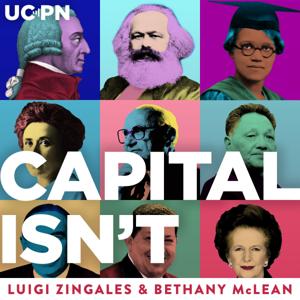

Is capitalism a force of nature, or a human-made order that we have the power to shape? In this episode, Luigi and Bethany sit down with Sven Beckert, a Harvard historian and author of the new book A Global History of Capitalism, to tackle a question that seems basic but remains surprisingly difficult to answer: what exactly is capitalism?
Beckert argues that capitalism is not defined simply by the existence of markets—which are found in all human societies—but rather by a specific economic logic of privately owned capital productively invested to produce more capital. He challenges the popular narrative that capitalism and the state are antithetical, suggesting instead that the state has been constitutive of capitalism throughout its history, from the colonization of the Americas to the industrial expansion of the 19th century.
Beckert also argues that capitalism is fundamentally "undogmatic", pointing out that it has thrived under radically different political systems from the British Empire and the slave plantations of the Caribbean to modern liberal democracies and authoritarian city-states. Rather than existing in opposition to the state, does capitalism actually rely on state power to construct markets and enforce the expansion of its logic?
Hosted by Simplecast, an AdsWizz company. See pcm.adswizz.com for information about our collection and use of personal data for advertising.
 View all episodes
 By University of Chicago Podcast Network

4.5
534534 ratings
Is capitalism a force of nature, or a human-made order that we have the power to shape? In this episode, Luigi and Bethany sit down with Sven Beckert, a Harvard historian and author of the new book A Global History of Capitalism, to tackle a question that seems basic but remains surprisingly difficult to answer: what exactly is capitalism?
Beckert argues that capitalism is not defined simply by the existence of markets—which are found in all human societies—but rather by a specific economic logic of privately owned capital productively invested to produce more capital. He challenges the popular narrative that capitalism and the state are antithetical, suggesting instead that the state has been constitutive of capitalism throughout its history, from the colonization of the Americas to the industrial expansion of the 19th century.
Beckert also argues that capitalism is fundamentally "undogmatic", pointing out that it has thrived under radically different political systems from the British Empire and the slave plantations of the Caribbean to modern liberal democracies and authoritarian city-states. Rather than existing in opposition to the state, does capitalism actually rely on state power to construct markets and enforce the expansion of its logic?
Hosted by Simplecast, an AdsWizz company. See pcm.adswizz.com for information about our collection and use of personal data for advertising.

32,105 Listeners

30,729 Listeners

10,738 Listeners

1,024 Listeners

1,978 Listeners

4,277 Listeners

2,456 Listeners
382 Listeners

895 Listeners
492 Listeners

7,228 Listeners

2,034 Listeners

5,539 Listeners

16,211 Listeners

355 Listeners