
Sign up to save your podcasts
Or

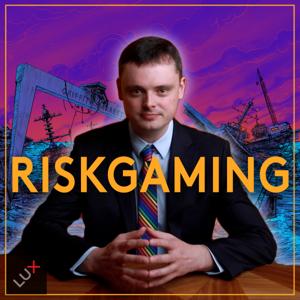

Gaming has enveloped our world. A majority of Americans now gamble at least once every year, and popular video games like Fortnite and Roblox count hundreds of millions of global players. In social science, game theory and its descendants remain the mainstay for objectively analyzing human rationality, even as a gigaton of evidence shows the limits of these mathematical approaches. Meanwhile in foreign affairs, wargaming (including some of our very own Riskgaming scenarios!) are used to explore speculative futures that can change the fate of nations.
All of these subjects and more are fodder in Playing With Reality: How Games Have Shaped Our World, a broad and open inquiry into the nature of games written by neuroscientist Kelly Clancy. Kelly weaves discussions of dopamine, surprise, chance and learning into a history of human behavioral development over the ages, but then she pivots her discussion. For all of gaming’s success across time and around the world, what are its limits and are we properly critiquing these simulacra of reality?
Kelly joins host Danny Crichton to talk about her book and so much more across an extended show that gets at the very heart of Riskgaming. We talk about the history of games, why the theory of probability arrived so late in the development of mathematics, why game theory works mathematically but fails to capture the complexity and dynamism of human behavior, how AI models use gaming techniques like self-play to evolve, and how the world might change given the explosive popularity of interactive gaming in all facets of modern life.
Produced by Christopher Gates
Music by George Ko
 View all episodes
 By Lux Capital

4.7
1616 ratings
Gaming has enveloped our world. A majority of Americans now gamble at least once every year, and popular video games like Fortnite and Roblox count hundreds of millions of global players. In social science, game theory and its descendants remain the mainstay for objectively analyzing human rationality, even as a gigaton of evidence shows the limits of these mathematical approaches. Meanwhile in foreign affairs, wargaming (including some of our very own Riskgaming scenarios!) are used to explore speculative futures that can change the fate of nations.
All of these subjects and more are fodder in Playing With Reality: How Games Have Shaped Our World, a broad and open inquiry into the nature of games written by neuroscientist Kelly Clancy. Kelly weaves discussions of dopamine, surprise, chance and learning into a history of human behavioral development over the ages, but then she pivots her discussion. For all of gaming’s success across time and around the world, what are its limits and are we properly critiquing these simulacra of reality?
Kelly joins host Danny Crichton to talk about her book and so much more across an extended show that gets at the very heart of Riskgaming. We talk about the history of games, why the theory of probability arrived so late in the development of mathematics, why game theory works mathematically but fails to capture the complexity and dynamism of human behavior, how AI models use gaming techniques like self-play to evolve, and how the world might change given the explosive popularity of interactive gaming in all facets of modern life.
Produced by Christopher Gates
Music by George Ko

3,075 Listeners

592 Listeners

2,188 Listeners

1,982 Listeners

2,685 Listeners

2,455 Listeners

1,094 Listeners

950 Listeners

2,163 Listeners

609 Listeners

1,442 Listeners

292 Listeners

2,157 Listeners

10,189 Listeners

271 Listeners