
Sign up to save your podcasts
Or

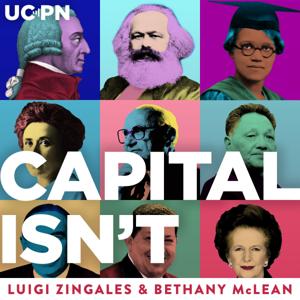

If we want to understand why capitalism feels broken, do we need to stop looking at the economy and start looking at the legal code that underpins it?
In our system, capital is often described as money, machinery, or raw materials. But Columbia Law School professor Katharina Pistor argues that capital is actually a legal invention. An asset, whether it's a plot of land, an idea, or a promise of future pay, only becomes capital when it is given the right legal coding.
Pistor suggests that lawyers are the true coders of capitalism. They use the law to "enclose" assets, from land to user data, giving owners the power to exclude others and monetize that value. She argues for injecting principles of "fairness and reciprocity" back into private law, ensuring that contracts aren't just tools for the powerful to extract value from the weak. Luigi Zingales suggests that large corporations have become so powerful we may need a new branch of "quasi-public law" to govern the asymmetry between an individual consumer and a corporate giant.
This episode explores the deep, often invisible architecture of our economic system and asks whether we can ever truly tame corporate power without rewriting the rules of the game.
Subscribe to our Youtube Channel
Follow Capitalisn’t on Instagram & TikTok
Send us your questions or comments by emailing [email protected]
Hosted by Simplecast, an AdsWizz company. See pcm.adswizz.com for information about our collection and use of personal data for advertising.
 View all episodes
 By University of Chicago Podcast Network

4.5
534534 ratings
If we want to understand why capitalism feels broken, do we need to stop looking at the economy and start looking at the legal code that underpins it?
In our system, capital is often described as money, machinery, or raw materials. But Columbia Law School professor Katharina Pistor argues that capital is actually a legal invention. An asset, whether it's a plot of land, an idea, or a promise of future pay, only becomes capital when it is given the right legal coding.
Pistor suggests that lawyers are the true coders of capitalism. They use the law to "enclose" assets, from land to user data, giving owners the power to exclude others and monetize that value. She argues for injecting principles of "fairness and reciprocity" back into private law, ensuring that contracts aren't just tools for the powerful to extract value from the weak. Luigi Zingales suggests that large corporations have become so powerful we may need a new branch of "quasi-public law" to govern the asymmetry between an individual consumer and a corporate giant.
This episode explores the deep, often invisible architecture of our economic system and asks whether we can ever truly tame corporate power without rewriting the rules of the game.
Subscribe to our Youtube Channel
Follow Capitalisn’t on Instagram & TikTok
Send us your questions or comments by emailing [email protected]
Hosted by Simplecast, an AdsWizz company. See pcm.adswizz.com for information about our collection and use of personal data for advertising.

32,246 Listeners

30,609 Listeners

10,747 Listeners

1,018 Listeners

1,993 Listeners

4,270 Listeners

2,461 Listeners
384 Listeners

907 Listeners
485 Listeners

7,244 Listeners
2,030 Listeners

5,576 Listeners

16,525 Listeners

366 Listeners