
Sign up to save your podcasts
Or

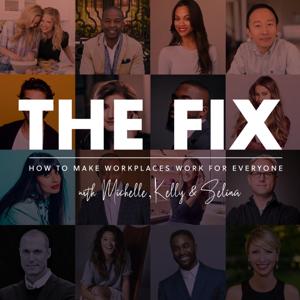

Psychological safety, a term coined and defined by Harvard Business School professor Amy Edmondson, people feel psychologically safe at work when they believe that they can be themselves at work and they won't be punished or humiliated for sharing their identity, speaking up with ideas, questions, concerns or mistakes.
In short, it is how comfortable individuals are with being themselves, taking risks and being vulnerable with their team. Having a diverse workforce most certainly does not guarantee that everyone in your organization feel comfortable or valued for who they are.
One of the quickest ways to erode psychological safety is microagressions, which are the indirect or unintentional expressions of racism, sexism, ageism, or ableism. Like asking to touch a Black colleagues hair, pushing a persons wheelchair without asking or telling women to smile. These are all forms of discrimination that come out in seemingly innocuous comments by people who might be completely unaware.
It is not the one off comment that has the greatest impact, rather it is the compounded effect day in and day out of working in an environment where you have to be on alert for where the next comment might be coming from. This has the greatest detrimental impact on a persons mental and emotional wellbeing because it sends the message that they do not belong.
Given the widespread nature of microagressions, on today's episode Heather Younger, international speaker, consultant, adjunct organizational leadership professor and author of The Art of Caring Leadership shares how we can manage microagressions when they happen and build a workplace where people can be themselves.
 View all episodes
 By Welton Media Limited

4.8
3030 ratings
Psychological safety, a term coined and defined by Harvard Business School professor Amy Edmondson, people feel psychologically safe at work when they believe that they can be themselves at work and they won't be punished or humiliated for sharing their identity, speaking up with ideas, questions, concerns or mistakes.
In short, it is how comfortable individuals are with being themselves, taking risks and being vulnerable with their team. Having a diverse workforce most certainly does not guarantee that everyone in your organization feel comfortable or valued for who they are.
One of the quickest ways to erode psychological safety is microagressions, which are the indirect or unintentional expressions of racism, sexism, ageism, or ableism. Like asking to touch a Black colleagues hair, pushing a persons wheelchair without asking or telling women to smile. These are all forms of discrimination that come out in seemingly innocuous comments by people who might be completely unaware.
It is not the one off comment that has the greatest impact, rather it is the compounded effect day in and day out of working in an environment where you have to be on alert for where the next comment might be coming from. This has the greatest detrimental impact on a persons mental and emotional wellbeing because it sends the message that they do not belong.
Given the widespread nature of microagressions, on today's episode Heather Younger, international speaker, consultant, adjunct organizational leadership professor and author of The Art of Caring Leadership shares how we can manage microagressions when they happen and build a workplace where people can be themselves.

43,677 Listeners

25,820 Listeners

1,476 Listeners
2,536 Listeners

8,599 Listeners

4,072 Listeners

1,013 Listeners

27,659 Listeners

4,803 Listeners

2,213 Listeners

41,376 Listeners

1,181 Listeners

19,848 Listeners
171 Listeners

358 Listeners