
Sign up to save your podcasts
Or



Every seventeen years in the eastern United States, a roaring mass of millions of black-bodied, red-eyed, thumb-length insects erupt from the ground. For a few glorious weeks the periodical cicadas cover the trees and the air vibrates with their chorus of come-hither calls. Then they leave a billion eggs to hatch and burrow into the dirt, beginning the seventeen year cycle all over again.
Sing. Fly. Mate. Die. This is Brood X or the Great Eastern Brood. It’s an event which, for the residents of a dozen or so US states, is the abiding memory of four, maybe five, summers of their lives.
In a programme that’s both a natural and a cultural history of the Great Eastern Brood we re-visit four Brood X years....1970, 1987, 2004 and 2021…. to capture the stories of the summers when the cicadas came to town.
Princeton University's Class of 1970 remember the cicadas’ appearance at their graduation ceremony, during a time of student unrest and protest against the Vietnam War; a bride looks back to the uninvited - but welcome - cicada guests attending her wedding; a musician recalls making al fresco music with Brood X; and an entomologist considers the extraordinary life cycle of an insect which is seems to possess both great patience and the ability to count to seventeen.
Brood X cicadas spend 17 years underground, each insect alone, waiting and listening. In 2021, as Brood X stirred and the air began to thicken with the cicadas’ love songs, we all shared with them that sense of emerging from the isolation of lockdown and making a new beginning.
Featuring: Elias Bonaros, Liz Dugan, Anisa George, Ray Gibbons, Peter Kuper, Gene Kritsky, Gregg Lange, David Rothenberg, Gil Schrage and Gaye Williams
Producer: Jeremy Grange
Cicada audio recorded by Cicada Mania and David Rothenberg
Programme Image: Prof. Gene Kritsky
"And if you gaze long enough into an abyss, the abyss will gaze back into you..."
Including archive from ReThinking with Adam Grant 'Aza Raskin on why technology – and democracy– are in an imagination crisis' (courtesy of TED).
Original music composed by Jeremy Warmsley
The years after Sybil Phoenix's arrival in England from British Guiana in 1956 follow a not unfamiliar pattern - trying to find a home and secure a livelihood, learning how to manage the endemic racism in Britain and, above all things, building a community.
Fostering countless children, setting up the famous Moonshot youth club in south-east London and dealing with the reaction from right-wing extremists bound together her personal and public lives. In 1972 she accepted - not without controversy - an MBE, the first black woman to do so. With her new status she set up a hostel for young women, the Marsha Phoenix Memorial Trust.
Now aged 97, Sybil's story is shared by her son Woodrow and daughter Loraine, the activist Eric Huntley, who's known her for over 80 years, and through previously not heard recordings that touch on her troubled early life, the death of her daughter Marsha, the New Cross Fire and much else.
Produced by Cherise Hamilton-Stephenson and Alan Hall
Peter Riley was 13 when he saw his first dead whale. It was a sperm whale. He spent most of the day with it on a Norfolk beach, and then watched on as someone carried away a trophy from its carcass. That night marked the beginning of Peter’s lifelong fascination with whales. Now, as an author and a Herman Melville scholar, Peter is seeking to understand the ancient and complex relationship between humans and whales.
According to the Cetacean Strandings Investigation Programme, there are approximately 550-800 strandings of whales, dolphins and porpoises in the UK every year. Although no one is completely certain why this happens, we do know they've been doing it for thousands of years.
For as long as there have been stranded whales, there have been humans drawing meaning from their arrival - a warning, a symbol of hope, endings or new beginnings. So what news might they be bringing us now?
In our current state of unprecedented abundance and advancement, in our pandemic of isolation and individual “strandedness”, the whales seem to be calling us again. As Peter speaks with cetacean experts, chases down whale remains and witnesses a whale stranding himself, he discovers what these magical creatures might be revealing about who we are, what we've become and where we might be headed.
A Sound & Bones production for BBC Radio 4
In 2023, Scout Tzofiya Bolton entered a grocery store in the small town where she lived, carrying a toy gun. The only thing she knows about what happened next is what she's seen on CCTV footage - she pointed the toy gun at the person behind the counter and shouted to give her the money or she'd shoot.
A few hours later, four police officers knocked at her door and took her away. She didn't return home for six months.
Scout was released from prison wearing a 'sobriety tag' – a tool increasingly being used to help people control their problematic alcohol use.
Music and words: Scout Tzofiya Bolton
A PRA production for BBC Radio 4
When broadcaster Jaz Singh revealed on BBC reality TV show The Traitors that his father had a secret second family, he received hundreds of messages from people who had lived through similar experiences.
As Jaz movingly explores his own feelings, he meets others who have also discovered that their loved ones are leading double lives. A wife who, after years of being happily married, discovered on social media that her husband was married to another woman. A daughter whose father had an entirely separate family and children - but whose existence was only revealed after he died.
Jaz tries to understand the psychology of these second lives, asking what drives people to weave such complicated webs of deception. How do they manage to deceive so entirely? And how can those who have been betrayed forgive and heal?
Producer: Helen Clifton
An Audio Always production for BBC Radio 4
In recent years, thousands of Britons have become German citizens via a restoration programme for German-Jews and their descendants, whose nationality was stripped from them during the Nazi regime. This is not without controversy. Some see it is a clear righting of wrongs, but for others the idea of becoming German is abhorrent.
For presenter Lois Pryce and her special guests, Matt Lucas and Ben Elton, it's personal. Had it not been for Britain's willingness to accept Jewish refugees in the 1930s, none of them would be here today. Lois and Ben share a direct relationship with German physicist Max Born, the Nobel prize-winning scientist and a founding father of quantum theory. He escaped Nazi Germany and fled to Britain in 1933. Descendants from this side of the family also include Olivia Newton-John as well as other luminaries in music, medicine and arts - all directly descended from German Jews seeking sanctuary.
In this programme, Lois, Ben and Matt look at this new wave of German citizens, give voice to the strong feelings on both sides, and investigate their own family's refugee story, including receiving an official apology at the German embassy in London.
By tackling the circular nature of the story, our hosts also examine the wider point that, in the 1930s, the UK benefited culturally and economically by welcoming this family and others from Germany. But now it is Germany that is restoring citizenship and welcoming refugees while the UK has become, according to some, a hostile environment. Will this shift in attitude ultimately damage the country’s economy as well as its reputation on the world stage?
Presenter: Lois Pryce
A 2 Degrees West production for BBC Radio 4
“Sound is the barometer of the health of the planet.”
It's almost 60 years since 11-year-old Martyn Stewart made his first recording near his house in Birmingham using a reel-to-reel machine borrowed from his older brother. From that day forward, he set out to capture all the natural sounds of the world, amassing nearly one hundred thousand recordings.
Now, musician and sound artist Alice Boyd retraces his steps to three locations in Britain to document how these environmental soundscapes have changed, revealing vanishing ecosystems, amplified human noise and the return of endangered species.
(Photograph courtesy of Tom Bright.)
Poet Ian McMillan has a gift for the art of small pleasures; the joy of close observation; revelling in everyday things, places and encounters; describing and re-describing them endlessly. In the company of fellow poets Helen Mort, Steve Ely and Dave Green he takes us to ordinary places that fascinate him: a railway platform with a striking red bench, on a bus journey, to a village cafe, and a local museum of curiosities; where we discover they can be portals into different ways of thinking, of feeling, and of being, where anything can happen, where the ordinary can become the extraordinary if we simply open our eyes and our ears.
Presented by Ian McMillan
Produced by Cecile Wright
"The north London heroin trade is almost folklore at this stage."
For decades, calculated gang warfare involving Turkish, Turkish Cypriot, and Kurdish heroin dealers has played out on the streets of north London, in the midst of dry cleaners, empty market stalls, and oddly abundant carpet shops. In this intimate documentary, we hear the careful accounts of women and young people on the edges of that world.
"It is a life-or-death situation to say the wrong thing."
Featuring creative direction and original poetry from Tice Cin, an award-winning interdisciplinary artist from Tottenham and Enfield.
"The best way to put it is if you look at the Turkish word ‘suskunluk’ ... It's the honour thing, you can't be bad-mouthing your own community."
Presented by Tice Cin
A Peanut & Crumb production for BBC Radio 4
(Programme Image by Peri Cimen & Tice Cin; © Neoprene Genie)
From the publisher's feed
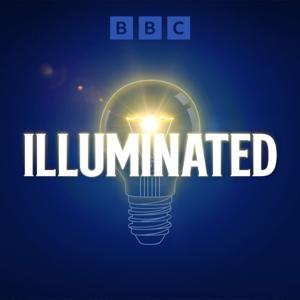
Illuminated is BBC Radio 4's home for creative and surprising one-off documentaries that shed light on hidden worlds.
Welcome to a place of audio beauty and joy, with emotion and human…
This is a chance to meet voices that are not normally heard, open secret doors into concealed chambers and, above all, be transported by the art and inventiveness of the very best programme makers. Just press the switch.
New episodes are available weekly on Sunday evenings. Subscribe on BBC Sounds to make sure you don't miss an episode.
Ranked by our users in the last 21 days

369 Listeners

872 Listeners
486 Listeners
111 Listeners

267 Listeners
43 Listeners
76 Listeners

380 Listeners

404 Listeners

839 Listeners

161 Listeners
164 Listeners

76 Listeners
37 Listeners
61 Listeners