
Sign up to save your podcasts
Or

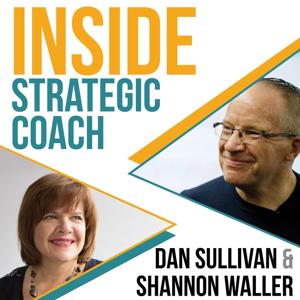


What if your company could create value for clients without depending on you to deliver it personally? Dan Sullivan and Shannon Waller explore why Strategic Coach® is an invention-producing enterprise, how intellectual property creates lasting value, and how entrepreneurs can turn their unique knowledge into capabilities that grow beyond themselves.
Here’s some of what you’ll learn in this episode:
Show Notes:
Strategic Coach has thousands of copyrights, hundreds of trademarks, and 85 patents.
Strategic Coach isn’t just a coaching company; it’s an invention-producing enterprise that creates new thinking tools for entrepreneurs.
Many coaching companies build their reputation through marketing and networking, while Strategic Coach’s intellectual property provides an additional source of marketplace credibility.
The U.S. Patent Bureau takes an adversarial approach, searching for reasons an invention may not qualify for a patent.
To receive a patent for a thinking tool, you must show that it’s unique, useful, non-obvious, and capable of producing consistent results.
Start by creating a product or service, then build the customer experience, create intellectual property, and turn it into intellectual capital that others can use.
Members experience Strategic Coach as an invention-producing enterprise through its thinking tools, teamwork, workshops, and the details of the overall experience.
Strategic Coach’s tools are tested with thousands of entrepreneurs and produce consistent results, even when taught by different coaches.
When your ideas become intellectual property, the value you create is no longer dependent on your being there personally.
Personality-based companies can grow only as far as the founder can show up, perform, and deliver the experience.
A system-based company gives other people the ability to create and deliver value using a proven method.
Ask yourself: For your company to have 10x the impact without clients ever interacting with you, how would your knowledge and capabilities have to be packaged?
Naming, documenting, and protecting your Unique Process™ is a practical first step toward making your company less dependent on you.
Resources:
What Is A Self-Managing Company®?
Casting Not Hiring by Dan Sullivan and Jeffrey Madoff
Casting Your 4 x 4 Company by Dan Sullivan
If you missed the last episode, Dan Sullivan and Shannon Waller discuss the dangers of maybes and the benefits of making clear-cut decisions. Entrepreneurs like being in action, but too often they get stuck in an in-between phase on a project. Tap here to listen to The One Word That Stops Entrepreneurs From Taking Action
Entrepreneurs like being in action, but too often they get stuck in an in-between phase on a project. Business coaches Dan Sullivan and Shannon Waller discuss the dangers of maybes and the benefits of making clear-cut decisions.
Here’s some of what you’ll learn in this episode:
Show Notes:
Both yes and no are strategically useful. In your past, you either said yes and took a complete action, or you said no and prevented yourself from getting into trouble.
Paralysis is in the middle of yes and no. This is where maybe is.
When you’re saying maybe, you’re not committed or certain, so you keep yourself in a state of suspended animation.
Your brain is what directs you toward and enables action, and it operates incredibly quickly.
You can give your brain some help by deciding yes or no, and eliminating everything in the middle.
Every week, look at your list of prospects and keep the yeses. “Maybe” kills you, “yes” rewards you, and “no” teaches you because you’re developing discretion.
For some entrepreneurs, their research phase doesn’t start until they’ve made a decision and are in motion.
When someone’s stuck in the maybe phase, it might be because they’re scared of making the wrong decision. They favor definitely not failing over potentially succeeding.
Instead of worrying about making the right decision, you can make a decision and then work to make the decision right.
Discovering what works for you leads to increased discernment.
No matter how long you spend on research and planning, you won’t know if your idea works until you engage with the marketplace or your clientele.
Resources:
The 4 C’s Formula by Dan Sullivan
Multiplication By Subtraction by Shannon Waller
What if the best way to create a better future is to focus on making today a great yesterday? In this episode, Dan Sullivan and Shannon Waller explore a simple, rewarding way to approach time that can reduce stress, sharpen focus, and help you feel more satisfied with each day as it happens.
Here’s some of what you’ll learn in this episode:
Show Notes:
What you do today, and how you think about it, shapes your experience of tomorrow.
Start each morning by deciding what would make today a great yesterday when you wake up tomorrow.
When you focus on creating a great yesterday, tomorrow becomes less about worry and more about the commitments you make today.
Creating great yesterdays can reduce the stress and regret you carry from the past.
When tomorrow takes care of itself, you can feel less pressure and anxiety about the future.
Getting emotionally attached to future possibilities can create anxiety because those possibilities don’t yet exist.
Each future possibility you become attached to competes for your attention today.
Focusing on today can improve your concentration by freeing you from stress about the past and future.
A simple point system can make daily progress more visible, playful, and satisfying.
There are no punishments in this system—only rewards for actions that move your life forward.
An activity is more valuable if you do it consciously.
Resources:
The Gap And The Gain by Dan Sullivan with Dr. Benjamin Hardy
Not Being Bothered by Dan Sullivan
For entrepreneurs, boredom is more than an inconvenience. It can lead to poor decisions, unnecessary disruption, and lost momentum. In this episode, Dan Sullivan and Shannon Waller explore why conscious thinking is the antidote to boredom and how asking better questions can create fresh energy, clarity, and opportunity from the experiences already in front of you.
Here’s some of what you’ll learn in this episode:
Show Notes:
Entrepreneurs need achievement that feels new, better, and different to stay energized and engaged.
If you are no longer growing, or are achieving in the same way for too long, boredom can quickly set in.
Boredom is not always a signal to look for more external stimulation; it can be a cue to change how you’re thinking.
You can shift your energy by consciously switching away from an unproductive thought and giving your brain a better question to answer.
Becoming aware of what you’re thinking, feeling, and experiencing in the moment is a practical antidote to boredom.
Asking yourself, “What is actually happening right now?” turns you from a passive participant into an active observer.
Taking the role of an observer creates emotional distance and helps you see a stressful situation more clearly.
Naming your experience gives your brain something specific to work on and creates an immediate shift in energy.
Anger and negative emotions can take over when you’re reacting unconsciously instead of examining what’s happening.
Curiosity keeps entrepreneurs engaged because it turns familiar experiences into sources of new insight.
Reviewing your best “yes” decisions and best “no” decisions can reveal valuable patterns, connections, and confidence for the future.
The more conscious you are of your thinking, the more easily you can create fresh energy from your past, present, and future experiences.
Resources:
The Greater Game by Dan Sullivan and John Bowen
Thinking About Your Thinking by Dan Sullivan
Inviting Genius: How Good Leaders Use Conflict to Become Great by Matthew Abrams
The 3 Most Important Questions For Constant Growth As An Entrepreneur
For over five decades, Strategic Coach® co-founder Dan Sullivan has been coaching talented, successful, ambitious entrepreneurs. In this episode, Dan shares insights from his new book, Who We’re Looking For, as he and business coach Shannon Waller define the kind of entrepreneur who gains the most from joining The Strategic Coach® Program.
Here’s some of what you’ll learn in this episode:
Show Notes:
Who you are is often easier for someone else to see, especially when they’re watching you in action and noticing what consistently works for you.
Your life is made up of hundreds and thousands of experiences, and the patterns of what works and what doesn’t reveal your real talents and direction.
The entrepreneurs who thrive in Strategic Coach are the ones who have chosen to base their income on their own effectiveness in the marketplace.
Entrepreneurs have the strongest connection to their ambition because they’ve taken full responsibility for creating their own opportunities and results.
Strategic Coach has coached over 25,000 entrepreneurs, and some members have been in the Program for more than 35 years, treating it as their entrepreneurial home.
The ideal Strategic Coach member is talented, successful, highly ambitious, and never wants to stop growing their freedom and impact.
When the right-fit entrepreneur hears about Strategic Coach, they recognize it immediately as the structure and community they’ve been looking for, which makes getting started simple and fast.
In the Strategic Coach community, entrepreneurs collaborate rather than compete, contributing their experiences and insights so everyone grows faster.
The biggest danger for entrepreneurs is loneliness, especially when they feel like no one around them really understands their ambition or experience.
Most entrepreneurs have had to prove themselves on their own without a process, structure, or environment designed specifically for people who think the way they do.
Strategic Coach gives entrepreneurs a space where they can be unabashedly ambitious and surrounded by peers who want them to think even bigger.
Fundamental entrepreneurial thinking is different from knowing your industry; it’s a way of seeing opportunities, taking ownership, and creating value regardless of the business you’re in.
There’s no point in being a successful entrepreneur unless your success continually increases your sense of personal happiness and agency.
Resources:
Unique Ability®
My Plan For Living To 156 by Dan Sullivan
What Is A Self-Managing Company®?
The Entrepreneur’s Guide To Time Management
The Impact Filter®
Thinking About Your Thinking by Dan Sullivan
What does it take to build a business around only what you love doing? In this episode, Shannon Waller sits down with long-time Program Coach Teresa Easler to talk entrepreneurship, Unique Ability®, and designing a Self-Managing Company® that supports your best work. Teresa explains how better boundaries, courageous decisions, and seeing your business as intellectual property can change the way you lead and grow.
Here’s some of what you’ll learn in this episode:
Show Notes:
Most entrepreneurs can trace their roots back to childhood experiments in selling, serving, and creating value.
Sometimes we choose entrepreneurship and sometimes life pushes us into it, but the result can be the same: freedom and growth.
You can design a business where you do only what you truly love and are uniquely great at.
Real communication isn’t just data exchange; it’s genuine connection and partnership with the person you’re talking to.
Entrepreneurs need strong communication both in the marketplace and inside the company with their teams.
It’s almost impossible to clearly communicate your value on your own because you’re too close to your own business story.
You can decide you won’t work with anyone you wouldn’t genuinely enjoy spending time with.
Learning to say no is a courage muscle that keeps your life and business simpler and more profitable.
Saying “yes” too quickly creates obligations without real commitment, which leads directly to messes and drama.
Treating your ideas and frameworks as intellectual property lifts you out of just selling products and services.
When you build a Unique Ability-focused team, you can take more time off while your company keeps growing.
Resources:
Unique Ability®
The Entrepreneur's Guide To Time Management
The 4 C’s Formula by Dan Sullivan
What Is A Self-Managing Company®?
AI can do a lot of tasks that used to take human effort, but it can’t think about its own thinking. In this episode, Dan Sullivan and Shannon Waller explain why the right response to AI is to become more conscious, discerning, and intentional so you can use technology with clarity and purpose.
Here’s some of what you’ll learn in this episode:
Show Notes:
AI is doing work that people used to do manually, but that doesn’t make it original thinking.
A lot of everyday thinking is repetitive and mechanical, which is exactly the kind of work AI can handle well.
Every interaction with technology that we take for granted now might have been a troubling experience when it was first introduced.
AI isn’t new. It's just entered the realm of cognition.
Most people think about only three things: things, people, and other people’s thoughts. The fourth level is thinking about your thinking.
If you think about your thinking, you’ll become very discerning and masterful in how you use AI.
Everyone uses AI for different reasons.
A lot of AI’s capabilities probably don’t serve your purposes.
To use AI effectively, you need to be clear on your reasons for using it.
AI is trying to keep up with humanity, not the other way around.
Resources:
Shannon Waller’s Team Success Podcast
Failure never feels good, but trying to dodge it or downplay it keeps you from learning what you most need as an entrepreneur. In this episode, Dan Sullivan and Shannon Waller explore why you should let failure be failure, fully feel the emotion, and then transform that energy into better thinking, better timing, and bigger progress.
Here’s some of what you’ll learn in this episode:
Why people sometimes avoid thinking about a failure.
Why you should allow yourself to fully experience your first failure.
Where entrepreneurs set themselves up for the most unhappiness.
The new Strategic Coach® thinking tool that shows you how you handle your failures and your breakthroughs.
Show Notes:
If you don’t learn from your failure, you’ll fail the same way again.
When you fail, let yourself feel the full negative emotion once, then use that energy to decide what you’ll do differently next time.
A person who keeps failing at the same thing with no learning and no change in behavior becomes a failure in that area.
Repeated failures in the same way can start to erode your sense of who you are as an entrepreneur.
Every failure is sending you a message about your thinking, preparation, or timing, and your job is to pay attention to it.
How you handle your failures and your breakthroughs determines whether you’re actually functioning as an entrepreneur.
Entrepreneurism is a daily back and forth between breakthroughs and failures, and both are raw material for new capabilities.
Many people try to avoid intense emotion, but dodging the feeling of failure also cuts you off from the insight it could lead to.
Most people measure their progress against an ideal, but an ideal is not reality; it’s an unreality that guarantees disappointment.
Often the “failure” is not the goal or project itself, but an unrealistic deadline or short game that ignores the actual capabilities and resources you have.
Your emotions aren’t attached to what happens outside you; they’re attached to how you choose to think about what happens, which means you can respond creatively instead of reactively.
Resources:
The Gap And The Gain by Dan Sullivan with Dr. Benjamin Hardy
What You Can Learn From Failure
Everyone knows what cognitive thinking is, but what about metacognitive thinking? Dan Sullivan uses this term to describe the kind of thinking The Strategic Coach® Program develops in entrepreneurs. In this episode, Dan and fellow business coach Shannon Waller explore metacognitive thinking and how it helps the right kind of entrepreneurs achieve their biggest dreams with greater clarity and confidence.
Here’s some of what you’ll learn in this episode:
Show Notes:
One level of thinking is thinking about things. People like things, and they often use shared things as common ground for conversation.
The second level of thinking is thinking about people, which is why social media has become such a powerful phenomenon.
For most people, thinking about things and thinking about people uses up almost all of their available mental time.
The third level of thinking is thinking about thoughts, which is the focus of higher education and high-level media.
In higher education, professors typically teach other people’s thinking rather than developing and teaching their own.
The fourth level of thinking, which very creative people—and especially entrepreneurs—can access, is thinking about your thinking.
Thinking about your thinking gives you the ability to deliberately change how you’re thinking about a situation or problem.
Strategic Coach® provides hundreds of thinking tools to help entrepreneurs think about their thinking in structured, practical ways.
Your emotions are not a direct response to what happens outside of you; they’re a response to how you’re thinking about what happens.
Resources:
My Plan For Living To 156 by Dan Sullivan
Unique Ability®
Entrepreneurs often need to be creative to have a profitable business. What do you do when you aren’t a creative person? In this episode, business coaches Dan Sullivan and Shannon Waller talk about the “why” and “how” of imitating other people in order to achieve business success.
Here's some of what you'll learn in this episode:
Show Notes:
There are two timeless ways of learning and improving yourself: imitating other people's performance, and repetition.
Humans are the only species that can use their brains to access the uniqueness of other people's brains.
We all imitate other people, whether we like to admit it or not.
If you're creative, and you come across someone who's more creative, you imitate, but at a certain point, you make it your own.
What an imitating person does, and for how long they do it, tells you whether they're just an imitator or whether they're creative.
If you appreciate someone else’s skills, you can translate them into your own world.
Creative people can be polarizing.
You create a new capability using vision and obstacles.
The combination of two people’s uniqueness creates something brand new.
People who imitate but aren’t creative are stealing.
In a world of AI imitation, creative people are going to get wildly more creative to differentiate themselves from robots.
Resources:
Unique Ability®
Your Life As A Strategy Circle by Dan Sullivan
From the publisher's feed

16,036 Listeners

114 Listeners

149 Listeners
48 Listeners

13,964 Listeners

576 Listeners
1,113 Listeners

256 Listeners

15 Listeners

72 Listeners

10 Listeners

242 Listeners

11 Listeners

131 Listeners
838 Listeners