
Sign up to save your podcasts
Or



Based on Podcast App listening data
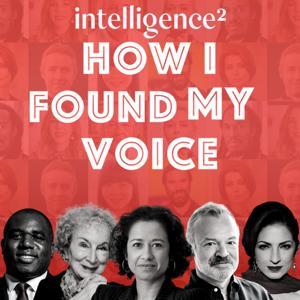
Samira Ahmed speaks to the novelist and author of An American Marriage, Tayari Jones. They speak about her life and career from growing up in Atlanta and taking a stand on ethical issues as a child to developing her voice as a writer, the role that children's author Judy Blume played in her life, and being selected for President Barack Obama's summer reading list and Oprah's Book Club.
This discussion first aired on our award-winning podcast, How I Found My Voice, in 2021.
_
We’d love to hear your feedback and what you think we should talk about next, who we should have on and what our future debates should be.
Send us an email or voice note with your thoughts to [email protected] or Tweet us @intelligence2.
And if you’d like to get ad-free access to all Intelligence Squared podcasts, including exclusive bonus content, early access to new episodes and much more, become a supporter of Intelligence Squared today for just £4.99, or the equivalent in your local currency .
Just visit intelligencesquared.com/membership to find out more.
Learn more about your ad choices. Visit podcastchoices.com/adchoices
Adam and Eve, Noah’s Ark, Moses and the Ten Commandments, the parting of the Red Sea. These are a few of the stories from the Old Testament. And then there’s the New Testament, with its account of the life of Jesus, the Good Samaritan, the raising of Lazarus and the feeding of the five thousand. Whatever our creed or background, these stories are embedded in our consciousness. They inform our everyday speech and much of our art, music and literature. But which of these books is the greater? For this archive episode, we gathered expert voices to consider the question including writer and broadcaster Anne Atkins, Booker Prize-winning novelist and journalist Howard Jacobson, Professor of Theology and Culture in the African Diaspora Robert Beckford, and Anglican priest and presenter the Rev. Richard Coles. Hosting the discussion is broadcaster, comedian and author David Baddiel.
We’d love to hear your feedback and what you think we should talk about next, who we should have on and what our future debates should be.
Send us an email or voice note with your thoughts to [email protected] or Tweet us @intelligence2.
And if you’d like to get ad-free access to all Intelligence Squared podcasts, including exclusive bonus content, early access to new episodes and much more, become a supporter of Intelligence Squared today for just £4.99, or the equivalent in your local currency .
Just visit intelligencesquared.com/membership to find out more.
Learn more about your ad choices. Visit podcastchoices.com/adchoices
Expanding our global electricity networks is the key to unlocking a renewable future. In the US alone, the electric grid will need to expand by at least 60% by 2030 to ensure renewable energy can make its way into our homes and businesses, and the UK’s networks are also in dire need of regeneration. To implement such a project will require seismic policy change, innovative thinking and massive investment. It’s an essential part of the energy transition.
There are big questions and issues to discuss: how will we fund improved networks? How will the private and public sectors work together to facilitate these changes? How can we change regulations and reduce bureaucracy to increase the speed at which renewable energy sources can be connected to the grid?
In this episode our host, journalist Kamal Ahmed, is joined by three brilliant guests, including Keith Anderson, CEO of Scottish Power, to give us an insight into the state of networks in the UK, US and Europe, the difficulties we currently face in improving them, and the potential solutions that could be put in place to reduce global carbon emissions whilst still meeting all of society’s energy needs.
For more information please visit iberdrola.com
—
We’d love to hear your feedback and what you think we should talk about next, who we should have on and what our future debates should be.
Send us an email or voice note with your thoughts to [email protected] or Tweet us @intelligence2.
And if you’d like to support our mission to foster honest debate and compelling conversations, as well as ad-free podcasts, exclusive bonus content, early access and much more, become a supporter of Intelligence Squared today.
Just visit intelligencesquared.com/membership to find out more.
Learn more about your ad choices. Visit podcastchoices.com/adchoices
This is the second part of a two-part episode. It’s the issue that’s more polarising than politics. The world is full of animal lovers but we can’t agree on which pet is more worthy of our love – the loyal, obedient dog, or the inscrutable, capricious cat. In this episode philosopher John Gray goes up against writer Will Self to debate the age old question of which animal is superior. The debate was chaired by writer, academic and broadcaster Shahidha Bari.
We’d love to hear your feedback and what you think we should talk about next, who we should have on and what our future debates should be.
Send us an email or voice note with your thoughts to [email protected] or Tweet us @intelligence2.
And if you’d like to get ad-free access to all Intelligence Squared podcasts, including exclusive bonus content, early access to new episodes and much more, become a supporter of Intelligence Squared today for just £4.99, or the equivalent in your local currency .
Just visit intelligencesquared.com/membership to find out more.
Learn more about your ad choices. Visit podcastchoices.com/adchoices
It’s the issue that’s more polarising than politics. The world is full of animal lovers but we can’t agree on which pet is more worthy of our love – the loyal, obedient dog, or the inscrutable, capricious cat. In this episode philosopher John Gray goes up against writer Will Self to debate the age old question of which animal is superior. The debate was chaired by writer, academic and broadcaster Shahidha Bari.
We’d love to hear your feedback and what you think we should talk about next, who we should have on and what our future debates should be.
Send us an email or voice note with your thoughts to [email protected] or Tweet us @intelligence2.
And if you’d like to get ad-free access to all Intelligence Squared podcasts, including exclusive bonus content, early access to new episodes and much more, become a supporter of Intelligence Squared today for just £4.99, or the equivalent in your local currency .
Just visit intelligencesquared.com/membership to find out more.
Learn more about your ad choices. Visit podcastchoices.com/adchoices
Distinguished psychologist Kimberley Wilson's recent book is Unprocessed: How the Food We Eat Is Fuelling Our Mental Health Crisis. In it, she explores the tangible links between diet and how the mind works. Wilson was a former Governor of the Tavistock & Portman NHS Mental Health Trust and has a master’s degree in nutrition. She also previously led the therapy service at what was then Europe’s largest women’s prison, so she knows first-hand about the importance of food and its role in mental health. Joining Kimberly in conversation is Christian Jarrett, cognitive neuroscientist and editor of Psyche magazine.
We’d love to hear your feedback and what you think we should talk about next, who we should have on and what our future debates should be.
Send us an email or voice note with your thoughts to [email protected] or Tweet us @intelligence2.
And if you’d like to get ad-free access to all Intelligence Squared podcasts, including exclusive bonus content, early access to new episodes and much more, become a supporter of Intelligence Squared today for just £4.99, or the equivalent in your local currency .
Just visit intelligencesquared.com/membership to find out more.
Learn more about your ad choices. Visit podcastchoices.com/adchoices
This is the second instalment of a three-part episode. Dickens. Tolstoy. Their names and reputations shake the ground – and so do their books, if you drop one. But whose legacy is more enduring? Whose vision truer and more relevant today? Should you embark on War and Peace or Our Mutual Friend? To battle it out, in 2018 Intelligence Squared brought two celebrated writers, John Mullan for Dickens and Simon Schama for Tolstoy, to our stage. They called on a cast of star actors, including Tom Hiddleston, to bring their arguments to life with readings from the authors’ finest works. The debate was chaired by author, playwright and broadcaster Bonnie Greer.
We’d love to hear your feedback and what you think we should talk about next, who we should have on and what our future debates should be.
Send us an email or voice note with your thoughts to [email protected] or Tweet us @intelligence2.
And if you’d like to get ad-free access to all Intelligence Squared podcasts, including exclusive bonus content, early access to new episodes and much more, become a supporter of Intelligence Squared today for just £4.99, or the equivalent in your local currency .
Just visit intelligencesquared.com/membership to find out more.
Learn more about your ad choices. Visit podcastchoices.com/adchoices
Dickens. Tolstoy. Their names and reputations shake the ground – and so do their books, if you drop one. But whose legacy is more enduring? Whose vision truer and more relevant today? Should you embark on War and Peace or Our Mutual Friend? To battle it out, in 2018 Intelligence Squared brought two celebrated writers, John Mullan for Dickens and Simon Schama for Tolstoy, to our stage. They called on a cast of star actors, including Tom Hiddleston, to bring their arguments to life with readings from the authors’ finest works. The debate was chaired by author, playwright and broadcaster Bonnie Greer. This is the first instalment of a three-part episode.
We’d love to hear your feedback and what you think we should talk about next, who we should have on and what our future debates should be.
Send us an email or voice note with your thoughts to [email protected] or Tweet us @intelligence2.
And if you’d like to get ad-free access to all Intelligence Squared podcasts, including exclusive bonus content, early access to new episodes and much more, become a supporter of Intelligence Squared today for just £4.99, or the equivalent in your local currency .
Just visit intelligencesquared.com/membership to find out more.
Learn more about your ad choices. Visit podcastchoices.com/adchoices
What was Rome like during its zenith? In July 2023 acclaimed historian and co-host of The Rest Is History podcast Tom Holland came to Intelligence Squared to paint a vivid picture of Rome during the Pax Romana, when Rome was the world’s great superpower. Drawing on his new book Pax: War and Peace in Rome’s Golden Age, Holland described how at its peak the Roman Empire was the wealthiest and most powerful state the world had then seen, stretching from Scotland to Arabia, and containing perhaps a quarter of the human population then alive. Joining Holland in conversation is Hannah Cornwell, Associate Professor of Ancient History at the University of Birmingham and author of Pax and the Politics of Peace: Republic to Principate.
We’d love to hear your feedback and what you think we should talk about next, who we should have on and what our future debates should be.
Send us an email or voice note with your thoughts to [email protected] or Tweet us @intelligence2.
And if you’d like to get ad-free access to all Intelligence Squared podcasts, including exclusive bonus content, early access to new episodes and much more, become a supporter of Intelligence Squared today for just £4.99, or the equivalent in your local currency .
Just visit intelligencesquared.com/membership to find out more.
Learn more about your ad choices. Visit podcastchoices.com/adchoices
What is it to imagine exactly? How do we go about it, and why is it so important that we imagine for ourselves? In July 2023 author and Condé Nast Britain managing director Albert Read came to Intelligence Squared to explain that the imagination is not just the preserve of artists and creatives but rather a muscle – an essential faculty of the mind which we can all train and develop throughout our lives. Drawing on his new book The Imagination Muscle, Read explains how the imagination is central to human achievement. In conversation with Times columnist and author of What I Wish I'd Known When I Was Young: The Art and Science of Growing Up, Alice Thomson, the discussion touches on art, music, film, literature, science and entrepreneurship. As technology advances and threatens to take over the creative aspects of our lives, Read's book suggests it is more pressing than ever to harness the power of our imaginations.
We’d love to hear your feedback and what you think we should talk about next, who we should have on and what our future debates should be.
Send us an email or voice note with your thoughts to [email protected] or Tweet us @intelligence2.
And if you’d like to get ad-free access to all Intelligence Squared podcasts, including exclusive bonus content, early access to new episodes and much more, become a supporter of Intelligence Squared today for just £4.99, or the equivalent in your local currency .
Just visit intelligencesquared.com/membership to find out more.
Learn more about your ad choices. Visit podcastchoices.com/adchoices
From the publisher's feed
Ranked by our users in the last 21 days

303 Listeners

4,107 Listeners
2,141 Listeners

882 Listeners

5,486 Listeners

297 Listeners

836 Listeners

121 Listeners

905 Listeners

2,537 Listeners
27 Listeners

136 Listeners
6 Listeners
3 Listeners

2 Listeners
1 Listeners

3,043 Listeners

474 Listeners

2,452 Listeners

333 Listeners

0 Listeners

4 Listeners
0 Listeners
4 Listeners
0 Listeners
9 Listeners

0 Listeners
2 Listeners
0 Listeners
0 Listeners