
Sign up to save your podcasts
Or

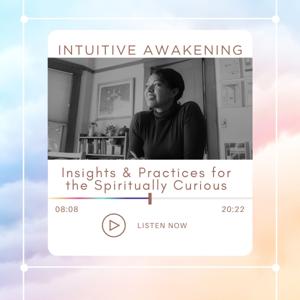


Know Thyself is one of the oldest spiritual instructions in human history, carved above the Temple of Apollo at Delphi and echoed across cultures, religions, and mystical traditions worldwide. Yet in the modern age, marked by identity confusion, spiritual outsourcing, and constant distraction, its meaning has become diluted or misunderstood.
In this episode, we return to the original depth of the Delphic maxim Gnōthi seauton and explore why self-knowledge was considered a prerequisite for wisdom, prophecy, and ethical living. Drawing from ancient Greek philosophy, Eastern wisdom traditions, Sufism, Christian mysticism, and modern psychology, this conversation reframes Know Thyself not as self-improvement or ego-polishing, but as a radical act of responsibility, humility, and inner clarity.
We examine why the ancients warned against seeking answers without self-awareness, how lack of self-knowledge fuels projection, guru-dependence, and moral certainty today, and why true spiritual maturity begins with honest inner inquiry. This episode explores how knowing oneself transforms how we live, relate, lead, and choose, offering a grounded path toward integrity, discernment, and compassionate action in a fractured world.
This is an invitation to step back from borrowed identities and inherited beliefs, and to reclaim the ancient courage of self-examination. In a time when many are searching outward for meaning, Know Thyself calls us inward, not to retreat from the world, but to meet it with wisdom, clarity, and truth.
Long before abstraction was accepted by museums, before critics named movements and men were credited as pioneers, women were painting under the guidance of unseen forces.
Hilma af Klint claimed her monumental canvases were commissioned by spiritual masters. Agnes Pelton sought luminous forms through meditation in the California desert. Ithell Colquhoun merged surrealism with occult initiation. Swiss healer Emma Kunz created vast geometric diagrams through pendulum guidance, using them not as decoration but as medicine.
In this episode, we explore the spiritualist currents that shaped modern art and ask a daring question: were these women inventing abstraction, or transmitting it?
What did they believe was happening when they entered trance or deep meditation? What symbols were encoded in their spirals, orbs, and geometric lattices? Why has history minimized the role of spiritualism in the development of modern art? And perhaps most importantly, why would unseen intelligences seek to work through human beings at all?
This is a journey into séances, desert studios, sacred geometry, and the radical idea that art may be collaboration rather than self-expression. Because if creativity is a form of transmission, then the question is no longer whether spirits exist.
The question becomes: what wants to move through you?
References:
1. Higgie, Jennifer. The Other Side: A Story of Women in Art and The Spirit World. First Pegasus Books, New York, 2024.
2. Bashkoff, Tracey. Hilma af Klint: Paintings for the Future. Guggenheim (n.d.)
What if words are not merely expressions of thought, but forces that shape reality itself? In this extended episode of The Intuitive Awakening Podcast, we enter the ancient Hermetic world to explore one of its most profound and unsettling teachings: that speech is creative at the level of being. Drawing from the Corpus Hermeticum, the Asclepius, and the living figure of Hermes Trismegistus, this episode weaves together myth, philosophy, cosmology, and lived spiritual practice to reveal why the ancients treated speech as sacred power rather than casual habit.
You’ll be introduced to what Hermeticism is, who Hermes Trismegistus was understood to be, and how these texts survived to shape Western mystical thought. Along the way, we explore Logos as the creative word, the ensouled and responsive nature of the cosmos, and why careless language was seen as a spiritual liability rather than a social flaw.
This is not a conversation about “positive thinking.” It is a deep dive into ontology, the nature of reality itself and the responsibility that comes with having a voice in a living universe. We’ll examine how speech binds or loosens fate, why silence was considered the womb of wisdom, and how everyday language quietly shapes identity, perception, and possibility.
This episode is for listeners who sense that words matter more than we’ve been taught and who are ready to reclaim speech as a conscious, ethical, and spiritual act.
What if myths were never meant to be taken literally or dismissed as fiction but read as maps of the inner life? In this episode of The Intuitive Awakening Podcast, we explore myth as the ancient world understood it: not as superstition or moral tale, but as a living language of the soul. Drawing from Greek myth, mystery traditions, philosophy, and ancient historians, this episode reveals how myths encode the deep structures of human experience: loss, desire, descent, transformation, and return.
We journey through stories of Demeter and Persephone, Orpheus, Inanna, Odysseus, and Psyche, not to analyze them from a distance, but to listen for how they mirror inner terrain. Along the way, we hear from Plato, Aristotle, Heraclitus, Plutarch, and later thinkers who recognized myth as a necessary form of knowledge when reason reaches its limits.
This is not a conversation about symbolism as abstraction. It is an invitation to reclaim mythic literacy, to recognize where you are in the story, and why certain myths continue to call to us across centuries. For listeners who sense that ancient stories still carry guidance, and that the soul has always known how to speak in images.
In this episode, we explore one of the most mysterious and least discussed teachings from Napoleon Hill’s work: the Invisible Council. Long overshadowed by Think and Grow Rich’s practical success principles, Hill’s inner council reveals a deeper, more spiritual dimension of his philosophy, one rooted in imagination, archetypal intelligence, and deliberate communion with wisdom beyond the ego.
Drawing from Hill’s writings, historical context, psychology, and ancient philosophical traditions, this episode traces the origins of the Invisible Council, why it was downplayed for decades, and what Hill himself claimed to experience when consulting it. We examine whether this practice was metaphor, psychological technique, spiritual discipline, or something that resists simple categorization altogether.
You are invited to consider how the mind organizes itself around the voices it listens to, why inner dialogue shapes destiny more than circumstance, and how intentional engagement with wisdom, rather than reaction or fear, can transform decision-making, creativity, and ethical clarity.
This episode is not about blind belief or manifestation shortcuts. It is about disciplined imagination, conscious thought, and the ancient understanding that intelligence is relational, even within the self.
Primary Work by Napoleon Hill
Hill, Napoleon. Think and Grow Rich. The Ralston Society, 1937.
What if the Devil was never meant to be taken literally, but recognized?
Written in 1938 and hidden for over seventy years, Outwitting the Devil by Napoleon Hill stages a provocative conversation between the author and the Devil himself. But this episode is not about theology or superstition. It is about power, who holds it, how it is surrendered, and why so many people live lives shaped by fear, habit, and unconscious drift.
In this episode of The Intuitive Awakening Podcast, we explore the Devil as a historical, psychological, and symbolic figure. We trace his evolution from “the accuser” in the Hebrew Bible, to the tempter of the Gospels, to the modern force of distraction, fear, and passivity that Hill exposes. Along the way, we examine Hill’s central teachings on drifting, discipline, fear, and self-governance and why they feel unsettlingly relevant today.
This is not a book review; it is an invitation to look honestly at the invisible structures shaping our choices, our attention, and our lives. For listeners interested in self-mastery, spiritual discernment, and reclaiming agency in an age of distraction, this episode offers a challenging and clarifying lens.
You don’t have to believe in the Devil to ask the question that matters most:
Who is governing your mind when you are not?
In this episode, we explore the ancient and enduring idea that life itself is a sacred drama, one in which the soul enters willingly, forgets its origin, and slowly remembers through love, loss, joy, and illumination. Drawing from poets, mystics, philosophers, and sacred traditions across time, this episode invites listeners to see their lives not as random or meaningless, but as intentional participation in a greater cosmic story.
We reflect on the roles we inhabit, the masks we wear, and the moments of suffering that initiate us into deeper wisdom. From Shakespeare’s stage to the Hindu concept of lila (divine play), from Platonic philosophy to mystical Christianity and Sufi devotion, we trace a shared teaching: that consciousness takes form so that love may be known in experience.
This episode speaks to grief and beauty alike, reminding us that pain is not punishment, love is not accidental, and light requires form to recognize itself. We explore what it means to live fully in our human roles while remembering our deeper identity as luminous beings, points of awareness through which the divine experiences itself.
Why do certain images, stories, and figures keep returning, across centuries, cultures, and even card decks?
In this episode of The Intuitive Awakening Podcast, we explore archetypes not as abstract symbols, but as living patterns that shape human experience. Long before psychology gave them a name, archetypes were recognized in myth, ritual, and philosophy as forces that move through the soul and structure perception, behavior, and meaning. They are not characters we invent; they are patterns we recognize because we live inside them.
This conversation traces how archetypes appear in ancient myth and philosophy, how they were preserved visually and symbolically in the Tarot, and why these images continue to speak with such clarity today. We look at the Major Arcana not as fortune-telling devices, but as a symbolic map of human initiation, thresholds of identity, power, loss, choice, and transformation that every life encounters.
Rather than reducing archetypes to personality labels or aesthetic identities, this episode asks a deeper question: what happens when we don’t recognize the archetype we are living? When patterns remain unconscious, they rule us. When they are named, they become navigable.
We also explore why archetypal literacy matters in a time of fragmentation, how these ancient patterns help us make sense of inner conflict, cultural upheaval, and personal change without collapsing complexity into slogans or self-help formulas.
This episode is for listeners who sense that images still carry wisdom, that Tarot is more than prediction, and that myth remains one of humanity’s most precise languages for understanding the soul.
From the publisher's feed
2,323 Listeners
5,743 Listeners
1,038 Listeners
897 Listeners
265 Listeners
505 Listeners
3,298 Listeners

27,597 Listeners
1,755 Listeners
1,377 Listeners

331 Listeners
860 Listeners
301 Listeners

3,448 Listeners
33 Listeners