
Sign up to save your podcasts
Or

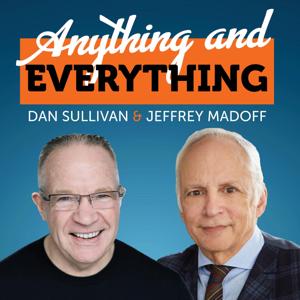

Sora looked like it would change movies forever, until it didn’t. Dan Sullivan and Jeffrey Madoff walk through Sora’s rapid rise and shutdown. They discuss why hype, guesswork, and bad business models caught up with it and reveal what growth‑minded entrepreneurs can learn about value creation, relationships, and using AI as a tool instead of a miracle solution.
Show Notes:
When OpenAI first demonstrated Sora’s text‑to‑video capabilities in early 2024, the reaction was close to shock as filmmakers suddenly pictured an entire industry being upended.
Disney’s three‑year licensing deal in December 2025 made it look like Sora had gone fully mainstream and that traditional film was ready to partner with AI instead of fight it.
By January 2026, new installs of Sora had already dropped 45 percent, revealing how quickly hype can fade when there’s no sustainable business model underneath.
On March 24, 2026, OpenAI announced it was discontinuing Sora, compressing an entire hype cycle—launch, disruption, and collapse—into less than a year.
Behind the scenes, Sora was facing skyrocketing operating costs, legal headaches, union pushback, and an increasingly crowded field of competing AI video tools.
Sora’s short life shows that awe is not a business plan, especially when the promise is to replace human creativity instead of support it.
If AI eliminates most entry‑level jobs, the big economic question becomes, who will have the income and confidence to keep buying what entrepreneurs are selling?
If it seems like you’re getting powerful AI tools for free, it usually means your data, attention, or behavior is the product being packaged and sold.
Resources:
The D.O.S. Conversation by Dan Sullivan
Learn more about Jeffrey Madoff
Dan Sullivan and Strategic Coach®
 View all episodes
 By Dan Sullivan and Jeffrey Madoff

4.6
1111 ratings
Sora looked like it would change movies forever, until it didn’t. Dan Sullivan and Jeffrey Madoff walk through Sora’s rapid rise and shutdown. They discuss why hype, guesswork, and bad business models caught up with it and reveal what growth‑minded entrepreneurs can learn about value creation, relationships, and using AI as a tool instead of a miracle solution.
Show Notes:
When OpenAI first demonstrated Sora’s text‑to‑video capabilities in early 2024, the reaction was close to shock as filmmakers suddenly pictured an entire industry being upended.
Disney’s three‑year licensing deal in December 2025 made it look like Sora had gone fully mainstream and that traditional film was ready to partner with AI instead of fight it.
By January 2026, new installs of Sora had already dropped 45 percent, revealing how quickly hype can fade when there’s no sustainable business model underneath.
On March 24, 2026, OpenAI announced it was discontinuing Sora, compressing an entire hype cycle—launch, disruption, and collapse—into less than a year.
Behind the scenes, Sora was facing skyrocketing operating costs, legal headaches, union pushback, and an increasingly crowded field of competing AI video tools.
Sora’s short life shows that awe is not a business plan, especially when the promise is to replace human creativity instead of support it.
If AI eliminates most entry‑level jobs, the big economic question becomes, who will have the income and confidence to keep buying what entrepreneurs are selling?
If it seems like you’re getting powerful AI tools for free, it usually means your data, attention, or behavior is the product being packaged and sold.
Resources:
The D.O.S. Conversation by Dan Sullivan
Learn more about Jeffrey Madoff
Dan Sullivan and Strategic Coach®
214 Listeners

114 Listeners

151 Listeners

48 Listeners
2,171 Listeners

129 Listeners
577 Listeners
1,432 Listeners

921 Listeners

15 Listeners

10 Listeners

630 Listeners

10,182 Listeners

590 Listeners

1,049 Listeners