
Sign up to save your podcasts
Or

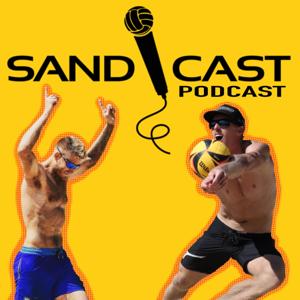

To read through the old LA Times archives, to dig through all of the gushing, flattering pieces, is to remember Jose Loiola as a man of near mythical proportions, a beach volleyball Paul Bunyan. How hard he could hit! How high he could jump! How entertaining he was to watch! How loud and brash and charismatic he was!
Loiola laughs at those memories. He laughs through a glass of wine, even though he has sworn off alcohol during the week.
It’s just one glass, right?
Nothing compared to what he and the boys could put down during the 90s, when the AVP was a rollicking party dishing out tens of millions per year and Brazil was in its nascent stages of becoming a bona fide beach volleyball power.
Loiola was the first, and for the 48-year-old there is no forgetting the day he and Eduardo Bacil took down the Gods. Back then, in the late 80s and early 90s, the Gods were known as Smith and Stoklos.
In the 86, 87 and 88 seasons, Sinjin Smith and Randy Stoklos would win 44 of 71 AVP tournaments and three of four FIVBs. You could count on one hand the teams who had a shot at beating them, and Jose Loiola would not have been among them.
It is with a delicious stroke of irony that Loiola and Bacil, a fellow Brazilian, stunned the Americans in their primes. Beach volleyball had been a weekend activity in Brazil prior to 1987. Nothing more. It was a soccer-mad state with beautiful beaches and recreational volleyball.
It was Smith who had a vision for the sport to grow internationally, Smith who worked with then-FIVB president Ruben Acosta to grow the game overseas, Smith who helped form an exhibition match in Rio de Janeiro, awakening the dormant beach volleyball giant that is the nation of Brazil.
Without Smith’s and Acosta’s efforts to establish the game in Brazil when they did, it’s quite possible we might never have heard of Loiola and Bacil. Without the FIVB establishing a beach volleyball branch to its indoor league, there may not be beach volleyball in the Olympic Games, and by extension no reason for Americans to pay attention to Brazilian beach volleyball at all.
But in 1993 there was no longer a choice. They had to watch, and with rapt attention, as Loiola and Bacil, who earned a wildcard to a pair of AVP events, in Fort Myers and Pensacola to begin the season, and then made every main draw after that on points, established themselves as one of the only international teams who could be reasonably expected to beat the Americans.
“I had the opportunity to play with and against the players I had grown up idolizing, the players I had grown up watching,” Loiola said on SANDCAST. “To me, that was the best thing. I’m competing with them and I’m beating all of them. From that point on, I realized if I put my time in and I become more professional and learn the hoopty-hoops, with the discipline and the perseverance, I knew I was going to get far.”
Loiola is not a man prone for understatement, and yet for him to describe his career as able to go far, and not to distances never before seen by a Brazilian beach volleyball player, is an understatement indeed. For at the end of that 1993 season, Loiola had been awarded the AVP Rookie of the Year, the first international player to do so.
In ’95, playing in an indoor beach tournament in Washington D.C., he and Bacil beat Stoklos and Adam Johnson in the finals, marking the first time an international team had claimed an AVP title.
“The AVP was the NBA of volleyball,” Loiola said. “It attracted the best players on the planet. It was, by far, the best tour.”
So much so that the AVP’s status as the premiere tour began to create animosity both in the U.S. and elsewhere. The Brazilian federation wanted Loiola to quit playing on the AVP and join the Brazilian national team so he could represent his native country in the 1996
 View all episodes
 By Travis Mewhirter

4.9
192192 ratings
To read through the old LA Times archives, to dig through all of the gushing, flattering pieces, is to remember Jose Loiola as a man of near mythical proportions, a beach volleyball Paul Bunyan. How hard he could hit! How high he could jump! How entertaining he was to watch! How loud and brash and charismatic he was!
Loiola laughs at those memories. He laughs through a glass of wine, even though he has sworn off alcohol during the week.
It’s just one glass, right?
Nothing compared to what he and the boys could put down during the 90s, when the AVP was a rollicking party dishing out tens of millions per year and Brazil was in its nascent stages of becoming a bona fide beach volleyball power.
Loiola was the first, and for the 48-year-old there is no forgetting the day he and Eduardo Bacil took down the Gods. Back then, in the late 80s and early 90s, the Gods were known as Smith and Stoklos.
In the 86, 87 and 88 seasons, Sinjin Smith and Randy Stoklos would win 44 of 71 AVP tournaments and three of four FIVBs. You could count on one hand the teams who had a shot at beating them, and Jose Loiola would not have been among them.
It is with a delicious stroke of irony that Loiola and Bacil, a fellow Brazilian, stunned the Americans in their primes. Beach volleyball had been a weekend activity in Brazil prior to 1987. Nothing more. It was a soccer-mad state with beautiful beaches and recreational volleyball.
It was Smith who had a vision for the sport to grow internationally, Smith who worked with then-FIVB president Ruben Acosta to grow the game overseas, Smith who helped form an exhibition match in Rio de Janeiro, awakening the dormant beach volleyball giant that is the nation of Brazil.
Without Smith’s and Acosta’s efforts to establish the game in Brazil when they did, it’s quite possible we might never have heard of Loiola and Bacil. Without the FIVB establishing a beach volleyball branch to its indoor league, there may not be beach volleyball in the Olympic Games, and by extension no reason for Americans to pay attention to Brazilian beach volleyball at all.
But in 1993 there was no longer a choice. They had to watch, and with rapt attention, as Loiola and Bacil, who earned a wildcard to a pair of AVP events, in Fort Myers and Pensacola to begin the season, and then made every main draw after that on points, established themselves as one of the only international teams who could be reasonably expected to beat the Americans.
“I had the opportunity to play with and against the players I had grown up idolizing, the players I had grown up watching,” Loiola said on SANDCAST. “To me, that was the best thing. I’m competing with them and I’m beating all of them. From that point on, I realized if I put my time in and I become more professional and learn the hoopty-hoops, with the discipline and the perseverance, I knew I was going to get far.”
Loiola is not a man prone for understatement, and yet for him to describe his career as able to go far, and not to distances never before seen by a Brazilian beach volleyball player, is an understatement indeed. For at the end of that 1993 season, Loiola had been awarded the AVP Rookie of the Year, the first international player to do so.
In ’95, playing in an indoor beach tournament in Washington D.C., he and Bacil beat Stoklos and Adam Johnson in the finals, marking the first time an international team had claimed an AVP title.
“The AVP was the NBA of volleyball,” Loiola said. “It attracted the best players on the planet. It was, by far, the best tour.”
So much so that the AVP’s status as the premiere tour began to create animosity both in the U.S. and elsewhere. The Brazilian federation wanted Loiola to quit playing on the AVP and join the Brazilian national team so he could represent his native country in the 1996
153,513 Listeners

120 Listeners
2,814 Listeners
11,880 Listeners

1,647 Listeners

4,886 Listeners
3,507 Listeners

8,522 Listeners

7,607 Listeners

951 Listeners

19 Listeners
32 Listeners
18 Listeners

2 Listeners

0 Listeners